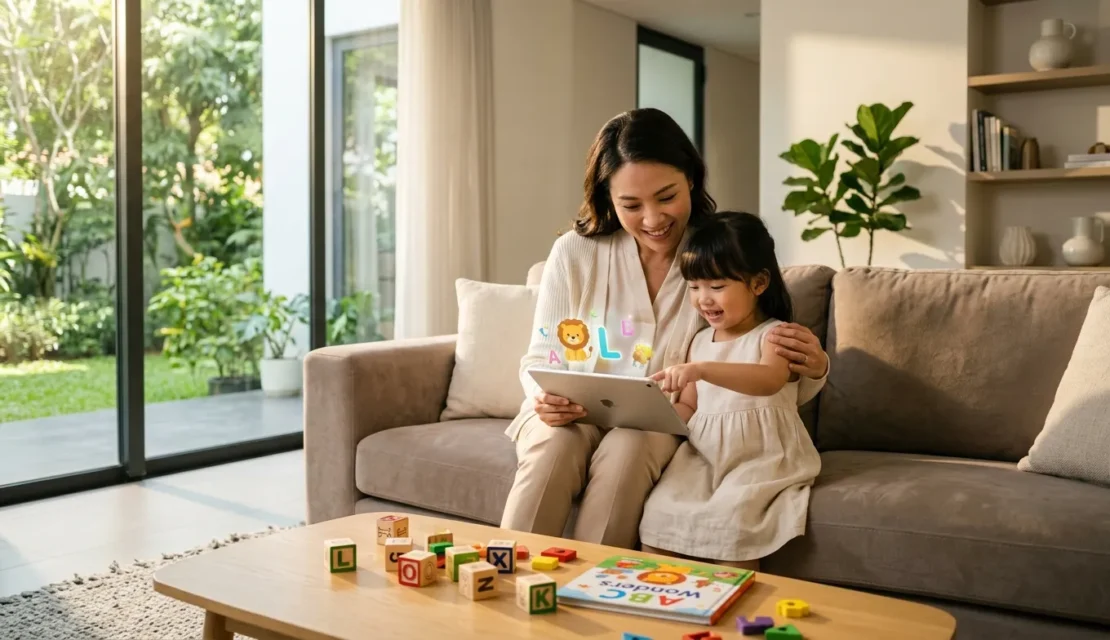
If you have ever watched a child point at a screen and squeal because a lion suddenly “appeared” in the living room, you already understand why Augmented Reality games grab so much attention. At Apple Tree Pre-School BSD, located in Educenter BSD Building, we see how quickly young children light up when learning feels playful, surprising, and a little magical. That is exactly why many parents are becoming curious about how this kind of technology can support preschool learning without turning childhood into one long screen session.
We get that some parents hear the word “technology” and immediately imagine glazed eyes, endless tapping, and a child who forgets the outside world exists. Honestly, we have had that same thought too. But when used thoughtfully, Augmented Reality games can become a fun bridge between digital curiosity and real world learning, which is where things get interesting for preschoolers.
Augmented Reality Games and Why Preschoolers Love Them
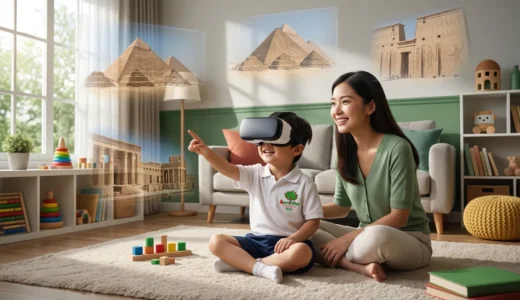
Augmented Reality games place digital images, sounds, or interactions into the real environment around a child. Instead of only watching something happen on a flat screen, children feel like they are part of the action. A dinosaur on the floor, letters floating above a book, or a butterfly moving across the table can make learning feel alive.
For preschoolers, that sense of wonder matters. Young children learn best when they can see, move, react, and explore. If a tool invites them to participate instead of just sit still, we usually pay attention.
AR makes learning feel like play
This is one of the biggest reasons Augmented Reality games can work so well for early childhood education. Preschoolers are not looking for “serious study time” in the same way older children are. They learn through play, repetition, imagination, and hands on discovery.
When a child sees numbers pop up in a game and needs to tap the correct one, it feels exciting, not heavy. When animals appear and make sounds, vocabulary practice suddenly becomes something they want to do again. That is a very different experience from simply being told to memorize something.
AR matches how young children naturally explore
Preschoolers are curious in a wonderfully chaotic way. They want to touch everything, ask “why” seventeen times before lunch, and investigate every tiny thing in their path. Augmented Reality games match that energy because they reward exploration.
Instead of saying, “Sit down and look at this,” AR often says, “Come closer, move around, try this, see what happens.” That active style can hold attention better, especially for children who learn best through movement and visual interaction.
The Benefits of Augmented Reality Games for Preschool Learning
When parents ask us whether AR is actually useful or just flashy, we always say the same thing, it depends on how it is used. Good tools support development. Poor tools just make noise and flash bright colors until everyone feels slightly exhausted.
Here are some of the strongest benefits we see when Augmented Reality games are chosen carefully:
- They increase focus by making lessons more interactive
- They support visual and auditory learning at the same time
- They encourage curiosity and problem solving
- They can help children remember concepts more easily
- They make abstract ideas feel concrete and relatable
- They often turn practice into something enjoyable
That last point matters more than people realize. Preschoolers are much more willing to repeat an activity when it feels fun, and repetition is one of the keys to early learning.
Language development can become more engaging
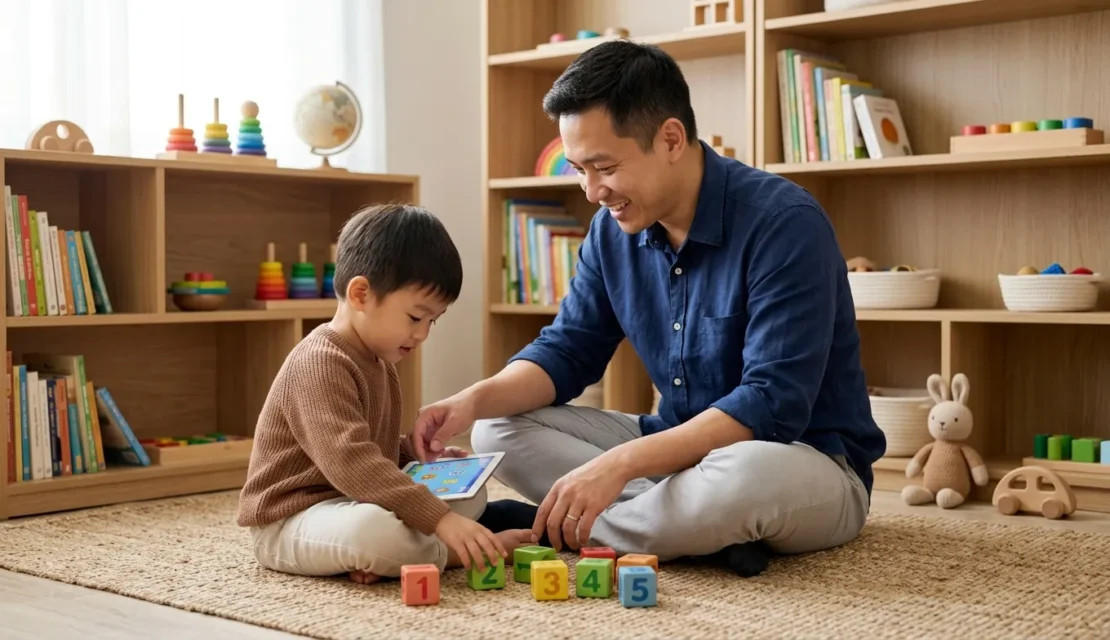
Children build language through listening, responding, naming, and connecting words to real experiences. Augmented Reality games can support this by combining images, movement, and sound. If a child points to a virtual apple, hears the word, repeats it, and then connects it to a real apple later, that is meaningful learning.
We especially like activities that encourage back and forth conversation with adults. The best learning moments do not happen when a child is left alone with a device. They happen when you sit nearby and say, “What do you see?” or “Can you find the red bird?” Suddenly the game becomes a shared experience.
Early math and science concepts feel less intimidating
Let us be honest, preschool math can be adorable and confusing at the same time. One minute a child counts five blocks perfectly, and the next minute they insist that eight comes after three because it “sounds bigger.” That is normal, and it is why playful reinforcement helps.
Augmented Reality games can make counting, sorting, matching, shapes, animals, weather, and simple science concepts feel approachable. Children are more likely to stick with a task when it feels like an adventure instead of a worksheet.
Confidence often grows through interactive success
When children can respond to a prompt and see an immediate result, they often feel proud and motivated. A correct answer gets a cheerful reaction, a completed challenge unlocks something fun, and suddenly they feel capable. That small sense of success can build confidence, especially for children who are still finding their footing in structured learning.
Of course, not every flashy app deserves applause. We always encourage parents to choose activities that reward thinking and participation, not just random tapping while cartoon music blasts in the background like a tiny party nobody asked for.
What Parents Should Watch Out For
Even though Augmented Reality games can be useful, balance still matters. Technology should support preschool learning, not replace real play, movement, conversation, and social interaction. If a child spends more time swiping than speaking, it is time to step back and rethink the routine.
A healthy approach usually includes a few simple rules:
- Choose age appropriate content with clear learning goals
- Limit screen time and avoid using AR as an all day babysitter
- Join your child during play whenever possible
- Follow digital activities with real world activities
- Watch your child’s mood and attention after using the app
We always tell parents that the real magic is not just in the game. It is in what happens before, during, and after the game. Your guidance makes the difference.
Real experiences still come first
No digital butterfly can replace the joy of chasing a real one in the garden. No virtual blocks can fully replace the feel of stacking, dropping, and rebuilding a tower on the floor. Augmented Reality games work best when they add to a child’s experiences, not when they become the whole experience.
That is why in early education, we believe technology should be one tool among many. Children still need messy art, story time, music, movement, outdoor exploration, and meaningful interaction with other people.
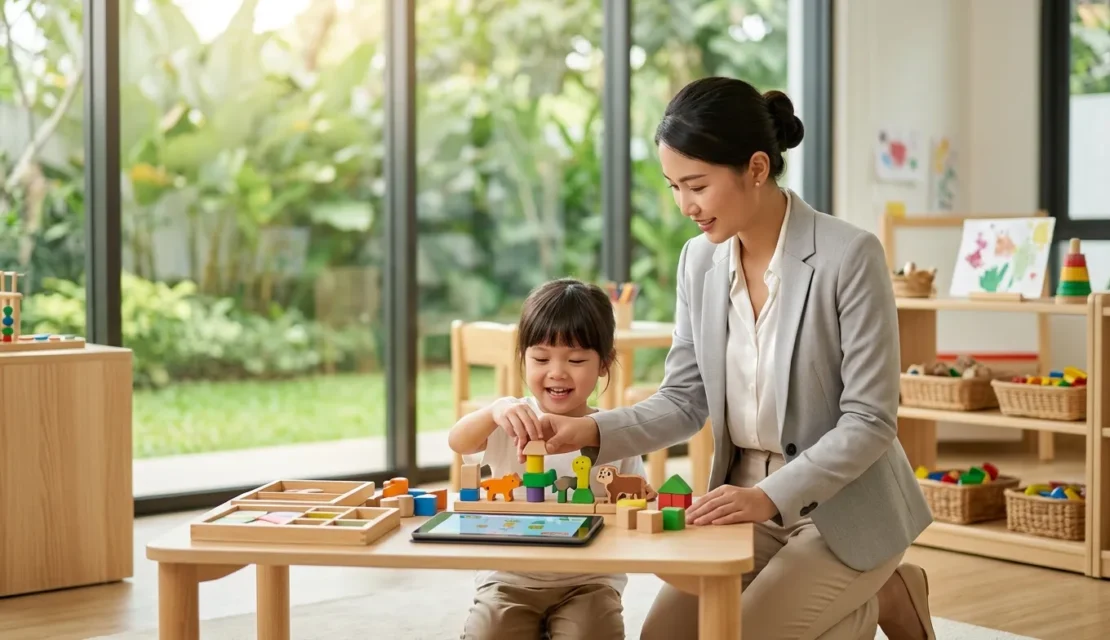
How We Blend Playful Learning at Apple Tree
At Apple Tree, we believe children learn best when they are engaged, supported, and having a genuinely good time. That is one reason our classroom approach focuses on active learning across English, Mathematics, Chinese, Science, Creativity, Music, Physical Education, Phonics, and more. We want children to explore ideas with their hands, minds, and hearts, not just stare at information from a distance.
If you explore our programs, you will see that we build learning around developmentally appropriate experiences for each age group, from Toddler to Kindergarten 2. We keep class sizes thoughtful so children receive personal attention, and we work closely with parents because growth happens best when school and home support each other.
A Fun Start Can Lead to Meaningful Learning
Augmented Reality games can be a helpful part of preschool learning when they are used with intention, moderation, and plenty of human connection. They can spark curiosity, strengthen early language and math skills, and make learning feel exciting for young children who are naturally eager to explore the world. Used wisely, they are not a replacement for childhood, but a playful tool that can enrich it.
If you are looking for a preschool that values joyful learning, strong foundations, and warm guidance for both children and parents, we would love to meet you. Come discover how Apple Tree Pre-School BSD helps children grow smart and happy together with parents. You can Chat with us on WhatsApp or call us at +62 888-1800-900 to learn more and register for a class.


Be the first to write a comment.