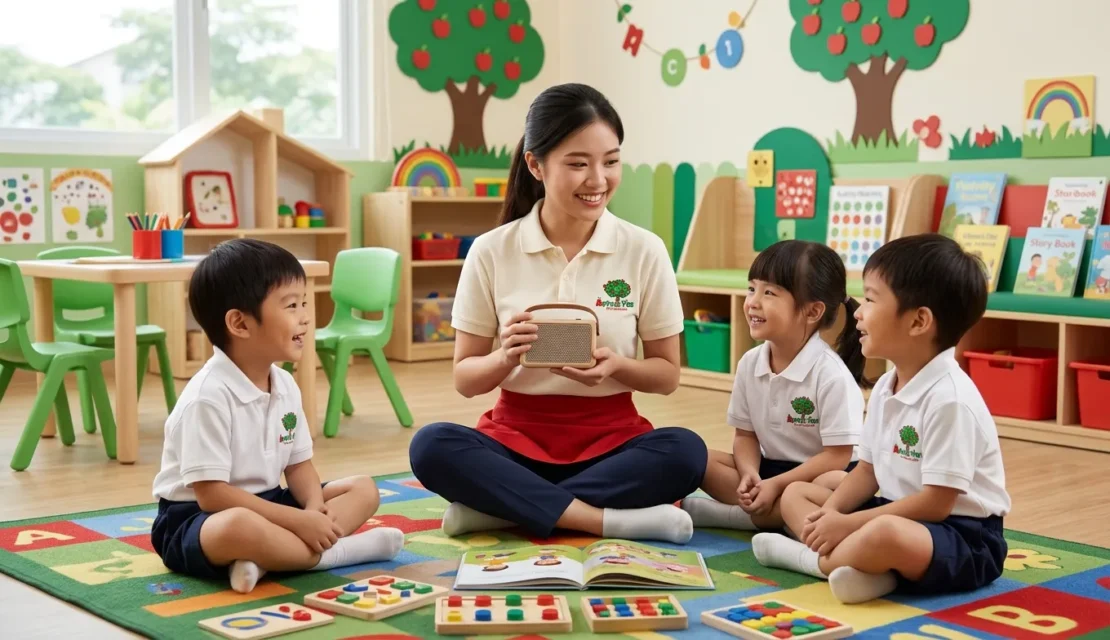
If you have ever tried to keep a young child focused for more than five minutes, you already know the struggle is very real. One minute they are listening sweetly, the next minute they are upside down on the sofa asking for snacks. That is why many parents are now exploring podcasts for kids as a simple, screen free way to build attention, language, and listening skills. At Apple Tree Pre-School BSD, located in the Educenter BSD Building, we often talk with parents about small daily habits that can make a big difference, and this is one of those surprisingly helpful tools.
The nice thing about podcasts is that they feel fun, not like a lesson wrapped in a serious face. Children get stories, songs, silly voices, and interesting facts, while you get a quiet little helper for focus training. When used thoughtfully, podcasts for kids can support routines at home and complement what children experience through our programs, where we nurture listening, language, confidence, and curiosity through our Singapore curriculum approach.
Podcasts for Kids and Why They Can Improve Focus
Many parents assume focus only grows when children sit still with worksheets or structured tasks. We have seen the opposite many times. Young children often focus better when they are relaxed, curious, and emotionally engaged.
That is exactly where podcasts for kids shine. Audio content invites children to listen carefully, imagine scenes in their minds, and follow a sequence without needing constant visual stimulation. It is a gentle workout for attention, and it feels more like play than practice.
Listening Builds Attention in a Natural Way
When children listen to a story or a short educational episode, they are learning to stay with one idea for a little longer. They tune in to voices, details, and sound patterns. This kind of active listening helps strengthen concentration in a very natural way.
It is also less overwhelming than fast moving videos. With audio, there are fewer distractions pulling them in ten directions at once. Their brains can slow down just enough to process, imagine, and stay present.
Podcasts Support Language and Self Control
Another reason podcasts for kids are so helpful is that they encourage children to pause and listen instead of reacting instantly. That may sound small, but for preschoolers, it is huge. Waiting for the next part of a story or listening for instructions builds patience and self regulation.
At the same time, children hear new vocabulary, sentence structures, and expressive ways of speaking. We love this because language growth and focus often develop side by side. A child who understands more can engage more, and a child who engages more tends to focus better.
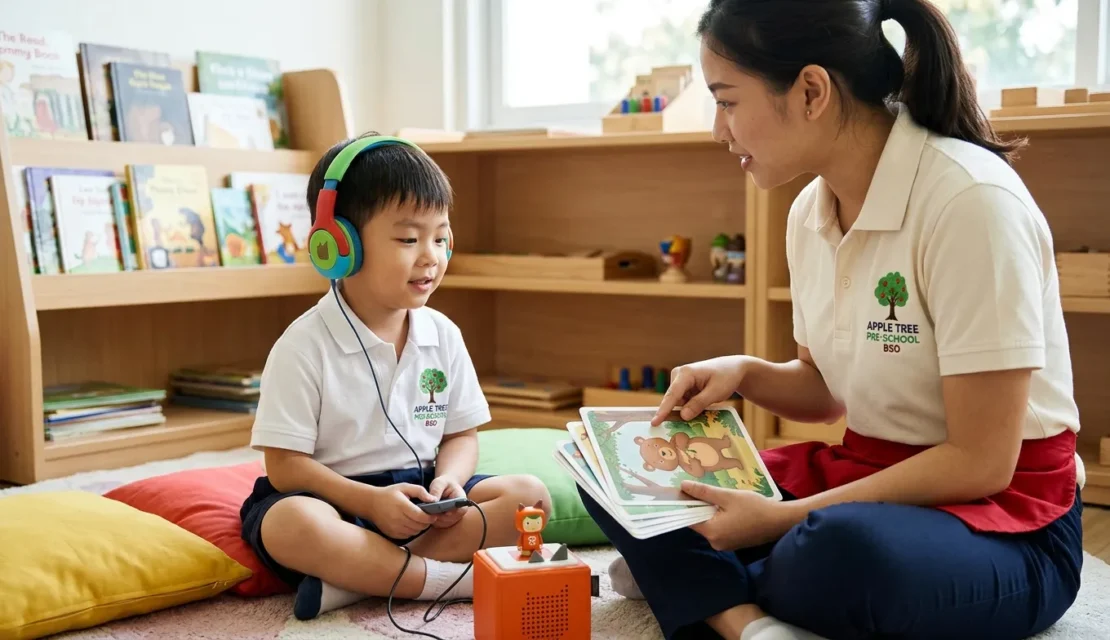
What Makes a Good Podcast for Young Children
Not every podcast made for children is automatically a great fit for preschool age listeners. Some are too long, too noisy, or packed with information in a way that makes everyone tired, including the grown up sitting nearby. Yes, parents count too.
When choosing podcasts for kids, it helps to keep a few simple things in mind.
Short Episodes Work Best
For younger children, shorter is usually smarter. Episodes around 10 to 20 minutes are often the sweet spot. They are long enough to hold attention, but short enough that children do not mentally wander off to think about dinosaurs, crackers, or whether socks are actually necessary.
Look for podcasts with:
- clear storytelling
- gentle pacing
- cheerful but not chaotic sound
- age appropriate themes
- simple educational value
Repetition Is a Good Thing
Parents sometimes worry that repeated episodes are boring. Children do not agree. In fact, repetition can improve comprehension and confidence. When children revisit a favorite episode, they start noticing details, remembering sequences, and predicting what comes next.
That kind of familiarity supports attention span because it makes listening feel successful. Success keeps children engaged. Engaged children are much easier to live with before lunch.
Recommended Types of Podcasts for Kids
Instead of chasing one perfect title, it is often more helpful to explore the kinds of audio content that match your child’s personality and developmental stage. Different children focus in different ways.
Story Podcasts
Story based podcasts for kids are wonderful for imagination, sequencing, and listening stamina. These are ideal for children who enjoy bedtime stories, pretend play, or dramatic voices. A well told story helps children stay with a beginning, middle, and end, which is great for cognitive development.
Educational Fact Podcasts
Some children love knowing how things work. If your child asks fifty questions before breakfast, a podcast with simple science facts, nature topics, or everyday life explanations can be a great fit. These support curiosity while still encouraging listening and attention.
Mindfulness and Calm Audio
For children who are easily overstimulated, calm audio or mindfulness style podcasts can be especially useful. These may include breathing prompts, relaxing stories, or quiet reflections. They can help children settle their bodies and minds, which often improves focus in daily routines.
Music and Rhythm Based Podcasts
Songs, chants, and rhythmic listening activities are excellent for young learners. Music helps with memory, pattern recognition, and language development. It also gives wiggly children a productive way to stay engaged instead of treating the sofa like a mountain climbing wall.
How to Use Podcasts for Kids at Home
Even the best content works better when it becomes part of a predictable routine. The goal is not to play audio all day like a tiny radio station. The goal is to use podcasts for kids intentionally.
Choose the Right Moments
Podcasts can work well during:
- quiet play time
- car rides
- after school wind down
- bedtime routines
- waiting time before meals or appointments
These moments already invite listening, so children are more likely to settle in and enjoy the experience.
Listen Together Sometimes
Independent listening is fine, but shared listening is even better. When you listen with your child, you can pause and ask simple questions like, “What happened next?” or “Which part did you like best?” That turns passive listening into a richer interaction.
It also helps you notice what captures your child’s attention. Some children love stories, others prefer facts, songs, or sound effects. Once you figure that out, choosing future podcasts for kids becomes much easier.
Avoid Overloading the Experience
Keep the setup simple. Do not combine podcasts with too many toys, screens, and background noise. If everything is happening at once, the focus benefit disappears.
Try one calm activity alongside listening, such as coloring, building blocks, or cuddling with a soft toy. That balance helps children stay engaged without becoming restless.
How Podcasts Connect With Preschool Learning
At preschool age, focus does not develop through pressure. It grows through meaningful experiences, consistent routines, and warm adult guidance. This is one reason we value activities that strengthen listening and attention in playful ways.
At Apple Tree Pre-School BSD, we support children through a Singapore curriculum that covers English, Mathematics, Chinese, Creativity, Social Studies, Science, Bahasa, Moral, Music, Physical Education, and Phonics. In our classrooms, children build focus through songs, storytelling, hands on exploration, guided routines, and interactive group learning.
That same philosophy can continue at home. When parents use podcasts for kids thoughtfully, they are giving children another chance to practice listening, attention, and imagination in a low pressure way. It is a lovely example of school and home working together, which is something we deeply believe in.
A Gentle Way to Help Your Child Focus More
If your child gets distracted easily, do not panic. Honestly, most young children are distractible. That is part of being little, curious, and wonderfully unpredictable. The good news is that small habits can slowly shape stronger attention over time, and podcasts for kids can be one of those easy habits.
The key is to choose age appropriate content, keep sessions short, and make listening part of a calm routine. Over time, you may notice your child becoming more patient, more engaged, and more able to follow stories or instructions. That is progress worth smiling about.
If you would like your child to grow in focus, confidence, and joyful learning through a warm preschool environment, we would love to welcome your family to Apple Tree. You can explore our programs and find the class that fits your child’s stage best. For more information, Chat with us on WhatsApp or call us at +62 888-1800-900. Come learn and grow with us at Apple Tree Preschool BSD.



Be the first to write a comment.