If you have ever sat beside your child during story time and watched them tap the page more enthusiastically than actually listen to the story, you are not alone. Many parents are now wondering whether Interactive ebooks can do more than entertain, and whether they can genuinely help children learn to read faster. At Apple Tree Preschool BSD, located in Educenter BSD Building, we see this curiosity all the time, especially from parents who want to support early reading without making it feel like a tiny homework session before dinner.
We understand the appeal. Interactive ebooks can read aloud, highlight words, animate pictures, and make reading feel exciting in a way that traditional books sometimes do not, especially for children who would rather wiggle, roll, and ask for snacks every three minutes. The big question is whether all that digital sparkle actually supports literacy, or simply distracts children with extra buttons to press.
Interactive Ebooks and Early Reading Development
Interactive ebooks can be helpful for preschool children, but the answer is not as simple as “more features means faster reading.” Children learn to read through a mix of listening, speaking, vocabulary building, phonics, print awareness, and repeated exposure to language. A digital book can support those skills, but only when it is used thoughtfully.
In other words, Interactive ebooks are a tool, not a magic trick. If only it were that easy, we would all just hand over a tablet and wait for a child to emerge reading chapter books and asking for library cards.
What makes Interactive ebooks different
Unlike regular picture books, Interactive ebooks often include voice narration, moving illustrations, word highlighting, sound effects, and touch based activities. These features can make stories feel more engaging, especially for children who are visual or auditory learners. For some children, that added engagement is enough to keep them interested long enough to actually absorb the language.
That matters because interest is not a small thing in early learning. If a child is tuned in, curious, and emotionally connected to a story, they are much more likely to build vocabulary and remember what they hear.
Why some children respond well to them
Not every child falls in love with books in the same way. Some children enjoy cuddling up with a printed story, while others need something more interactive to hold their attention. Interactive ebooks can help bridge that gap by turning reading into an active experience rather than a passive one.
For children who are just starting to recognize sounds, letters, and story patterns, that extra interaction can feel less intimidating. A child who might resist a traditional reading session may happily listen, tap, repeat words, and stay involved when the story responds to them.

Can Interactive Ebooks Help Children Learn to Read Faster?
Yes, Interactive ebooks can help some children progress more quickly in early literacy, but only in the right conditions. They work best when they support core reading skills rather than distract from them. A well designed ebook can strengthen reading readiness, but a noisy one can turn story time into a digital circus.
Here are some ways they may help children learn to read more effectively:
- They can model correct pronunciation through read aloud narration
- They can highlight words as they are spoken, helping children connect print and sound
- They can introduce new vocabulary with visual support
- They can encourage repeated reading because children enjoy the format
- They can support children who need multisensory learning experiences
These benefits are real, but only if the child is focused on the story itself. If your child spends the whole session tapping animated frogs and giggling at sound effects, the reading part may quietly disappear into the background.
Word highlighting can support print awareness
One useful feature in Interactive ebooks is text highlighting during narration. When children hear a sentence while also seeing the words light up, they begin to understand that spoken language connects to written text. This helps build print awareness, which is an important early reading skill.
It is a simple feature, but it can make a difference. Children start noticing that words move from left to right, that sentences have structure, and that print carries meaning. These are small steps, but they matter a lot in the early years.
Audio support can build confidence
Some children feel overwhelmed when they are asked to “read” before they are ready. Interactive ebooks can take some of that pressure away by offering audio support. A child can listen first, follow the story, and then begin joining in with familiar words and phrases.
That kind of support can make reading feel achievable rather than stressful. When children feel successful, they are more willing to keep trying, and that consistency is often what helps them progress.
When Interactive Ebooks Are Less Helpful
We have to be honest here, not all Interactive ebooks are created with learning in mind. Some are excellent, and some are basically games wearing a book costume. They may call themselves educational, but if the story is constantly interrupted by unrelated animations, music, and tapping activities, children can lose the thread completely.
This is where parents need to be a little picky, in the best possible way.
Too many features can distract from reading
Preschool children are easily drawn to movement and sound. That is normal, but it means extra features can sometimes pull attention away from the story. If every page invites a child to poke, swipe, and trigger random effects, they may remember the fireworks and forget the words.
That does not mean interactive features are bad. It just means they should support the story, not compete with it. Good Interactive ebooks keep the child engaged with the language, not only with the screen.
Reading still needs real human connection
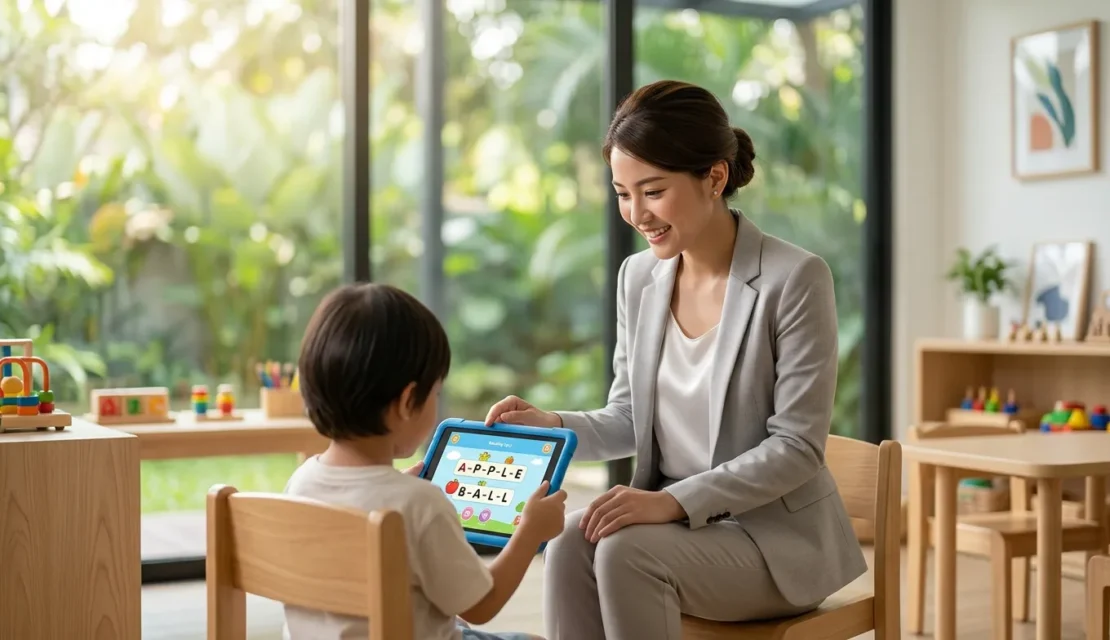
This part is important. Children do not learn best from a device alone. They learn best through interaction with people, conversation, repetition, and emotional connection. Even the most beautifully designed ebook cannot replace a parent or teacher who pauses to ask, “What do you think happens next?” or “Can you find the letter B?”
When you read with your child, whether it is on paper or on a screen, your presence makes the experience richer. You help build comprehension, attention, and confidence in ways that a device simply cannot.
How to Use Interactive Ebooks in a Smarter Way
If you want Interactive ebooks to support reading development, a few simple habits can make a big difference. The goal is to use them as part of a balanced literacy routine, not as the whole routine.
Here are a few practical tips:
- Choose ebooks with clear narration and simple, relevant interactivity
- Look for stories that highlight words while reading aloud
- Read together instead of handing over the device and walking away
- Pause often to talk about pictures, characters, and new words
- Balance digital reading with printed books and real world storytelling
- Keep sessions short and enjoyable, especially for preschoolers
We often tell parents that the best reading habit is the one your child actually looks forward to. If Interactive ebooks help open that door, great. Just make sure the door leads to language, not endless tapping.
Where Strong Reading Habits Really Begin
At Apple Tree, we believe children learn to read best when literacy is joyful, social, and woven into everyday life. That means songs, stories, phonics, conversations, pretend play, picture books, shared reading, and lots of chances to use language in meaningful ways. Technology can support that journey, but it works best when it is one part of a bigger, richer experience.
If you explore our programs, you will see that we focus on building strong foundations through active, age appropriate learning. From Toddler to Kindergarten 2, we help children grow in confidence, communication, and curiosity, which are all essential for reading readiness.

A Good Story Can Be the Start of Something Big
Interactive ebooks can absolutely support early literacy when they are chosen carefully and used with intention. They can boost engagement, model fluent reading, and help children connect spoken and written language in a way that feels fun and approachable. Still, the real secret to helping children learn to read faster is not just the format, it is the quality of the experience and the caring adult beside them.
If you want to give your child a warm, playful, and well guided start in literacy, we would love to welcome you to Apple Tree Preschool BSD. You can Chat with us on WhatsApp or call us at +62 888-1800-900 to learn more. Come play and learn with other children, and let us grow smart and happy together.




Be the first to write a comment.