If you have ever watched your child stare blankly at a history book and then suddenly light up when technology gets involved, you are definitely not alone. Many parents are now discovering that Virtual Reality learning can turn history from something that feels distant and dusty into something vivid, exciting, and surprisingly fun. At Apple Tree Pre-School BSD, located in the Educenter BSD Building, we love seeing how modern tools can spark curiosity, especially when they help children feel more connected to what they are learning.
The truth is, young children rarely fall in love with facts just because we hand them facts. They connect with experiences, stories, visuals, and a sense of wonder. That is why Virtual Reality learning has become such an interesting option for families at home. It gives children the feeling of stepping into another place and time, which is much more memorable than simply hearing, “This happened a long time ago,” while they quietly wonder what is for dinner.
Virtual Reality Learning Can Make History Feel Real
When children learn history through ordinary explanations alone, it can feel abstract. A castle is just a word. Ancient Egypt is just a picture. A famous monument is just another page to flip past while your child starts asking whether dinosaurs lived there too.
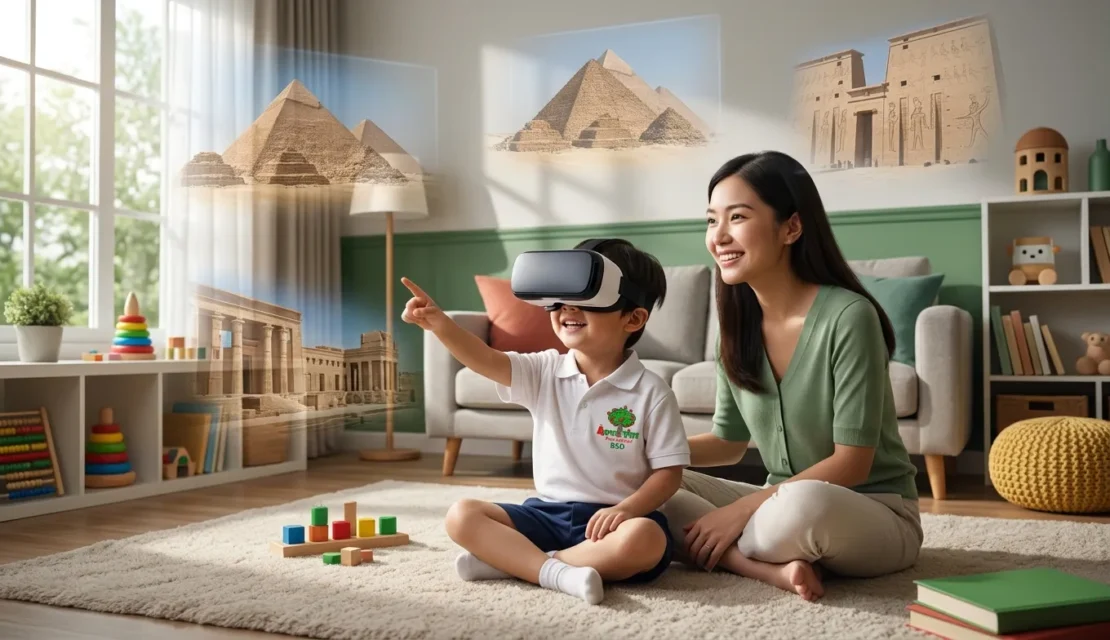
With Virtual Reality learning, history becomes more immersive. Children can explore ancient cities, walk through museums, and look around historical spaces as if they are really there. That feeling of being “inside” the lesson can make them far more engaged, and honestly, it can make parents feel a little more heroic too.
Why children respond so well to immersive learning
Children are naturally drawn to experiences that feel active and sensory. They learn best when they can imagine, move, notice details, and ask questions as they go. Virtual reality supports this by making learning feel like discovery rather than memorization.
This is especially helpful for history, because history depends on context. When children can see what a place might have looked like, they start to understand that real people lived there, worked there, and had stories of their own. That emotional connection matters more than most people realize.
Why parents appreciate it too
Let us be honest, if a learning activity keeps your child interested without involving a battle over worksheets, that already feels like a win. Virtual reality can offer a fresh alternative when your child seems restless or bored with more traditional materials.
It also creates opportunities for shared learning. You can explore together, ask questions together, and laugh together when your child confidently announces that an ancient emperor “probably needed a snack.”
Fun Ways to Use Virtual Reality Learning for History at Home
You do not need to turn your house into a futuristic museum lab to make this work. In many cases, simple and guided use of VR experiences can already introduce history in a fun and age appropriate way.
Visit famous landmarks without getting on a plane
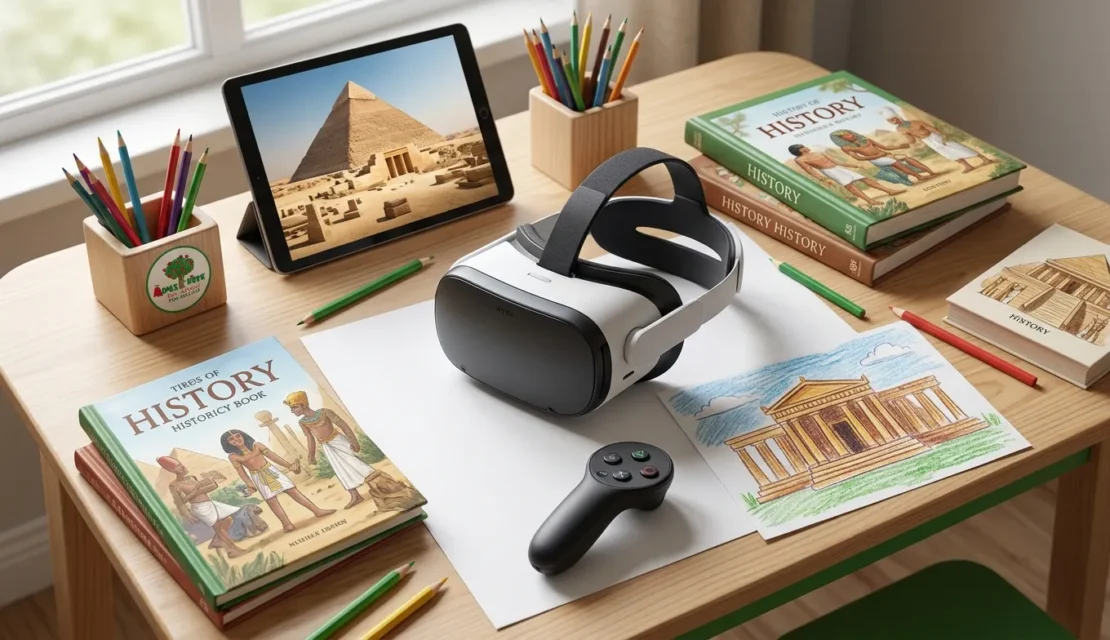
One of the easiest ways to begin Virtual Reality learning is by virtually visiting famous historical landmarks. Children can explore places like pyramids, castles, temples, and old cities while staying comfortably at home in BSD, still wearing pajamas if necessary. We do not judge, and honestly, children learn very well in pajamas.
This kind of virtual visit helps history feel concrete. Instead of hearing a name and trying to imagine it, your child gets a visual experience that adds scale, texture, and atmosphere.
Explore museums in a more engaging way
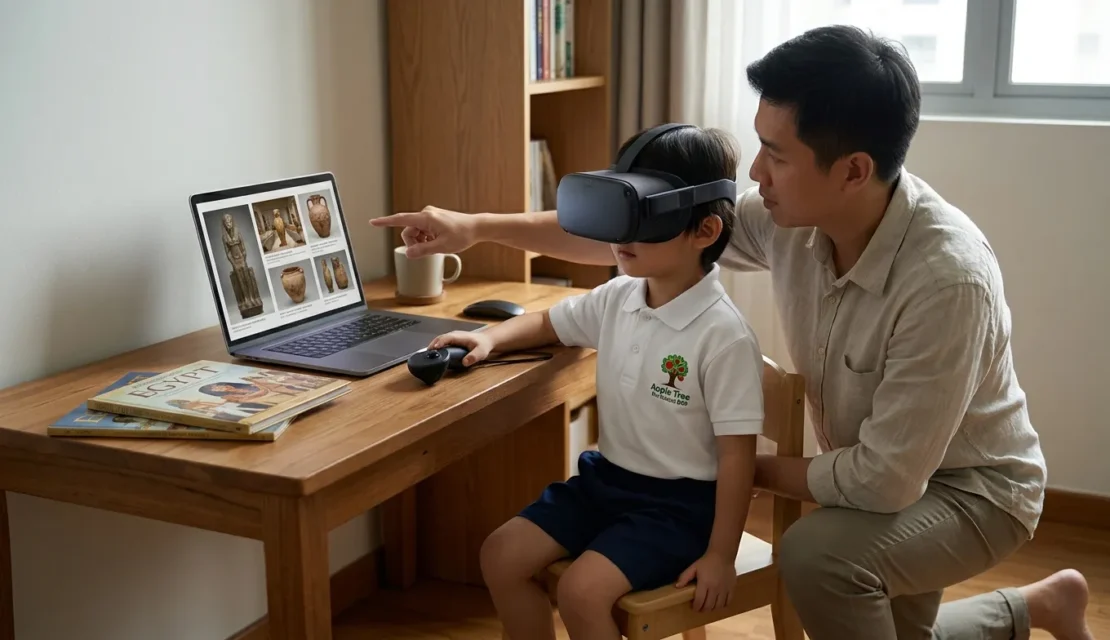
Many museums now offer virtual tours or immersive digital experiences. This can be a lovely introduction to history for children who are still building their attention span. They can look at artifacts, statues, paintings, and old objects with much more curiosity when the experience feels interactive.
To make it even better, sit with your child and ask simple questions:
- What do you notice first?
- Which object looks the most interesting?
- What do you think people used this for?
- Does this place feel old, grand, mysterious, or funny?
Questions like these turn Virtual Reality learning into a conversation, not just passive watching.
Recreate historical moments through storytelling
After a VR session, invite your child to retell what they saw. Maybe they visited an ancient building, a royal palace, or an old marketplace. Ask them to imagine who lived there, what people wore, what they ate, and what a normal day might have looked like.
This is where the magic really happens. History stops being just visual input and becomes part of your child’s imagination. We often say that when children tell a story back to us, that is when we know the learning has started to stick.
How to Keep Virtual Reality Learning Child Friendly
As exciting as it is, Virtual Reality learning works best when it is used thoughtfully. Young children do not need long sessions or overly intense content. A short, guided experience is usually much more effective.
Choose age appropriate content
Not every VR experience is designed for young children. Some are too complex, too fast, or filled with information that may fly right over their heads. Look for simple, visual, child friendly options that introduce historical places and ideas in a calm way.
A good rule is to keep it clear, short, and meaningful. If it feels like too much, it probably is. If it sparks questions and excitement, you are on the right track.
Keep sessions short and balanced
Children benefit more from short bursts of focused engagement than from long stretches that leave them tired or overstimulated. Around 10 to 15 minutes can be plenty for younger learners, especially if you follow it with discussion, drawing, or pretend play.
You can balance VR with simple follow up activities such as:
- drawing a historical place they visited
- building a “castle” from blocks
- dressing up as explorers or travelers
- telling a bedtime story inspired by the experience
This keeps Virtual Reality learning grounded in real interaction, which is important for early childhood development.
Stay involved as a parent
Children learn more deeply when an adult joins in. You do not need to become a history professor overnight. Just be present, curious, and willing to ask easy questions.
Your voice and attention help children organize what they experience. Even a simple comment like, “That room looks huge, who do you think stood there?” can open up great conversations and boost understanding.
What Children Can Gain Beyond History Knowledge
One thing we really appreciate about Virtual Reality learning is that the benefits often go beyond the topic itself. Yes, children may learn about historical places and cultures, but they also build language, observation skills, listening, and curiosity.
They begin asking more thoughtful questions. They compare one place with another. They use descriptive language. They try to imagine how people lived in different times. These are wonderful foundations for broader learning.
At Apple Tree Pre-School BSD, we value that kind of whole child development. Through our Singapore based curriculum, children grow in English, Mathematics, Chinese, Creativity, Social Studies, Science, Bahasa, Moral, Music, Physical Education, and Phonics. You can explore our programs to see how we support children at each stage, from toddler years through Kindergarten 2.
Turning Curiosity Into a Love of Learning
The most exciting part of Virtual Reality learning is not just that it looks impressive. It is that it can help children feel genuinely curious about the world and the people who came before them. That sense of wonder is powerful, and once it appears, learning becomes much easier and much more joyful.
If your child enjoys stories, visuals, and hands on exploration, using VR to learn history at home can be a fun and meaningful option. And if you want that same spirit of curiosity, confidence, and joyful learning to grow in a warm preschool environment, we would love to welcome your family. To learn more about Apple Tree Preschool BSD, Chat with us on WhatsApp or call us at +62 888-1800-900. Register now and come play and learn with other children.


Be the first to write a comment.