


If an inconsistent bedtime routine has turned your evenings into a strange little circus of one more story, one more drink, one more trip to the toilet, and one child suddenly remembering seventeen important thoughts about dinosaurs, you are absolutely not alone. At Apple Tree Pre-School BSD, near Educenter bsd, we hear this from parents all the time, because bedtime can quietly become the most unpredictable part of the day. The reassuring news is that better sleep usually does not begin with a miracle trick, it begins with a routine that feels calm, steady, and easy for your child to trust.
Children thrive when life has a rhythm. They may spend half the day resisting that fact with great passion, of course, but their bodies and brains still love predictability. When bedtime changes from night to night, sleep often becomes harder, emotions run higher, and the whole house starts feeling a bit frayed around the edges.
Why an Inconsistent Bedtime Routine Causes So Much Trouble
An inconsistent bedtime routine confuses the body’s internal clock. Young children do not just fall asleep because the adults say, “Right, that is enough now.” Their brains need cues that sleep is coming, and those cues work best when they happen in the same order, at around the same time, every evening.
When bedtime moves around too much, children often become overtired. And this is the truly annoying part, overtired children do not always look sleepy. They may look louder, sillier, clingier, or suddenly full of mysterious energy, which feels deeply unfair when you are the one who just wants them in pajamas.
Common signs your routine is too inconsistent
You may be dealing with an inconsistent bedtime routine if you notice things like:
- Bedtime changes a lot from one night to the next
- Your child resists sleep almost every evening
- They get a second burst of energy late at night
- They wake cranky, tired, or hard to settle in the morning
- Evenings feel rushed, chaotic, or emotionally loaded
- You rely on different methods every night just to get them asleep
If some of that feels painfully familiar, do not panic. This is fixable, and you do not need to become a military commander with a bath towel.
What a Consistent Bedtime Routine Actually Gives Your Child
A strong bedtime routine does much more than make evenings quieter. It supports emotional regulation, brain development, physical health, and your child’s sense of safety. When children know what is coming next, they spend less energy resisting and more energy settling.
Better sleep supports the whole child
When children sleep well, you usually see the difference everywhere else too. Their mood is steadier, their concentration improves, and they cope better with frustration during the day. Suddenly the child who was falling apart over a slightly crooked sandwich becomes much more manageable.
A consistent evening rhythm also supports learning. At school, rested children are better able to listen, participate, remember, and enjoy the day. That is one reason we care so much about healthy routines in the early years.
Routines reduce stress for parents too
Let us be honest, bedtime is not only about the child. An inconsistent bedtime routine can leave parents exhausted because every night feels like a fresh negotiation. When the steps become predictable, you stop having to invent new strategies while brushing tiny teeth and wondering where the missing stuffed rabbit has gone.
A routine gives you a script to lean on. And when you are tired, a script is a beautiful thing.
How to Build a Bedtime Routine That Actually Works
The best routines are not the fanciest ones. They are the ones you can repeat, calmly and consistently, even on a Wednesday when everyone is a little tired and somebody spilled water into a shoe.
Keep the steps short and clear
A good bedtime routine does not need to be long. In fact, shorter is often better because children can remember it and parents can actually keep doing it.
A simple flow might look like this:
- Bath or wash up
- Pajamas
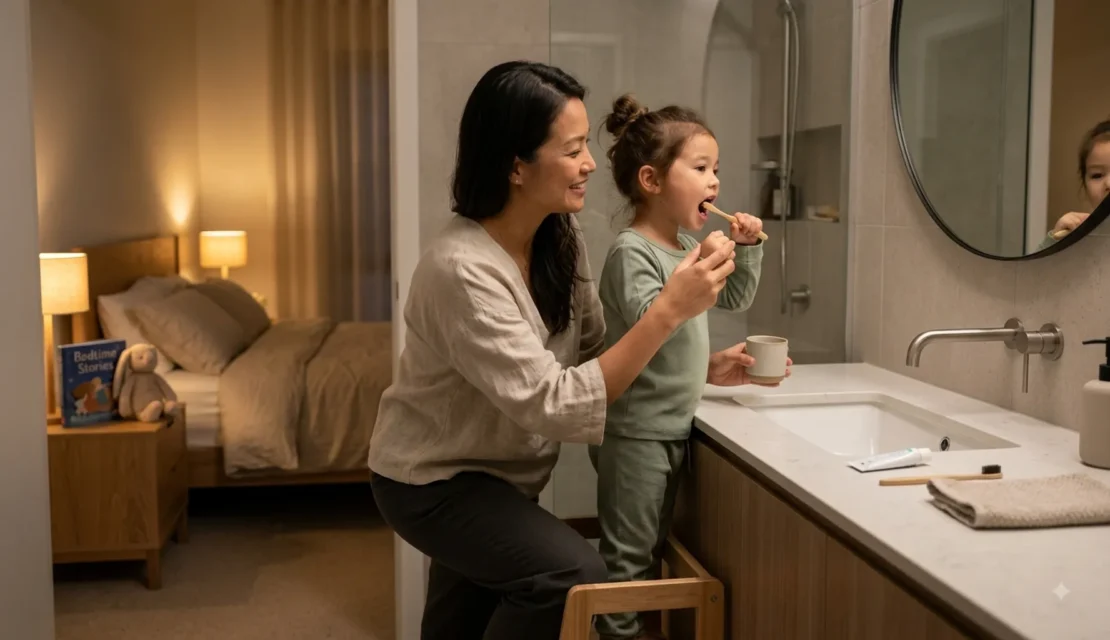
- Brush teeth
- One or two books
- Cuddle
- Lights out
This order matters because it becomes a familiar sequence that the brain starts to associate with sleep. Over time, just hearing the first step can help your child begin winding down.
Choose a realistic bedtime
A routine only works if the timing fits your child’s actual needs. If bedtime is too late, your child may already be overtired by the time the routine starts. If it is wildly different every evening, the body never quite catches on.
Try choosing a bedtime that you can keep most nights, especially on school nights. It does not have to be perfect to the minute, but regularity helps far more than many parents expect.
Making Evenings Calmer Before Bedtime Begins
Sometimes the problem is not the routine itself. Sometimes the hour before the routine is the real chaos zone. If the evening ends with screens, noisy play, sugar, and everyone rushing about, even the loveliest bedtime story may not be enough to fix the mood.
Lower the stimulation
Children settle more easily when the whole house starts to slow down. Softer lights, quieter voices, and calmer activities make a real difference. Think drawing, puzzles, books, or gentle music instead of high speed games and bright screens.
A few simple changes can help:
- Turn off screens at least an hour before bed
- Keep late snacks light and simple
- Avoid rough play right before pajamas
- Dim the lights if possible
- Use a calm voice even when you are tired
None of this has to look Instagram perfect. You are just helping the nervous system get the message that the day is closing.
Prepare for tomorrow before bedtime
An inconsistent bedtime routine often gets worse when parents are trying to do everything at once. Packing bags, finding uniforms, and making last minute decisions during the bedtime hour can make the whole atmosphere feel rushed.
If you can, set out clothes, pack bags, and sort tomorrow’s essentials earlier in the evening. This frees up bedtime to feel more connected and less like a family emergency with toothbrushes.
What to Do When Your Child Pushes Back
Even a great routine may get resistance at first, especially if bedtime has been flexible for a while. That does not mean the routine is not working. It usually means your child is adjusting.
Stay warm and steady
Children respond best when you are calm, kind, and clear. You do not need a big lecture. You just need confidence.
You can say things like:
- “It is bedtime now”
- “I know you want one more game, and now it is time to rest”
- “We can do that tomorrow”
- “I am here, and the routine stays the same”
Warmth helps your child feel safe. Steadiness helps them trust the boundary.
Expect progress, not perfection
Some nights will still wobble. Someone will remember they urgently need a purple sock, or ask a philosophical question about the moon just as the lights go out. That is normal. Success is not a magical bedtime with angelic silence. Success is a routine that gets easier and more familiar over time.

Better Sleep Grows in the Right Environment
At Apple Tree Pre-School BSD, we believe strong routines help children grow smart and happy together with parents. Sleep, emotional regulation, independence, and learning are all connected, which is why the daily rhythm matters so much in the early years.
If you would like to explore our programs, we would love to show you how we support children through structured days, warm guidance, and joyful learning. Our location in the Educenter BSD Building also makes daily routines easier for many busy BSD families, and honestly, anything that makes family life smoother deserves a little celebration.
A Kinder Evening Can Change the Whole Day
If an inconsistent bedtime routine has been making evenings harder than they need to be, take heart. Small, repeatable changes can lead to calmer nights, better sleep, and happier mornings. Children do not need a perfect bedtime, they need a dependable one.
We would be happy to support your family with a preschool environment that values routine, confidence, and gentle growth at every stage. Chat with us on WhatsApp or call +62 888-1800-900 to learn more.
Register now, and come play and learn with other children.





Be the first to write a comment.