
If you have ever found yourself reacting to your child with surprising intensity, maybe over a spilled drink, a loud “no,” or a bedtime protest that somehow felt far bigger than the moment itself, you are not imagining things. Very often, Parents’ inner child quietly shows up in everyday family life, shaping reactions, expectations, and emotional patterns in ways we do not always notice at first. At Apple Tree Preschool BSD, located in the Educenter BSD Building, we see every day how deeply family emotions and child development are connected, and how understanding yourself can be just as important as understanding your child.
This topic matters because parenting is rarely only about the present moment. Sometimes you are responding not just as the adult in the room, but also as the child you once were. That sounds dramatic, but honestly, it often shows up in very ordinary situations, like feeling unusually hurt when your child rejects your help, or becoming overly anxious when they struggle socially. The good news is that once you begin to notice these patterns, you can parent with more calm, clarity, and compassion.
Parents’ Inner Child and Why It Matters in Parenting
When people talk about Parents’ inner child, they usually mean the emotional part of you that still carries memories, needs, fears, and coping habits from childhood. It is not some mystical floating version of your five year old self wearing a paper crown. It is simply the part of your emotional world shaped by early experiences.
That inner child can hold lovely things, joy, creativity, playfulness, tenderness, and also harder things, like shame, fear of rejection, or a strong need to please others. When you become a parent, those old emotional patterns often get stirred up because children naturally bring you back into close contact with vulnerability, dependence, noise, need, and unpredictability. In other words, all the things childhood contains in generous quantities.
Why parenting can trigger old feelings so quickly
Children are incredibly good at reaching emotional places you did not realise were still sensitive. A child’s crying may remind you of how emotions were handled in your own home. A child’s defiance may touch an old wound around control, respect, or feeling unheard.
This is why Parents’ inner child can influence parenting so strongly. The reaction you have may be partly about your child, and partly about something older that gets activated in you. Recognising that does not make you a bad parent. It makes you a more aware one.
How Parents’ Inner Child Shows Up in Daily Family Life
The influence of Parents’ inner child is not always obvious. It usually appears in patterns, especially the moments that seem bigger emotionally than they “should” feel.
Overreacting to normal child behaviour
Sometimes a very normal child behaviour can trigger a very intense adult reaction. A child refusing to listen, making a mess, whining repeatedly, or saying “I do not like you” can stir something surprisingly painful.
That intensity often has a story behind it. If you grew up needing to be obedient, quiet, or emotionally careful, your child’s natural behaviour may feel threatening, disrespectful, or overwhelming in a way that has more to do with your history than with the child in front of you.
Becoming overly permissive or overly strict
Parents’ inner child can also influence boundaries. Some parents become very strict because chaos felt unsafe in their own childhood. Others struggle to say no because they remember feeling controlled, criticised, or powerless growing up.
Neither response comes from nowhere. Both often come from an inner attempt to protect the self, or to avoid recreating painful experiences. The challenge is that your child still needs balanced guidance, not only your reaction against the past.
Wanting to give your child everything you missed
This is one of the most tender ways the inner child appears. If you lacked affection, freedom, praise, or emotional safety growing up, you may feel determined to make sure your child never feels those absences.
That impulse comes from love, and we want to honour that. But sometimes it can also lead to overcompensating, overprotecting, or struggling to tolerate your child’s frustration because it awakens your own old pain. This is where awareness becomes so valuable.
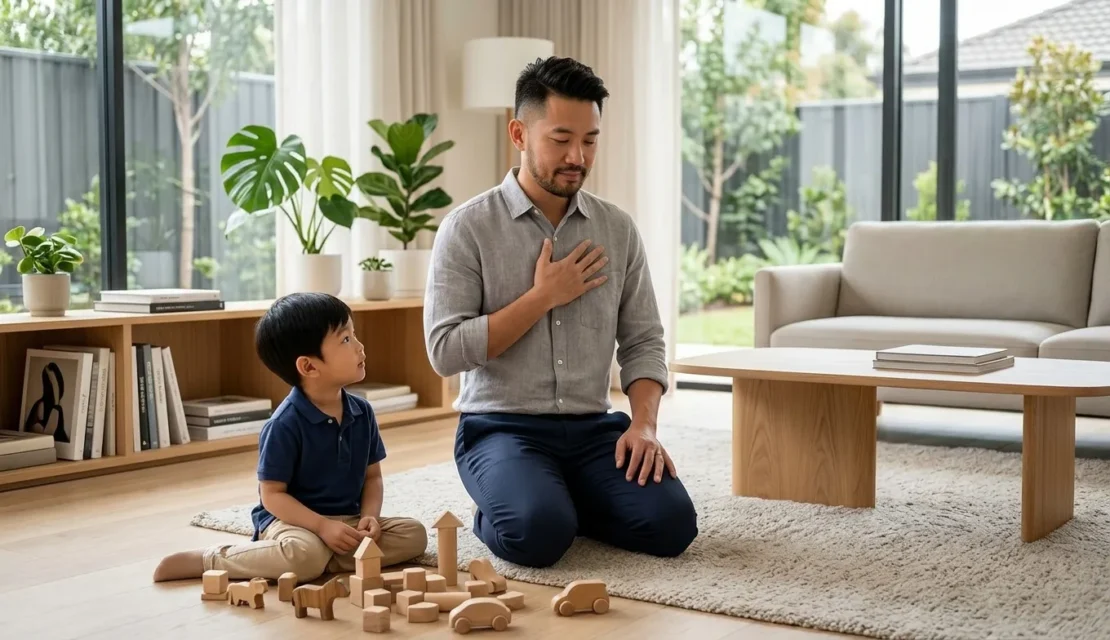
The Healthy Side of Parents’ Inner Child
The phrase Parents’ inner child can sound heavy, but it is not all about wounds and triggers. Your inner child also carries gifts that can make parenting richer and warmer.
Playfulness and imagination
Parents who stay connected to their playful side often find it easier to enter a child’s world. You can build blanket forts, make silly voices, dance in the kitchen, or turn bath time into a pirate mission with very little persuasion.
That playful energy matters. Children thrive when adults can meet them with delight, not just instruction. Sometimes your inner child is the reason you can still laugh at nonsense and appreciate a cardboard box as a spaceship.
Empathy for children’s feelings
If you remember what it felt like to be small, powerless, embarrassed, or misunderstood, you may be especially sensitive to your child’s emotional world. That empathy can be a real strength.
It can help you pause before shaming, listen before correcting, and respond with warmth even when your child is having a hard moment. In that sense, Parents’ inner child can make you more emotionally attuned, not less.
How to Work with Parents’ Inner Child in a Healthy Way
Awareness is the turning point. You do not need to become perfectly healed, permanently calm, and emotionally enlightened by next Tuesday. You just need to begin noticing what belongs to the present, and what may be echoing from the past.
Pause and name your reaction
When a situation feels unusually intense, ask yourself a quiet question: “What is being touched in me right now?” You may not always know immediately, but even that pause creates space between feeling and reacting.
Often, that moment of reflection is enough to soften your response. Instead of acting only from old pain, you can respond more intentionally to the child in front of you.
Separate your story from your child’s story
Your child is not you, and their childhood does not have to repeat yours. That sounds simple, but it is powerful. A child having a tantrum is not necessarily becoming “spoiled.” A child wanting independence is not rejecting you. A child making mistakes is not a sign that you are failing.
This is one of the most helpful reminders when thinking about Parents’ inner child. Your history matters, but it does not need to control the meaning you assign to every parenting moment.
Practise repair, not perfection
All parents get triggered sometimes. All parents lose patience. The goal is not flawless parenting. The goal is being willing to repair, reconnect, and grow.
When you say, “I was too harsh just now, and I am sorry,” you are doing something deeply powerful. You are showing your child that relationships can survive mistakes, and you are also giving your own inner child something they may not have received enough of, accountability with love.

Why the Right School Environment Supports the Whole Family
At Apple Tree Preschool BSD, we believe children flourish best when parents feel supported too. Parenting does not happen in isolation, and emotional awareness at home is strengthened when children are also guided with warmth, structure, and understanding at school.
That is why our environment is designed to support not only academic readiness, but also emotional safety, respectful routines, and strong parent school partnership. Through our programs, families can find a place where children grow smart and happy, while parents feel understood rather than judged.
When You Understand Yourself, Parenting Feels Lighter
Understanding Parents’ inner child does not mean blaming your past for every hard parenting day. It means noticing that your emotional history matters, and that self awareness can help you parent with more gentleness, balance, and wisdom. The more you understand your own patterns, the more freedom you have to choose how you want to respond to your child now.
If you are looking for a preschool that values emotional development, strong family connection, and joyful learning, we would love to welcome you. Chat with us on WhatsApp or call us at +62 888-1800-900. Come play and learn with other children at Apple Tree Preschool BSD.




Be the first to write a comment.