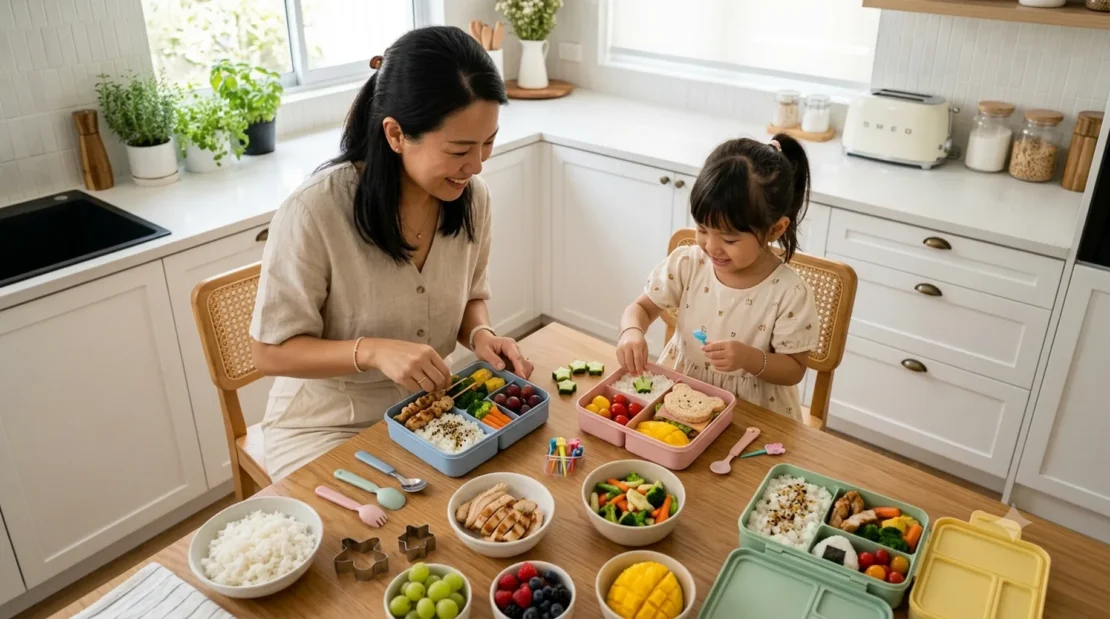
Packing lunch for a preschooler can sometimes feel like preparing food for the toughest restaurant critic in BSD. You carefully arrange rice, chicken, vegetables, and fruit, only to discover later that the crackers disappeared while everything else came home looking suspiciously untouched. That is exactly why we believe practical preschool lunchbox ideas should be simple, familiar, nutritious, and realistic for Indonesian families.
At Apple Tree Pre-School BSD, located inside Educenter bsd, we see how children gradually develop independence through ordinary daily routines, including mealtimes. When food is easy to recognize, comfortable to hold, and served in manageable portions, children may feel more confident exploring what is inside their lunchbox.
We also know that parents are busy. Nobody wants to create a miniature panda from seaweed at six in the morning while simultaneously looking for a missing school sock.
So, we have collected ten practical preschool lunchbox ideas using foods commonly found in Indonesian homes. Each recipe is designed to be approachable, preschool friendly, and flexible enough for you to adjust according to your child’s preferences.
Preschool Lunchbox Ideas for Indonesian Families
When we prepare a preschool lunchbox, we usually think about four things: carbohydrates, protein, fruit or vegetables, and practicality.
A balanced lunch does not need twelve different ingredients. For preschool children, simple combinations are often easier to manage and less intimidating.
You can also adjust the portion according to your child’s appetite. Some children happily finish a bowl of rice, while others appear to survive on three bites and pure enthusiasm.
Here are ten preschool lunchbox ideas you can rotate throughout the school week.
1. Chicken Vegetable Fried Rice
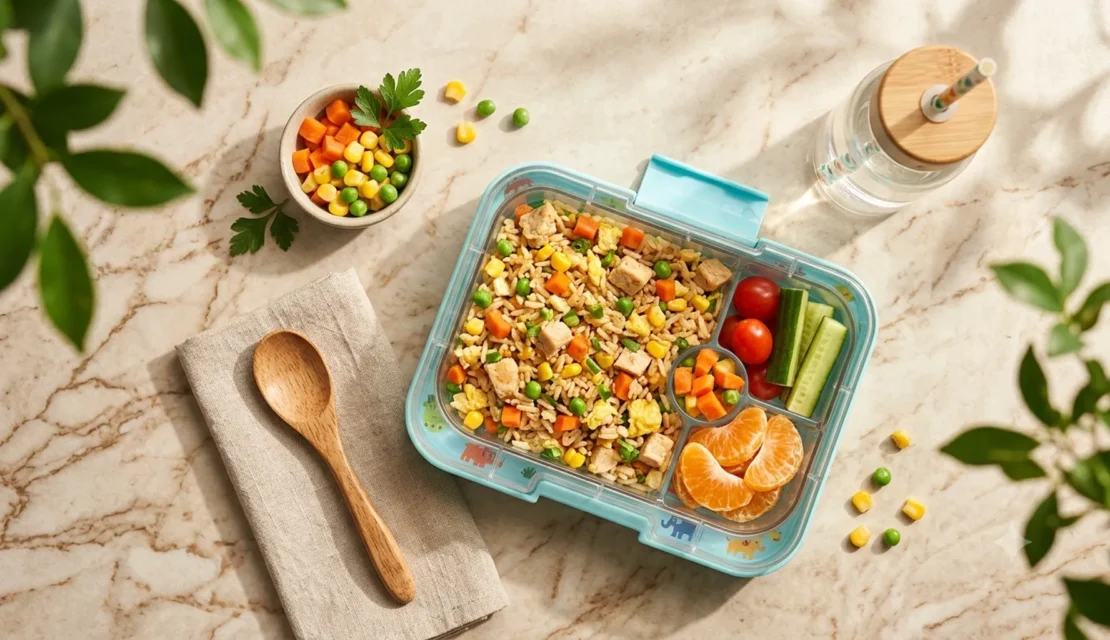
Chicken vegetable fried rice is one of our favorite lunchbox options because Indonesian children are usually already familiar with rice. Adding finely chopped vegetables helps introduce extra colors and textures without dramatically changing the meal.
Rice provides energy, while chicken and egg add protein. Carrot, corn, and peas also bring fiber, vitamins, and natural sweetness.
Tools
- Frying pan
- Spatula
- Cutting board
- Knife
- Small bowl
- Lunchbox container
Ingredients
- 1 cup cooked white rice
- 50 grams boneless chicken, finely diced
- 2 tablespoons finely chopped carrot
- 2 tablespoons sweet corn
- 1 tablespoon green peas
- 1 egg
- 1 teaspoon minced garlic
- 1 teaspoon sweet soy sauce
- 1 teaspoon light soy sauce
- 1 teaspoon cooking oil
How to Make It
- Heat the cooking oil in a frying pan over medium heat, then sauté the garlic gently until fragrant.
- Add the finely diced chicken and stir regularly until every piece turns opaque and cooks completely through.
- Add chopped carrot, sweet corn, and green peas, then stir for several minutes until the vegetables soften slightly.
- Push the chicken and vegetables aside, then crack the egg into the empty section of the frying pan.
- Scramble the egg gently until cooked, then combine it evenly with the chicken and vegetable mixture.
- Add the cooked rice, breaking apart any clumps carefully so all ingredients distribute evenly throughout the pan.
- Pour in sweet soy sauce and light soy sauce, then stir until every grain becomes evenly seasoned.
- Continue cooking for two minutes, stirring gently so the rice stays fluffy and does not stick.
- Turn off the heat and cool the fried rice slightly before transferring it into your child’s lunchbox.
2. Mini Chicken and Cheese Sandwiches
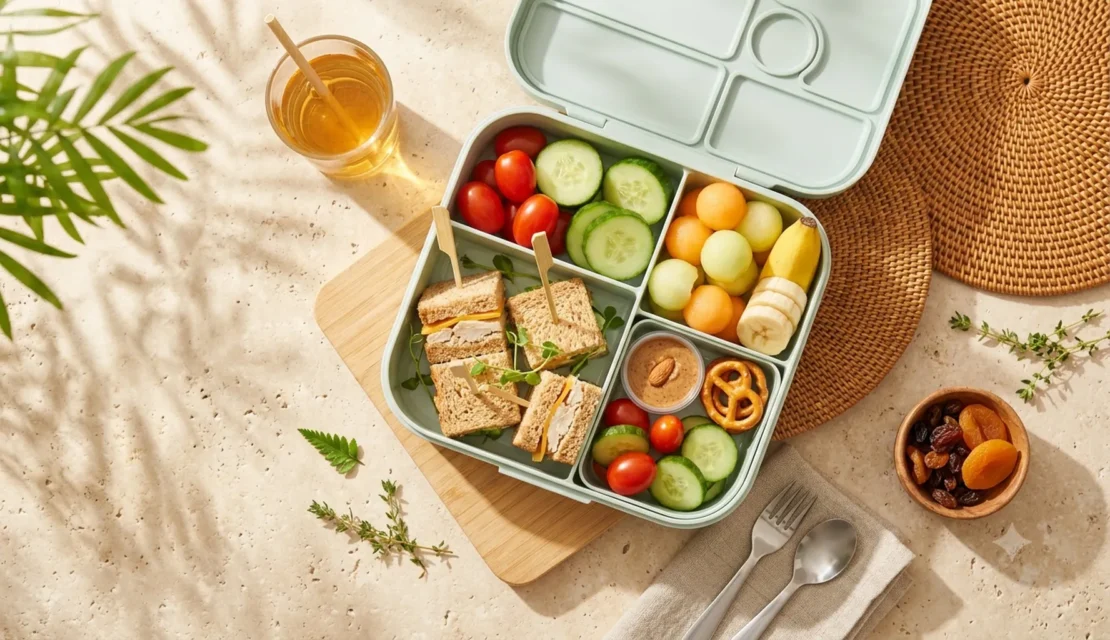
For mornings when cooking rice feels like one task too many, mini chicken sandwiches can save the day. They are easy to pack, easy for small hands to hold, and do not require reheating.
Chicken provides protein, bread supplies carbohydrates, and cheese contributes calcium and additional protein. A little grated carrot adds color without making the filling complicated.
Tools
- Mixing bowl
- Spoon
- Cutting board
- Knife
- Sandwich cutter or cookie cutter
- Lunchbox container
Ingredients
- 2 slices soft white or whole wheat bread
- 40 grams cooked shredded chicken
- 1 tablespoon mayonnaise
- 1 slice mild cheddar cheese
- 1 tablespoon finely grated carrot
- A small pinch of black pepper, optional
How to Make It
- Place the cooked shredded chicken in a mixing bowl, checking carefully for any large or tough pieces.
- Add mayonnaise and finely grated carrot, then mix thoroughly until the filling becomes creamy and evenly combined.
- Lay both bread slices on a clean cutting board, then spread the chicken mixture evenly over one slice.
- Place the cheese slice neatly over the chicken filling, covering as much of the bread surface as possible.
- Top with the second bread slice, then press gently so the sandwich holds together without squeezing out filling.
- Trim the crusts if your child prefers softer edges, or simply leave them on for extra texture.
- Cut the sandwich into small squares or fun shapes that preschoolers can hold and bite comfortably.
- Arrange the sandwiches in a dry lunchbox compartment so they stay neat and do not become soggy.
- Add sliced banana, melon, or papaya separately to give the lunchbox extra color, freshness, and natural sweetness.
3. Indonesian Corn Fritters With Rice
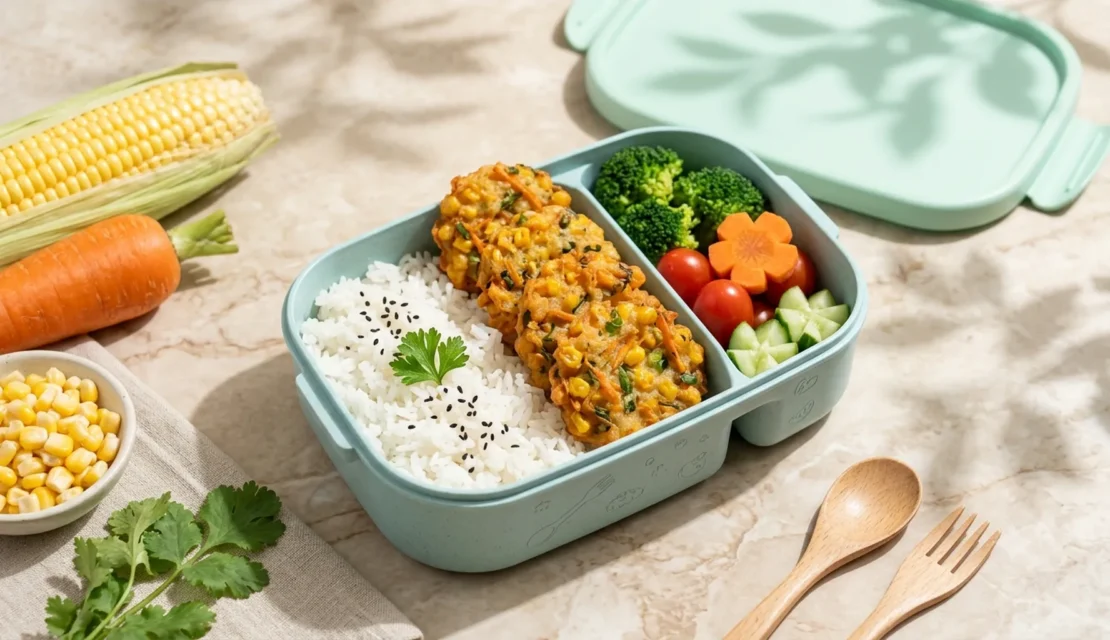
Bakwan jagung is familiar, slightly sweet, and easy to transform into a smaller preschool portion. Instead of making large fritters, we prepare little ones that are easier for children to pick up.
Corn provides carbohydrates and fiber, while egg adds protein. Grated carrot can also be included without changing the familiar corn flavor too much.
Tools
- Mixing bowl
- Spoon
- Frying pan
- Spatula
- Grater
- Paper towel
Ingredients
- 100 grams sweet corn kernels
- 1 egg
- 2 tablespoons flour
- 1 tablespoon grated carrot
- 1 tablespoon finely chopped spring onion
- 1 tablespoon water
- A small pinch of salt
- 1 teaspoon cooking oil
How to Make It
- Place the sweet corn in a mixing bowl, then lightly crush several kernels with a spoon for better binding.
- Add the egg, flour, grated carrot, chopped spring onion, water, and a small pinch of salt.
- Stir everything together until a thick batter forms and the vegetables are distributed evenly throughout the mixture.
- Heat a thin layer of cooking oil in a frying pan over medium low heat before adding batter.
- Spoon small portions of batter into the pan, leaving enough space between each fritter for easy turning.
- Flatten each portion gently with the back of a spoon so the fritters cook evenly in the center.
- Cook until the bottoms become golden, then flip carefully and cook the second sides until fully set.
- Transfer the fritters onto paper towel and allow any excess cooking oil to drain before cooling.
- Cool completely, then pack two or three mini fritters with a modest portion of plain steamed rice.
4. Chicken Teriyaki Rice Balls
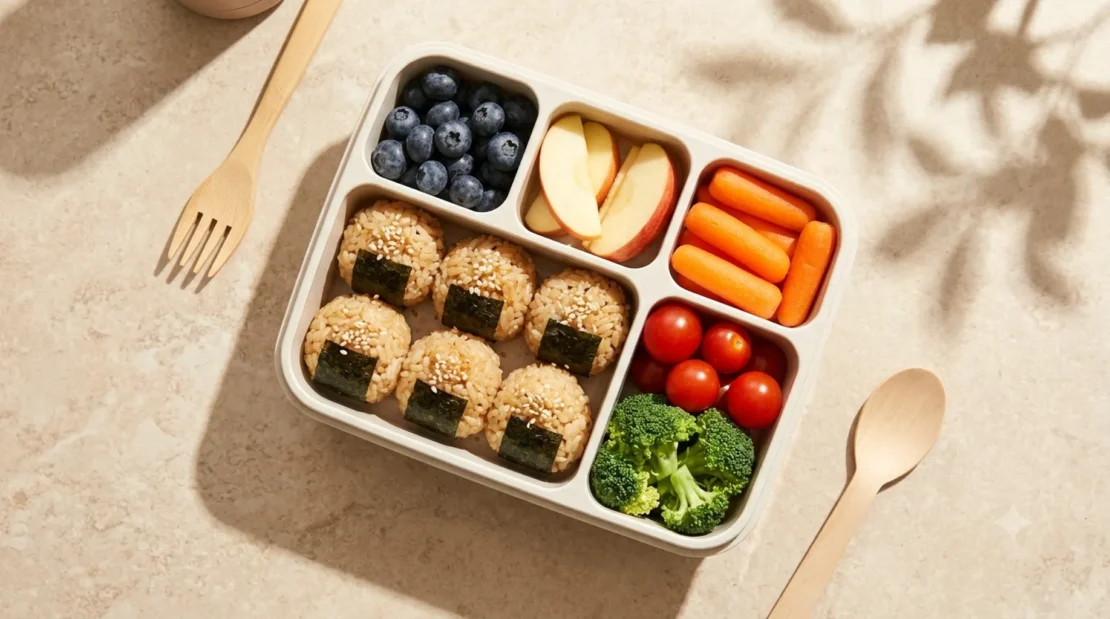
Rice balls make ordinary rice feel surprisingly exciting. For children who are developing independent eating skills, small rice balls can also be easier to handle than loose rice.
We use mild chicken filling with familiar sweet and savory flavors. The result is one of those preschool lunchbox ideas that looks playful without requiring complicated food decoration.
Tools
- Small saucepan
- Spoon
- Mixing bowl
- Plastic wrap
- Lunchbox container
Ingredients
- 1 cup warm cooked rice
- 60 grams cooked shredded chicken
- 1 teaspoon light soy sauce
- 1 teaspoon sweet soy sauce
- 1 teaspoon honey
- 1 tablespoon water
- 1 teaspoon sesame seeds, optional
How to Make It
- Combine shredded chicken, light soy sauce, sweet soy sauce, honey, and water in a small saucepan.
- Cook the mixture over low heat, stirring occasionally until the chicken absorbs the sauce and becomes slightly sticky.
- Remove the chicken from the heat and allow it to cool enough for safe and comfortable handling.
- Place two tablespoons of warm rice on plastic wrap, then flatten gently into a small round shape.
- Add one teaspoon of chicken filling in the center, keeping enough rice around the edges for sealing.
- Cover the filling with another small spoonful of rice, then bring the outer edges together carefully.
- Shape the wrapped rice gently into a firm ball, avoiding excessive pressure that could make it overly dense.
- Repeat the process until you have used all the rice and chicken filling prepared for the lunchbox.
- Sprinkle sesame seeds lightly if desired, making sure your child is already comfortable eating sesame products.
- Cool the rice balls completely before packing them tightly enough to prevent rolling around inside the lunchbox.
5. Mini Potato and Chicken Patties
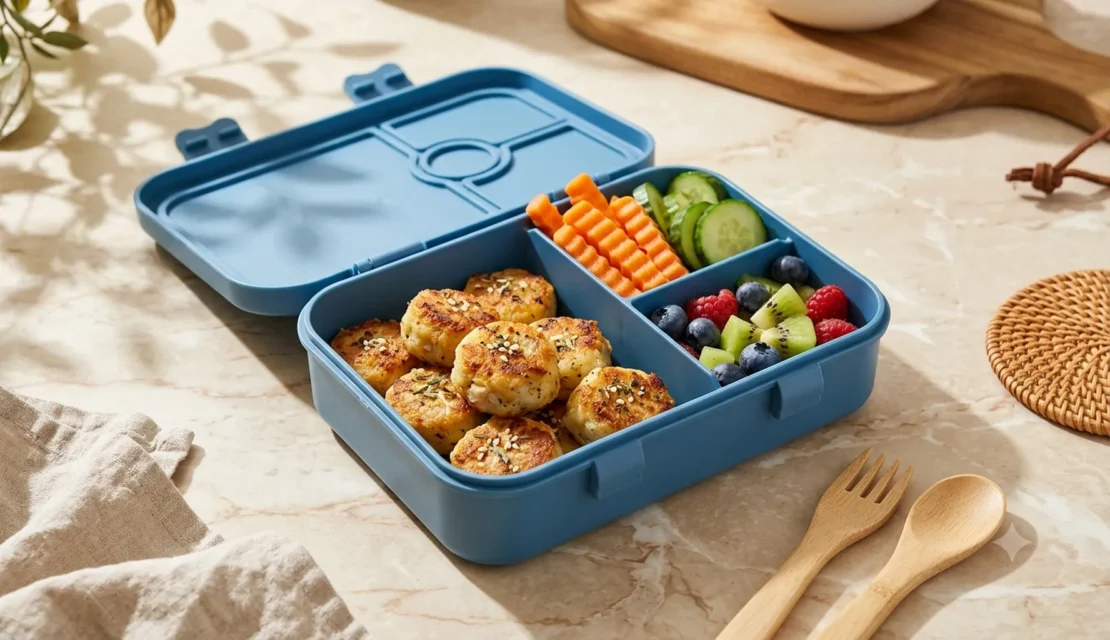
If your child needs a break from rice, potato patties are a practical alternative. Their soft texture can work particularly well for younger preschoolers who prefer foods that are easy to bite.
Potatoes provide carbohydrates, while chicken and egg contribute protein. Grated vegetables can also be mixed directly into the patties.
Tools
- Saucepan
- Potato masher
- Mixing bowl
- Frying pan
- Spatula
Ingredients
- 1 medium potato
- 50 grams cooked minced chicken
- 1 tablespoon grated carrot
- 1 egg
- 1 tablespoon breadcrumbs
- A small pinch of salt
- 1 teaspoon cooking oil
How to Make It
- Peel the potato, cut it into small chunks, then boil until completely tender when pierced with a fork.
- Drain the cooked potato thoroughly, then mash it while warm until smooth and free from large lumps.
- Add cooked minced chicken, grated carrot, egg, breadcrumbs, and a small pinch of salt to the potato.
- Mix everything thoroughly until the mixture becomes evenly combined and firm enough to hold its shape.
- Divide the mixture into small portions, then shape each portion into a flat patty for little hands.
- Heat cooking oil in a nonstick pan over medium low heat, then arrange the patties without overcrowding.
- Cook each patty until lightly golden underneath, then flip carefully and cook the opposite side completely.
- Transfer the patties to a clean plate and allow them to cool before placing them inside the lunchbox.
6. Mild Chicken Noodle Stir Fry
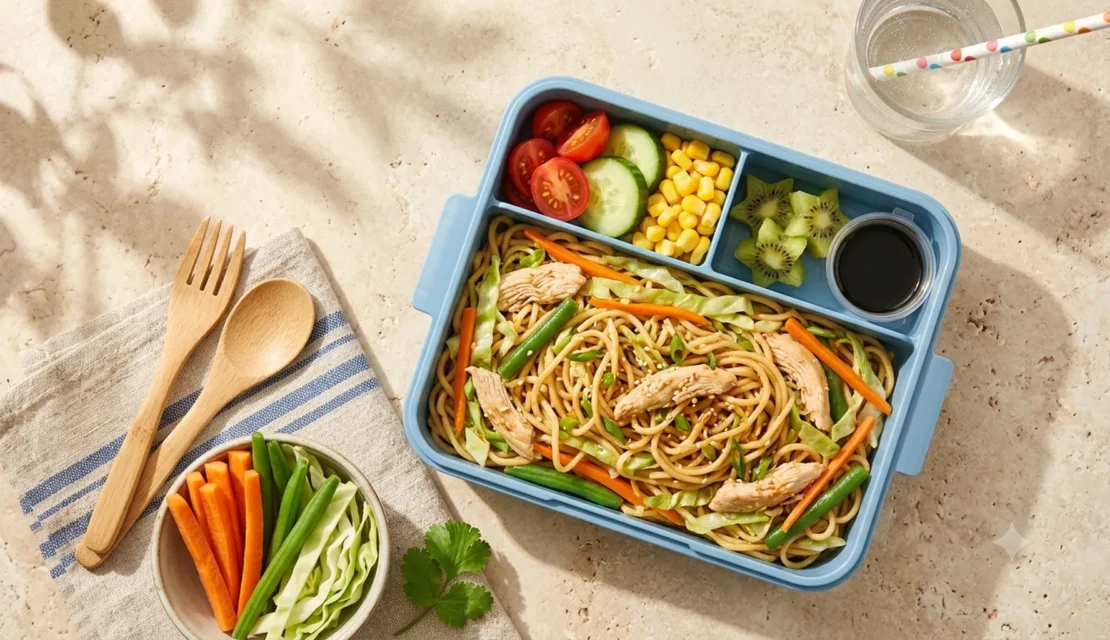
Noodles often earn immediate approval from preschoolers, so we like using them as a base for vegetables and protein. Cutting the noodles into shorter pieces can make lunchtime much less messy.
Chicken provides protein, while cabbage, carrot, and green beans add different textures and nutrients. We keep the seasoning mild so the flavors remain comfortable for young children.
Tools
- Saucepan
- Frying pan
- Tongs
- Knife
- Cutting board
- Clean kitchen scissors
Ingredients
- 80 grams egg noodles
- 50 grams chicken, thinly sliced
- 2 tablespoons shredded cabbage
- 1 tablespoon grated carrot
- 1 tablespoon chopped green beans
- 1 teaspoon sweet soy sauce
- 1 teaspoon light soy sauce
- 1 teaspoon cooking oil
How to Make It
- Bring water to a boil, cook the egg noodles according to package directions, then drain them thoroughly.
- Cut the cooked noodles into shorter lengths using clean kitchen scissors so preschoolers can eat them more easily.
- Heat cooking oil in a frying pan over medium heat, then add the thinly sliced chicken pieces.
- Stir the chicken frequently until fully cooked, ensuring no pink areas remain before adding the vegetables.
- Add shredded cabbage, grated carrot, and chopped green beans, then stir until they begin to soften.
- Add the drained noodles, sweet soy sauce, and light soy sauce, then toss everything together carefully.
- Continue cooking for two minutes so the noodles absorb flavor and the vegetables become pleasantly tender.
- Taste a small portion after cooling briefly, then adjust only if the seasoning needs to remain mild.
- Remove from heat and cool completely before transferring the noodles into a secure lunchbox container.
7. Tempeh Sweet Soy Rice Bowl
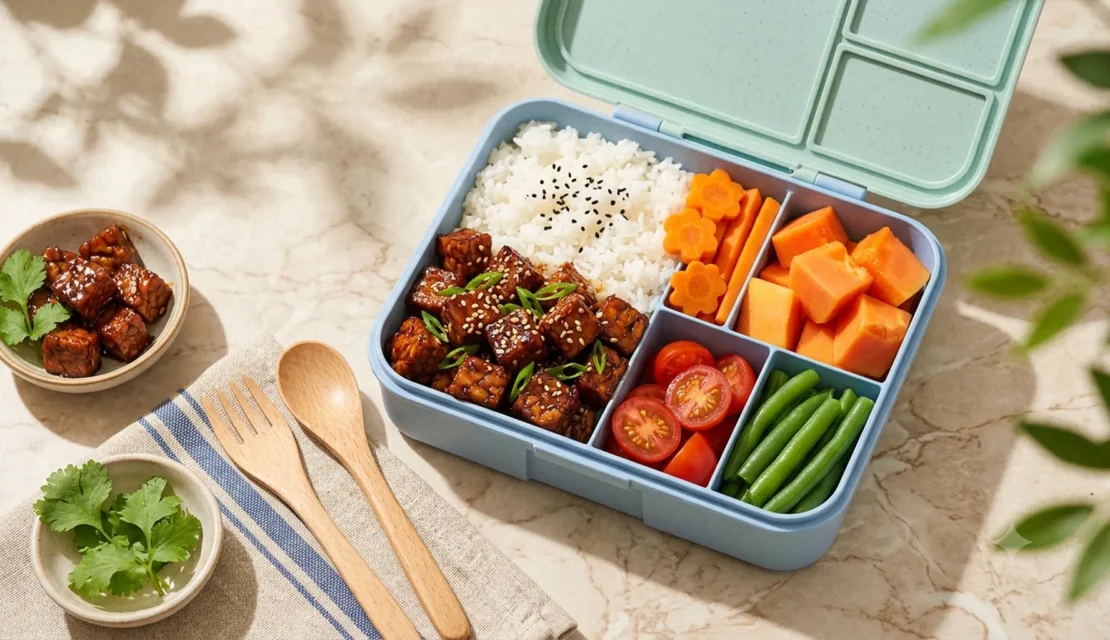
We could hardly make a list of Indonesian preschool lunchbox ideas without including tempeh. It is affordable, familiar, versatile, and easy to combine with rice.
Tempeh provides plant protein and several useful nutrients. Cooking it with a mild sweet soy glaze creates a flavor many Indonesian children already recognize.
Tools
- Frying pan
- Spatula
- Knife
- Cutting board
- Small bowl
Ingredients
- 70 grams tempeh
- 1 cup cooked rice
- 1 teaspoon sweet soy sauce
- 1 teaspoon light soy sauce
- 1 tablespoon water
- 1 tablespoon finely chopped carrot
- 1 teaspoon cooking oil
How to Make It
- Cut the tempeh into small even cubes so each piece cooks quickly and remains easy for preschoolers.
- Heat cooking oil in a frying pan over medium heat, then arrange the tempeh in one layer.
- Cook the tempeh until lightly golden on several sides, stirring gently to prevent the cubes from breaking.
- Add finely chopped carrot and cook for another minute until it begins to soften without becoming mushy.
- Pour in sweet soy sauce, light soy sauce, and water, then stir carefully to coat every piece.
- Reduce the heat and cook until most liquid evaporates and the sauce lightly glazes the tempeh.
- Prepare a small portion of warm steamed rice and spread it loosely inside the lunchbox compartment.
- Spoon the cooled tempeh mixture beside or over the rice, depending on how your child prefers eating it.
- Add a simple fruit portion, such as papaya or melon, in a separate compartment for extra freshness.
- Allow everything to cool completely before closing the lunchbox to reduce unwanted moisture and condensation inside.
8. Chicken and Spinach Omelette Rolls
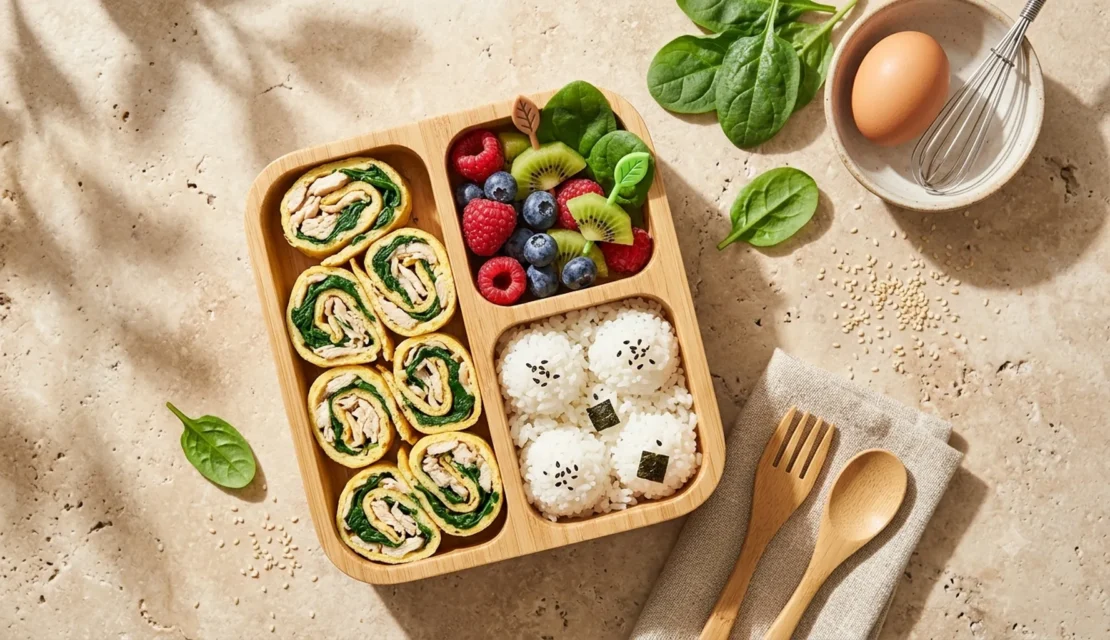
Omelette rolls are colorful, soft, and surprisingly convenient for lunchboxes. Cutting them into small pieces also makes them easy for preschoolers to eat independently.
Egg and chicken provide protein, while spinach and carrot add color and variety. You can serve the rolls alone or pair them with a small amount of rice.
Tools
- Mixing bowl
- Fork or whisk
- Frying pan
- Spatula
- Cutting board
- Knife
Ingredients
- 2 eggs
- 30 grams cooked minced chicken
- 1 tablespoon finely chopped spinach
- 1 tablespoon grated carrot
- 1 teaspoon cooking oil
- A small pinch of salt
How to Make It
- Crack the eggs into a mixing bowl, then whisk until the yolks and whites are completely combined.
- Add cooked minced chicken, chopped spinach, grated carrot, and a small pinch of salt to the eggs.
- Whisk again until all ingredients are evenly distributed, especially the finely chopped vegetables and chicken pieces.
- Heat cooking oil in a nonstick frying pan over low heat, spreading it lightly across the surface.
- Pour in the egg mixture and tilt the pan gently so it forms an even thin layer.
- Cook until the surface is almost set, then carefully roll the omelette from one side using a spatula.
- Continue cooking the rolled omelette for another minute, turning gently so the center cooks completely through.
- Transfer the omelette to a clean cutting board and let it cool enough to slice neatly.
- Cut into small bite sized pieces, then pack with rice or fruit in separate lunchbox compartments.
9. Mini Tuna Rice Cakes
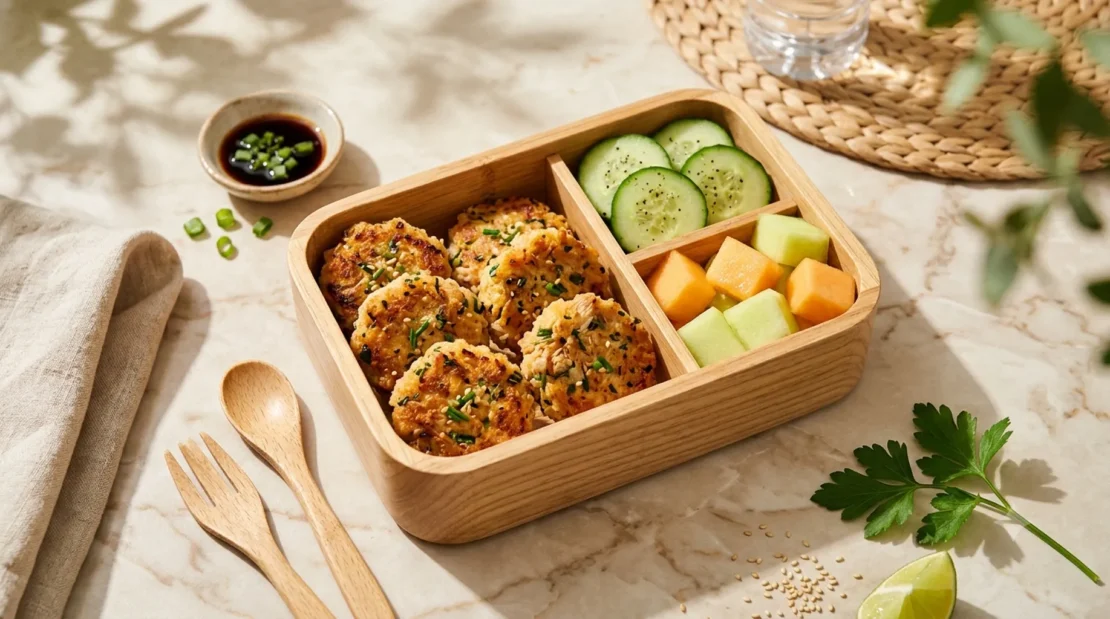
Rice does not always need to be served with a spoon. Turning it into mini tuna rice cakes creates another texture while keeping the ingredients familiar.
Tuna contributes protein, while egg helps hold everything together. We recommend using tuna packed in water and checking it carefully before preparing food for young children.
Tools
- Mixing bowl
- Fork
- Frying pan
- Spatula
- Spoon
- Paper towel
Ingredients
- 1 cup cooked rice
- 50 grams canned tuna in water, drained
- 1 egg
- 1 tablespoon finely grated carrot
- 1 tablespoon breadcrumbs
- 1 teaspoon cooking oil
How to Make It
- Place the cooked rice in a mixing bowl and break up any large clumps using a fork.
- Add drained tuna, checking carefully for bones or tough pieces before combining it with the rice.
- Add the egg, grated carrot, and breadcrumbs, then mix thoroughly until the mixture becomes sticky and cohesive.
- Divide the mixture into small portions, then shape each portion into a compact flat rice cake.
- Heat cooking oil in a nonstick frying pan over medium low heat before adding the prepared rice cakes.
- Cook the rice cakes until lightly golden underneath, allowing enough time for the egg mixture to set.
- Flip each cake carefully with a spatula, then cook the opposite side until firm and golden.
- Transfer the cooked rice cakes onto a plate lined with paper towel to remove any excess oil.
- Cool completely, then pack with cucumber, melon, or another simple side your preschooler already enjoys.
10. Banana Pancake Bites With Yogurt
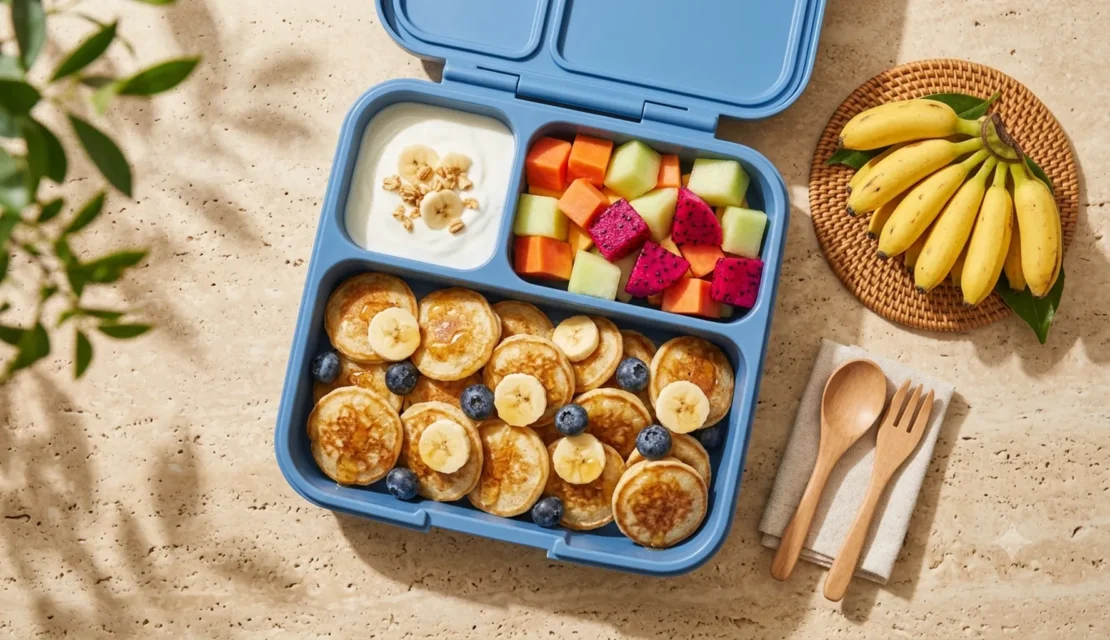
Sometimes children want something naturally sweet instead of another savory meal. Banana pancake bites can work as a light lunch, snack, or additional lunchbox item.
Banana provides carbohydrates and potassium, while egg and yogurt contribute protein. Adding Indonesian favorites such as papaya, melon, or dragon fruit keeps the box colorful without relying on sugary treats.
Tools
- Mixing bowl
- Fork
- Frying pan
- Spatula
- Tablespoon
- Small sealed yogurt container
Ingredients
- 1 ripe banana
- 1 egg
- 3 tablespoons flour
- 2 tablespoons milk
- 1 teaspoon cooking oil
- 2 tablespoons plain yogurt
- Fresh fruit for serving
How to Make It
- Peel the ripe banana, place it in a mixing bowl, then mash thoroughly until mostly smooth.
- Crack the egg into the mashed banana, then whisk until both ingredients are evenly blended together.
- Add flour and milk gradually, stirring until the batter becomes smooth, thick, and free from dry pockets.
- Heat a nonstick frying pan over medium low heat, then spread a small amount of cooking oil.
- Spoon small rounds of batter into the pan, keeping each pancake small enough for preschoolers to hold.
- Cook until small bubbles appear on the surface and the edges begin to look slightly dry.
- Flip each pancake gently, then cook the second side until golden and completely cooked through.
- Transfer the pancakes to a clean plate and allow them to cool fully before packing.
- Place plain yogurt in a separate sealed container so the pancakes stay dry and pleasantly soft.
- Add freshly cut banana, papaya, melon, or dragon fruit for extra color and natural sweetness.
How to Make Preschool Lunchbox Ideas More Appealing
Sometimes the problem is not the food itself. The portion simply looks far too big for a small child.
Imagine opening your lunch and discovering enough fried rice for six adults. We would probably feel overwhelmed too.
For preschoolers, smaller portions can make lunch feel more manageable. You can always increase the amount when you notice your child consistently finishes everything and still seems hungry.
Here are a few simple strategies we often suggest:
- Cut sandwiches into smaller pieces.
- Make rice balls that fit comfortably into little hands.
- Keep noodles relatively short.
- Serve fruit in easy to eat pieces.
- Pack sauces separately when necessary.
- Combine familiar foods with one newer ingredient.
- Use two or three main components instead of overcrowding the box.
- Let your child choose between two appropriate options.
Giving limited choices can be particularly helpful. Asking, “Would you like papaya or melon tomorrow?” usually works better than opening the entire refrigerator and starting a thirty minute negotiation.
What Should a Balanced Preschool Lunchbox Include?
We do not think every lunchbox needs to look like a nutrition textbook. Instead, we try to create a simple balance between energy, protein, produce, and foods children can manage independently.
Include a Source of Carbohydrates
Children need energy for learning, movement, play, and the impressive amount of running that somehow happens during preschool.
Common Indonesian lunchbox choices include:
- Rice
- Noodles
- Bread
- Potatoes
- Corn
- Pancakes
You can rotate these options so lunch feels different without requiring an entirely new cooking routine every morning.
Include a Source of Protein
Protein plays an important role in children’s growth and development. Fortunately, Indonesian meals give us plenty of convenient choices.
You might use:
- Chicken
- Eggs
- Fish
- Tuna
- Tempeh
- Tofu
- Cheese
- Yogurt
We like rotating protein sources rather than relying on one option every day.
Add Fruit or Vegetables
Your child does not have to enthusiastically eat every vegetable immediately. Exposure can be part of becoming familiar with different foods.
Practical options include:
- Banana
- Papaya
- Melon
- Watermelon
- Dragon fruit
- Mandarin orange
- Carrot
- Corn
- Cucumber
- Green beans
If the cucumber returns home untouched on Monday, you do not necessarily have to declare cucumber permanently defeated. You can offer it again another day without pressure.
How Much Food Should You Put in a Preschool Lunchbox?
There is no universal portion that works for every preschooler. Appetite varies according to age, growth, activity, breakfast, sleep, personal preferences, and even the mood of the day.
We usually prefer starting with realistic portions rather than packing an enormous lunchbox. A manageable amount can help children feel capable of finishing their meal.
Younger preschoolers may be comfortable with two or three small components. Older children might want a larger main meal with fruit or another simple side.
Watch what regularly comes home. It can give you useful clues about portion sizes and which textures your child finds easiest to manage.
Practical Food Safety Tips for Preschool Lunchboxes
Good preschool lunchbox ideas also need to consider food handling and storage. Foods containing meat, eggs, dairy products, fish, or cooked rice should be prepared and stored appropriately.
We recommend using clean equipment and suitable insulated containers when needed. Always follow your preschool’s policies regarding allergies, food sharing, and restricted ingredients.
You should also cut foods according to your child’s developmental ability. When you are unsure whether a particular food size or texture is appropriate for your child, choose a softer and easier to manage preparation.
Simple Weekly Preschool Lunchbox Rotation
You certainly do not need to cook all ten recipes in one week. That would turn lunch preparation into a second job.
Instead, you could create a simple rotation such as:
- Monday: Chicken vegetable fried rice with melon.
- Tuesday: Mini chicken and cheese sandwiches with papaya.
- Wednesday: Tempeh sweet soy rice bowl with banana.
- Thursday: Chicken and spinach omelette rolls with rice.
- Friday: Banana pancake bites with yogurt and dragon fruit.
During the following week, you could swap in noodles, corn fritters, rice balls, tuna rice cakes, and potato patties.
Repeating familiar meals is perfectly reasonable. Children often appreciate predictability, and parents usually appreciate not having to invent a completely new menu every morning.
Healthy Habits Grow Through Everyday Routines
At Apple Tree Preschool BSD, we believe children’s development happens through both structured lessons and everyday experiences. Carrying a lunchbox, opening containers, sitting with friends, communicating needs, and practicing independent eating can all become valuable learning moments.
Our Singapore curriculum covers English, Mathematics, Chinese, Creativity, Social Studies, Science, Bahasa, Moral, Music, Physical Education, and Phonics. Through our programs, we support children at different developmental stages, from Toddler classes through Kindergarten 2.
Our preschool is located in the Educenter BSD Building, making it convenient for families around BSD and surrounding areas. We want children to grow smart and happy while parents remain connected to their learning journey.
And yes, sometimes growing independently starts with something surprisingly small, such as remembering where the spoon belongs after lunch.
Make Tomorrow’s Lunchbox a Little Easier
The best preschool lunchbox ideas do not need fancy ingredients, complicated decorations, or hours of preparation. Familiar Indonesian foods such as rice, chicken, eggs, tempeh, corn, noodles, potatoes, and fresh fruit can become practical meals children genuinely recognize.
You can begin with one or two recipes your child already likes, then gradually introduce new combinations. Keep portions manageable, make foods easy to hold, and remember that one untouched carrot does not mean your entire lunchbox strategy has failed.
At Apple Tree Preschool BSD, we love helping children build confidence, curiosity, independence, and positive everyday habits alongside their academic development. We also believe parents and educators work best when we grow together with the child.
If you are looking for a warm preschool environment in BSD where your child can learn, play, communicate, and grow, come and discover our programs.
Come play and learn with other children at Apple Tree Preschool BSD!
Phone: +62 888 1800 900
Register your child for Apple Tree Preschool BSD and let us make learning, playing, growing, and even lunchtime part of a happy preschool journey.


Be the first to write a comment.