If you have ever watched a child turn a cardboard box into a spaceship, a spoon into a microphone, and a puddle into the most fascinating science experiment of the week, you have already seen the magic of learning through play. At Apple Tree Pre-School BSD, located in the Educenter BSD Building, we see every day that children do not learn best by sitting still and looking serious for long stretches. They learn best when they are curious, involved, and having such a good time that they barely notice they are building important skills. That is why learning through play matters so much for young children today, especially when many parents are trying to balance academic readiness with the very real need for children to enjoy childhood.
We understand why parents sometimes worry. You want your child to be ready for school, confident with others, and able to keep up in a fast changing world. It is easy to feel pressure when you hear about early reading, early math, early everything. But in our experience, children do not need more pressure. They need meaningful experiences that help them think, move, speak, imagine, and connect.
Learning Through Play Builds More Than Academic Skills
When people hear the word “play,” they sometimes imagine something random or unstructured. We get it. It can look like pure chaos from the outside, especially when blocks are everywhere and somebody is wearing a colander as a hat. But learning through play is actually one of the most effective ways for children to develop the skills they need for life and school.
Play supports the whole child. It helps with language, problem solving, emotional regulation, creativity, physical coordination, and social understanding. In other words, it covers a lot more ground than a worksheet ever could.
Play Helps Children Learn Naturally
Young children are wired to explore. They touch, test, repeat, question, build, knock things over, and then build again. This is not wasted time. It is how they make sense of the world.
When children are actively involved, learning sticks more easily. They remember what they discover through experience because they were part of it. That is one of the biggest reasons learning through play feels so powerful in early childhood.
Play Makes Children More Willing To Try
Children are much more open to learning when they do not feel judged or pushed too hard. Play creates a relaxed environment where mistakes feel normal. If the tower falls down, they laugh and build another one. If the pretend cake turns out “spicy,” everyone moves on.
That freedom helps children become brave learners. They try new ideas, solve problems, and take small risks without the fear of getting everything exactly right the first time.
Learning Through Play Supports Cognitive Development
One of the most wonderful things about play is that it quietly teaches children how to think. They may look like they are “just playing,” but their brains are doing serious work behind the scenes.
Problem Solving Happens All The Time
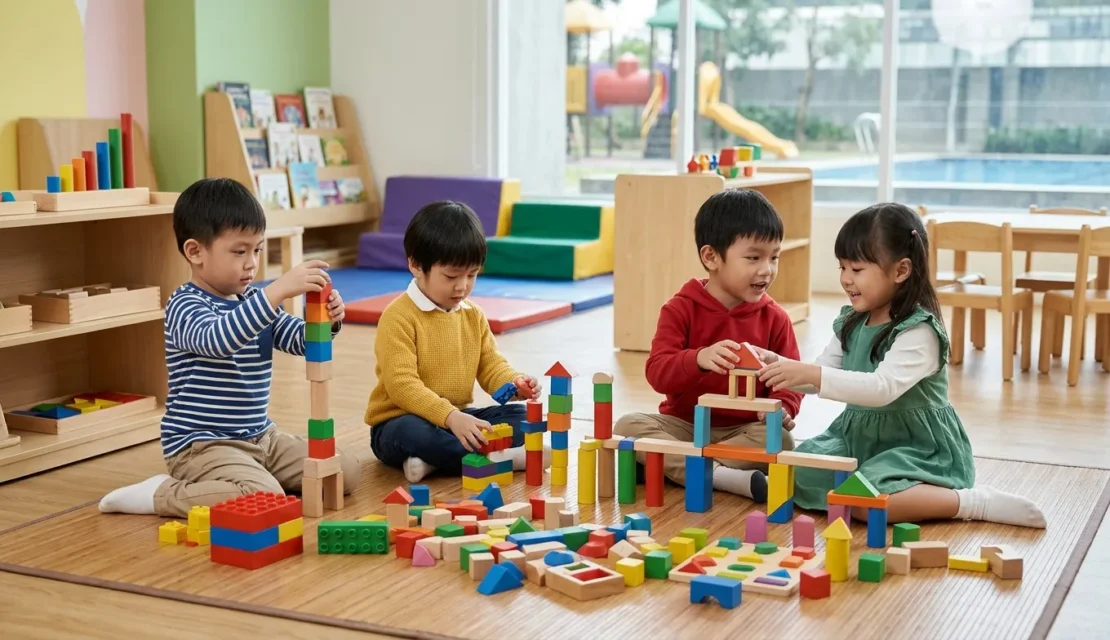
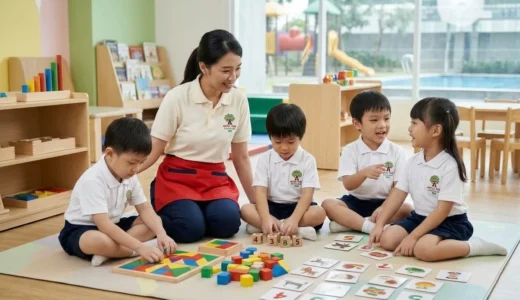
During play, children are constantly making decisions. They figure out how to stack blocks higher, how to fit puzzle pieces together, or how to make room for one more stuffed animal at their pretend tea party. These little moments are full of reasoning and problem solving.
Learning through play encourages children to ask questions like:
- What happens if I try this?
- Why did that fall down?
- How can I make it work better?
- What should I do next?
Those thinking habits become incredibly valuable as children grow.
Play Strengthens Language And Communication
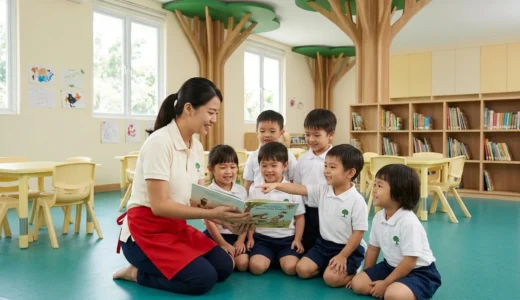
Children talk more when they are engaged. During pretend play, storytelling, singing, and group games, they naturally use new words and practice expressing ideas. We often see children who are quiet during formal activities suddenly become wonderfully chatty when they are pretending to run a shop or cook lunch for a room full of imaginary guests.
This is one reason learning through play supports language development so well. Children are not memorizing words in isolation. They are using language for a real purpose, and that makes it more meaningful.
Learning Through Play Helps Social And Emotional Growth
Academic skills matter, of course, but social and emotional development matters just as much in the early years. Children need to learn how to share space, express feelings, manage frustration, and build relationships with others.
Children Learn To Take Turns And Cooperate
Play gives children regular opportunities to practice patience and cooperation. Whether they are building together, waiting for a turn in a game, or deciding who gets to be the doctor in pretend play, they are learning how to interact with others.
These moments are not always smooth. Sometimes there are disagreements over toys, roles, or the exact number of plastic bananas required for the game. But even those wobbly moments are useful. They help children learn negotiation, empathy, and self control.
Play Creates Emotional Safety
Children often work through feelings during play. They act out experiences, repeat situations they are trying to understand, and express emotions in ways that feel safe. A child who pretends to be the teacher, the parent, or even the grumpy dinosaur is often exploring emotions and relationships through imagination.
Learning through play gives children a way to process the world at their own pace. That emotional safety helps them feel more secure, confident, and ready to engage.
Learning Through Play Encourages Physical Development Too
We cannot talk about early childhood without mentioning movement. Young children need to move. A lot. Sometimes it feels like they have a secret energy source hidden somewhere behind their ears.
Active Play Builds Motor Skills
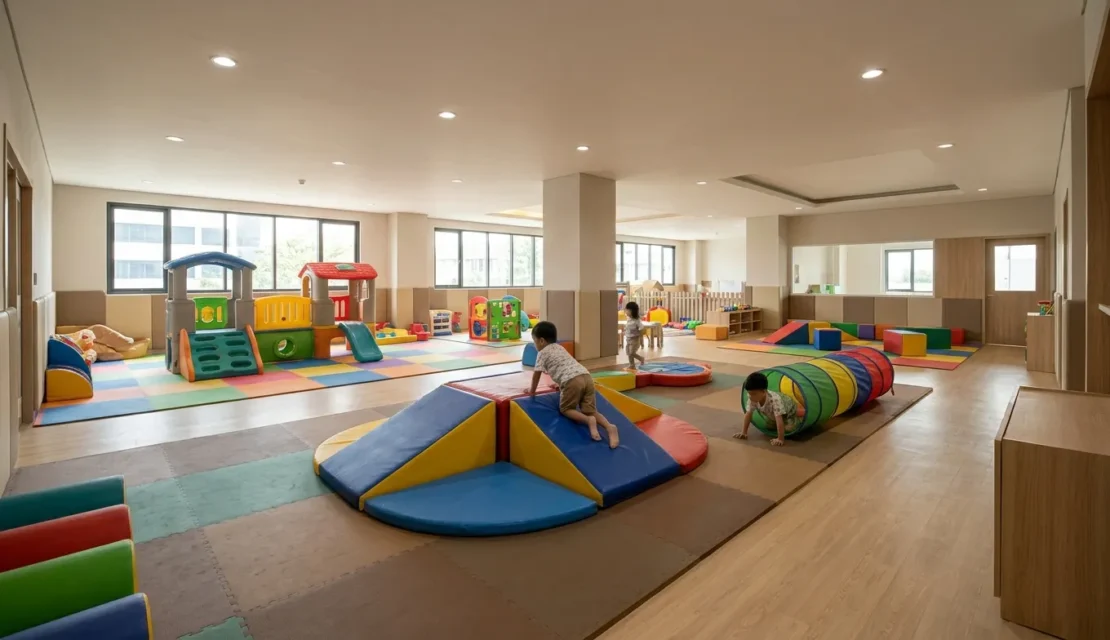
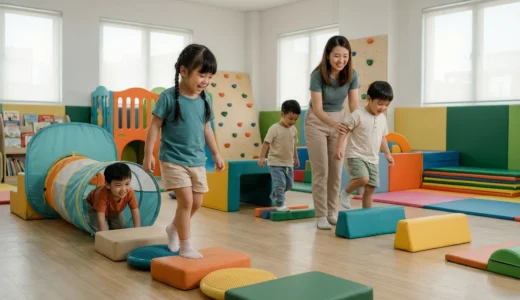
Climbing, jumping, running, balancing, drawing, threading beads, and molding play dough all support physical development. Gross motor skills and fine motor skills both grow through hands on, playful experiences.
Some simple activities that support learning through play include:
- obstacle courses with cushions and tape
- sorting games with tongs or spoons
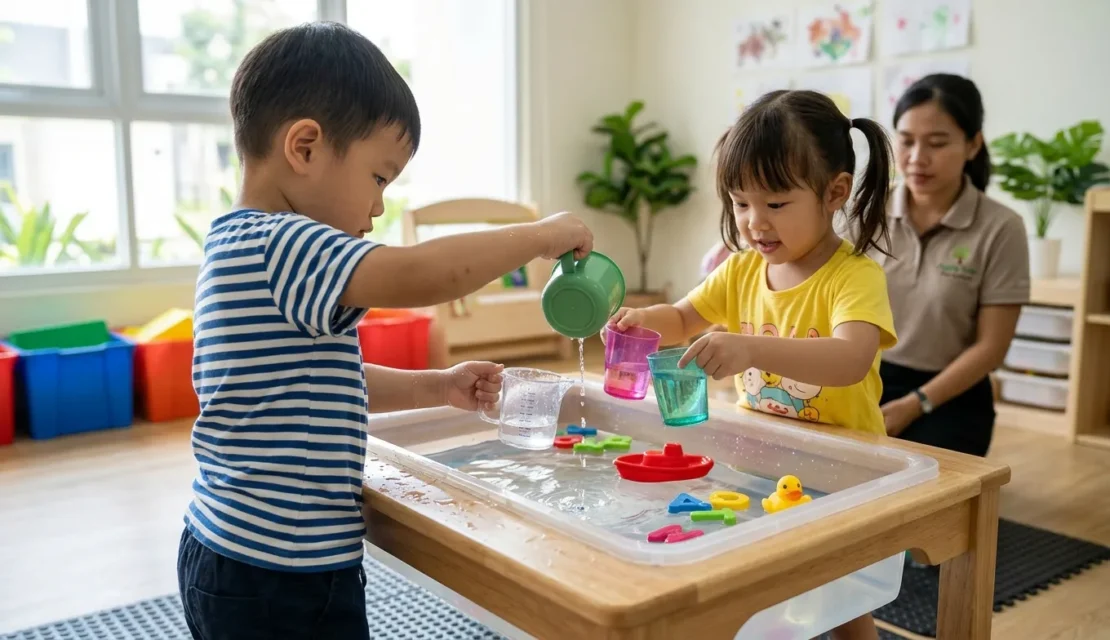
- water play with pouring cups
- drawing, coloring, and cutting
- dancing to songs with actions
These activities help children strengthen coordination, control, and body awareness without needing formal exercise routines that make everyone feel strangely tense.
Movement Helps Attention And Readiness
Children often focus better after they have had a chance to move. Physical play helps release energy, improve mood, and support concentration. This is especially important in a world where many children are expected to sit still too soon and too often.
When movement is built into learning, children feel more regulated and more ready to take part. That is another reason learning through play fits young children so well.
Why Learning Through Play Matters More Today
Today’s children are growing up in a fast paced environment. Screens are everywhere, routines can feel rushed, and parents often feel pressure to speed up learning. We understand that pressure, but we also know that early childhood is not a race.
Learning through play gives children something they deeply need, time to explore, imagine, communicate, and build confidence in a developmentally appropriate way. It reminds us that childhood should not be treated like a checklist. It should be a season of growth that feels joyful, connected, and meaningful.
At Apple Tree, we use a Singapore curriculum that supports children through English, Mathematics, Chinese, Creativity, Social Studies, Science, Bahasa, Moral, Music, Physical Education, and Phonics. We believe children learn best when those areas are introduced through engaging and age appropriate experiences. If you would like to explore our programs, you can see how we support children from Toddler through Kindergarten 2 in a nurturing and playful environment.
A Joyful Way To Help Children Grow
Learning through play is not a soft option or a lesser way to learn. It is one of the smartest, healthiest, and most effective ways to support young children as they grow. Through play, children build thinking skills, language, confidence, coordination, and emotional strength, all while doing what children naturally love to do.
If you want your child to grow in a place where learning through play is taken seriously and delivered with warmth, care, and real understanding, we would love to welcome your family. You can Chat with us on WhatsApp to ask about classes and registration, or call us directly at +62 888-1800-900. Come play and learn with other children at Apple Tree Preschool BSD, where we help children grow smart and happy together with parents.


Be the first to write a comment.