If you have ever watched your child turn a spoon into a rocket, a sofa cushion into a mountain, and your living room into what can only be described as an “active learning zone,” you already know that children are wired to learn through play. That is exactly why child development activities matter so much in the early years. At Apple Tree Pre-School BSD, located in the Educenter BSD Building, we see every day that children grow best when learning feels joyful, natural, and full of real connection. The good news is that you do not need a fancy setup or a teaching certificate to support your child at home, you just need a few meaningful ideas and a little patience, which, yes, can feel harder before your morning coffee.
Many parents worry that they are not doing enough. You may wonder whether your child is learning the right things, speaking enough words, moving confidently, or developing the social skills they will need later. We understand that feeling. The encouraging part is that simple, consistent child development activities can make a big difference, especially when they are part of everyday life.
Child Development Activities That Support The Whole Child
The best child development activities do not focus on only one skill. They help children build language, motor coordination, creativity, emotional awareness, and problem solving all at once. Young children learn in layers, not neat little boxes, which is both beautiful and slightly chaotic.
That is why we always recommend activities that feel playful and practical. When your child is engaged, curious, and having fun, the learning tends to stick much better.
1. Read Together And Talk About The Story
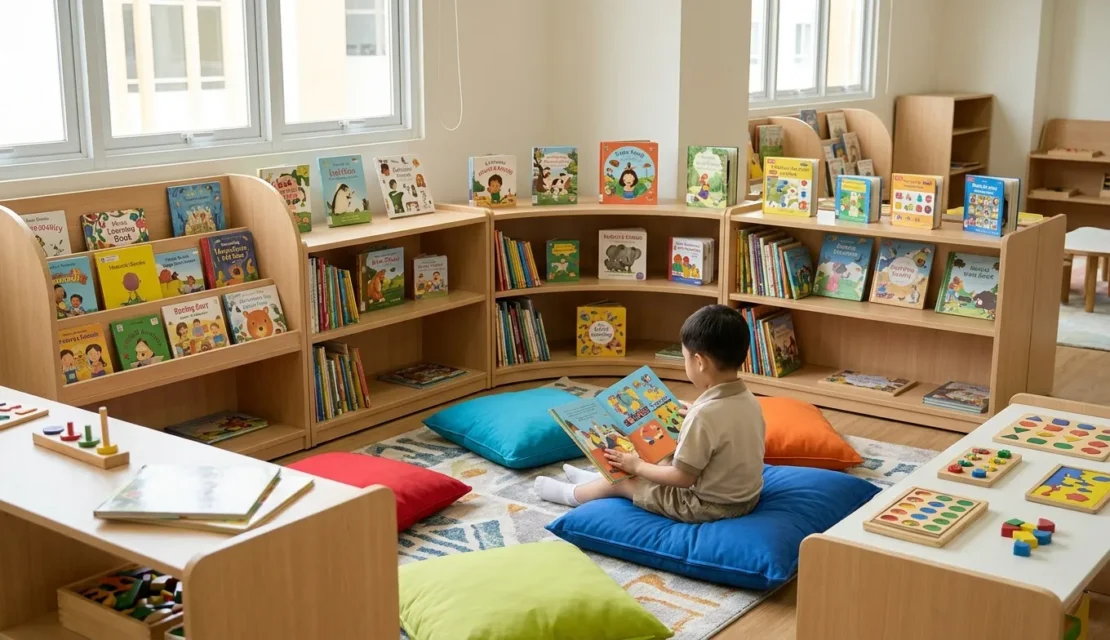
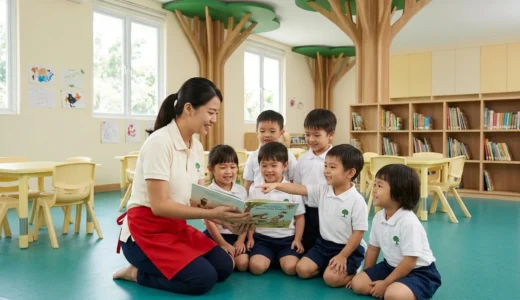
Reading is one of the most powerful child development activities because it supports vocabulary, listening, imagination, and early comprehension. Even better, it creates a warm moment between you and your child, and that connection matters just as much as the book itself.
As you read, pause and ask simple questions. Try things like, “What do you think will happen next?” or “Why do you think she feels sad?” These little conversations help children think, express ideas, and connect emotions to language.
2. Play Sorting And Matching Games
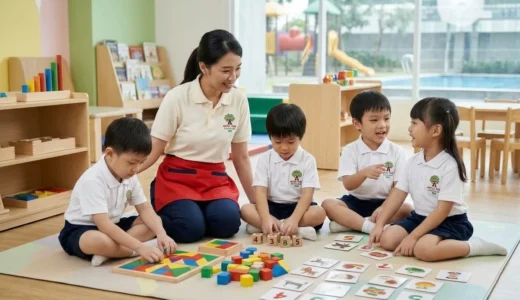
Sorting may seem simple, but it is excellent for brain development. It teaches children to notice similarities, differences, categories, and patterns, which are early thinking skills that support math and reading later on.
You can use everyday objects such as:
- blocks by color
- spoons and forks
- socks by size
- toy animals and vehicles
- buttons by shape
These child development activities are easy to set up and surprisingly effective. They also make children feel very accomplished, which is always nice to see.
3. Sing Songs And Add Movements
Songs are wonderful because they mix language, rhythm, memory, and movement in one cheerful activity. Most children will happily sing the same song again and again with the dedication of a touring pop star, so you might as well let that repetition work in your favor.
Action songs help children follow directions, improve coordination, and build body awareness. They also support speech development through repeated sounds and phrases. If you end up doing hand motions to the same tune twenty times, consider it both parenting and cardio.
Child Development Activities That Build Motor Skills
Children need chances to move, grab, squeeze, climb, draw, and explore. Physical development plays a huge role in confidence, focus, and independence. A child who can control their body more easily often feels more ready to join classroom activities and daily routines.
4. Create Simple Obstacle Courses
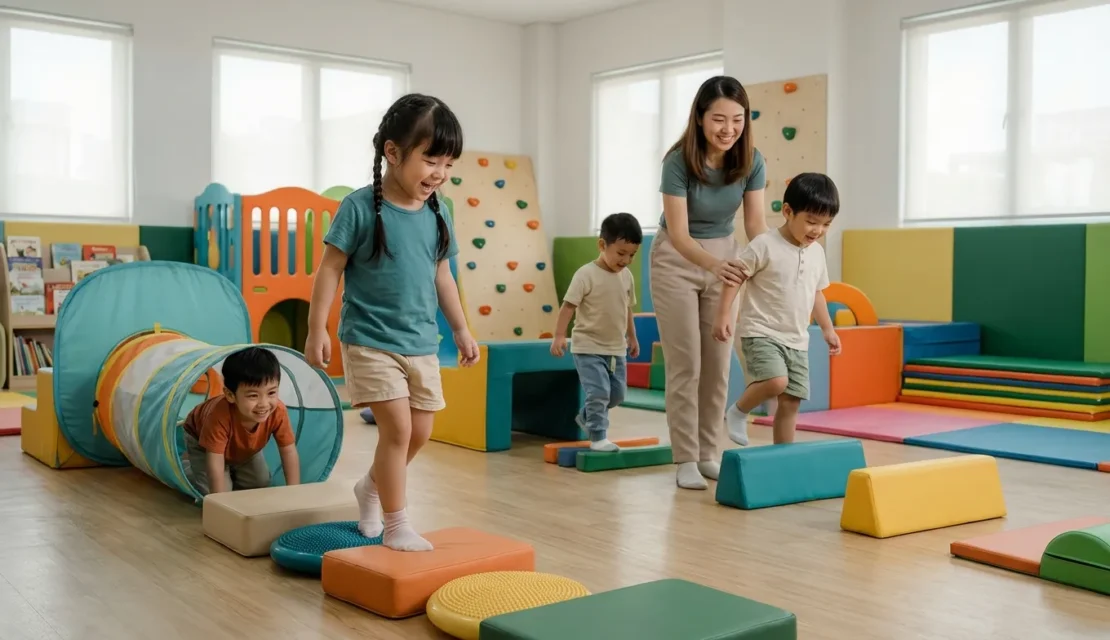
Obstacle courses are some of our favorite child development activities because they develop balance, coordination, and listening skills all at once. You can make one with pillows, chairs, tape on the floor, and a few safe objects from around the house.
Try simple instructions like:
- jump over the line
- crawl under the chair
- step on the cushions
- carry a toy to the finish
Children love the challenge, and they feel proud when they complete it. It turns movement into a game instead of “exercise,” which is a word most preschoolers would probably reject on principle.
5. Offer Drawing, Coloring, And Cutting Practice
Fine motor skills are important for writing, self care tasks, and classroom independence. Activities like drawing, coloring, tearing paper, and using child safe scissors help strengthen the small muscles in the hands and fingers.
You do not need perfect art projects. In fact, we would argue that the beautifully messy attempts are often better. These child development activities give children a chance to make choices, improve control, and express themselves freely.
6. Try Sensory Play With Safe Materials
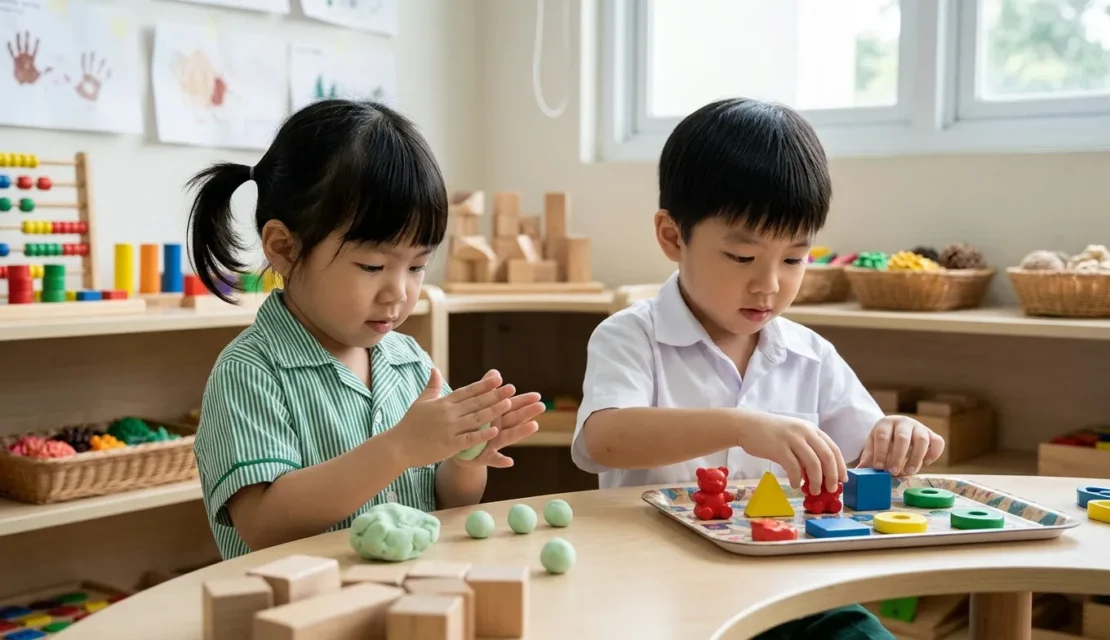
Sensory play is a classic for a reason. Water, sand, rice, play dough, foam, and textured objects all help children explore with their senses while building focus and coordination.
Sensory based child development activities also support language because children describe what they feel, see, and notice. Words like soft, sticky, smooth, cold, and squishy become much more meaningful when children experience them directly.
Child Development Activities That Strengthen Thinking And Language
As children grow, they need opportunities to ask questions, solve problems, and use language in real situations. These are the moments when play becomes a powerful tool for cognitive development.
7. Encourage Pretend Play
Pretend play may look like random silliness from the outside, but it is deeply important for early learning. When children play house, run a pretend shop, or become tiny doctors with great confidence and questionable diagnoses, they are practicing language, storytelling, empathy, and social understanding.
These child development activities help children organize thoughts and act out what they know about the world. They also give shy children a safer way to speak up and interact.
8. Build With Blocks Or Loose Parts
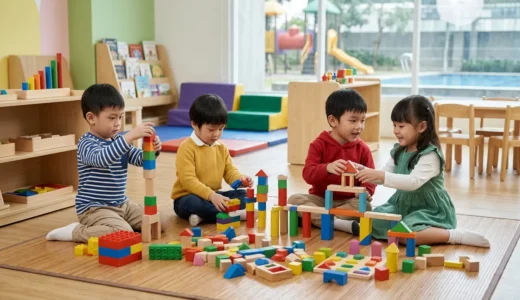
Building activities encourage planning, balance, creativity, and problem solving. Children test ideas, make adjustments, and learn what happens when things fall over, which, to be fair, is an important life lesson for all of us.
You can use blocks, cups, cardboard tubes, or other safe materials. Ask open ended questions like, “How can we make it taller?” or “What could help it stay strong?” These child development activities build flexible thinking and persistence.
9. Count In Daily Life
You do not need formal lessons to build number awareness. Counting stairs, fruit pieces, crayons, and toy cars helps children connect numbers to real objects and real experiences.
Daily counting activities are simple, natural, and easy to repeat. This kind of repetition strengthens memory and helps children feel comfortable with early math concepts without pressure.
Child Development Activities That Support Social And Emotional Growth
Children are not just learning letters and numbers. They are learning how to wait, share, cope with frustration, and express feelings without collapsing into tears because someone took the blue cup. Social and emotional growth deserves just as much attention.
10. Practice Turn Taking And Talking About Feelings
Board games, ball games, and simple group play are great child development activities for self regulation. They teach children to wait, listen, and handle the fact that life will not always go exactly their way, which is an important discovery for tiny humans.
You can also help by naming feelings during everyday moments. Say things like, “You seem frustrated,” or “You were so proud of that.” When children hear emotional language often, they become better at expressing themselves and understanding others.
When Learning Feels Joyful, Growth Comes Naturally
The most effective child development activities are usually the ones that feel manageable, playful, and connected to real life. You do not need to fill every hour with structured lessons. A story before bed, a song in the car, a puzzle on the floor, or a silly pretend game in the afternoon can all support meaningful development.
At Apple Tree, we believe children thrive when learning is balanced, nurturing, and age appropriate. Through our Singapore curriculum, we help children build strong foundations in English, Mathematics, Chinese, Creativity, Social Studies, Science, Bahasa, Moral, Music, Physical Education, and Phonics. If you would like to explore our programs, you can see how we support each stage from Toddler through Kindergarten 2.
A Fun Start For Growing Minds
Child development activities do not have to be complicated to be powerful. When you give your child chances to read, move, create, build, imagine, and connect with you, you are already doing meaningful work that supports lifelong learning. Small moments really do add up, even the messy, noisy, slightly ridiculous ones.
If you are looking for a warm and joyful environment where your child can learn through meaningful child development activities, we would love to welcome your family to Apple Tree Preschool BSD. You can Chat with us on WhatsApp to ask about registration and class options, or call us directly at +62 888-1800-900. Come play and learn with other children in a place where growing smart and happy truly happens together.


Be the first to write a comment.