At Apple Tree Pre-School BSD, in the Educenter BSD Building, we often meet parents who worry that their child lacks organizational skills and seems to misplace everything except the one toy they should have packed away last week. If that sounds familiar, you are not alone, and no, it does not mean your child is destined to live in a future surrounded by mystery socks and missing pencils. In the early years, organization is a skill that grows slowly through routine, repetition, and plenty of patient guidance from the adults around them.
The tricky part is that disorganization can look like laziness, stubbornness, or a total lack of interest. In reality, young children are still learning how to sort, remember, sequence, and finish simple tasks in order. Once you understand what is really happening, it becomes much easier to help your child build better habits without turning every morning into a tiny family crisis.
Child Lacks Organizational Skills, What Is Really Going On?
When a child lacks organizational skills, the problem is usually not attitude first. More often, it is a mix of developing memory, limited attention span, weak routine habits, and the very normal preschool talent of getting distracted by absolutely everything. We have seen children walk across the room to put away a book, spot a crayon, remember a song, sit on the floor, and completely forget the original mission.
That is why organization needs to be taught in small, concrete ways. Young children do not magically become organized just because adults repeat, “Be more tidy,” ten times before breakfast. They need systems they can see, practice, and understand.
Why organization feels hard for young children
Preschoolers are still building executive functioning skills. These are the brain based skills that help children plan, remember instructions, manage materials, and move from one step to the next. If your child seems scattered, it may simply mean those skills are still under construction.
A child who loses shoes, forgets bottles, or leaves a trail of crayons from one room to another is not trying to test you every second of the day. Sometimes it just feels that way, especially when you are already late and somehow one sock has disappeared into another dimension.
Signs your child may need more support
Some children are naturally more structured than others, but there are a few common signs that a child lacks organizational skills and may need extra guidance:
- You often have to repeat simple routines again and again
- Your child struggles to put items back in the right place
- Tasks are started quickly but rarely finished calmly
- Your child forgets steps unless you stay nearby
- Transitions, like getting ready for school, feel chaotic every day
These signs are common in early childhood, so the goal is not to panic. The goal is to respond early and consistently.
Helping a Child Lacks Organizational Skills Through Simple Daily Routines
The fastest way to improve organization is not through long lectures. It is through predictable routines that your child can follow every day. Children learn structure best when the environment does some of the teaching for them.
If your mornings feel messy, start there. Morning routines are basically a live performance of your child’s planning skills, memory, attention, and emotional regulation, all before 8 a.m., which is honestly a lot to ask from a small person.
Create one clear home for everyday items
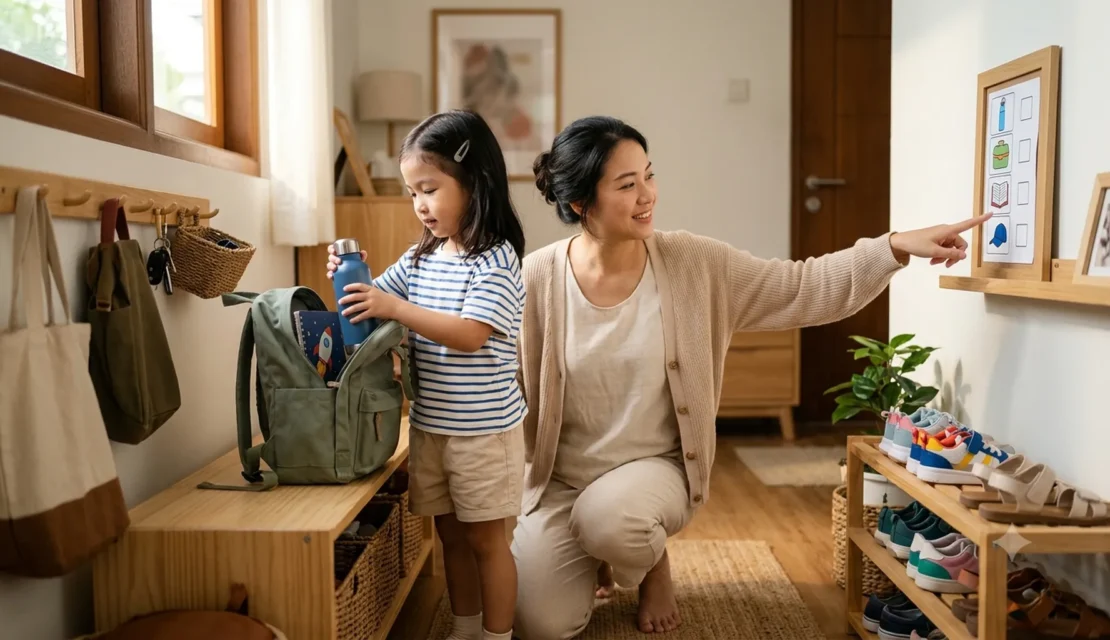
Children organize better when items always live in the same place. Bags, shoes, bottles, lunch boxes, and favorite comfort items should each have an obvious home. When everything has a place, your child does not have to make a new decision every single time.
You can use baskets, low hooks, open shelves, or labeled containers with pictures. For younger children, visual cues work much better than verbal reminders alone. A picture of shoes on a shoe shelf makes more sense to a four year old than a speech about responsibility.
Use short routines instead of big instructions
If your child lacks organizational skills, a long list of instructions will probably fall apart halfway through. “Get your shoes, put your book away, wash your hands, and sit down nicely” may sound simple to you, but for a young child it can feel like being handed a five step puzzle while distracted by a toy car.
Instead, break routines into smaller parts. Give one or two steps at a time, then repeat them consistently until they become automatic. Over time, those small routines start to stick.
Try a visual checklist
A simple picture chart can make a huge difference. You can create a morning checklist with images for brushing teeth, getting dressed, packing a bag, and putting on shoes. Children often enjoy checking things off because it feels like a game, and frankly, anything that makes the morning smoother deserves respect.
Useful checklist moments include:
- Getting ready for school
- Packing up after playtime
- Preparing for bedtime
- Setting up for homework or reading time
Build Organization Through Play, Not Pressure
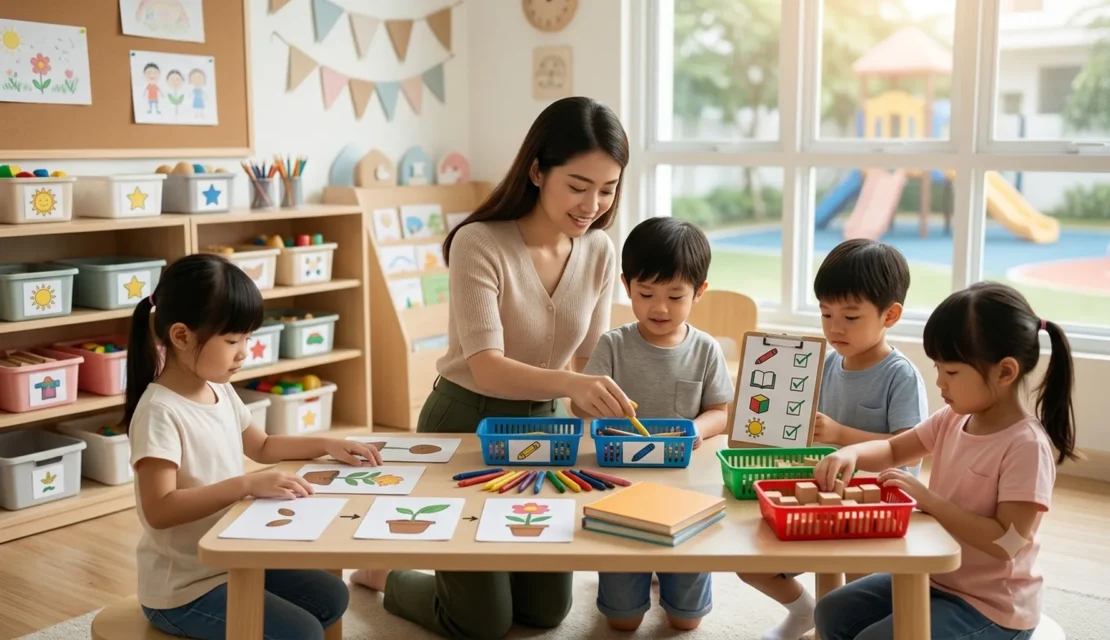
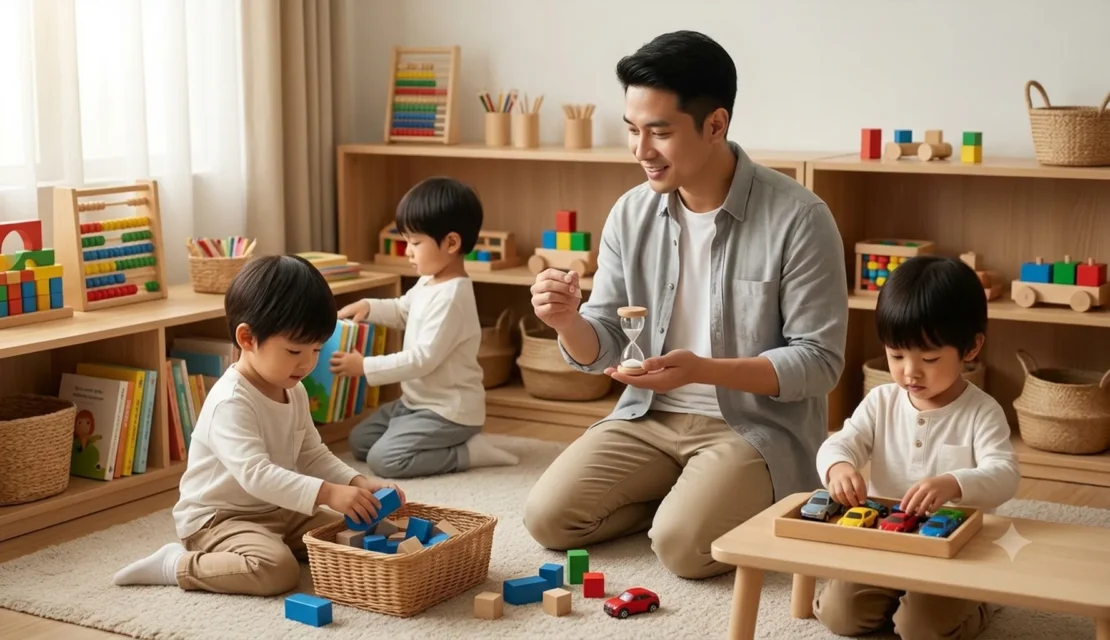
One mistake parents make is treating organization like a discipline issue only. In the early years, play is one of the best ways to teach structure. Sorting, matching, grouping, sequencing, and tidying are all early organizational skills in disguise.
When children play with blocks by color, sort buttons by size, or put story cards in order, they are strengthening the same thinking patterns that help them organize daily life. It is learning, just wearing a more cheerful outfit.
Turn tidy up time into a predictable game
We often tell parents that cleanup works better when it feels routine, not dramatic. If tidying only happens when adults are already annoyed, children start connecting organization with tension. That usually makes them avoid it even more.
You can use a cleanup song, a timer, or simple categories like “books here” and “cars there.” Keep it short, cheerful, and specific. Young children respond better to “Let’s put all the blue blocks in this basket” than “Please clean everything properly.”
Praise the process, not perfection
If your child lacks organizational skills, progress may look small at first. Maybe they remember to hang their bag twice this week instead of zero times. That still counts.
Notice effort in clear language. You can say, “You put your shoes back without being reminded,” or “You finished one step, then came back for the next one.” Specific praise helps children understand exactly what success looks like.
How School Helps Children Grow More Organized
A strong preschool environment gives children repeated chances to practice routine, independence, and responsibility in a way that feels natural. At school, children learn to follow sequences, manage their belongings, move between activities, and tidy up shared spaces with peers. Those are valuable organizational habits that grow over time.
At Apple Tree, we support these skills through structured routines, age appropriate expectations, and a warm classroom environment. Our Singapore based curriculum covers English, Mathematics, Chinese, Creativity, Social Studies, Science, Bahasa, Moral, Music, Physical Education, and Phonics, which means children are constantly learning how to listen, follow steps, complete tasks, and care for materials. If you are exploring our programs, you will find classes from toddler through Kindergarten 2, each designed to match your child’s stage of development.
Why parent and school consistency matters
Children do better when home and school use similar expectations. If your child practices simple routines in both places, the skill becomes part of daily life instead of a once in a while experiment. Consistency reduces confusion and builds confidence.
We have seen this many times in the BSD community. When parents and teachers work together, children often become more capable much faster, and everyone gets fewer frantic searches for water bottles five minutes before class.
Small Skills Today, Big Confidence Tomorrow
If your child lacks organizational skills, the answer is not more pressure. It is more structure, more practice, and more patience in the small moments that repeat every day. When you give your child visual cues, short routines, clear places for belongings, and playful practice, organization starts to feel possible instead of overwhelming.
If you would like your child to learn in a warm, structured environment where independence and daily habits grow naturally, we would love to welcome your family. You can Chat with us on WhatsApp to ask about enrollment, or call us at +62 888 1800 900. Come play and learn with other children at Apple Tree Preschool BSD, where small routines help build confident, happy learners.




Be the first to write a comment.