

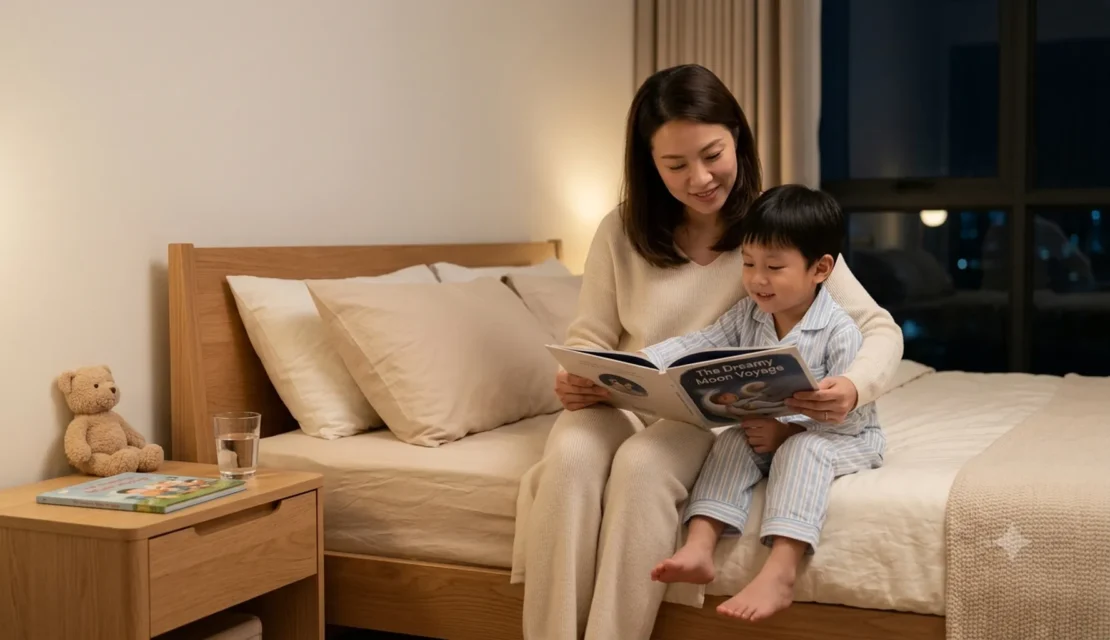
If your child can’t sleep at night, you probably know the evening pattern by heart. One more drink, one more cuddle, one more question about dinosaurs, and suddenly bedtime feels less like a routine and more like a very long stage performance. At Apple Tree Pre-School BSD, near Educenter bsd, we hear this from parents all the time, because many young children struggle to settle even when they are clearly tired and everyone else in the house is quietly losing steam.
The encouraging part is this, sleep struggles are common, and they are usually workable. Most children are not staying awake just to test your patience, although some of them do have surprisingly dramatic timing. More often, a child who cannot fall asleep needs a better rhythm, a calmer evening, and a few small changes that help their body understand it is finally time to switch off.
Why a Child Can’t Sleep at Night So Often
When a child cannot fall asleep, parents often assume the problem starts at bedtime. In reality, bedtime is usually just where the problem becomes visible. What happens during the afternoon and evening often shapes how easily your child settles later on.
Young children need their days to feel balanced. If they are overstimulated, overtired, under active, or emotionally wound up, sleep becomes harder. Their body may be tired, but their mind is still running laps around the living room.
Common reasons sleep feels difficult
A few everyday reasons a child can’t sleep at night include:
- Bedtime changes too much from one day to the next
- Screen time happens too close to sleep
- Naps are too late or too long
- The bedroom feels too bright, noisy, or exciting
- Your child is anxious, overstimulated, or not tired enough physically
- Bedtime has become linked with long negotiations and attention
When you look at sleep this way, it becomes much less mysterious. It is rarely just one magical missing trick. It is usually a combination of habits, timing, and emotional cues.
Child Can’t Sleep at Night, Start With a Predictable Evening Rhythm
Children thrive on rhythm, even when they spend half the day pretending they do not. A predictable evening routine tells the brain, again and again, that sleep is coming next. Over time, that routine becomes a cue the body trusts.
Keep bedtime steps simple and repeatable
You do not need a complicated routine with seventeen steps and matching baskets. In fact, the simpler it is, the better your chances of actually sticking with it.
A calming routine might look like this:
- Bath or wash up
- Pajamas
- Brush teeth
- One or two books
- Quiet cuddle and lights out
Try to keep the same order each night. Children settle better when bedtime feels familiar, not surprising.
Aim for consistency, not perfection
If bedtime is 8 PM one night and 10 PM the next, your child may struggle to find a natural sleep pattern. A regular bedtime helps the body build a reliable internal clock. Even a difference of thirty minutes can matter more than many parents expect.
That does not mean family life has to become military level strict. It just means keeping a steady rhythm most nights, especially on school days, makes everything easier.
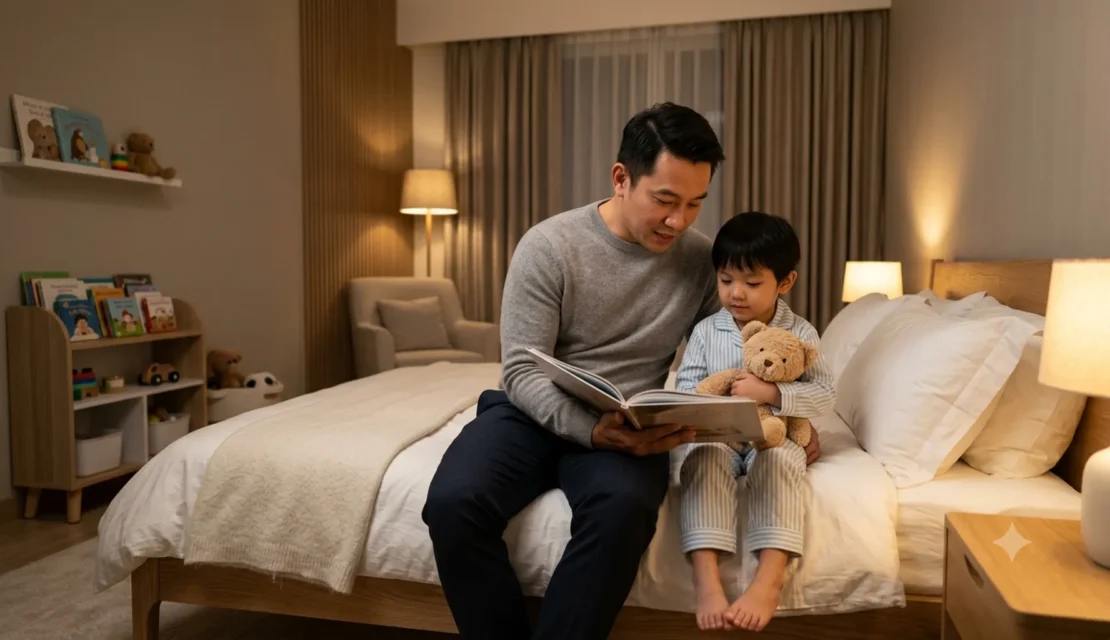
Calm the Body Before You Ask It to Sleep
Sometimes a child can’t sleep at night because their body is still in play mode. If the last hour before bed is filled with bright screens, rough play, or last minute excitement, their nervous system may still be fully switched on.
Reduce stimulation in the hour before bed
This is the moment to dial things down. Try softer lights, quieter voices, and activities that slow the pace rather than speed it up. Books, puzzles, drawing, and gentle music all work well.
Screens deserve special attention here. Tablets, phones, and television can make it much harder for children to feel sleepy, both because of the light and because of the stimulation. If possible, switch screens off at least one hour before bedtime. Yes, there may be complaints. Children rarely applaud the end of cartoons.
Give the body enough movement during the day
Some children do not sleep well simply because they have not used enough energy. Running, climbing, jumping, dancing, and outdoor play help regulate the body in a powerful way. A child who has moved well during the day often settles more easily at night.
This is one reason we place so much value on active learning and physical play at school. Children are built to move, not just to sit and then somehow magically feel sleepy later.
Help Your Child Feel Safe Enough to Let Go of the Day
A child may also stay awake because something emotional is tugging at them. Even when children cannot explain it clearly, worries about separation, school, darkness, or small daily stresses can show up most strongly at bedtime.
Make space for quiet conversation
Sometimes five calm minutes of connection can prevent forty minutes of bedtime drama. Before lights out, ask one or two simple questions that help your child unload the day.
You might ask:
- What was the best part of your day?
- Did anything feel tricky today?
- What would you like to do tomorrow?
Keep the tone relaxed. You are not conducting an interview, just creating enough space for your child to feel heard.
Use comfort without creating endless dependence
Comfort matters. A cuddle, a bedtime phrase, a favourite blanket, or a soft toy can help your child feel safe. The trick is to offer reassurance without turning bedtime into an endless series of returns, requests, and renegotiations.
You can be warm and firm at the same time. “We love you, you are safe, now it is time to rest” is often more helpful than staying for another twenty minutes because your child has suddenly remembered an urgent question about monkeys.
Child Can’t Sleep at Night, Check the Sleep Environment Too
Sometimes the simplest reason gets missed. The room itself may not be helping. Children are sensitive to light, sound, heat, and comfort more than we sometimes realise.
Create a sleep friendly bedroom
A helpful sleep space is usually:
- Dim or dark
- Quiet or softly covered by white noise
- Cool enough to feel comfortable
- Free from bright toys and distracting screens
If the bed feels like an extension of the playroom, sleep may take longer. A calm room helps send a clear message about what happens there.
Watch for bedtime habits that accidentally keep sleep away
Many parents, understandably, stay longer and longer beside a restless child because they hope it will help. Sometimes it does. Sometimes it teaches the child that falling asleep requires more and more parental presence each night.
If that pattern has developed, try stepping back gradually rather than all at once. Small changes are usually easier for children to handle than dramatic ones.
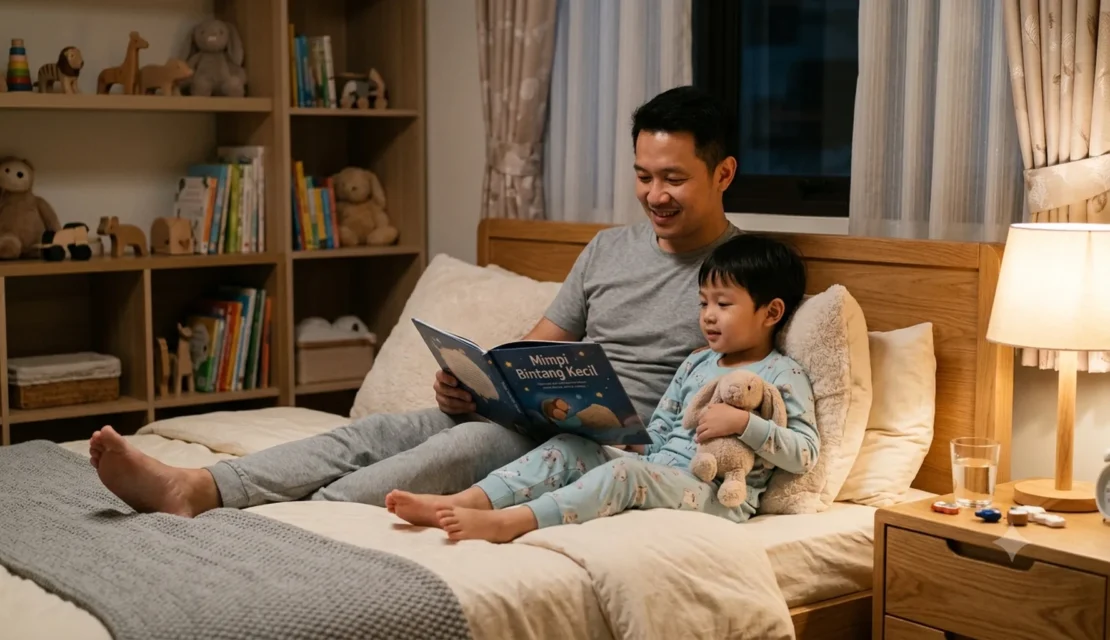
When It Might Be Time to Get Extra Support
If your child can’t sleep at night for a long stretch of time, snores heavily, wakes often in distress, or seems unusually tired during the day, it may be worth speaking with a pediatrician. Persistent sleep issues can sometimes have medical or developmental factors behind them.
Most bedtime struggles are part of normal childhood, but it is always okay to ask for help if something feels off. Parenting gets lighter when you stop trying to solve everything alone at 9 PM.
Better Days Often Begin the Night Before
When children sleep well, everything else tends to go better too. Mornings are smoother, emotions are steadier, and learning comes more easily. That is one reason we care so much about routines and wellbeing at Apple Tree Pre-School BSD.
If you would like a preschool environment that supports healthy rhythms, active play, emotional security, and joyful learning, we would love to show you our programs. Our location in the Educenter BSD Building also makes daily routines easier for many busy BSD families.
A Softer Path to Sleep Starts Here
If your child can’t sleep at night, take heart. Better sleep usually comes from steady routines, calmer evenings, enough movement, and a sense of safety that builds night by night. You do not need a perfect bedtime, you just need a kinder and more consistent one.
We would be happy to support your family with a warm school environment where children grow smart and happy together with parents. Chat with us on WhatsApp or call +62 888-1800-900 to learn more.
Register now, and come play and learn with other children.





Be the first to write a comment.