

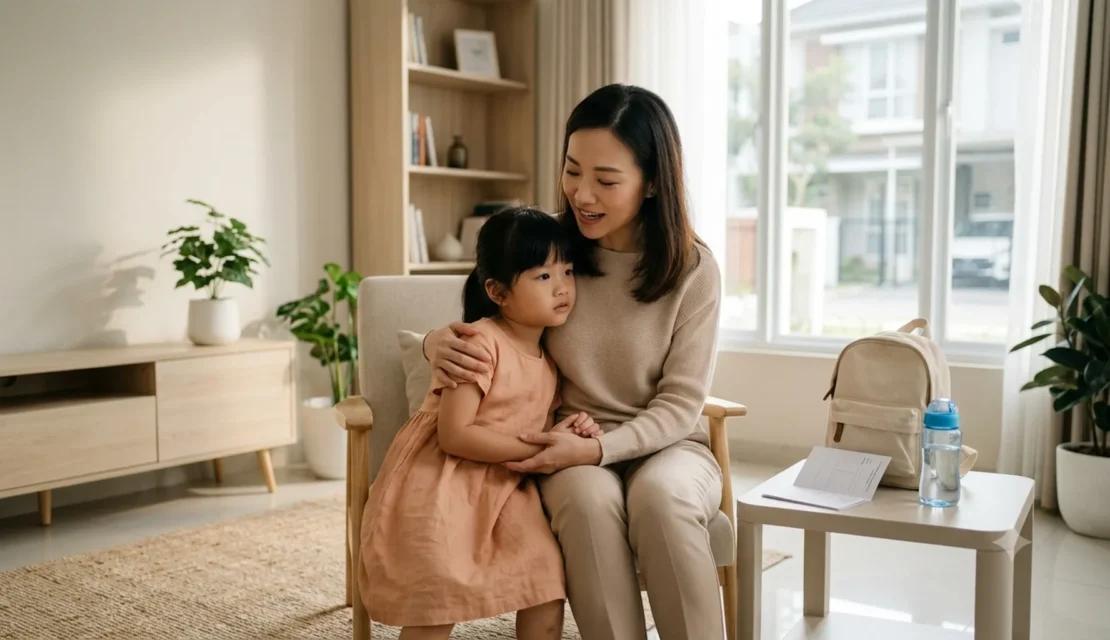
If you have ever stood in the middle of a shop, a café, or a school hallway with a child crying in public places, while strangers suddenly become very interested in your parenting, you are absolutely not alone. At Apple Tree Pre-School BSD, close to Educenter bsd, we talk about this with parents all the time, because public meltdowns are one of those classic early childhood moments that can make even the calmest adult want to disappear behind a display of biscuits. The good news is that these moments are manageable, and no, your child is not secretly plotting to embarrass you in front of the entire neighbourhood.
Most of the time, a tantrum in public is not about bad manners or bad parenting. It is about a young child whose feelings have become bigger than their ability to cope. Once you start looking at the meltdown through that lens, everything becomes a little less personal and a lot more practical.
Why a Child Crying in Public Places Is So Common
Young children are still learning how to regulate frustration, disappointment, hunger, noise, waiting, and the deeply unfair fact that adults sometimes say no. Public places tend to pile all those things together at once. Bright lights, crowded spaces, unfamiliar routines, and delayed snacks are not exactly a recipe for emotional balance.
That is why a child crying in public places is often reacting to overload, not trying to put on a performance. It may look dramatic, and to be fair, it often is dramatic, but underneath the drama is a child who has run out of coping skills.
What usually triggers public meltdowns
Some of the most common triggers include:
- Hunger or tiredness
- Too much waiting
- Sensory overload from noise or crowds
- Being told no
- Sudden transitions
- Wanting independence without having the skills yet
Once you spot these patterns, you can start planning around them. That alone can reduce a surprising number of meltdowns.
Child Crying in Public Places, Start With Your Own Calm First
This is the part nobody enjoys hearing when they are already stressed, but your nervous system matters. Children borrow our emotional tone. If you panic, rush, or sound embarrassed, your child often becomes even more overwhelmed.
Pause before you react
When the meltdown starts, take one breath before you do anything else. Not because breathing solves everything, but because it gives you one small second to respond instead of react. A calm face and steady voice help your child feel safer, even if they are still crying loudly enough to attract an audience.
You do not need to look cheerful. You just need to look grounded. Think less “perfect parent from a parenting book,” more “calm airport staff during minor turbulence.”
Do not parent for the crowd
One of the hardest parts of a public tantrum is feeling watched. Suddenly you are not just dealing with your child, you are also dealing with the imaginary panel of judges in aisle three. Try not to let strangers decide your tone.
Your job is not to prove you are in control. Your job is to help your child through the moment in the most effective way possible. Those are not always the same thing.
What to Do in the Moment When the Tantrum Starts
When a child crying in public places is already in full meltdown mode, long explanations usually do not help. Their brain is not ready for logic yet. Start with regulation first, then teaching later.
Get low and keep your words simple
If it is safe to do so, kneel to your child’s level. Use a calm, low voice and very short sentences.
You might say:
- “You are upset, I am here.”
- “You wanted that, and it is hard.”
- “We are going to calm down together.”
- “You are safe.”
Notice what is missing here. No lecture, no debate, no ten minute speech about gratitude in the supermarket.
Move to a quieter spot if possible
Sometimes the best move is simply reducing stimulation. Step outside, move to a quieter corner, or sit on a bench away from the crowd. A different environment can help your child settle faster.
This is not giving in. It is smart regulation. If adults take a break when they feel overwhelmed, it seems only fair that children get the same courtesy.
How to Prevent Public Tantrums Before They Begin
Not every meltdown can be prevented, because children are creative and life is unpredictable, but a lot of public crying can be reduced with a little planning. Prevention is often much easier than recovery.
Plan around basic needs
A tired, hungry child in a busy place is basically being asked to do emotional gymnastics without a mat. Before errands or outings, think about timing.
Try to check these first:
- Has your child eaten recently?
- Are they overdue for a nap or rest?
- Is the outing too long for their age?
- Do you have water and a simple snack?
- Have you built in a break?
These little things may sound ordinary, but ordinary things solve a lot of family problems.
Tell your child what to expect
Transitions are easier when children know what is coming. Before you enter the shop, clinic, or restaurant, give a short preview.
You can say, “We are buying groceries, then we go home,” or “We are waiting for ten minutes, then it is your turn.” Predictability helps children feel more secure, and secure children usually cope better.
Teach Emotional Skills When Nobody Is Melting Down
The best time to teach children how to manage big feelings is not during the actual public meltdown. It is later, when everyone is calm and nobody is lying dramatically across a shopping cart.
Name feelings in everyday life
Children regulate emotions better when they have words for what they feel. You can model this gently at home.
Try simple phrases like:
- “You felt frustrated when we had to leave.”
- “You were disappointed when I said no.”
- “Your body got overwhelmed.”
This helps your child connect feelings with language, which is a huge step toward coping instead of exploding.
Practise coping tools at home
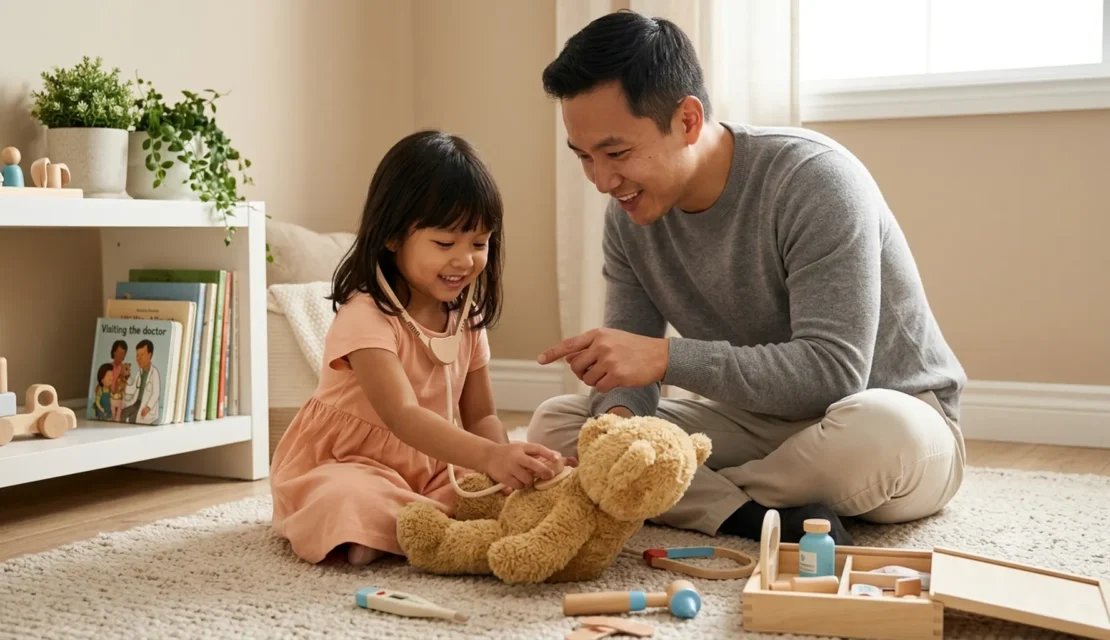
Small calming tools work better in public when they have been practised in calm moments first. You can make this playful and simple.
A few useful tools include:
- Taking slow dragon breaths
- Squeezing hands together
- Counting to five
- Hugging a comfort toy
- Asking for a break
Children are much more likely to use these tools when they already know them well.
When Boundaries Still Need to Stay Firm
Being empathetic does not mean saying yes to everything. If your child is crying because you would not buy three chocolates and a plastic dinosaur that lights up for no clear reason, you can still hold the limit kindly.
Validate the feeling, keep the boundary
This is one of the most useful parenting skills you can build. You can understand the feeling without changing the rule.
For example, “You really wanted that toy, and we are not buying it today.” Warm, clear, and steady. Children do not need endless explanations, they need consistency.
Follow through without punishment theatre
If the outing needs to end early because your child cannot recover, it is okay to leave. Not as a dramatic punishment, but as a practical response. Sometimes the kindest choice is simply to reset the day.
The goal is not to “teach them a lesson” in front of everyone. The goal is to help them return to a state where learning is even possible.

Everyday Confidence Grows With the Right Support
At Apple Tree Preschool BSD, we know that emotional regulation does not appear overnight. Children learn it through repetition, loving boundaries, and adults who stay steady even when things get messy. That is one reason our daily routines focus not just on academics, but also on confidence, communication, and social emotional growth.
If you would like to explore our programs, we would love to show you how we help children grow smart and happy together with parents. Our location in the Educenter BSD Building also makes daily routines easier for many busy BSD families, which we know is always a welcome bonus.
Softer Outings Can Start With Small Shifts
If you are managing a child crying in public places, please remember this does not mean you are failing and it does not mean your child is difficult by nature. It usually means your child is still learning how to handle big feelings in big spaces, and that learning takes time. Calm responses, simple preparation, and steady boundaries can make public outings feel much less overwhelming for both of you.
We would be happy to support your family with a warm preschool environment where emotional growth and joyful learning go hand in hand. Chat with us on WhatsApp or call +62 888-1800-900 to learn more.
Register now, and come play and learn with other children.





Be the first to write a comment.