

If your child won’t take vitamins, you are definitely not the only parent standing in the kitchen holding a tiny gummy like it is part of a high stakes peace negotiation. At Apple Tree Pre-School BSD, near Educenter bsd, we hear this from parents all the time, because little children can spot a suspicious tablet from across the room with truly impressive talent. One second you are offering “something healthy,” and the next second your child is acting like you have presented them with a spoonful of garden soil.
The good news is that this problem is usually more manageable than it feels in the moment. Most children are not refusing vitamins just to make your morning more dramatic, although some of them do seem to enjoy the theatre of it all. Once you understand why the resistance happens, you can make the daily routine much easier, calmer, and far less exhausting for everyone involved.
Why a Child Won’t Take Vitamins So Often
When a child won’t take vitamins, the issue is usually not the vitamin itself. It is more often about taste, texture, routine, independence, or plain old suspicion. Young children are naturally cautious about anything unfamiliar, especially if it smells fruity but somehow still feels medicinal. Frankly, they are not entirely wrong to be confused.
Some children dislike chewable vitamins because they are too chalky. Others dislike syrups because they are too sticky or too sweet. And some children simply do not like being told what to put in their mouth, which is a surprisingly strong opinion for someone who recently tried to eat a crayon.
What may be causing the refusal
A few common reasons children resist daily vitamins include:
- The taste feels too strong or artificial
- The texture is chewy, chalky, or sticky
- The smell makes them suspicious before they even try it
- They feel pressured, so the vitamin becomes a power struggle
- The routine is inconsistent, so it never feels normal
- They had one bad experience and now remember it forever
This is why forcing usually makes the situation worse. Once the vitamin becomes part of a daily battle, your child may focus less on the taste and more on the fact that it has become a contest of wills.

Child Won’t Take Vitamins, Start With Routine Before Persuasion
When you want something to feel easy for a child, routine is your best friend. Children trust what is familiar. If vitamins show up randomly, in different moods, at different times, they can feel like a strange event instead of a normal part of the day.
Pick one consistent time every day
Try offering vitamins at the same time each day, such as after breakfast or after dinner. A regular schedule helps your child stop seeing it as a surprise. It becomes one more predictable step, like brushing teeth or putting on shoes.
Morning often works well because the day has structure and children are less overtired. If evenings are calmer in your home, that is fine too. The exact time matters less than the consistency.
Keep your tone light and matter of fact
Children pay close attention to your energy. If you approach the vitamin like a major confrontation, they will sense that immediately. A calm, cheerful tone works much better than a long speech about health benefits that they absolutely did not ask for.
You can say something simple like, “Here is your vitamin, then we are off to play.” Short, relaxed, and boring in the best possible way. Boring routines are often the ones that stick.
Make Vitamins Feel More Friendly and Less Suspicious
If your child won’t take vitamins, presentation matters more than most adults expect. We know, it sounds slightly ridiculous that packaging or phrasing could change everything, but children are wonderfully dramatic about small details.
Offer age appropriate forms they may prefer
Not every child likes the same format. Some do better with gummies, some prefer liquids, and some tolerate chewables better than syrups. If one type has failed repeatedly, it may be worth asking your pediatrician which alternatives are suitable for your child’s age and needs.
You might find success with:
- A gummy vitamin with a familiar fruit taste
- A liquid vitamin mixed into a tiny amount of food or drink, if approved by your pediatrician
- A chewable vitamin taken with water afterward
- A powder form recommended by a doctor for easier mixing
Always check instructions carefully and avoid disguising medicine or vitamins in a way that could confuse children about what food and medicine are. Safety comes first, even when you are tired and desperate before school.
Give limited choices
Children love having some control. You do not need to ask, “Do you want your vitamin?” because that often invites a proud and immediate “No.” Instead, offer two acceptable choices.
Try questions like:
- “Would you like your vitamin before breakfast or after breakfast?”
- “Do you want water first or after?”
- “Should we use the blue spoon or the yellow spoon?”
You are still guiding the routine, but your child feels included. This tiny shift can work wonders.
Turn the Habit Into Something Positive
Children learn best through repetition, play, and connection. If your child won’t take vitamins, it can help to make the experience feel lighter instead of more serious.
Use praise for cooperation, not pressure for perfection
Notice every small success. If your child touches the vitamin, smells it, or takes even a tiny step toward cooperation, acknowledge it. You are building comfort, not demanding instant perfection.
Say things like, “You were really brave trying that,” or “I like how you stayed calm.” Children respond far better to encouragement than to frustration, even when frustration feels extremely deserved before 8 AM.
Create a simple reward rhythm
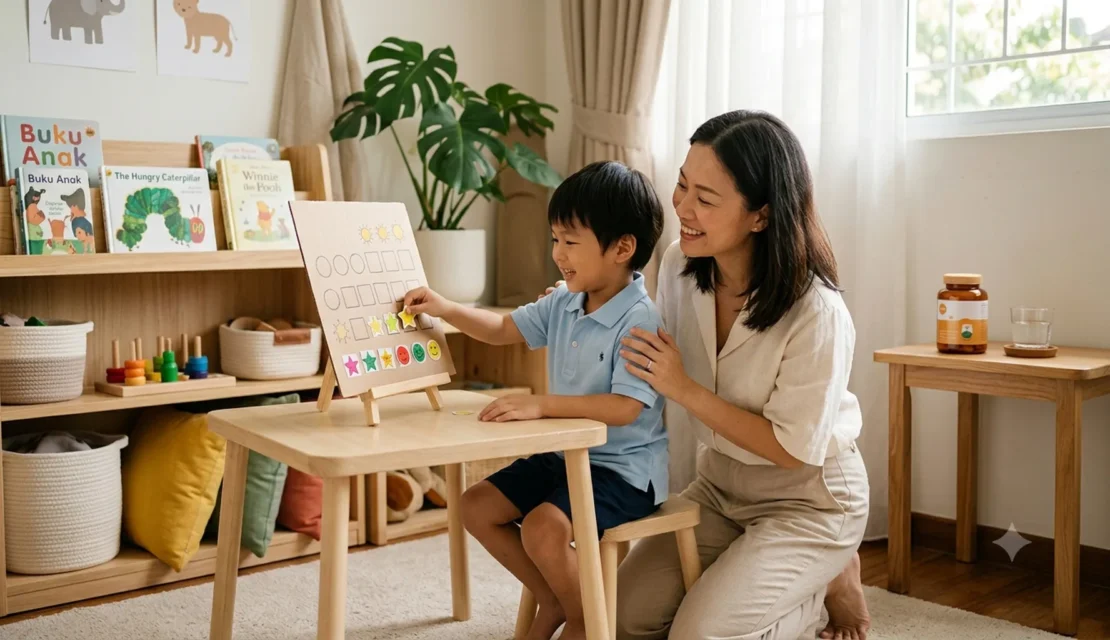
A sticker chart can be surprisingly effective for preschoolers. One sticker for each smooth vitamin routine, then a small non food reward after a certain number of stickers. Nothing huge, just something fun and motivating.
A few easy reward ideas include:
- Choosing the bedtime story
- Picking the family song in the car
- Extra coloring time
- Choosing a weekend activity
This works best when the reward celebrates consistency, not when it feels like a bribe pulled out in panic.
When Your Child Won’t Take Vitamins, Look at the Bigger Picture
Sometimes vitamin refusal is not just about vitamins. It may be part of a larger pattern involving feeding challenges, sensory sensitivity, or a strong need for control. That does not mean something is terribly wrong, but it does mean the situation may need a little more patience and observation.
Check whether your child is already overwhelmed
If mornings are rushed, noisy, and packed with too many instructions, the vitamin may simply become the final straw. A calmer routine can reduce resistance across the board. Children often cooperate better when they do not feel hurried from the moment they open their eyes.
This is one reason structured early childhood environments matter so much. At school, children usually respond well to rhythms that feel steady, warm, and predictable. Home routines benefit from that same sense of gentle structure.
Ask your pediatrician when needed
If your child consistently gags, vomits, or becomes extremely distressed with vitamins, it is worth checking with your pediatrician. You may need a different form, a different dose, or even a conversation about whether supplementation is necessary in the first place. It is always better to get clear guidance than to spend months in a daily wrestling match with a berry flavored chewable.
Healthy Habits Grow Best in the Right Environment
When children are supported with calm routines, positive encouragement, and age appropriate expectations, small daily habits become much easier to build. That includes eating, sleeping, toileting, and yes, even taking vitamins without a dramatic monologue.
At Apple Tree Preschool BSD, we help children grow smart and happy through routines that build confidence and independence step by step. If you would like to explore our programs, we would love to show you how our classes support healthy habits alongside academic and social development. Our location in the Educenter BSD Building also makes things easier for busy BSD families, which we know is never a small detail.
A Gentler Daily Rhythm Can Change Everything
If your child won’t take vitamins, try to think of it as a skill building moment, not a parenting failure. With consistency, simple choices, a calmer tone, and the right format, this daily struggle can become much less dramatic and much more manageable. Most children do get there, even the ones who currently react to a gummy vitamin like it is a personal insult.
We would be happy to support your family with a warm, structured environment where healthy routines grow naturally. If you are looking for a preschool that understands real family life and child development in equal measure, we would love to meet you.
Chat with us on WhatsApp or call +62 888-1800-900 to learn more. Register now, and come play and learn with other children.





Be the first to write a comment.