

Picture this: you call your child for dinner, and they don’t even blink. They’re completely locked in, eyes glued to the screen, controller in hand, utterly unreachable. You call again. Nothing. You tap them on the shoulder and they look at you like you’ve just interrupted something of world-historical importance.
Sound familiar? You are definitely not alone.
Managing screen time limits for kids has become one of the most genuinely tricky parts of modern parenting, especially as games get more immersive, more social, and honestly, more fun than ever before. The challenge isn’t just getting them off the screen. It’s figuring out how much is too much, what the real risks are, and how to set boundaries that actually stick without turning every evening into a negotiation marathon.
We’ve had so many conversations with parents here at Apple Tree Preschool BSD about exactly this. So let’s talk about it properly.
Why Screen Time Limits for Kids Actually Matter
Setting screen time limits for kids isn’t about being the strict parent who takes all the fun away. It’s about protecting something that is genuinely precious and irreplaceable during the early childhood years: brain development.
Between the ages of 2 and 6, a child’s brain is growing at a pace that will never happen again in their lifetime. The connections being formed during this window shape how they learn, how they relate to others, how they manage emotions, and how they approach challenges for the rest of their lives. Too much passive or overstimulating screen time during this period doesn’t just eat into the clock. It actively competes with the experiences that build those connections.
What Excessive Gaming Actually Does to Young Children
We want to be clear here: we are not saying screens are evil. Educational content, interactive apps used thoughtfully, and even some games can have genuine value. But when gaming becomes the dominant activity in a young child’s day, the research is pretty consistent about what gets squeezed out.
- Physical movement drops significantly, and young children need large amounts of active play to develop gross motor skills, coordination, and core strength.
- Language development slows when screen time replaces conversation, storytelling, and interactive reading with real people.
- Sleep quality takes a hit, particularly when gaming happens in the hour or two before bedtime, because the blue light and the stimulation both interfere with melatonin production.
- Attention regulation becomes harder when a child’s brain is constantly fed the rapid-fire reward cycles that most games are deliberately designed to deliver.
- Social skills get less practice, because gaming, even multiplayer gaming, doesn’t replicate the nuanced, unscripted social learning that happens in face-to-face play.
None of this means your child is doomed because they had a long gaming Saturday. It means that patterns matter, and consistent, thoughtful limits make a real difference over time.
What the Experts Actually Recommend
The World Health Organization and the American Academy of Pediatrics both offer guidance that most parents find genuinely useful as a starting point.
- Under 18 months: Screen time is best avoided entirely, with the exception of video calls with family.
- 18 to 24 months: Very limited, high-quality content only, and always watched together with a parent, not handed to a child alone.
- Ages 2 to 5: No more than one hour per day of high-quality programming, co-viewed where possible.
- Ages 6 and up: Consistent, reasonable limits that don’t crowd out sleep, physical activity, homework, and family time.
The key word in all of this is “consistent.” Limits that shift depending on your mood or how tired you are will always be tested, and children are extraordinarily skilled at identifying exactly which conditions produce the most negotiating room.
How to Set Screen Time Limits That Actually Work
Knowing the numbers is one thing. Getting them to work in your actual home, with your actual child, is a different conversation entirely. Here’s what we’ve seen work well for families in our community.
Start With Structure, Not Restrictions
Rather than framing it as “you can’t play games,” frame it around what the day looks like as a whole. When children understand that gaming time comes after outdoor play, meals, reading, and homework, it becomes a natural part of a routine rather than a prize being withheld. This approach dramatically reduces the daily negotiation because the rule isn’t personal, it’s just how the day runs.
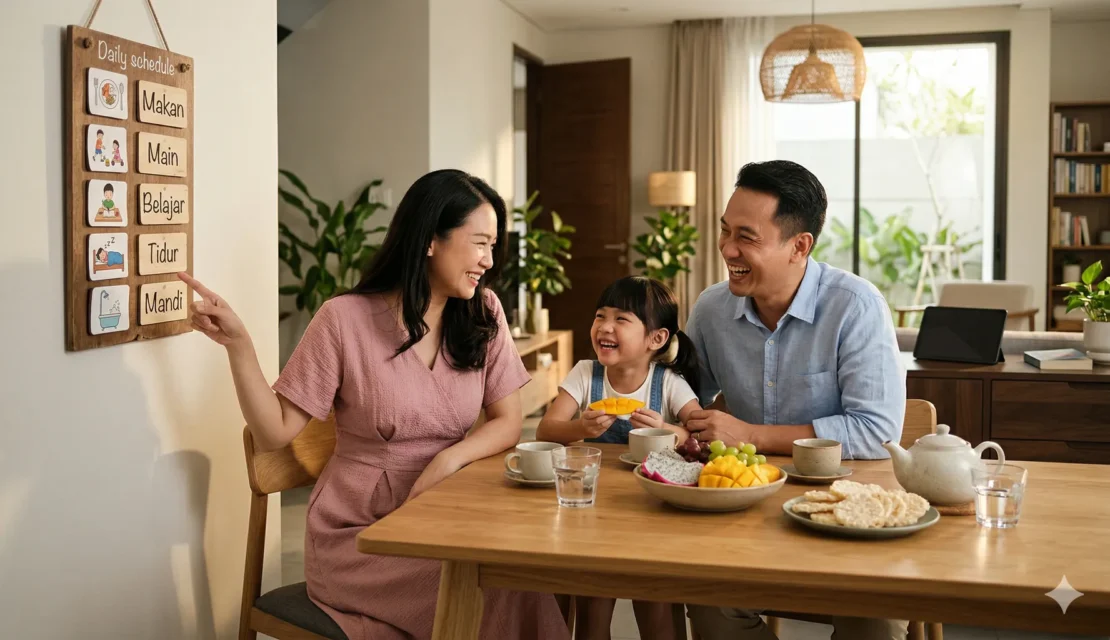
A simple visual schedule works beautifully for preschool-aged children. Draw or print out the daily routine with gaming clearly shown in its slot. Children this age respond incredibly well to being able to see where they are in the day and what comes next.
Use Timers and Transition Warnings
One of the most consistent sources of conflict around screen time is the abrupt ending. “Time’s up, turn it off” is a near-guaranteed tantrum trigger, especially mid-game. A five-minute warning followed by a two-minute warning, using a visible timer that the child can see, gives them time to mentally prepare for the transition.
Apps and parental control tools that lock the screen after a set time are genuinely useful here, because the boundary becomes external rather than a personal decision you’re making in the moment. It’s not “Mum decided to end it.” It’s “the time is up.” Less conflict, same outcome.
Make the Offline World More Interesting
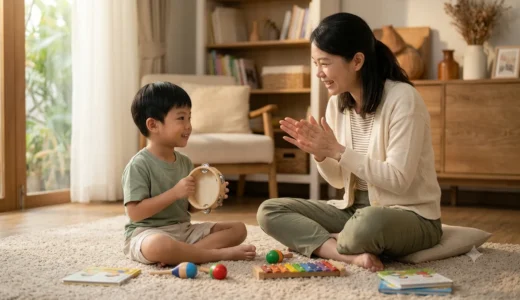
This sounds obvious but it’s worth saying clearly: children gravitate toward screens when the alternative is boredom. If the offline world is full of interesting, engaging, joyful things, screens become one option among many rather than the only option that delivers stimulation.
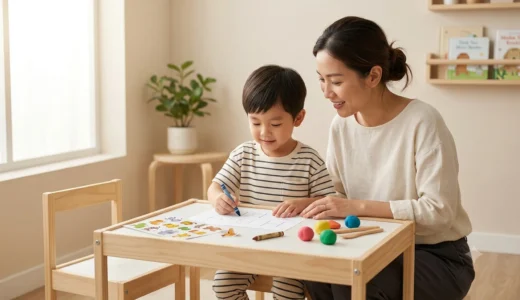
This means investing in open-ended toys, outdoor time, creative materials, books, playdates, and experiences that are genuinely exciting to your child. It also means being present with them sometimes, playing alongside them, reading together, or just being in the same room doing your own thing, because your company is the most compelling thing in a young child’s world.
Be Consistent and Model What You Expect
Here is the uncomfortable truth that we say with complete warmth: children watch us. If you set a one-hour limit for them but spend three hours scrolling on your phone at the dinner table, the message that lands is not the one you’re trying to send. Modelling your own healthy screen habits, putting your phone away during family meals, having screen-free evenings, and being visibly present and engaged, does more for your child’s relationship with screens than any rule you could write.
Building Better Habits Starts Earlier Than You Think
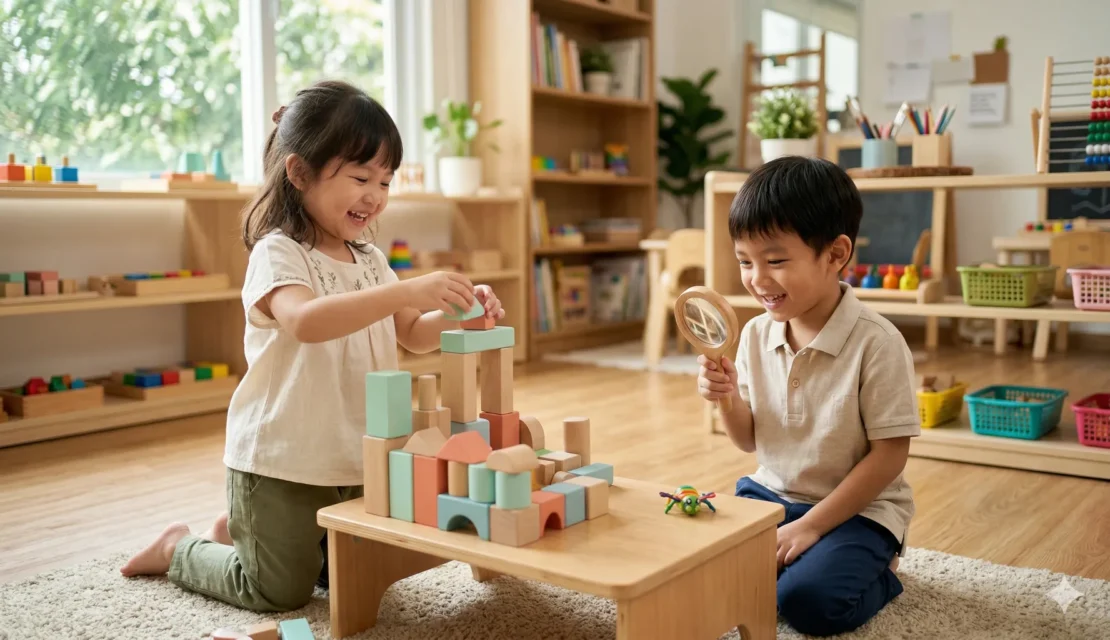
Everything we’ve talked about, structure, routine, balance, self-regulation, is precisely what the early years of a child’s education should be building. At Apple Tree Preschool BSD, nestled inside the Educenter BSD Building, our days are built around exactly the kind of rich, varied, hands-on experiences that develop the whole child.
Our programmes, from our gentle Toddler classes right through to Kindergarten 2, are designed to make the real world irresistibly interesting. Through our Singapore curriculum, children move, create, explore, collaborate, sing, build, question, and grow in an environment where learning feels like the most exciting game in the room.
When children have a week full of genuine engagement and stimulation, they come home with full cups and much less desperation for screen-based entertainment. The habits you build at home and the foundations we build at school work together in the best possible way.
Take a look at our full range of classes and programmes to find the right fit for your little one.
Let’s Keep the Conversation Going
Setting healthy screen time limits for kids isn’t a one-time conversation. It’s an ongoing, evolving part of raising a child in the digital age, and it genuinely helps to have a community and a school that understands what you’re navigating.
We’d love to be part of your family’s journey. Whether your child is 18 months or heading toward primary school, we have a programme designed to help them grow smart, happy, and wonderfully curious about the world beyond the screen.
Register now and come play and learn with other children at Apple Tree Preschool BSD! Chat with us on WhatsApp or call us at +62 888-1800-900. We’d love to hear from you!


Be the first to write a comment.