

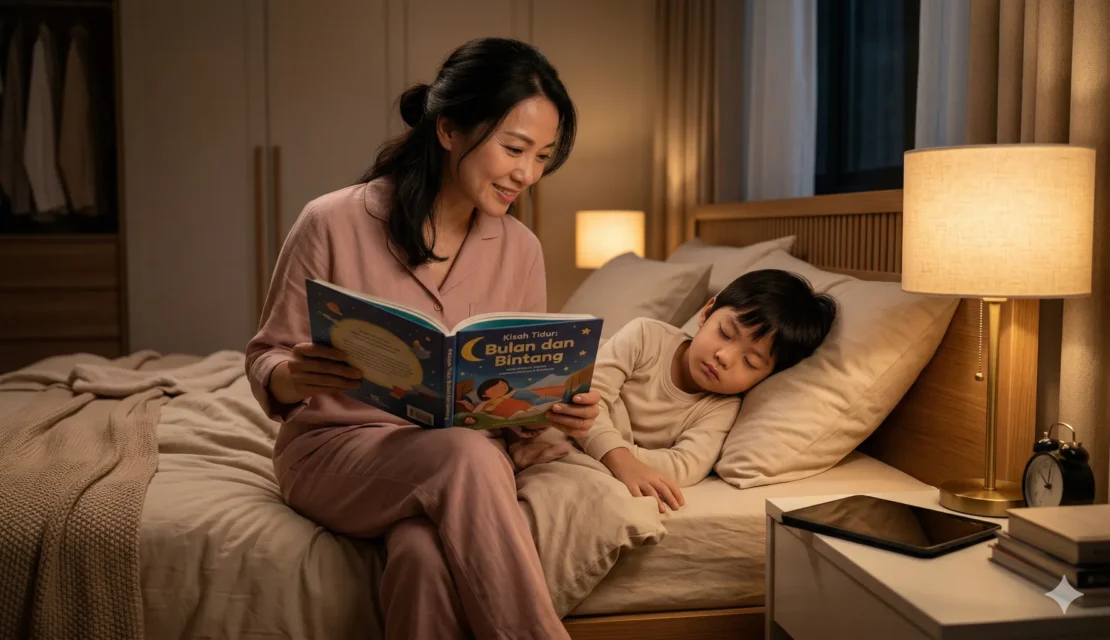
It’s 11:30 PM. The house is quiet. You’ve gone to bed. And somewhere down the hall, behind a closed door with a suspicious glow coming from underneath it, your child is still very much awake, fully alert, and apparently in the middle of an urgent gaming situation that simply cannot wait until morning.
If you’ve lived this moment, you already know the particular exhaustion that comes with it. Not just the tiredness of being woken up, but the deeper frustration of having tried everything and still finding yourself with a child up all night gaming, again, on a school night, with absolutely no sign of slowing down.
We hear this from parents constantly at Apple Tree Preschool BSD, and we want to be honest with you: this isn’t a small problem, and it isn’t your fault. But it is fixable. Let’s talk about how.
Why Your Child Up All Night Gaming Is a Bigger Deal Than Lost Sleep
Most parents start with the obvious concern: their child is tired the next day. And yes, that matters. But a child up all night gaming is dealing with something that goes quite a bit deeper than a yawn at breakfast.
The combination of sleep deprivation and excessive gaming in young children creates a cycle that genuinely affects brain development, emotional regulation, learning capacity, and physical health in ways that accumulate over time. Understanding the full picture is what motivates real change, for you and for your child.
What Gaming Actually Does to a Young Brain at Night
Games are not designed to be put down easily. This is not an accident. The reward systems built into most video games, the level completions, the streaks, the social pressure of online play, are specifically engineered to keep players engaged. For an adult brain, this is a manageable pull. For a developing child’s brain, it is extraordinarily difficult to resist.
When your child is up all night gaming, their brain is flooded with dopamine hits on a loop. Every win, every new level, every notification keeps the reward system firing. The result is a brain that is simultaneously overstimulated and unable to wind down, which is exactly the opposite of what the body needs to transition into sleep.
Add the blue light from screens suppressing melatonin production, and you have a child who genuinely cannot fall asleep easily even if they want to. The body’s sleep signal has been chemically blocked.
The Knock-On Effects You Might Not Be Connecting
A child who is regularly up all night gaming rarely shows up the next day just tired. The effects tend to ripple out in ways that parents sometimes attribute to other causes.
- Mood and emotional regulation take a significant hit after poor sleep. The meltdowns, the irritability, the hair-trigger reactions you’re seeing during the day may be directly connected to what happened the night before.
- Concentration and memory are both heavily dependent on sleep. A child who didn’t sleep properly genuinely struggles to absorb and retain new information, which matters enormously in the preschool and early school years.
- Appetite and physical health are disrupted by irregular sleep patterns. Children who sleep poorly tend to crave higher-sugar foods and have less energy for physical activity.
- Social interactions suffer because an overtired, overstimulated child has fewer emotional resources to navigate the complex social world of play, sharing, and communication.
None of these effects are permanent, but they do compound when the late-night gaming pattern becomes a regular habit.
Practical Solutions for the Child Up All Night Gaming
Here is what we want to say before diving into solutions: firmness and warmth are not opposites. The most effective approaches combine clear, non-negotiable boundaries with genuine empathy for how hard those boundaries are for your child to accept. You can be both kind and consistent, and in fact, that combination is far more effective than either alone.
Solution 1: Remove the Device From the Bedroom at Night
This sounds simple, and it is. It is also the single most effective thing you can do. A child cannot be up all night gaming if the device is not in their room. Full stop.
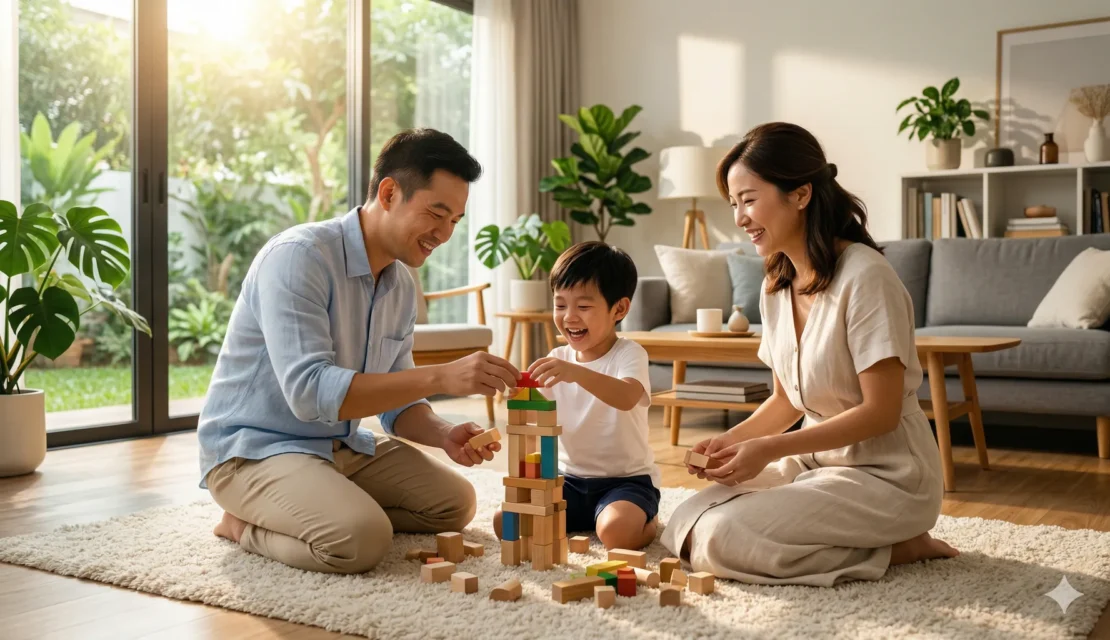
We know this feels like a battle waiting to happen, and the first few nights probably will be. But establish a clear “device dock,” a central spot in the living room or kitchen where all screens are charged overnight, and apply this rule to everyone in the household, including yourself. When it becomes a family norm rather than a punishment aimed at one child, the resistance drops considerably. It also removes the temptation entirely, which is more realistic than asking a young child to exercise self-control in the dark at midnight.
Solution 2: Set a Non-Negotiable Screen-Off Time
An hour before bed, screens go off. Not negotiable, not subject to “just five more minutes,” and not moveable based on where they are in the game. Sixty minutes is the minimum buffer that sleep researchers recommend between screen use and bedtime, and we’d suggest you think of it as a firm closing time rather than a flexible suggestion.
The transition away from gaming is genuinely hard for children, particularly when they’re mid-game or mid-conversation with online friends. Reduce the conflict by giving a ten-minute warning, then a five-minute warning, using a visible timer they can see. The ending becomes the timer’s doing rather than yours, which takes a surprising amount of heat out of the moment.
Solution 3: Build a Wind-Down Routine That the Body Learns to Follow
The hour after screens go off is just as important as the screen-off itself. A consistent wind-down routine teaches the body and brain that sleep is coming, and over time, the routine itself begins to trigger drowsiness. This is genuine sleep science, and it works beautifully for children when applied consistently.
A simple wind-down sequence might look like this:
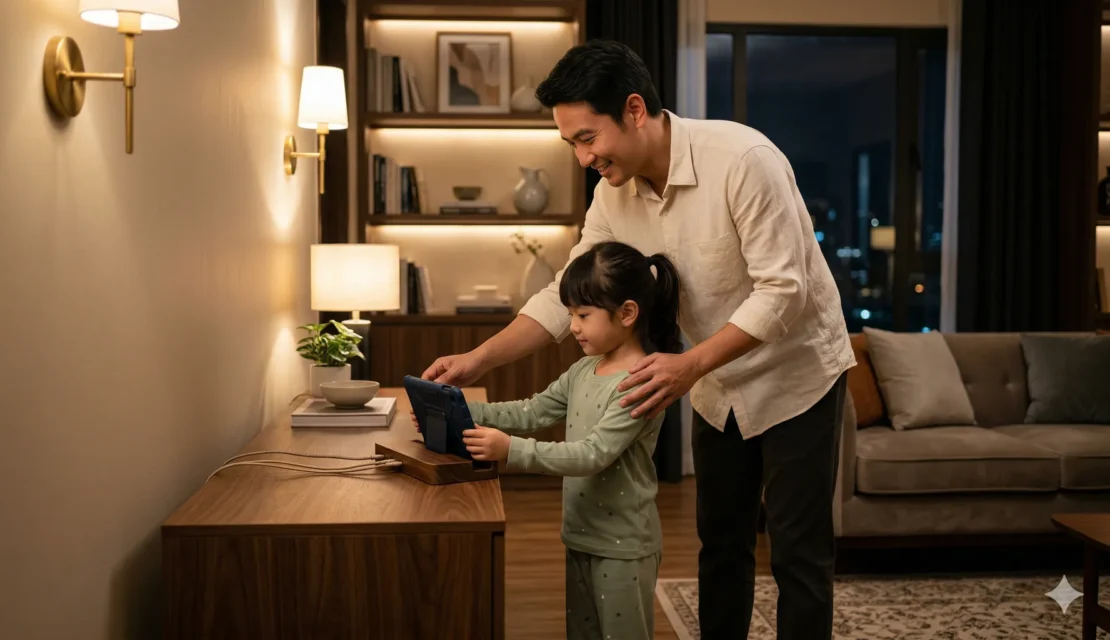
- A warm bath or shower, which raises and then lowers body temperature in a way that naturally promotes sleepiness
- Ten to fifteen minutes of reading together or independent reading, which is calming, screen-free, and great for language development
- A brief conversation about one good thing from the day, a habit that grounds the child emotionally and ends the day on a positive note
- Lights out at a consistent time, even on weekends where possible
The key word here is consistent. A wind-down routine that happens every night becomes a biological cue. One that happens when you remember to do it is just a nice idea.
Solution 4: Have the Honest Conversation With Your Child
Children, even very young ones, respond better to explanations than to rules handed down from above. Sit with your child during the day, not in the heat of a midnight argument, and talk about why sleep matters. Keep it simple and concrete.
“Your brain needs sleep to remember things and feel happy. When you play games at night instead of sleeping, your brain doesn’t get what it needs, and that’s why we feel grumpy and sad the next day.” That’s a message a four-year-old can genuinely understand and hold onto.
Involve them in creating the plan where possible. Ask them what they think is a fair gaming time. Ask them what they’d like their wind-down routine to look like. Children who feel heard and included in the solution are dramatically more cooperative than children who feel rules are being imposed on them.
Solution 5: Make Daytime More Fulfilling Than Nighttime Gaming
A child who is deeply engaged, physically active, socially connected, and genuinely stimulated during the day has much less psychological need to chase stimulation at midnight. Late-night gaming is often partly about filling an emptiness, a lack of excitement or connection during waking hours.
This is worth sitting with honestly. Is your child getting enough outdoor play? Enough face-to-face social time? Enough creative, open-ended activities that feel genuinely exciting? When the daytime cup is full, children are far more naturally ready for sleep when bedtime comes.
The Foundation You Build Now Will Shape Everything
Helping your child develop healthy sleep habits and a balanced relationship with screens is not just about surviving the current phase. It is laying down patterns of self-regulation, impulse control, and wellbeing that will serve them for life.
At Apple Tree Preschool BSD, based in the Educenter BSD Building, our entire programme is built around giving children days so full of real, meaningful, joyful experiences that the screen simply doesn’t need to fill every gap. Through our Singapore curriculum, children are moving, creating, socialising, and exploring in ways that build the whole child, not just their academic skills.
When children have a school life that genuinely excites and engages them, they come home more settled, sleep more readily, and are far less likely to be the child up all night gaming because the real world has already given them everything they needed.
Explore our full range of classes and programmes for children from 18 months through to age 6.
A Well-Rested Child Is a Happy, Ready-to-Learn Child
Solving the problem of a child up all night gaming takes time, consistency, and a lot of patience on your part. But the payoff, a child who sleeps well, wakes up bright, and approaches the day with genuine energy and curiosity, is absolutely worth every difficult night it takes to get there.
You don’t have to figure this out on your own. We are here to be your partner in raising a child who is smart, happy, and thriving in every way.
Register now and come play and learn with other children at Apple Tree Preschool BSD! Chat with us on WhatsApp or call us directly at +62 888-1800-900. We would love to welcome your family!




Be the first to write a comment.