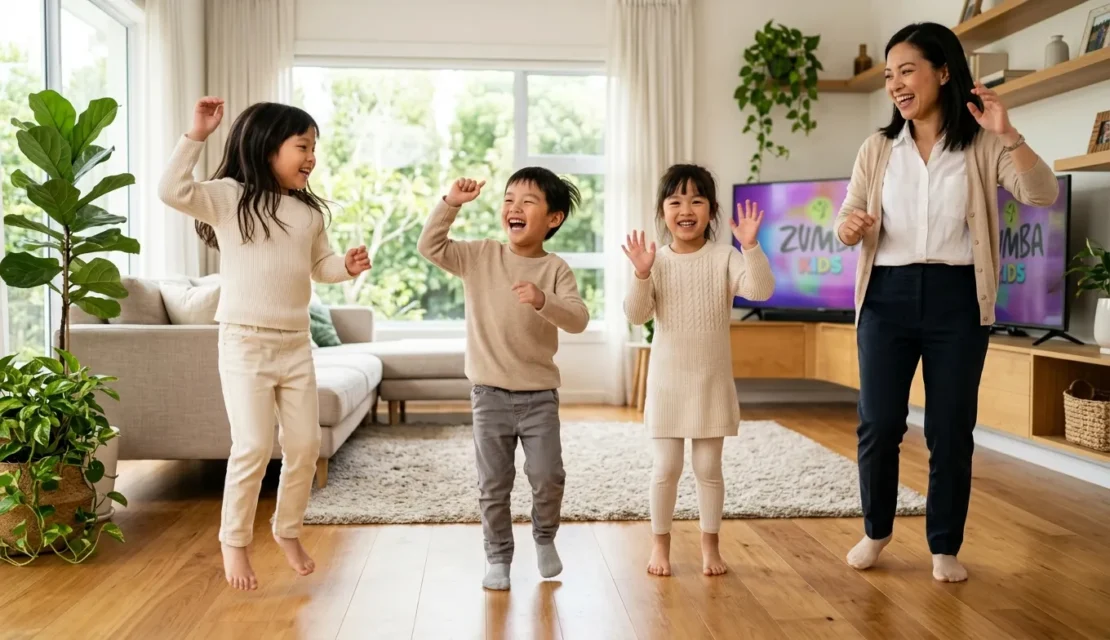
If your child has ever turned your living room into a full concert arena after hearing one upbeat song, you already understand why Zumba Kids routines are such a hit. At Apple Tree Preschool BSD, located in the Educenter BSD Building, we love activities that help children move, laugh, and learn at the same time. The best part is that fun home exercise does not need expensive equipment, a giant playroom, or your own secret career as a dance instructor.
Sometimes parents tell us they want their child to be more active, but they are also dealing with tiny attention spans, endless energy at exactly the wrong hour, and a child who suddenly becomes “very tired” the second exercise sounds serious. We get it. That is exactly why Zumba works so well. It feels like play, looks like a party, and quietly supports coordination, rhythm, balance, and confidence while your child is busy having the time of their life.
Zumba Kids Routines Make Home Exercise Feel Like Play
One of the biggest reasons children enjoy Zumba Kids routines is simple. They do not feel like exercise. They feel like music, movement, and silliness with permission. For preschoolers, that is usually the perfect combination.
When children move to music, they use their whole body in a natural and joyful way. They jump, twist, clap, reach, march, and spin without overthinking it. That matters, because young children learn best when their bodies are involved, not when they are told to stand in one spot and “do fitness” like tiny office workers.
Why movement through music works so well
Music gives children structure without pressure. A strong beat helps them predict what comes next, and repeated movements make them feel successful quickly. Even children who are usually shy in group activities often loosen up once the music starts.
We see this often in preschool. A child may begin by just swaying a little, then suddenly they are doing big arm moves like they are performing for a stadium crowd in BSD. Confidence can arrive in very surprising ways.
Why home is a great place to start
Home is often the easiest place for children to try movement without feeling watched or corrected. They can wiggle, miss the beat, invent dramatic new moves, and recover as if nothing happened. Honestly, that freedom is part of what makes the experience so useful.
When you try Zumba Kids routines at home, you also create positive family habits. Exercise becomes something cheerful and shared, not a chore everyone avoids until the last possible minute.
Easy Zumba Kids Routines You Can Try at Home
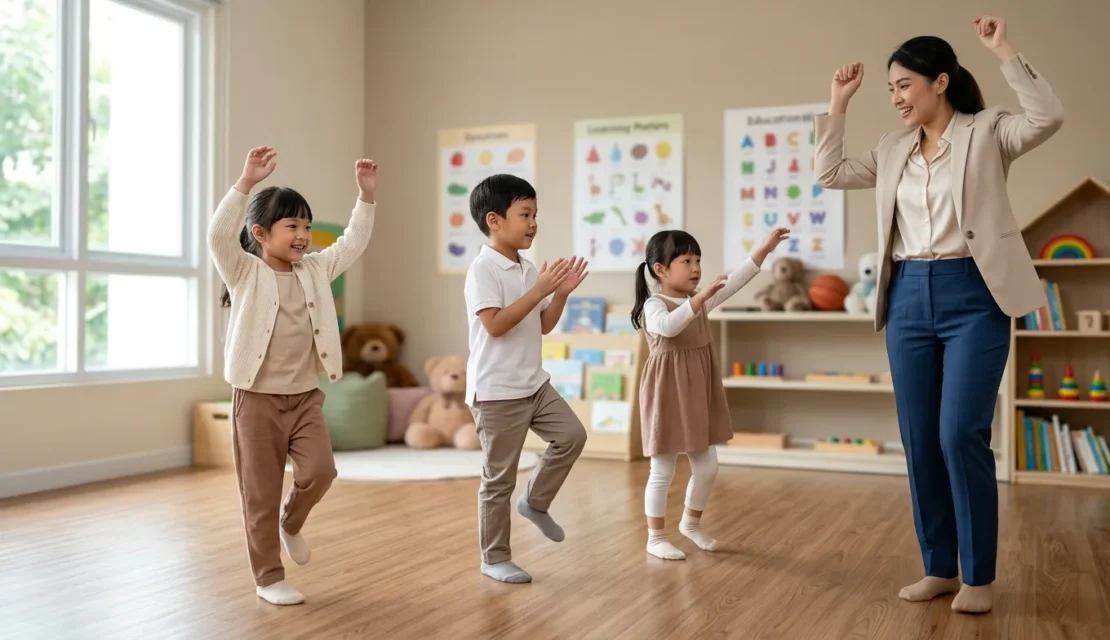
You do not need complex choreography to make this work. In fact, preschoolers do better with short, repetitive movements they can remember easily. The “latest” approach that works best for little children is simple, energetic, and playful.
1. March, clap, and turn
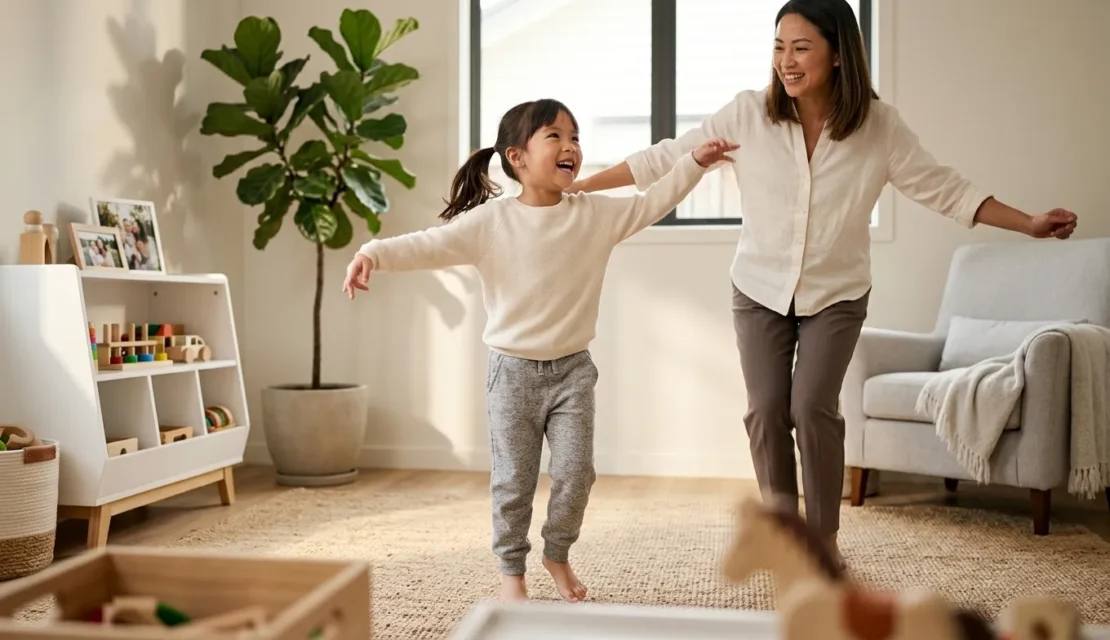
This is one of the easiest Zumba Kids routines to begin with. Ask your child to march in place for eight counts, clap their hands four times, then do one slow turn. Repeat it with music and suddenly you have a routine.
This movement pattern helps children practise rhythm, coordination, and body control. It also works well for beginners because the steps are easy to copy. Nobody needs to panic, and that includes the adults.
2. Side step and reach
Step to the right, bring feet together, then step to the left and bring feet together. Add big reaching arms overhead and your child instantly feels like they are in a proper dance class. Preschoolers love movements that feel “big,” and this one does the job beautifully.
This routine supports balance and spatial awareness. It is also a lovely choice for children who need movement without too much jumping around the furniture.
3. Jump, freeze, and smile
Children never seem to get tired of games that involve freezing dramatically. Play upbeat music and let them do small jumps for a few seconds, then pause the music and freeze in a funny pose. Start the music again and repeat.
This version of Zumba Kids routines helps with listening skills, timing, and self control. It is also wildly entertaining to watch, especially when your child freezes with the expression of someone caught in a very serious dance scandal.
4. Animal move dance
Turn the routine into pretend play by asking children to move like different animals. Stomp like an elephant, flap like a bird, bounce like a rabbit, or slink like a cat. Add music and switch animals every few beats.
This is fantastic for imagination and gross motor development. It also helps children stay engaged longer because the focus is on play, not performance.
What Children Learn from Zumba Kids Routines
The beauty of Zumba Kids routines is that they support far more than physical fitness. While your child is busy dancing around the house, they are building a surprising number of important early childhood skills.
Better coordination and motor control
Dance based exercise helps children connect movement with rhythm and direction. When they follow simple sequences, they learn how to control their bodies more smoothly. Over time, this supports jumping, running, climbing, and even classroom skills like sitting with better posture.
Movement really is part of learning. For preschoolers, the body and brain are very much working as a team.
Stronger focus and listening skills
Short dance routines teach children to pay attention to cues, copy movement patterns, and switch actions when the music changes. These small moments of listening and responding build concentration in a very natural way.
This is one reason we value music and movement in the early years. Children often learn focus more easily through action than through verbal instruction alone.
More confidence and self expression
There is something wonderfully freeing about dancing without worrying whether it looks perfect. Children feel proud when they remember a routine, invent a move, or simply join in without hesitation. That sense of “I can do this” matters.
A confident child does not become confident only through worksheets and praise. Confidence often grows through experiences where the body, emotions, and imagination all get involved together.
Tips for Making Zumba Time Work at Home
If you want Zumba Kids routines to become a happy part of your week, keep things simple. You do not need to run a perfect class. You just need enough structure to make it fun and enough flexibility to keep everyone cheerful.
Here are a few tips that help:
- Keep sessions short, around 10 to 15 minutes for preschoolers
- Choose upbeat songs with a clear beat
- Repeat favourite moves instead of changing everything too quickly
- Give lots of encouragement, even when the routine becomes creative in unexpected ways
- Join in if you can, because children love it when you move with them
You do not have to be polished. In fact, being a little silly helps. Children respond beautifully when they see adults enjoying movement instead of treating it like a task.
Why We Love Movement Based Learning at Apple Tree
At Apple Tree Preschool BSD, we know children grow best when learning is active, meaningful, and full of joy. Music and movement activities help children build motor skills, social confidence, emotional expression, and body awareness in ways that feel natural and exciting. That is why active learning is part of everyday life in our classrooms.
We also understand that families want more than academic progress alone. You want your child to be healthy, happy, curious, expressive, and confident in their own skin. If you would like to see how we support that kind of whole child growth, you can explore our programs.
A Happy Way to Get Moving Together
The best Zumba Kids routines are the ones that make your child laugh, move, and ask to do it again tomorrow. They do not need to be fancy. They just need music, a little space, and the freedom to enjoy movement without pressure. When exercise feels like play, children are far more likely to embrace it, and that is a win for everyone in the house.
If you are looking for a preschool where children can learn through movement, creativity, and joyful everyday experiences, we would love to welcome your family. Chat with us on WhatsApp or call us at +62 888-1800-900. Come play and learn with other children at Apple Tree Preschool BSD.


Be the first to write a comment.