If your forgetful child loses school items so often that you are starting to suspect pencils, water bottles, and hats are quietly running away on their own, you are absolutely not alone. At Apple Tree Pre-School BSD, near Educenter bsd, we hear this from parents all the time, because early childhood and misplaced belongings tend to go together rather well. One day it is a missing sock, the next day it is a lunch box lid, and by Friday even the child looks mildly surprised by what has vanished.
The good news is that forgetfulness in young children is usually not laziness, disrespect, or some secret plot to make your mornings more chaotic. It is usually a skill issue, not a character flaw. Children need time, routine, and practice to learn how to notice, remember, and take responsibility for the little things they carry through the day.
Why a Forgetful Child Loses School Items So Easily
When a forgetful child loses school items, it helps to remember that young children are still developing executive functioning skills. That includes attention, memory, planning, and organization. In adult terms, this means they are trying their best while their brain is still under construction, which honestly explains quite a lot.
Children are often focused on the exciting part of the day, not the practical part. They remember the game they played, the song they sang, and the fact that someone brought dinosaur stickers. They do not always remember where they placed their sweater after snack time.
What usually causes children to forget their things
A few common reasons children lose belongings again and again include:
- They are easily distracted by play and social activity
- They do not yet have a consistent routine for packing and unpacking
- Their belongings all look similar to everyone else’s
- They rely on adults to notice everything for them
- They feel rushed during transitions
- They are still learning responsibility in small, everyday ways
This is why telling a child to “just be more careful” rarely helps much. They need systems, not speeches.
Forgetful Child Loses School Items Less When Routines Are Clear
The simplest way to help a child remember their belongings is to reduce how much they have to hold in their head. Routine does that beautifully. When the same steps happen in the same order every day, children begin to rely less on memory and more on habit.
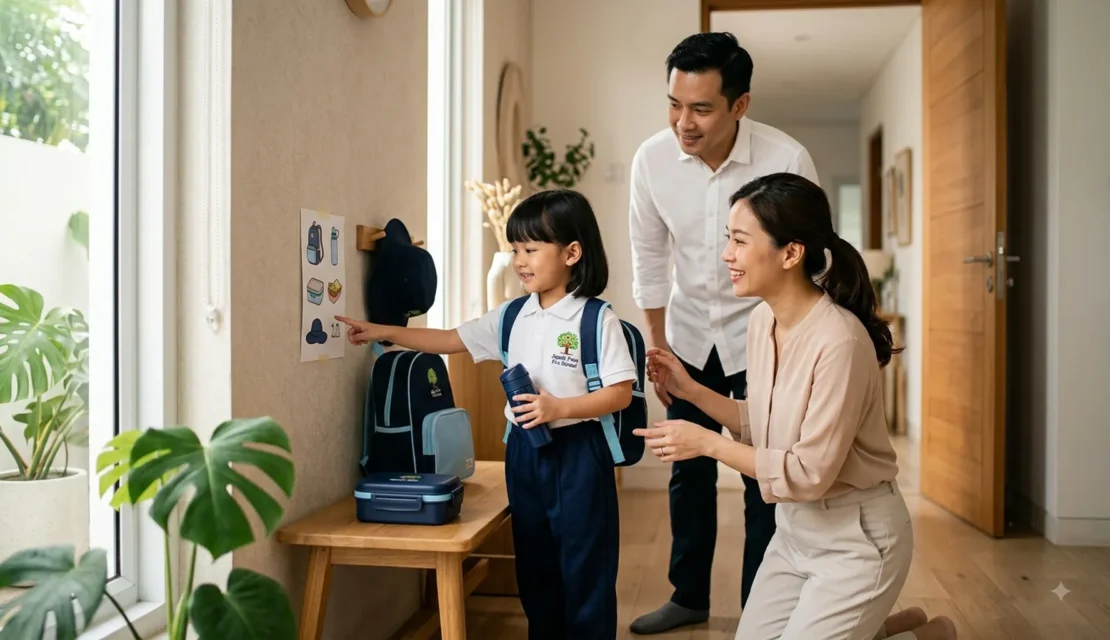
Create a simple leaving home routine
Mornings go better when children know exactly what to check before leaving. Keep it short enough that they can actually remember it without needing a motivational seminar at the front door.
A helpful routine might be:
- Bag
- Water bottle
- Lunch box
- Hat or jacket
- Shoes
You can turn this into a little chant, a picture checklist, or a quick game. Children are much more likely to cooperate with “Let us do our ready to go check” than with “How have you forgotten your bottle again?”
Build an after school check too
Children also need a return routine when they get home. This is where you help them connect the day at school with responsibility at home.
A simple after school habit might be:
- Put the bag in one spot
- Take out the lunch box
- Check for water bottle
- Place shoes in their place
- Empty artwork or notes
This helps children notice missing items sooner and makes the whole process feel more manageable.
Make Belongings Easy to Recognize
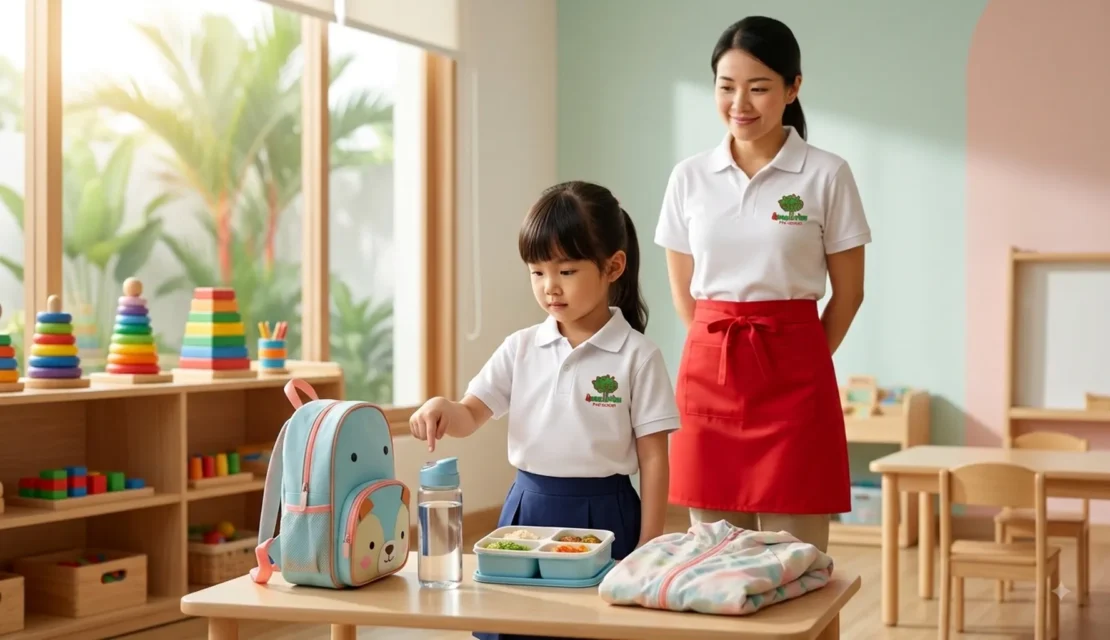
Sometimes a forgetful child loses school items not because they are especially forgetful, but because everything looks the same. If ten children have similar bottles and identical blue jackets, confusion is practically guaranteed.
Label everything clearly
This is not glamorous advice, but it works. Put your child’s name on water bottles, bags, lunch boxes, hats, jackets, and anything else likely to wander off during the day.
If possible, use labels that are:
- Clear and easy to read
- Durable enough for washing
- Bright or visually distinctive
- Placed where your child can actually see them
When children recognize their own things more easily, they are more likely to notice when something is missing.
Choose items with simple visual cues
You do not need to buy an entirely new lifestyle. But a bright bottle, a favorite keychain on the bag, or a unique pencil case can make a big difference. Children remember what stands out.
A plain black water bottle may be practical, but to a five year old it also looks suspiciously like everyone else’s black water bottle. That is how family legends begin.
Teach Responsibility in Tiny, Doable Steps
If your forgetful child loses school items regularly, the goal is not to shame them into remembering. The goal is to teach one small responsibility at a time until it becomes natural.
Give your child one job first
Instead of saying, “Remember all your things,” start with one clear responsibility. For example, your child is in charge of their own water bottle every day. Once that becomes easier, add another item.
Children do better when the task feels possible. Too much responsibility all at once can make them tune out, especially if they already feel like the forgetful one.
Use prompts, then reduce them slowly
At first, you may need to remind your child often. That is fine. Think of reminders as scaffolding, not failure.
You can ask:
- “What do you need before we leave?”
- “What is your one job today?”
- “Did your bottle come home with you?”
Over time, try to pause longer before helping. That little pause gives your child a chance to remember independently.
Help Your Child Practice Noticing
Some children lose items because they move quickly through transitions without really observing their surroundings. They need help learning how to pause and scan.
Teach a simple stop and look habit
Before leaving any space, teach your child to stop for a few seconds and look around. You can make it playful and easy to remember.
Try a quick three part check:
- Look at the chair
- Look at the floor
- Look at your hands
This tiny habit can prevent a surprising number of lost items. It also helps children feel more in control, which is always a bonus.
Turn remembering into a game
Young children often learn best through play. You can say, “Let us do a detective check,” or “Can you spot if anything belongs to you before we go?” Suddenly the task feels less like a lecture and more like a challenge.
And honestly, most things improve when you let children pretend they are detectives.
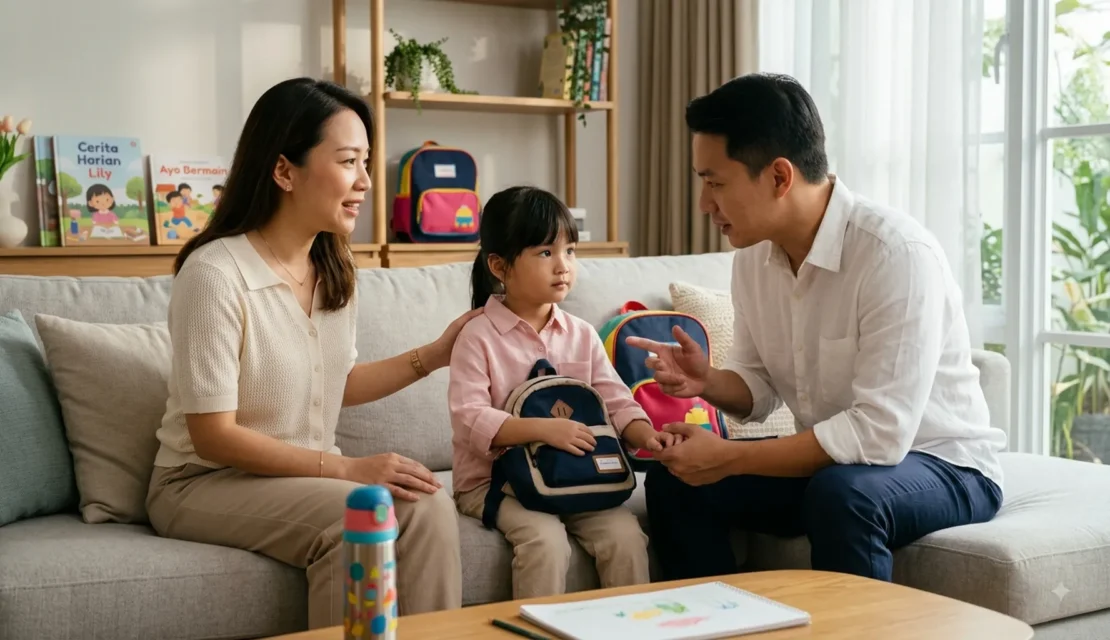
Respond Without Shame When Things Still Go Missing
Even with good routines, your child will still forget things sometimes. That is normal. The way you respond matters a great deal, because shame rarely builds responsibility. It usually builds anxiety or avoidance.
Stay calm and problem solve together
If something goes missing, keep your tone steady. Instead of saying, “You always lose everything,” try, “Let us think about where you last had it.”
That small shift teaches problem solving rather than blame. It also helps your child feel capable, which makes them more likely to keep trying.
Praise progress, not perfection
Notice the small wins. If your child remembered their bottle three days in a row, say so. If they checked the floor before leaving, that counts too.
You might say:
- “You remembered your lunch box all by yourself”
- “I noticed you checked your chair before leaving”
- “You are getting better at keeping track of your things”
Children grow into the identity we reflect back to them. It helps if that identity is “learning to be responsible,” not “the one who always loses everything.”
Strong Habits Grow Best With Steady Support
At Apple Tree Preschool BSD, we know that responsibility is not something children suddenly wake up with one morning. It grows through routines, encouragement, and lots of patient repetition. That is why we support children not only in academic learning, but also in the everyday habits that help them grow smart and happy together with parents.
If you would like to explore our programs, we would love to show you how we help children build confidence, independence, and practical life skills in a warm and structured environment.
Small Routines Can Save a Lot of Water Bottles
If your forgetful child loses school items, take heart. This is a common stage, and it usually improves when children have clearer routines, easier systems, and adults who teach without turning every lost pencil into a courtroom case. Progress may start small, but small habits are exactly what grow into lifelong responsibility.
We would be delighted to support your family with a preschool environment where confidence, independence, and joyful learning all grow side by side. Chat with us on WhatsApp or call +62 888-1800-900 to learn more.
Register now, and come play and learn with other children.




Be the first to write a comment.