
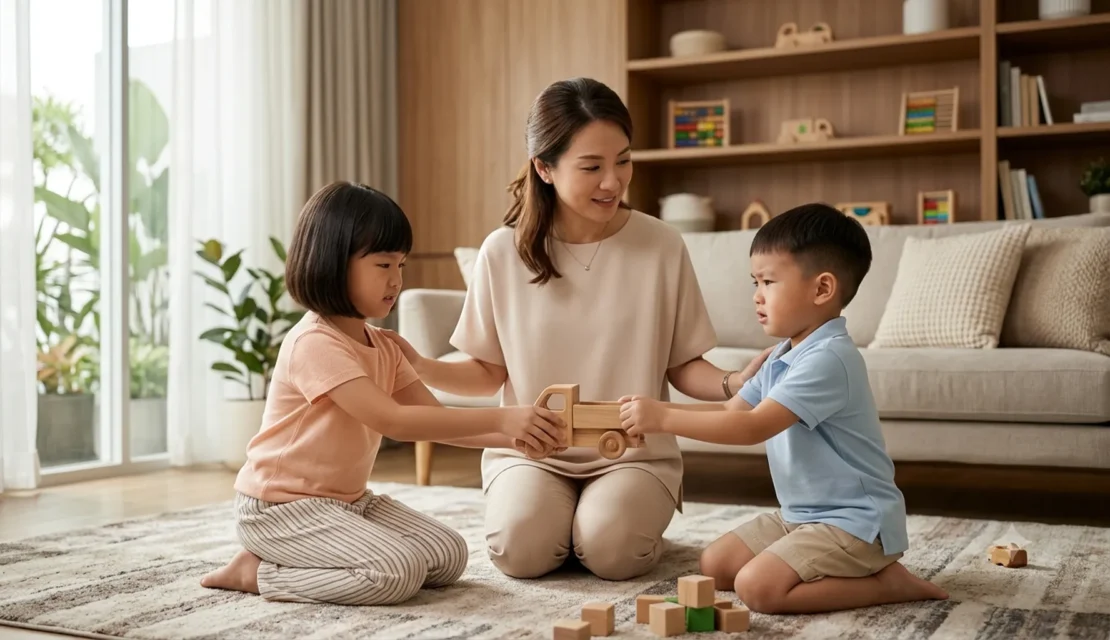
If you are dealing with siblings fighting over toys, welcome to one of the most common family soundtracks on earth. At Apple Tree Pre-School BSD, near Educenter bsd, we talk with parents about this all the time, because two children can turn one toy car into an international crisis in under twelve seconds. One minute everyone is peaceful, the next minute somebody is shouting, somebody is crying, and somebody is claiming they had it “first” with the confidence of a courtroom lawyer.
The good news is that toy fights are normal, especially in the early years. Children are still learning how to wait, share, speak up, and manage big feelings without grabbing, yelling, or dramatically collapsing onto the floor. That means your home is not chaotic because you are doing something wrong. It means your children are learning, and like most learning, it can get a little noisy.
Why Siblings Fighting Over Toys Happens So Often
When children fight over toys, the toy is usually only part of the story. What they are really struggling with is ownership, fairness, attention, self control, and the painful fact that another small human is standing very close to the exact thing they want.
Young children are naturally egocentric, which is a very academic way of saying they honestly believe their idea is the main idea. They are not trying to be selfish villains in a cartoon. They are simply still growing the skills they need to think about another person’s point of view.
What is really going on underneath the toy battle
A few common reasons sibling toy fights happen include:
- One child feels protective of “their” belongings
- One child wants the toy only because the other child has it
- Both children are tired, hungry, or overstimulated
- They do not yet know how to wait for a turn
- They are competing for your attention, not just the toy
- The rules around sharing are unclear or inconsistent
This is why simply saying “share nicely” often does not solve much. Children need more than instructions. They need coaching, repetition, and a calm adult who is not already one missing shoe away from losing it.
Siblings Fighting Over Toys, Start With Better Ground Rules
One of the most helpful things you can do is create simple, predictable rules about shared items and personal items. Children cope better when they know what to expect. Constantly changing rules tend to create even more arguing, because every disagreement turns into a negotiation.
Teach the difference between shared toys and personal toys
Not everything has to be shared all the time. This is an important point, because children often become more willing to share when they know a few things are truly theirs. If everything is public property, children can feel defensive all day long.
You can create two simple categories:
- Family toys, which everyone can use
- Special toys, which belong to one child and only need to be shared if that child chooses
This approach helps reduce panic and possessiveness. It also teaches respect, which is just as important as generosity.
Keep the rules short and repeatable
Try using just two or three household sharing rules. The simpler they are, the more likely children are to remember them.
For example:
- We use gentle hands
- We ask before taking
- We take turns with family toys
Say them often, especially before play begins, not only after somebody has already snatched a dinosaur and sprinted across the room.
Teach Turn Taking Without Turning It Into a Lecture
When siblings are fighting over toys, the skill they often lack is not kindness. It is patience. Waiting for a turn feels impossible to many young children, especially when they can physically see the thing they want right in front of them.
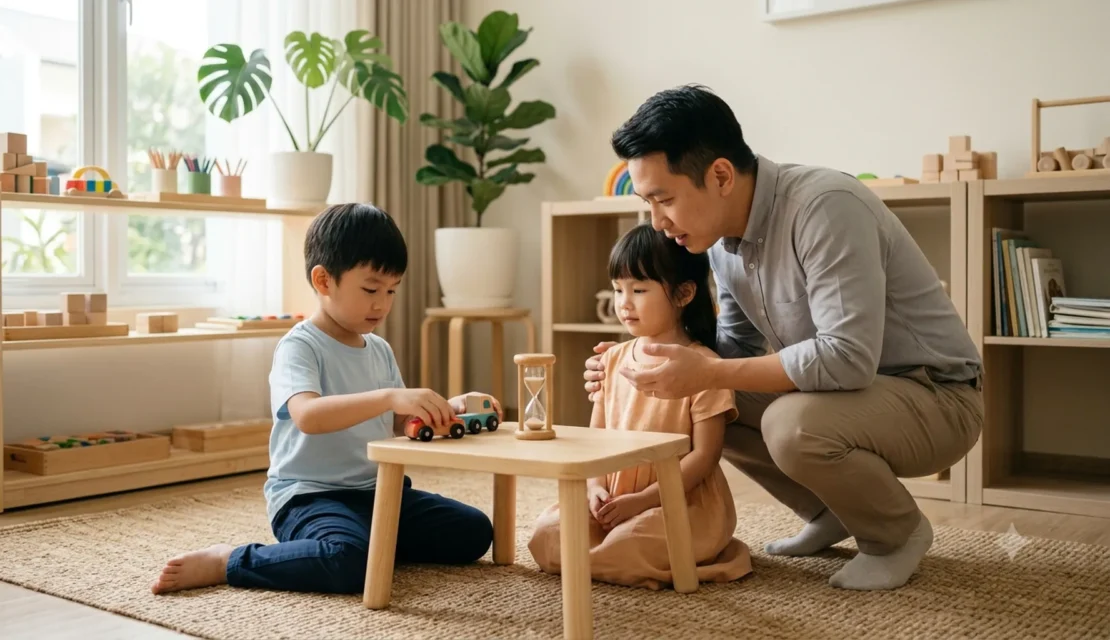
Use timers because they save everyone’s sanity
A timer can be surprisingly magical. It removes some of the emotional weight from you, because you are no longer the one deciding when the turn ends. The timer becomes the neutral referee, which is useful when everyone in the room is deeply committed to believing you are unfair.
You might say, “Your sister will use it until the timer rings, then it is your turn.” Keep the wait short enough that your child can actually succeed. For younger children, even two or three minutes may be plenty at first.
Offer language they can actually use
Children often fight because they do not know what to say instead. Give them simple phrases they can practise during calm moments.
Useful phrases include:
- “Can I have a turn when you are done?”
- “I am still using this”
- “Let’s set the timer”
- “Can we play together?”
These little scripts matter. Children who have words are less likely to lead with grabbing.
Step In Like a Coach, Not a Judge
When a toy fight erupts, it is tempting to charge in and immediately decide who was wrong. Sometimes that is necessary if somebody is hitting or being unsafe. But often, a calmer coaching approach works better in the long run.
Pause the conflict and describe what you see
Instead of launching straight into blame, try calmly narrating the situation. “You both want the same truck. You are upset. We need a solution.” This helps children feel seen without rewarding the chaos.
Describing the problem also slows the moment down. It gives everyone a tiny bit of breathing room, which is often badly needed.
Help them solve it, do not solve everything for them
If you always decide instantly, children may learn to run their every conflict through you. If you guide them instead, they begin to build real problem solving skills.
You can ask:
- “Whose turn is it right now?”
- “What could we do so this feels fair?”
- “Should we use the timer or choose another toy while waiting?”
This does not mean every conflict ends in a perfect peaceful agreement. Some days it ends with one child still frowning dramatically at a stuffed rabbit. That is still progress.
Prevent More Fights by Changing the Play Environment
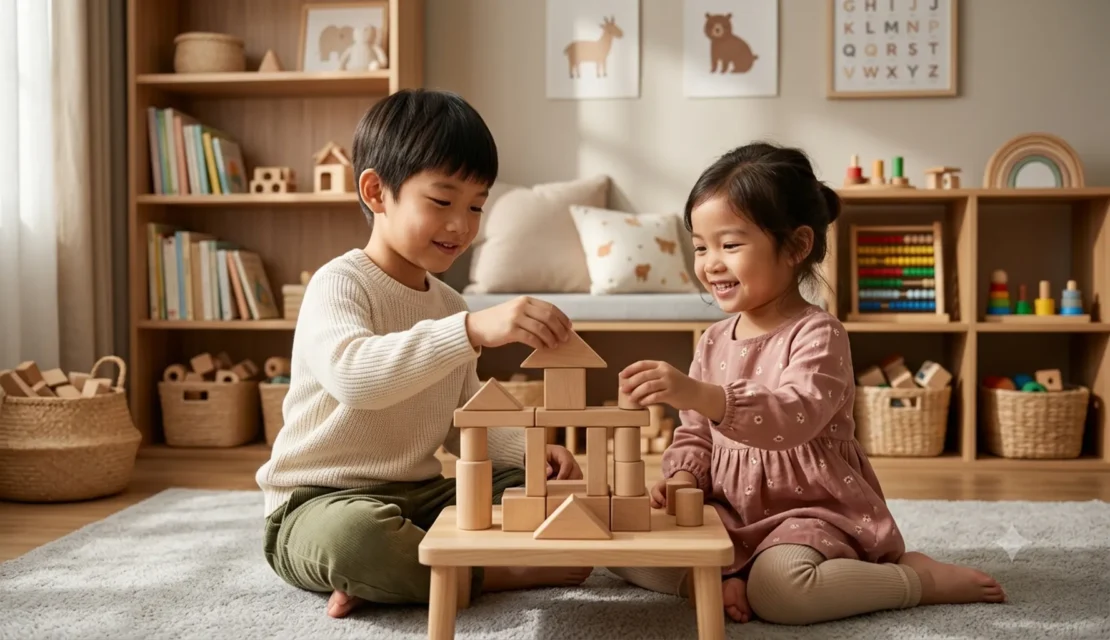
Sometimes the best way to handle siblings fighting over toys is to make the environment less likely to trigger constant conflict. This is especially helpful for younger children who are still learning emotional control.
Put away the toys that always cause trouble
You probably already know which toys start the worst arguments. There is often one prized truck, one glittery doll accessory, or one mysterious object that suddenly becomes the crown jewel of the house. If a certain toy causes daily battles, it is completely fine to put it away for a while.
That is not defeat. That is smart management.
Create duplicates where it makes sense
No, you do not need two of everything. But for a few high interest items, duplicates can make family life dramatically easier. Two scoops in the sand box, two similar cars, or two paintbrushes can prevent many completely unnecessary wars.
Think of it less as giving in and more as respecting developmental reality. Even adults prefer not to share everything all the time.
The Bigger Lesson Behind the Toy Fight
Here is the part we always come back to. Siblings fighting over toys is annoying, yes, but it is also a chance to teach lifelong skills. Every small conflict is practice for negotiation, empathy, emotional regulation, and respect.
At Apple Tree Preschool BSD, we help children learn these skills through guided play, classroom routines, and warm social coaching. If you are curious about our programs, we would love to show you how we support children as they grow smart and happy together with parents. Children do not magically learn to share one fine morning after eating a banana. They learn it slowly, through consistent support at home and at school.
More Peaceful Play Can Start at Home
If you are tired of siblings fighting over toys, try to remember that progress usually looks small before it looks impressive. One child waits thirty seconds longer than usual. One child asks instead of grabbing. One child hands over the toy with only moderate complaining. That counts.
With calm routines, clear rules, and a bit of patience, these daily clashes can become less intense and much less frequent. And if you want a preschool environment that supports social skills, emotional growth, and happy learning every day, we would be delighted to welcome your family.
Chat with us on WhatsApp or call +62 888-1800-900 to learn more. Register now, and come play and learn with other children.





Be the first to write a comment.