Encouraging child to read more can feel impossible when your child would rather negotiate for YouTube like a tiny lawyer with unlimited stamina. We get it, and we see it at Apple Tree Preschool BSD in the Educenter BSD Building, where the “I love books” mood can change faster than a toddler spotting snacks. The good news is that reading interest is not fixed, it is built, and you can build it without turning your home into a strict library.
You do not need a perfect reader overnight. You need a repeatable reading routine, a few smart environmental tweaks, and a way to make books feel emotionally rewarding. When books become a source of comfort, laughter, and connection with you, your child starts choosing them more often on their own.
Below are practical strategies we use and recommend to parents, especially for toddlers to early primary ages. Keep what works, skip what does not, and remember that consistency beats intensity.
Encouraging Child to Read More Starts With Removing Hidden Obstacles
Before you add new strategies, it helps to spot what is quietly blocking reading at home. In many families, the issue is not “my child hates books.” It is “books keep losing against easier dopamine.”
Check the Competition, Screens and Busy Schedules
If a screen is always available, books are competing with something designed to be irresistible. That does not mean you must ban screens, but you do need a boundary that protects reading time. If your evenings are also rushed, reading becomes optional, and optional habits tend to disappear.
A simple fix is choosing one small daily pocket when books always win. Ten minutes is enough if it happens every day.
Make Books Easy to Reach, Not Stored Like Museum Art
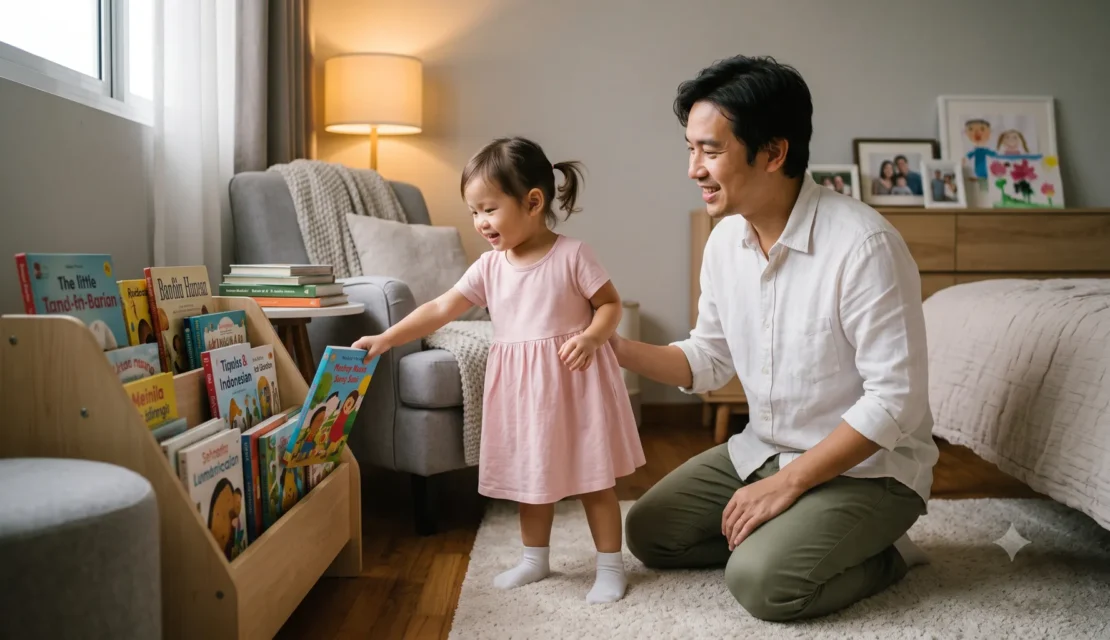
Many parents keep books on a high shelf to “protect them.” Totally understandable, and also the fastest way to make books irrelevant. If you want encouraging child to read more to work, books must be visible and reachable.
Try a low basket in the living room and another in the bedroom. Rotate the books weekly so the basket feels fresh without buying new ones constantly.
Build a Reading Routine That Feels Like a Treat, Not Homework
Children do not fall in love with reading because you tell them it is important. They fall in love with reading because it feels good.
Use the “Same Time, Same Place” Cue
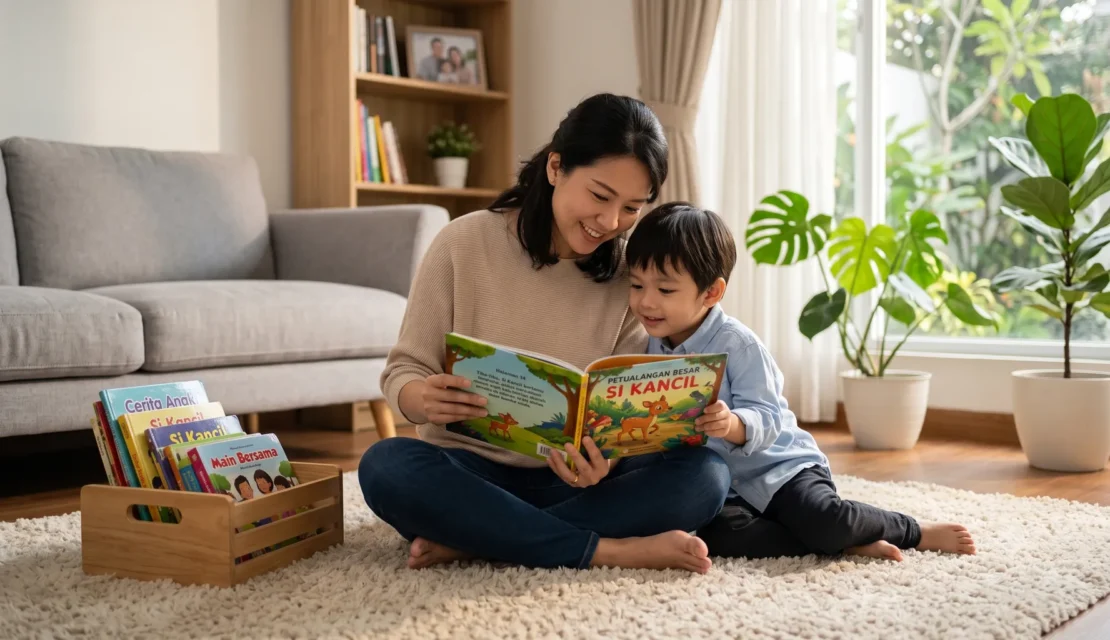
Pick a predictable moment, after bath, after dinner, or before nap. Sit in the same cozy spot if you can, because physical cues help the brain switch into “story mode.” When your child expects it daily, resistance drops.
If you miss a day, do not compensate with a marathon. Just return tomorrow.
Keep It Short Enough to Succeed
A lot of parents accidentally push past their child’s limit, then label the child as “not into reading.” Most young kids do better with short sessions that end on a good note.
A helpful starting point:
- Ages 1.5 to 3: 5 to 10 minutes, lots of pointing and repeating
- Ages 3 to 4: 10 to 15 minutes, interactive questions
- Ages 4 to 6: 15 to 25 minutes, depending on stamina
Stopping while your child still feels happy is a powerful way of encouraging child to read more tomorrow.
Let Your Child Choose, Even If Their Taste Is Questionable
If you want your child to own reading, they need agency. Yes, that means you might read the same book about a noisy truck fifty times. We promise you will survive.
Offer Choices, Not Unlimited Options
Too many options can overwhelm young children. Instead, offer two or three books and let them pick. This creates control without chaos.
You can also do a “parent pick, child pick” routine. That keeps your preferences in the mix while honoring theirs.
Follow Their Interests, Then Expand Gently
If your child loves dinosaurs, start with dinosaurs. If your child loves princesses, start there. Once they are hooked, you can branch out to similar themes, like animals, adventure, friendship, or funny school stories.
Encouraging child to read more works best when you ride their curiosity instead of fighting it.
Make Reading Interactive Without Turning It Into a Quiz
Many children stop enjoying reading when adults turn every page into a test. If reading becomes performance, anxiety appears.
Use “Talk Around the Story” Questions
Instead of “What is this word?” try questions that feel playful:
- “What do you think happens next?”
- “Which character would you be?”
- “How do you think they feel?”
- “Can you find something red on this page?”
This builds comprehension and vocabulary while keeping the vibe light.
Re read Books, It Is Not Boring for Them
Adults crave novelty. Children crave mastery. Re reading helps kids predict, participate, and eventually “read” parts from memory, which is an early literacy win.
If you are tired of the same book, change your voice, swap character names to family members, or let your child “read” by turning pages and narrating.
Use Micro Habits That Build Reading Into Daily Life
When reading is only “bedtime reading,” it stays small. When books show up throughout the day, reading becomes normal.
The Three Tiny Reading Moments
Try building these into your week:
- One short book after breakfast, even two minutes counts
- One book in the car bag for waiting time
- One book before screens, so reading happens first
This helps with encouraging child to read more because it changes reading from an event into a habit.
Create a Simple “Book Celebration” Ritual
Kids love rituals. You can do a weekly “book picnic” on the floor with snacks, or a Friday “choose a new book” moment from the library. The book becomes connected to joy and attention, not pressure.
If your child finishes a book, celebrate effort, not level. “You stayed with the story, well done,” is better than “You are so smart.”
If Your Child Refuses Books, Try These Fixes First
Some children resist reading because the books are not right for their stage. That is a solvable problem.
Match the Book to Their Development
A child who cannot sit for long needs books with large pictures and fewer words. A child who is restless might love lift-the-flap books, search-and-find books, or stories with repeated phrases.
If your child is learning English while also using Bahasa at home, bilingual books can reduce frustration and build confidence.
Try Read Aloud Without Forcing Stillness
Some kids listen better while moving. Let them play with blocks while you read. Let them color while you tell the story. Listening comprehension still counts, and it often becomes a bridge to independent reading later.
Encouraging child to read more sometimes starts with encouraging child to enjoy stories more.
How We Support Early Literacy at School
At Apple Tree Preschool BSD, we treat reading as a relationship skill as much as an academic skill. Children learn language through conversation, songs, stories, phonics play, and daily routines that make words meaningful. That is why reading grows faster when children feel safe, curious, and confident.
Our Singapore curriculum includes English and Phonics alongside Mathematics, Chinese, Science, Social Studies, Bahasa, Moral, Music, and Physical Education. This balance matters because reading stamina is supported by attention skills, movement, and emotional regulation, not only by worksheets.
If you want to see how reading readiness develops by age, explore our programs. Many parents find it easier to build home routines when they understand the school progression.
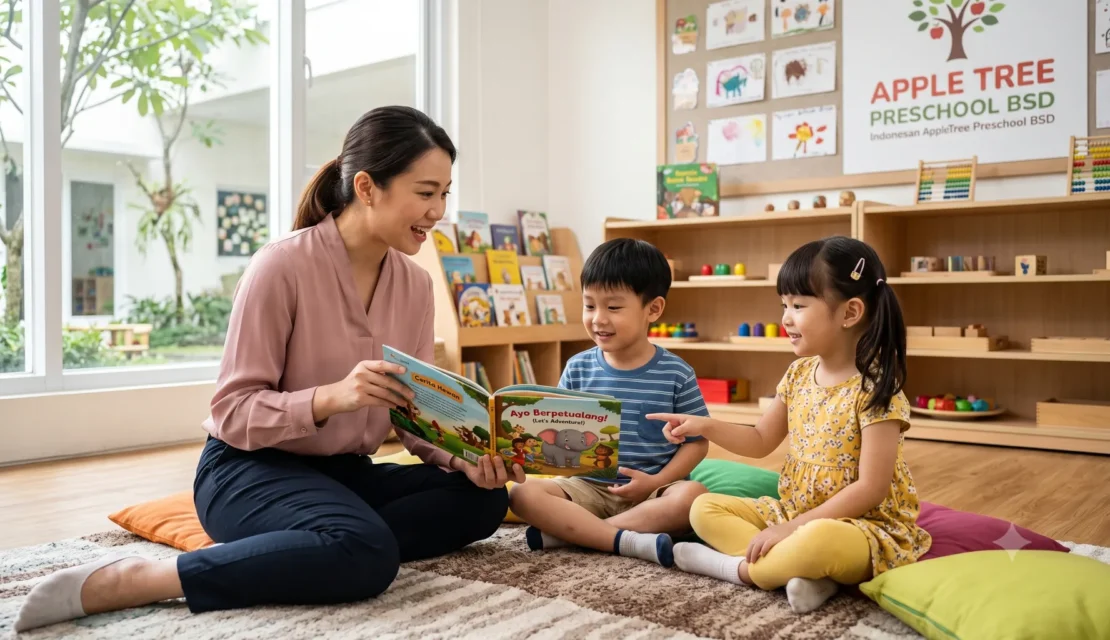
A Simple Weekly Reading Plan You Can Copy
If you want a low stress structure, here is a realistic plan that fits busy families:
- Monday: 10 minutes of read aloud, child chooses the book
- Tuesday: 5 minutes of phonics play, letter sound hunt in the house
- Wednesday: Re read a favorite book, child joins repeated lines
- Thursday: Library or book swap day, choose two fresh books
- Friday: Storytelling night, you tell a story without a book, then read one short book
- Weekend: Book picnic, cozy corner, snack, and a longer story if your child is up for it
This plan works because it is varied, short, and repeatable.
Ready to Raise a Child Who Reaches for Books
Encouraging child to read more is not about pushing harder. It is about making books easier to access, routines more predictable, and reading time more emotionally rewarding than the alternatives. When you protect a daily reading pocket, let your child choose, and keep it interactive, reading becomes something your child does because it feels good.
If you would like a school environment that supports early literacy daily through stories, phonics, language-rich play, and a warm community, come visit us at the Educenter BSD Building. We would love to help you find the right class fit and share routines you can use at home too.
Register now, or come play and learn with other children!
Chat with us on WhatsApp or call +62 888-1800-900 to ask about schedules and availability.





Be the first to write a comment.