At Apple Tree Preschool BSD, located in the Educenter BSD Building, we often meet families who feel stuck when they have a child resistant to learning. You may wonder whether your child is being stubborn, bored, tired, or just determined to test your patience before breakfast, which honestly happens more often than parents think. The good news is this kind of resistance usually means something important is going on, and once you understand the reason, you can respond in a way that actually helps.
When learning starts to feel like a daily tug of war, it can drain everyone in the house. You want to help, your child wants control, and somehow a simple worksheet turns into a full dramatic production with tears, snacks, and mysterious trips to the bathroom. We have seen this many times, and we can tell you that resistance is not the end of the story. It is often the start of better understanding.
Child Resistant to Learning: What Your Child May Be Trying to Tell You
A child rarely wakes up and thinks, “Today feels like a great day to reject all education.” More often, learning resistance is a message. Your child may be saying, “This feels too hard,” “I am tired,” “I do not feel confident,” or “I need this to feel more fun and less like a performance review.”
This matters because the wrong response can make the problem bigger. If you treat resistance like laziness, you may add pressure when your child actually needs support. If you assume your child is fine and simply not trying, you may miss signs of stress, confusion, or frustration that are hiding underneath the surface.
Learning resistance is often about emotions first
Young children learn best when they feel safe, connected, and curious. If your child feels rushed, compared, corrected all day, or overwhelmed by expectations, the brain is not exactly rolling out a welcome mat for new information. It is more likely to protect itself by shutting down, avoiding, or saying a very firm “no.”
We have seen children refuse counting games at home, then happily count blocks in class five minutes later. That does not mean parents are doing something wrong. It usually means context matters. Children respond differently depending on the environment, the mood, and whether learning feels playful or pressured.
Pressure can accidentally backfire
Many parents try to motivate with good intentions. You remind, repeat, persuade, explain, and maybe throw in a few classic lines about “doing this for your future.” Unfortunately, young children are not usually inspired by long term career planning.
When a child resistant to learning feels pushed, the task can start to feel bigger and scarier. Even small activities like tracing letters or matching colors may become tied to anxiety. Once that happens, your child may resist not because the work is impossible, but because the emotional feeling around it has become heavy.
What You Can Do When Your Child Is Resistant to Learning
The goal is not to win the moment. The goal is to rebuild trust in the learning process so your child feels capable again. That takes patience, consistency, and a willingness to change the approach, even when you are already tired and your coffee has gone cold for the third time.
Start with connection before correction
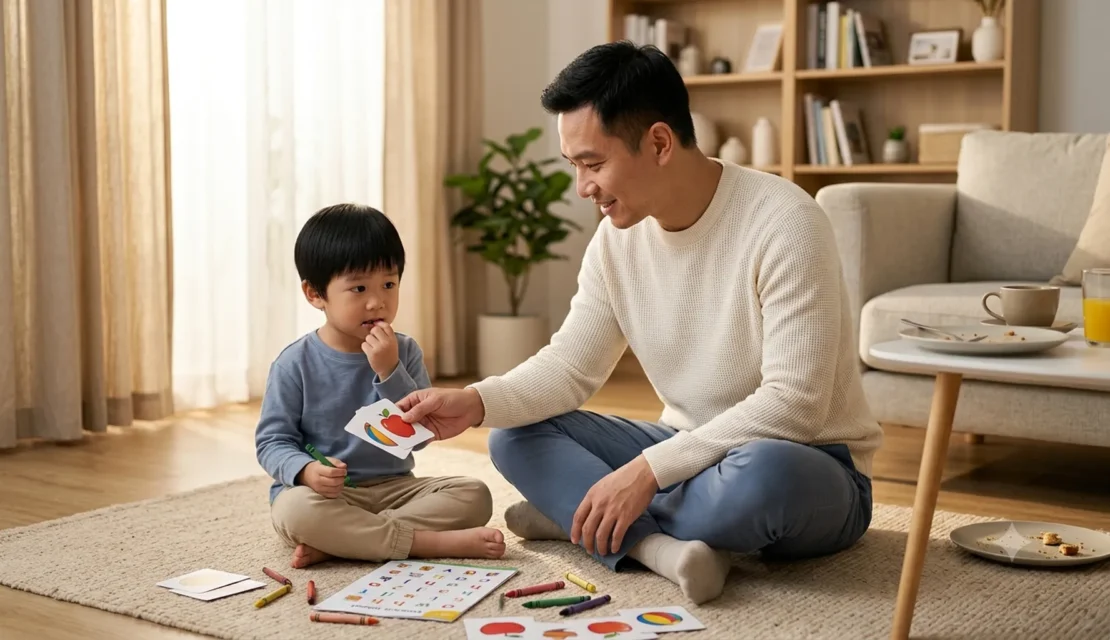
Before teaching, connect. Sit beside your child, notice their mood, and keep your voice calm. A child who feels seen is more likely to cooperate than a child who feels managed.
You can say things like:
- “You look tired today. Shall we make this easier together?”
- “This feels tricky right now, but we can do one small part first.”
- “Do you want to start with drawing, counting, or reading?”
- “Let’s try for five minutes, then we take a break.”
These kinds of phrases lower defensiveness. You are not giving up authority. You are showing your child that learning is something you do with them, not something you force onto them.
Make learning feel like play again
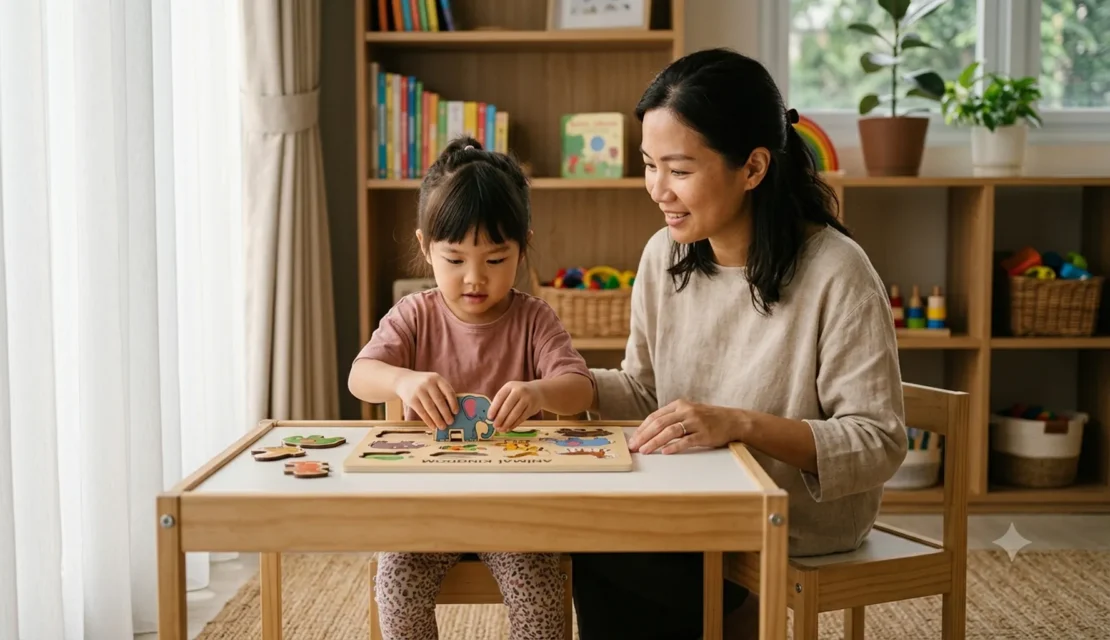
For early childhood, play is not a break from learning. Play is often the most effective way to learn. If your child pushes back against formal tasks, turn the skill into a game instead.
You can hide letter cards around the room, count toy cars, sort socks by color, or make up silly rhymes while getting dressed. You can practice fine motor skills with play dough, science with water play, and vocabulary during snack time. When children laugh, move, and explore, resistance often melts faster than parents expect.
At our school, this is one reason we value a child centered Singapore based curriculum that includes English, Mathematics, Chinese, Science, Creativity, Phonics, Music, Physical Education, and more. Young children learn best when subjects feel alive, connected, and hands on.
Give choices, but keep the frame
Children need structure, but they also crave a sense of control. If every learning moment feels like a command, resistance can become their favorite hobby. Giving limited choices helps your child feel involved without handing over the whole steering wheel.
Try choices like, “Do you want crayons or markers?” or “Would you like to read first or count first?” or “Should we do this at the table or on the floor?” These are small decisions, but they can reduce power struggles in a big way.
Keep routines simple and predictable
A predictable routine helps children know what to expect. If learning only happens when everyone is rushed, hungry, or already annoyed, it will be harder for your child to engage. A short, calm routine works better than a long session that becomes a daily battle.
You do not need a complicated home schedule. In fact, simple is usually better. A short activity at the same time each day, followed by a break, is often enough to build momentum. Children thrive when the rhythm feels steady and manageable.
When to Look More Closely at the Pattern
Sometimes a child resistant to learning is reacting to a specific mismatch. The task may be too easy, too hard, too long, too repetitive, or not suited to their developmental stage. This is why observation matters more than assumptions.
Ask yourself what happens right before the resistance starts. Is it during writing tasks, transitions, group work, or moments when your child fears getting something wrong? Patterns can reveal whether the issue is confidence, attention, sensory discomfort, frustration, or fatigue.
Work together with teachers
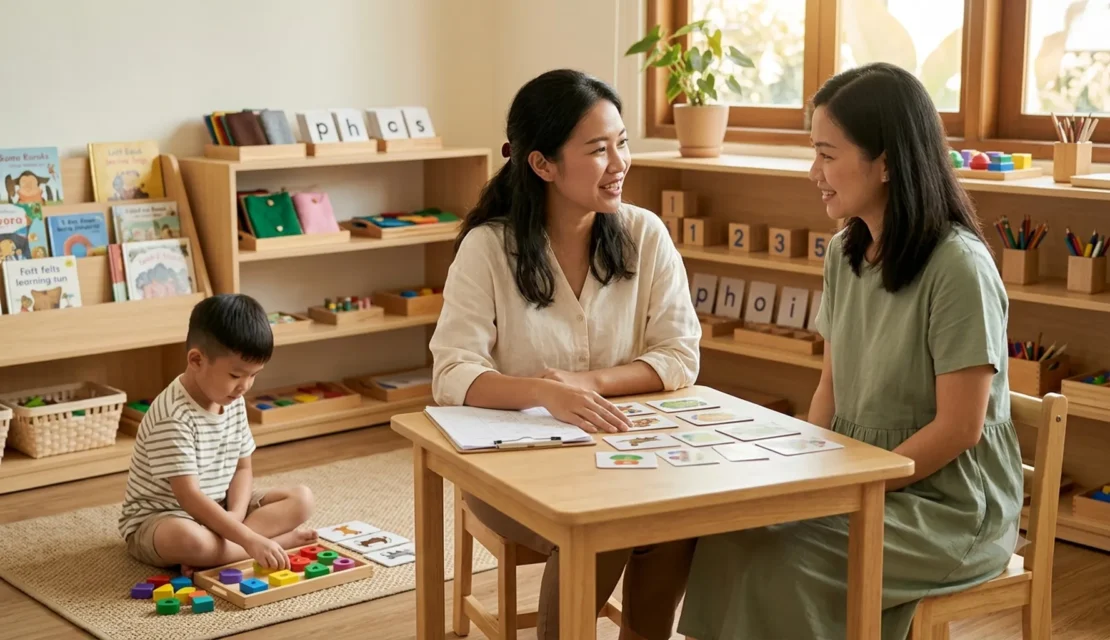
Parents should not have to solve this alone. When home and school share observations, solutions become clearer and more effective. A child may show one behavior at home and another at school, and both pieces of information matter.
At Apple Tree, we believe children grow smart and happy together with parents. That partnership is not just a nice idea. It is often the key to helping children feel supported across both environments. If you want to explore our programs, we offer classes from toddler through Kindergarten 2, with age appropriate routines, caring guidance, and class sizes designed to support meaningful learning.
A Gentler Way Forward for You and Your Child
If your child is resistant to learning, try not to treat it as proof that something is wrong with your child or with you. More often, it is a sign that the current approach needs adjusting. With connection, playful routines, clear choices, and collaboration, many children begin to relax and re engage with learning in a much healthier way.
If you would like a warm, supportive environment where your child can learn through structure, play, and partnership with educators, we would love to help. You can Chat with us on WhatsApp to ask about registration, class availability, and the best fit for your child. You can also call us directly at +62 888 1800 900 and come see how we help every child resistant to learning feel more confident, curious, and ready to grow.




Be the first to write a comment.