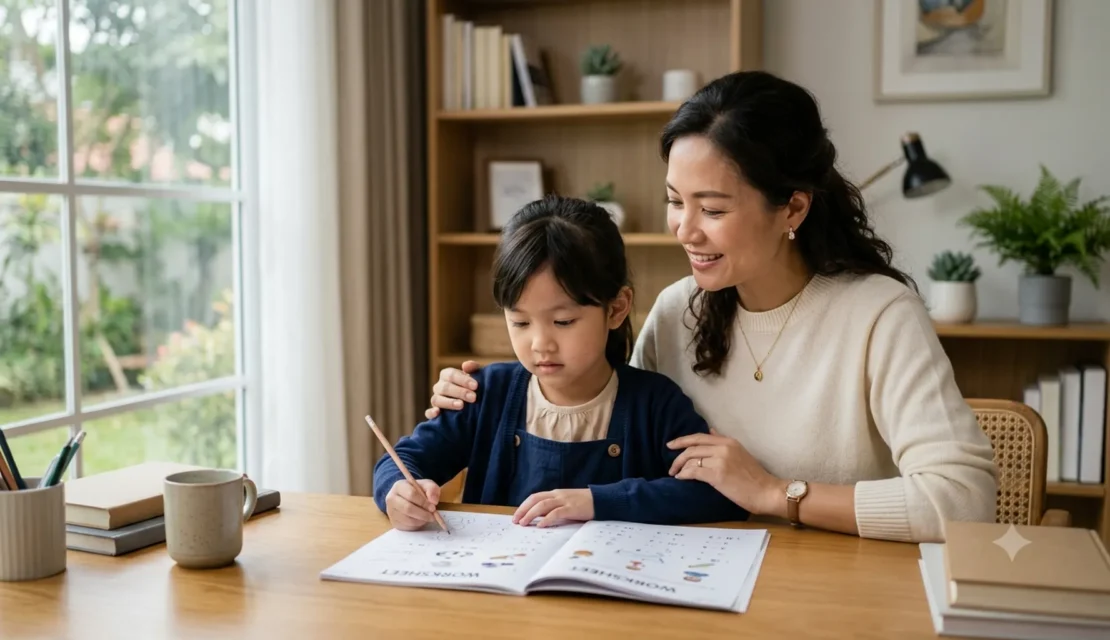
If your child avoids challenging tasks, you probably know the pattern by heart. The worksheet comes out, the sigh arrives right on cue, and suddenly your child urgently needs water, the toilet, a snack, a different pencil, and possibly a new life. At Apple Tree Pre-School BSD, in Educenter bsd, we talk with many parents who quietly wonder, “Why does my child give up so quickly when we know they can do more?” The short answer is this, avoidance is usually not laziness. It is often a sign that something feels uncomfortable, risky, or too hard to manage alone.
That is actually good news, because once you understand what is behind the behaviour, you can help your child build confidence instead of turning every tricky task into a daily tug of war. And honestly, most of us would happily retire from those after school battles.
Why Your Child Avoids Challenging Tasks
When a child avoids challenging tasks, adults often assume the child is not trying. Sometimes that is true for a moment, but most of the time the deeper issue is emotional, not academic. Young children do not usually avoid effort because they have a grand strategy. They avoid it because the task makes them feel unsure.
Fear of getting it wrong
Many children would rather avoid a difficult task than risk making a mistake in front of others. They may not say it out loud, but inside they are thinking, “What if I try and I am not good at it?” That feeling can be powerful enough to stop them before they begin.
This is especially common in bright children who are used to getting things right quickly. Once something feels hard, they can interpret struggle as failure, instead of seeing it as part of learning.
The task feels too big
Sometimes a child looks uncooperative, but the real issue is overwhelm. A page with too many questions, a long set of instructions, or an activity that requires several steps can make a young child shut down before they even start.
You may notice this if your child is fine with one question at a time, but falls apart when the whole worksheet appears. In that case, the problem is not the child. It is the size of the task in their mind.
They have learned that avoidance works
Children are quick studies when it comes to human behaviour. If avoiding, whining, stalling, or melting down helps them escape difficult work, even once in a while, that pattern can stick. Not because they are manipulative masterminds, but because they are children, and children repeat what works.
That is why consistency matters so much. Mixed signals make avoidance stronger.
Signs Your Child Needs Support, Not Pressure
A child avoids challenging tasks in different ways. Some children cry. Some get silly. Some suddenly become experts in sharpening pencils for twelve minutes. Some just stare into space like tiny philosophers.
Here are a few common signs to watch for:
- saying “I can’t” before trying
- asking for help immediately without attempting the task
- getting distracted the moment work begins
- becoming upset over small mistakes
- leaving work unfinished again and again
- complaining of tummy aches during study time
These signs do not mean your child is incapable. They often mean your child needs a calmer path into the challenge.
How to Help a Child Avoids Challenging Tasks Less Often
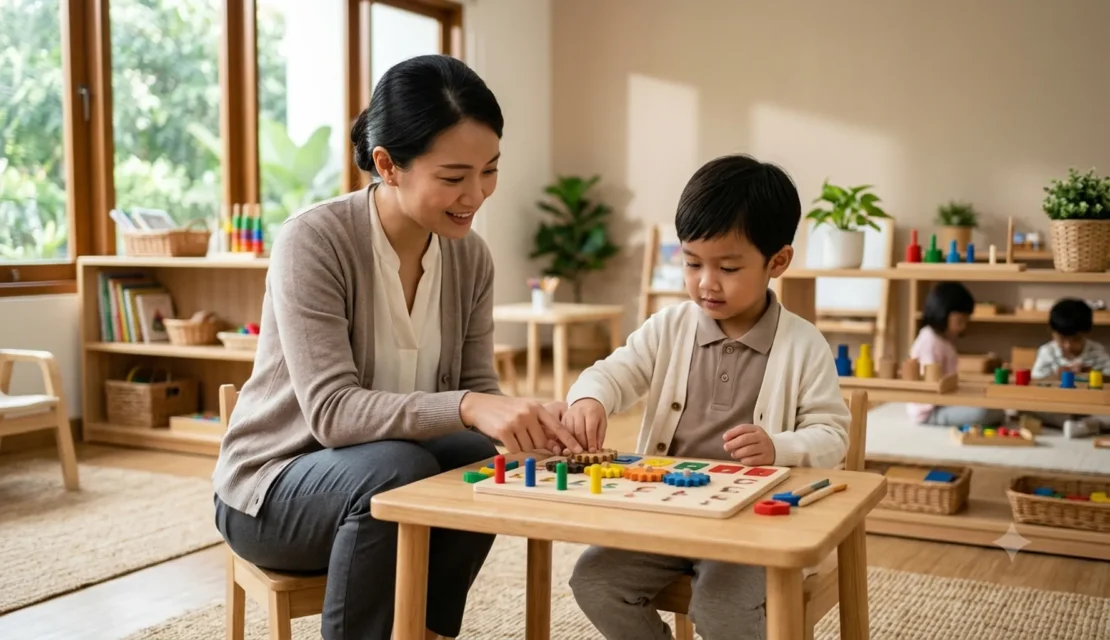
The goal is not to remove all difficulty. Children need challenge to grow. The goal is to help your child experience challenge in a way that feels manageable, safe, and even a little satisfying.
Break hard tasks into tiny wins
If your child avoids challenging tasks, start by shrinking the challenge. Instead of saying, “Finish this page,” try, “Let’s do the first two together,” or, “Circle the questions you think you can do first.”
Small wins matter because they change the emotional tone. Your child begins to think, “Oh, I can do part of this,” which is much better than, “This is impossible and I would like to disappear now.”
Praise effort, strategy, and persistence
Children need to hear that trying matters. If the only praise comes when they get everything right, they may start believing that success means perfection. That is a heavy burden for a little person.
Try saying things like:
- “You kept going even when it felt tricky”
- “I like how you tried a different way”
- “You did not give up after one mistake”
- “That took courage”
This kind of feedback teaches your child that learning is a process, not a performance.
Stay calm when they resist
This part is not always easy, especially when you are tired and your child has chosen phonics practice as the exact moment to collapse dramatically across the table. But your calm matters. When you stay steady, you show your child that hard things can be handled without panic.
You do not need a long speech. A simple, calm response works well: “I know this feels hard. We are going to do it one small step at a time.”
Building Confidence at Home
Helping a child who avoids difficult school work does not begin and end with homework. Confidence is built in lots of ordinary moments at home too.
Let your child do hard little things
Resilience grows when children practise manageable struggle. Let them zip their own bag, pour their own water, tidy their toys, and solve simple problems before you jump in. Yes, it may take longer. Yes, you may age slightly while waiting. But it helps.
These little moments teach your child, “I can do hard things, even if I need a bit of time.”
Make mistakes feel normal
If your child thinks mistakes are embarrassing, challenge will always feel threatening. One of the best things you can do is talk casually about mistakes in everyday life. Burned the toast? Forgot your shopping list? Welcome to being human.
You can say, “Oops, that did not work. I will try again.” That simple modelling helps your child see mistakes as ordinary, not shameful.
Use routines that lower stress
A child who is tired, hungry, overstimulated, or rushed will find challenging tasks harder to handle. Good routines do not solve everything, but they make everything easier.
Helpful foundations include:
- regular sleep
- calm after school transitions
- a snack before study time
- a tidy, quiet place to work
- short bursts of focused effort with breaks
When the body feels regulated, the brain copes better.

Why the Right School Environment Matters
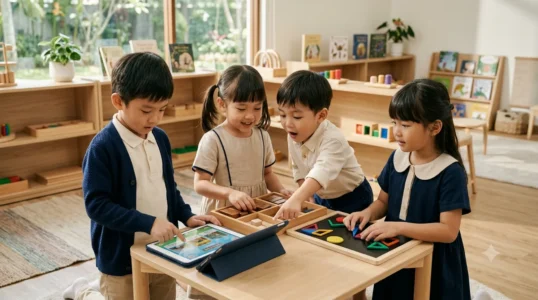
Sometimes a child avoids challenging tasks because the environment around them does not yet feel supportive enough. Children thrive when teachers know how to stretch them gently, not overwhelm them. They need guidance, encouragement, and room to grow at their own pace.
At Apple Tree Pre-School BSD, we understand that academic growth and emotional confidence go hand in hand. Through our Singapore curriculum, children explore English, Mathematics, Chinese, Creativity, Social Studies, Science, Bahasa, Moral, Music, Physical Education, and Phonics in a warm, structured environment. We do not just look at whether a child can complete a task. We pay attention to how they approach challenge, how they recover from mistakes, and how they build trust in themselves.
That matters because confidence is not built through pressure alone. It grows when children feel supported as they try, wobble, and try again. Many families who explore our programs are looking for exactly that balance.
You can also find us at the Educenter BSD Building, right in the BSD area, which makes it easier for families looking for a nurturing preschool community close to home.
When Challenge Stops Feeling So Scary
If your child avoids challenging tasks, try not to see it as a fixed personality trait. It is usually a skill and confidence issue, which means it can improve beautifully with the right support. Small steps, patient guidance, and the right environment can make a bigger difference than constant reminders ever will.
We believe children grow best when they feel smart and happy, together with their parents. If you would like your child to learn in a place that supports both confidence and academic growth, we would love to welcome your family to Apple Tree Preschool BSD.
Chat with us on WhatsApp or call us at +62 888-1800-900 to learn more. Register now, and come play and learn with other children in a warm environment where challenge becomes growth, not fear.



Be the first to write a comment.