
If you are currently Dealing with stubborn child moments that seem to begin over socks, continue through lunch, and somehow peak dramatically at bedtime, we truly get it. At Apple Tree Preschool BSD, located in the Educenter BSD Building, we meet many loving parents who are not raising “difficult” children at all, but strong willed little humans with big feelings, clear opinions, and a remarkable ability to say “no” with their whole body. The encouraging news is that stubborn behaviour does not always need harsher discipline. Quite often, it needs calmer connection, clearer boundaries, and more empathetic communication.
That matters because what looks like stubbornness on the surface is often something deeper underneath. Your child may be tired, overwhelmed, seeking control, or struggling to express frustration in a more mature way. When we shift from fighting the behaviour to understanding the message behind it, parenting often starts to feel a little less like a daily hostage negotiation.
Dealing with Stubborn Child Behaviour Starts with Understanding the Why
Before we talk about what to say, it helps to understand what may be driving the behaviour. Young children are still learning how to manage disappointment, transitions, limits, and strong emotions. They do not yet have the self control or language skills that adults expect from them, even when they look surprisingly confident while refusing to wear shoes.
That is why Dealing with stubborn child behaviour becomes easier when you stop asking, “Why are you being so difficult?” and start asking, “What is making this hard for you right now?” That one mental shift changes everything. It helps you respond as a guide instead of reacting as an opponent.
Stubbornness is often a sign of unmet needs
Sometimes children resist because they need more autonomy. Sometimes they are hungry, tired, overstimulated, or simply not ready to switch from one activity to another. A child who says “no” repeatedly may not be trying to challenge you personally. They may be trying to protect their sense of control.
This does not mean you give in to every refusal. It means you look beneath the behaviour so your response becomes more useful and less emotionally charged.
Strong willed children often have strengths hiding underneath
Many children labeled as stubborn are actually persistent, determined, observant, and confident. Those qualities can be difficult at age four, but they can also become wonderful strengths later in life. The child who argues with you about brushing teeth may one day become the adult who stands up for what is right.
So yes, Dealing with stubborn child moments can be exhausting. But it also helps to remember that you may be shaping strong character, not just managing hard behaviour.

Why Empathetic Communication Works Better Than Power Struggles
When adults feel challenged, the natural temptation is to push harder. We raise our voice, repeat ourselves, or move into command mode. Sometimes that works briefly, but often it makes strong willed children dig in even more.
Empathetic communication works differently. It lowers defensiveness, helps children feel understood, and creates just enough emotional safety for cooperation to become possible. Not immediate, magical, movie style cooperation every time, of course, but real progress.
Empathy does not mean weakness
This part is important. Being empathetic does not mean being permissive. It does not mean letting your child run the house like a tiny, emotional CEO. It means you acknowledge the feeling while still holding the boundary.
For example, instead of saying, “Stop being difficult and put your shoes on,” you might say, “You really do not want to stop playing. I understand that. It is still time to put your shoes on.” That is empathy with structure, which is exactly what many children need.
Children listen better when they feel heard
Adults are not the only ones who dislike being dismissed. Children do too. When you reflect their feeling first, they are more likely to soften because they feel seen rather than controlled.
That is one reason Dealing with stubborn child situations becomes less intense when you slow down and connect before correcting. Feeling heard often reduces resistance all by itself.
Practical Empathetic Communication Phrases You Can Use
The goal is not to sound like a parenting textbook. The goal is to sound calm, clear, and human. Children respond best to language that is simple and warm.
Here are some phrases that help:
- “You really wanted it to go your way”
- “This is hard for you right now”
- “You are upset, and I am here”
- “I will help you through this”
- “You do not like this limit, but the limit stays”
- “You can be angry and still be safe”
These phrases work because they validate emotion without surrendering the boundary. That balance is the heart of empathetic parenting.
Offer choices whenever possible
One of the smartest strategies for Dealing with stubborn child behaviour is giving limited choices. Strong willed children often calm down when they feel some sense of control.
You might say:
- “Do you want the red cup or the blue cup?”
- “Will you walk to the car or hop like a bunny?”
- “Do you want to brush teeth first or put on pyjamas first?”
The trick is to offer choices you can live with. This is not the moment to ask open ended philosophical questions to a furious five year old.
What to Do When Emotions Are Already Running High
Sometimes you catch the moment early. Sometimes you absolutely do not, and now everyone is halfway into a power struggle with no elegant exit. That is normal. The key is not perfection. The key is repair and reset.
Regulate yourself first
Children borrow calm from adults. If your voice is tight, your body is tense, and your patience has left the building, your child will feel that immediately. Before speaking, take one slow breath. Lower your voice instead of raising it.
This may sound simple, but it is one of the most effective parts of Dealing with stubborn child behaviour. Your calm is not a small detail. It is the foundation.
Say less, not more
When a child is upset, long explanations rarely help. They are not in a state to absorb a five point lecture on responsibility and cooperation. Keep it brief, kind, and clear.
Try this pattern:
- Name the feeling
- State the limit
- Offer help or a choice
For example, “You are angry because playtime ended. It is time to leave. I can hold your hand or carry you to the car.”
Stay firm without becoming cold
Children feel safer when adults are steady. If you become harsh, they escalate. If you become inconsistent, they keep pushing. Calm firmness is what helps them trust the boundary.
It is not easy, especially on the tenth hard moment of the day. But it is powerful.
Habits That Reduce Stubborn Behaviour Over Time
Empathetic communication works best when it is supported by everyday routines. Many stubborn moments happen because children are tired, rushed, confused, or caught off guard.
A few simple habits can help a lot:
- Give transition warnings before changing activities
- Keep routines predictable
- Offer choices early, before conflict starts
- Notice and praise cooperation
- Build connection during calm moments, not only during correction
These habits make Dealing with stubborn child patterns less reactive and more manageable. Prevention will never remove every struggle, but it can reduce the number of daily battles considerably.
Growing Together With the Right Support
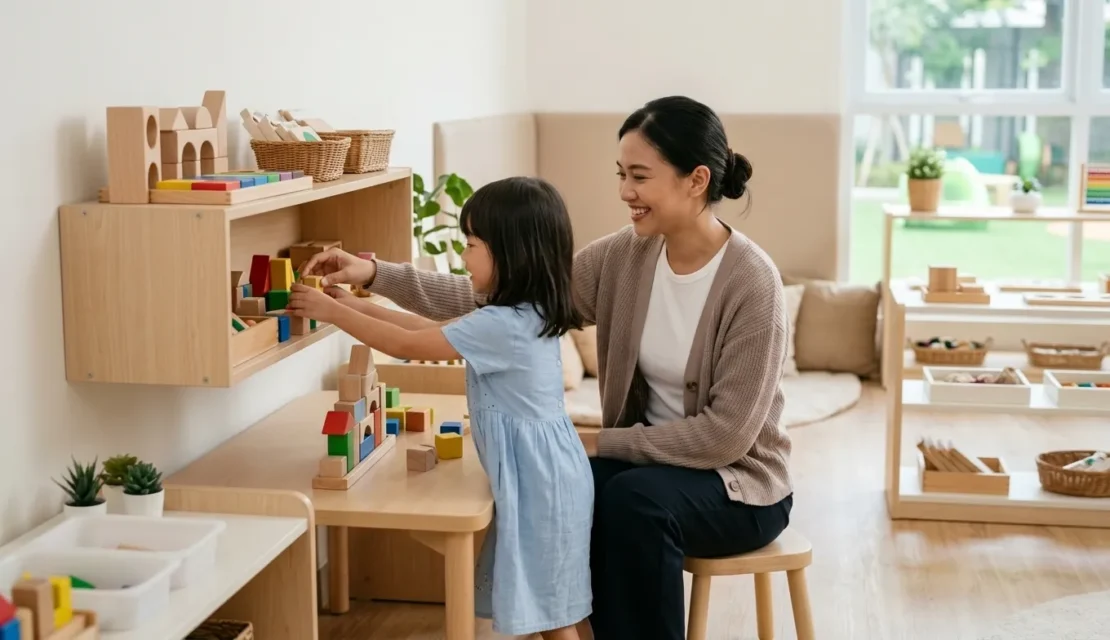
At Apple Tree Preschool BSD, we believe strong willed children do not need to be “broken.” They need guidance, emotional safety, and adults who can hold both empathy and boundaries at the same time. Through warm routines, respectful communication, and thoughtful classroom support, we help children build emotional regulation, cooperation, and confidence in ways that feel secure and age appropriate.
If you would like to see how we support children and families through these important early years, you can explore our programs. We know parenting is not always simple, and we believe school should feel like a partnership, not another pressure point.
When Connection Changes the Whole Conversation
Dealing with stubborn child moments can feel draining, especially when they happen every day over the smallest things. But stubborn behaviour often softens when children feel heard, respected, and guided by calm, consistent adults. Empathetic communication will not make every conflict disappear, but it can turn many battles into moments of connection, learning, and real growth.
If you are looking for a preschool where children are supported with warmth, structure, and understanding, we would love to welcome your family. Chat with us on WhatsApp or call us at +62 888-1800-900. Come play and learn with other children at Apple Tree Pre-School BSD.





Be the first to write a comment.