If you are dealing with child anger management issues, you are not alone, and you are definitely not the only parent who has watched a tiny person explode because the banana broke in half or the blue cup was somehow the wrong blue cup. At Apple Tree Pre-School BSD, near Educenter bsd, we talk with parents about this all the time, because anger is one of the most misunderstood emotions in early childhood. The good news is that anger itself is not the problem, what children do with it is what needs gentle teaching.
Many parents worry that an angry child is becoming rude, aggressive, or difficult by nature. Usually, that is not what is happening at all. More often, your child is feeling something very big in a body and brain that are still learning how to slow down, use words, and recover without turning the living room into a weather event.
Understanding Child Anger Management Issues in Early Childhood
When we talk about child anger management issues, it helps to start with one important truth. Anger is normal. It is not bad, and it is not something you need to erase from your child.
Children get angry for the same basic reasons adults do. They feel frustrated, ignored, disappointed, tired, overstimulated, or powerless. The difference is that adults usually have more language, more patience, and a slightly lower chance of throwing themselves dramatically onto the floor because toast was cut the wrong way.
Why young children struggle with anger
Young children are still developing the skills needed to manage strong emotions. Those skills include:
- Naming what they feel
- Waiting without falling apart
- Handling disappointment
- Asking for help
- Calming their body after getting upset
If one or more of those skills is still weak, anger can come out fast. That does not mean your child is naughty. It means your child needs practice, support, and repetition.
What anger can look like in children
Not every child expresses anger in the same way. Some children get loud, some get physical, and some shut down completely.
You might notice:
- Yelling or screaming
- Throwing toys
- Hitting or kicking
- Crying and collapsing
- Running away
- Refusing to speak
- Saying harsh things they do not fully mean
This is why child anger management issues need a thoughtful response, not just a punishment. The behavior matters, yes, but the skill gap underneath it matters even more.

Child Anger Management Issues Often Start With Overload
Sometimes anger is really the final stop after a long chain of stress. A child who is hungry, tired, rushed, noisy, and overstimulated is far more likely to lose control over something small. To adults, it can look like an overreaction. To the child, it can feel like the last straw.
Look for the hidden triggers
Before you focus only on the outburst, ask what came before it. We often encourage parents to think like calm detectives, not courtroom judges.
Common triggers include:
- Poor sleep
- Hunger
- Too much screen time
- Sudden transitions
- Crowded or noisy spaces
- Feeling misunderstood
- Having little control over the day
When you spot the pattern, you can prevent some of the explosions before they start. That is not spoiling your child. That is smart support.
Teach Anger Words Before the Angry Moment
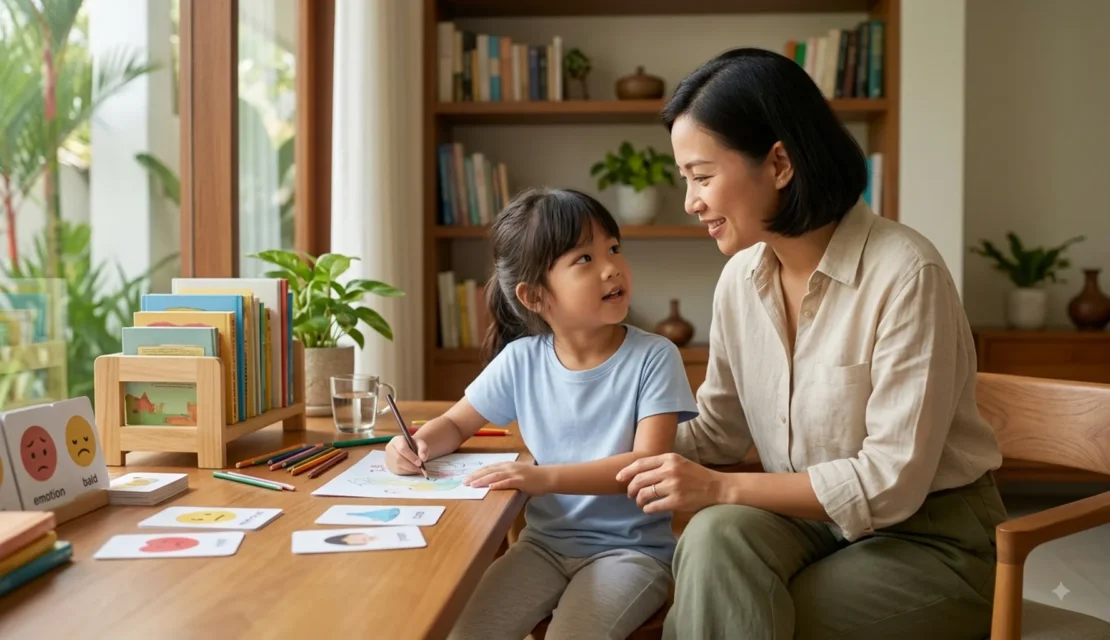
One of the best ways to help with child anger management issues is to teach emotional vocabulary when your child is calm. If children do not have words for what they feel, they often use volume instead.
Give your child simple feeling language
You do not need a giant chart with forty emotional states and the energy of a therapist on three coffees. Start small and keep it natural.
Try phrases like:
- “You look frustrated”
- “That made you angry”
- “You feel disappointed”
- “You wanted it to go your way”
When children hear these words often, they slowly begin using them. And once a child can say, “I am angry,” they are already one step closer to not throwing the nearest object.
Read books and talk about characters’ feelings
Stories are brilliant for this. When you read together, pause and ask simple questions.
You might say:
- “How do you think he feels?”
- “Why is she upset?”
- “What could he do instead of shouting?”
Children often understand emotions in characters before they can recognize them in themselves. That still counts as valuable practice.
Show Healthy Ways to Express Anger
If you want your child to express anger well, they need alternatives. Telling a child what not to do is only half the job. They also need to know what to do instead.
Create a few simple calming tools
Keep the tools easy enough to remember in the heat of the moment. If the strategy sounds like a complicated wellness retreat, it probably will not work for a four year old.
Helpful options include:
- Taking three slow breaths
- Squeezing a pillow
- Stomping feet safely on the floor
- Asking for a hug
- Sitting in a calm corner
- Saying, “I need help”
- Drawing their feelings
The goal is not to make anger disappear instantly. The goal is to help your child move from chaos to control in a safer way.
Practice when your child is calm
This part matters a lot. You cannot introduce a brand new calming technique in the middle of a meltdown and expect magic. Practice during peaceful moments first.
You can make it playful. Pretend to be angry teddy bears and practice dragon breaths. Act out what to do when blocks fall over. Children learn best through repetition and play, not lectures delivered during emotional explosions.
Your Response Shapes What Happens Next
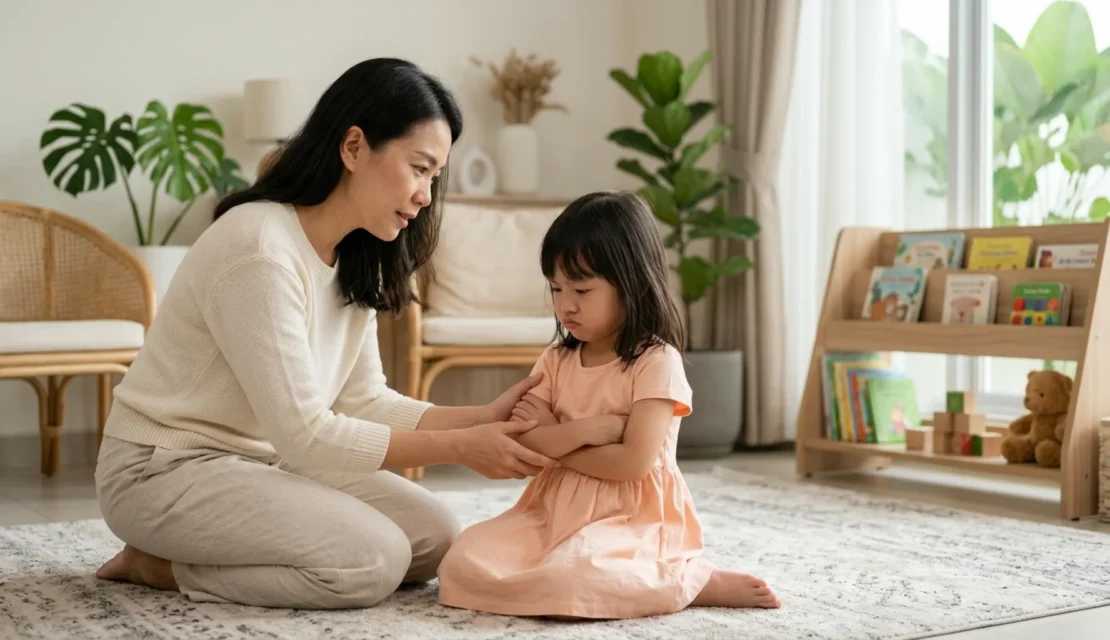
When your child is furious, your reaction becomes part of the emotional environment. We know this is easier said than done, especially if you are also tired and someone has just thrown a shoe at a chair for dramatic emphasis.
Stay calm, even if your child is not
A calm adult helps an angry child borrow regulation. A dysregulated adult usually adds fuel to the fire.
Try short, steady phrases like:
- “I see you are angry”
- “I will help you stay safe”
- “I will listen when your body is calmer”
- “You may be angry, but I will not let you hit”
This approach does two things at once. It validates the feeling and holds the boundary.
Separate feelings from behavior
This is one of the most important lessons in child anger management issues. Feelings are allowed. Hurtful behavior is not.
You can say, “It is okay to feel angry, it is not okay to throw toys.” That message teaches emotional honesty without giving permission for chaos. Children need both acceptance and limits.
Build Routines That Support Emotional Regulation
Children manage anger better when daily life feels predictable. That is one reason routines matter so much in the early years. When the body is well rested, well fed, and not constantly rushed, emotions tend to be much easier to handle.
Support regulation through everyday habits
A strong daily rhythm can reduce anger outbursts significantly. Focus on basics like:
- Consistent sleep
- Regular meals and snacks
- Outdoor play
- Less overstimulating screen time
- Predictable transitions
- Enough connection with you
This may sound almost too simple, but simple things are often the real foundation. Emotional skills grow better in a body that feels cared for.
When Extra Support Is a Good Idea
Sometimes child anger management issues go beyond typical preschool frustration. If your child’s anger is very intense, happens constantly, leads to harm, or affects school and relationships, it may be worth speaking with a pediatrician or child psychologist.
That does not mean you have failed. It means you are being thoughtful and proactive. Getting support early can make life much easier for everyone.
Growing Calm, Confident Children Takes Practice
At Apple Tree Preschool BSD, we believe emotional development deserves just as much care as academic growth. Through daily routines, guided play, and warm relationships, we help children learn how to express big feelings in healthier ways. If you would like to explore our programs, we would love to show you how we support children as they grow smart and happy together with parents in the Educenter BSD Building.
Small Emotional Skills Become Big Life Skills
If you are working through child anger management issues, please remember that progress often looks small before it looks impressive. One child uses words instead of yelling. One child stomps safely instead of hitting. One child asks for help before completely unraveling. Those are big wins, even if they do not feel glamorous in the moment.
We would be happy to support your family with a warm preschool environment where emotional growth, confidence, and joyful learning all go hand in hand. Chat with us on WhatsApp or call +62 888-1800-900 to learn more.
Register now, and come play and learn with other children.





Be the first to write a comment.