

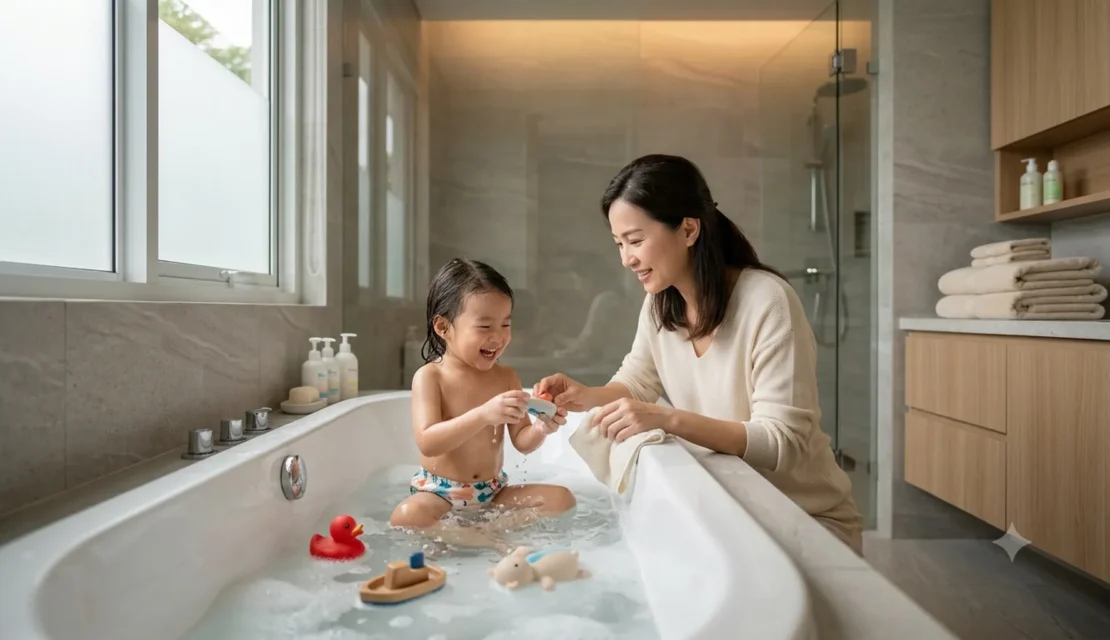
If your child refuses to take bath, you are definitely not the only parent negotiating with a tiny human who suddenly acts like warm water is a personal betrayal. At Apple Tree Pre-School BSD, near Educenter bsd, we hear this from parents all the time, because bath time can turn from perfectly normal to wildly dramatic in about eight seconds. One minute your child is happily painting with yogurt on their face, and the next minute they are deeply offended by the idea of getting clean.
The good news is that bath resistance is common, and it usually has more to do with emotion, control, or sensory discomfort than simple stubbornness. Once you understand what is behind the protest, bath time becomes much easier to reshape. You do not need magic, although a few bubbles and a toy boat can feel pretty close.
Why a Child Refuses to Take Bath in the First Place
When a child refuses to take bath, parents often assume the issue is laziness or defiance. Usually, it is not that simple. Young children experience routines through their senses, emotions, and desire for control, so even a small detail can feel enormous to them.
Some children dislike the transition away from play. Others hate getting water in their eyes, do not like the temperature, or feel overwhelmed by washing hair. And some children, quite honestly, just enjoy saying no when they realise it gets a big reaction.
Common reasons bath time becomes a battle
A few of the most common reasons children resist bathing include:
- They are interrupted during play and do not want to stop
- The water feels too hot, too cold, or unfamiliar
- They dislike hair washing or soap on their skin
- They are tired and emotionally running on fumes
- They want more independence and control
- Bath time has already become associated with stress
This is why saying, “Just get in the bath,” often does not solve very much. Your child is not always fighting the bath itself. They may be fighting the feeling that something uncomfortable or unwanted is about to happen.
Child Refuses to Take Bath, Start With a Better Transition
One of the biggest bath time mistakes, and we say this with love, is announcing it too suddenly. Children do not always switch gears gracefully. If they are busy building a block tower or pretending the sofa is a pirate ship, being told to stop immediately can feel like a deep injustice.
Give warnings before bath time starts
Try giving a ten minute warning, then a five minute warning. This helps your child prepare mentally instead of feeling ambushed by soap. A simple phrase like, “Five more minutes, then bath time,” can make a surprising difference.
You can even make the transition playful. “The bath is getting ready for you,” or “The rubber duck is waiting for its captain,” sounds silly to adults, but young children respond beautifully to a little imagination.
Use a visual routine if your child needs predictability
Some children settle much better when they can see what happens next. A simple picture routine can help them understand that bath time is just one normal part of the evening, not a random interruption.
A helpful evening order might be:
- Finish play
- Bath time
- Pajamas
- Story
- Sleep
When routines stay predictable, children often resist less because the sequence feels familiar and safe.

Make Bath Time Feel Like Play Instead of a Chore
If your child refuses to take bath, turning the tub into a place of fun can change the entire mood. Young children learn best through play, and yes, that absolutely includes hygiene.
Add simple bath activities that invite curiosity
You do not need a fancy setup. In fact, the best bath ideas are often the easiest ones.
Try using:
- Cups and funnels for pouring
- Bath crayons
- Foam letters
- Small boats or animals
- Bubbles
- A washcloth “puppet” with a silly voice
Suddenly, the bath is not just about getting clean. It is about scooping, pouring, drawing, pretending, and exploring. That shift matters.
Let your child become the helper
Children often cooperate more when they feel capable. Let them help pour water into the tub, choose the toy, squeeze the shampoo into your hand, or wash their own arms first.
This builds independence and reduces the feeling that bath time is something being done to them. A child who feels involved is much less likely to protest every step.
Reduce Sensory Triggers That Make Bath Time Hard
Sometimes a child refuses to take bath because something about the experience feels genuinely unpleasant. If that is the case, more cheerleading alone will not solve it. You may need to adjust the experience itself.
Check the basics you might be overlooking
Small sensory details can make a huge difference. Look at the bath through your child’s eyes and ask what might feel uncomfortable.
Consider these simple changes:
- Test the water temperature carefully
- Use a softer towel
- Switch to tear free soap or shampoo
- Use a visor or cloth for hair washing
- Warm the bathroom a little before bath time
- Keep lighting gentle if your child is easily overstimulated
A child who hates water on their face may not hate baths at all. They may just hate that one part, very passionately.
Hair washing deserves its own strategy
Let us be honest, for many families, the real drama is not the bath. It is the hair washing. That is where the betrayal begins.
If hair washing is the problem, try separating it from the rest of the bath emotionally. Use a countdown, keep it brief, and reassure your child clearly. You can say, “We are just washing your hair, then the hard part is done.” Sometimes that tiny bit of structure lowers resistance right away.
Give Choices So Your Child Feels More in Control
Children crave autonomy, especially when they are small and most decisions are made for them. If your child refuses to take bath, offering limited choices can help them feel respected without handing over the whole routine.
Offer choices that still lead to the bath
Instead of asking, “Do you want a bath?” which invites a powerful “No,” offer choices inside the routine.
For example:
- “Do you want bubbles or no bubbles?”
- “Would you like the blue towel or the yellow towel?”
- “Do you want to get in by yourself or hold my hand?”
- “Should we bring the duck or the boat?”
These are small choices, but to a child, they matter. Choice creates buy in, and buy in reduces drama.
Keep Your Response Calm and Consistent
We know this part is easier to read than to do, especially when you are tired and someone is running through the hallway in only one sock. Still, your tone sets the temperature of the whole moment.
Stay warm, steady, and boring in the best way
If bath refusal gets a huge emotional reaction every night, some children begin to expect that intensity. A calm, consistent response works better over time than a big lecture or a desperate bargain involving snacks and cartoons.
You can say, “I hear you, you do not feel like taking a bath, and it is still bath time.” Warm, clear, and not up for debate. Children feel safer when you sound confident, even if you are mentally begging the rubber duck to help.
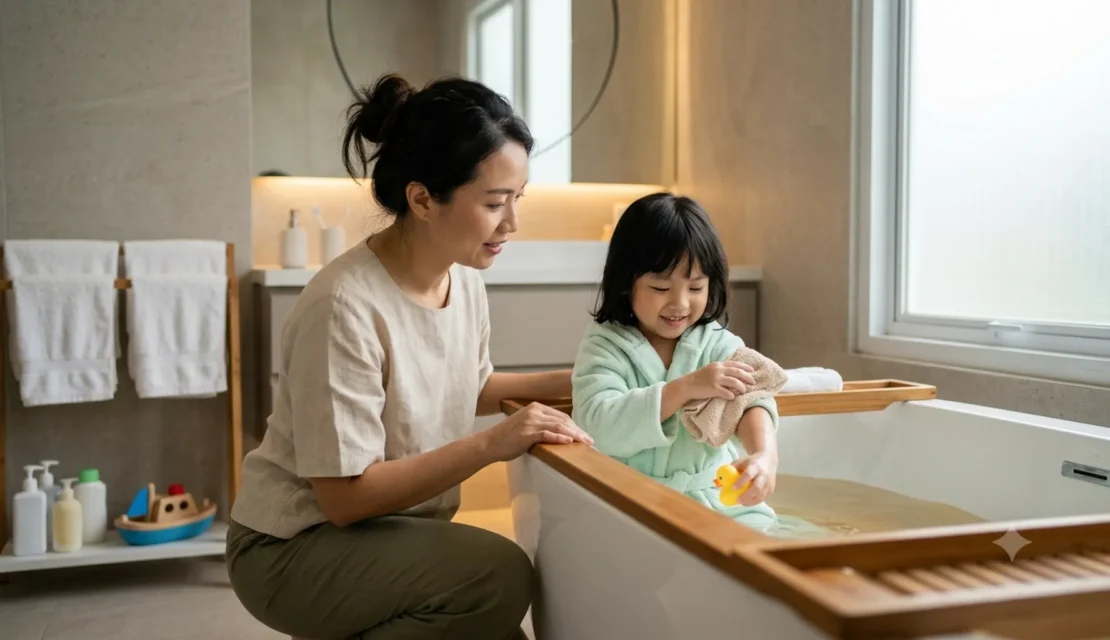
Everyday Routines Grow Easier With the Right Support
At Apple Tree Preschool BSD, we know that routines like bath time, mealtime, and bedtime are not just household chores. They are part of how children build independence, emotional regulation, and confidence. That is why our daily approach supports not only learning, but also the gentle habits that help children grow smart and happy together with parents.
If you would like to explore our programs, we would love to show you how we help children thrive through structure, warmth, and playful learning. Our location in the Educenter BSD Building also makes daily routines a little easier for busy BSD families, which is always a lovely bonus.
A Happier Splash Starts With Small Changes
If your child refuses to take bath, try to think of the problem as something to reshape, not something to win. Better transitions, playful routines, sensory adjustments, and small choices can transform the whole experience over time. You do not need a perfect bath time, just one that feels calmer, kinder, and a little less like a dramatic courtroom scene.
We would be happy to support your family with a warm preschool environment where healthy routines and joyful learning grow side by side. Chat with us on WhatsApp or call +62 888-1800-900 to learn more.
Register now, and come play and learn with other children.





Be the first to write a comment.