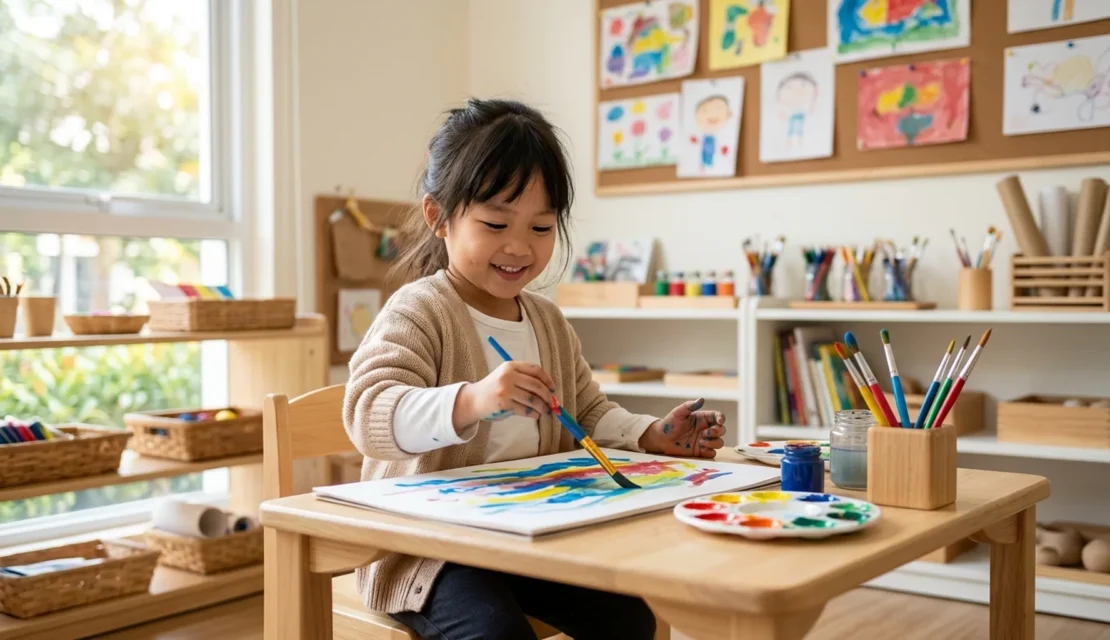
If you have ever handed a child a paintbrush and watched them treat it like a magic wand, a drumstick, a spoon, and then finally an actual art tool, you already know why this matters. At Apple Tree Pre-School BSD, located in Educenter bsd, we see every day how the right creative tools can turn a simple art session into real learning. When children understand basic painting brush types, they do not just make prettier pictures. They build confidence, control, patience, and a wonderful sense of curiosity that keeps them coming back for more.
Painting with children is rarely a neat and tidy masterpiece moment. It is usually more like joyful chaos with a splash of blue on somebody’s sleeve and a suspicious amount of yellow on the table. Still, that is part of the fun. When you introduce the right brush in the right way, your child begins to understand that every brush can do something different, and that is where the magic starts.
Painting Brush Types Kids Can Learn With Easily
Learning painting brush types does not have to feel technical or serious. In fact, the best way to introduce them is to keep it playful and hands on. You do not need to give your child a long lecture about bristles and shapes. You just need a few brushes, some paper, a bit of paint, and the willingness to say, “Let’s see what this one can do.”
For young children, we usually recommend starting with a small set of easy, friendly brushes. These are the ones that tend to work beautifully for beginner artists:
1. Flat brush
A flat brush has a wide, straight edge. It is perfect for bold strokes, filling large spaces, and painting backgrounds. If your child wants to make a big blue sky in six enthusiastic swipes, this is the brush for the job.
2. Round brush
A round brush has a pointed tip and is one of the most useful painting brush types for kids. It can make thick lines, thin lines, dots, swirls, and little details. If brushes had a “can do everything” cousin, this would be it.
3. Fan brush
A fan brush spreads out like a tiny hand fan. Children love it because it makes textures so easily. It is wonderful for grass, fur, feathers, and those happy little tree leaves that somehow end up everywhere.
4. Detail brush
A detail brush is small and fine. It works well for tiny lines, simple patterns, or finishing touches. It is not usually the first brush a child falls in love with, but it becomes very exciting once they want to add eyes, whiskers, or tiny stars.
5. Foam brush
A foam brush is soft, simple, and very easy for little hands to manage. It is great for spreading paint smoothly and works especially well for toddlers who are still learning how to hold and control a brush.
How Each Brush Helps Children Learn Through Play
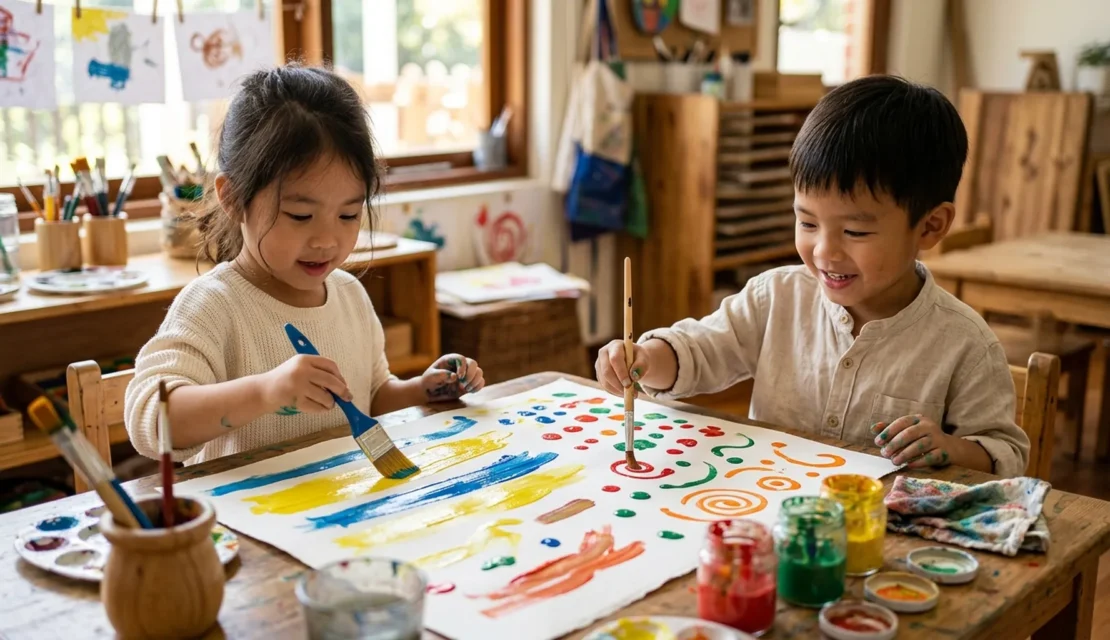
One of the lovely things about teaching painting brush types is that children are learning much more than art. They are learning how tools work, how pressure changes results, and how different choices create different effects. In other words, they are experimenting like tiny scientists, just with more paint on their elbows.
Flat Brushes for Big Confidence
Flat brushes are often the easiest place to begin. They are forgiving, easy to hold, and perfect for broad movement. When a child uses a flat brush, they can cover space quickly, which helps them feel successful right away.
We often use flat brushes for:
- Painting skies, oceans, and backgrounds
- Making bold stripes and blocks of colour
- Practising side to side arm movement
- Learning how to dip and wipe the brush properly
For younger children, success matters. A flat brush gives them that early feeling of “I can do this,” which is half the battle in any creative activity.
Round Brushes for Exploration
Round brushes are excellent when your child is ready to explore more variety. With one brush, they can make dots, loops, wavy lines, and flower petals. It is a very friendly way to show that one tool can create many results.
This is usually the point where children start making connections. They realise that if they press hard, they get a thick line. If they use just the tip, they get something small and neat. That discovery feels huge to them, even if the painting still looks like a cheerful weather report gone slightly wrong.
Fan Brushes for Texture and Fun
If you want instant excitement, bring out a fan brush. Children love unusual tools, and a fan brush looks unusual before it even touches the paint. Once they use it, they start seeing how art can show texture, not just shape.
A fan brush is great for painting:
- Grass in a garden scene
- Hair on a lion or a silly monster
- Feathers on birds
- Tree leaves and textured clouds
It is one of those painting brush types that makes children feel clever very quickly, because the effect looks fancy even when the technique is simple.
Tips for Teaching Kids How to Use Paint Brushes
Once you have introduced a few painting brush types, the next step is showing children how to use them without sucking all the joy out of the moment. We want learning, yes, but we also want giggles, surprise, and enough freedom for creativity to breathe.
Start With Simple Rules
Children do well when the instructions are clear and short. We usually keep it to a few basics:
- Dip the brush gently
- Wipe extra paint on the edge
- Use one brush at a time
- Wash the brush before changing colours
- Put brushes down softly, not like pirate swords
Short rules are easier to remember, and honestly, they save your tablecloth.
Let Children Compare Brush Marks
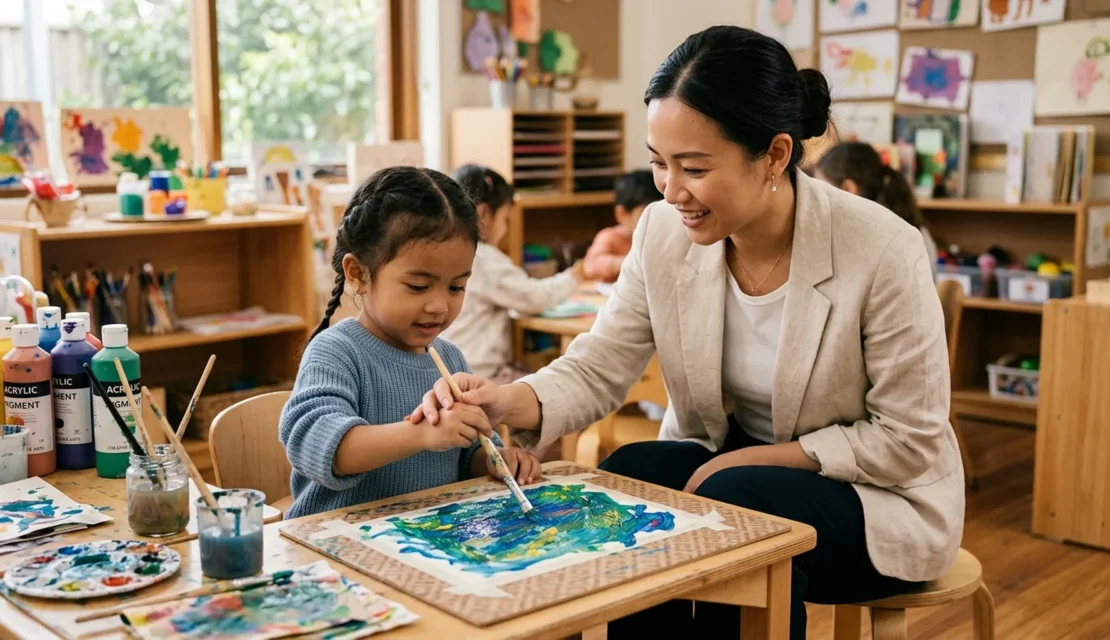
A fun activity is to give your child three or four different brushes and let them make one stroke with each. Ask simple questions like, “Which one makes the fattest line?” or “Which one looks like grass?” This turns the lesson into a game rather than a task.
That kind of comparison helps children understand painting brush types naturally. They are not memorising definitions. They are seeing the differences with their own eyes, which makes the learning stick.
Focus on Process, Not Perfection
This part matters more than most parents realise. If your child paints a purple tree with orange rain using a fan brush upside down, that is not failure. That is exploration. Creativity grows best when children feel safe to try strange ideas without someone hovering nearby saying, “Trees are not purple.”
At preschool, we care much more about the thinking, experimenting, and confidence behind the artwork than whether it looks realistic. The same is true at home. The best art sessions are often the messiest ones.
Why Creative Tools Matter in Early Childhood
When children are introduced to painting brush types in a thoughtful way, they are developing skills that go far beyond art class. They are strengthening fine motor control, practising hand and eye coordination, learning patience, and expressing emotions in ways words cannot always handle yet.
This is one reason creative learning is such an important part of what we do at Apple Tree. Through art, music, movement, language, and discovery, children begin to understand both the world and themselves. If you would like to explore how we support this kind of hands on learning, you can take a look at our programs.
Children do not need expensive materials to become confident little artists. They need time, encouragement, and adults who do not panic when the paint pot gets a bit too much love. That last part is harder than it sounds, we know.
Where Little Artists Begin to Shine
Introducing painting brush types to kids is really about opening a door. One brush helps them make bold lines. Another helps them add tiny details. Another makes grass, feathers, or a wild patch of hair that looks suspiciously like Dad on a humid BSD morning. Bit by bit, your child learns that tools have purpose, choices matter, and creativity can be both fun and meaningful.
At Apple Tree, we love creating these moments with children every day. In our warm and engaging environment, children explore art as part of a bigger journey of growing smart and happy together with their families. If you would love to see your child learn, play, paint, and thrive with us, we would be delighted to welcome you.
Chat with us on WhatsApp or call us at +62 888-1800-900. Come play and learn with other children at Apple Tree Pre-School BSD.


Be the first to write a comment.