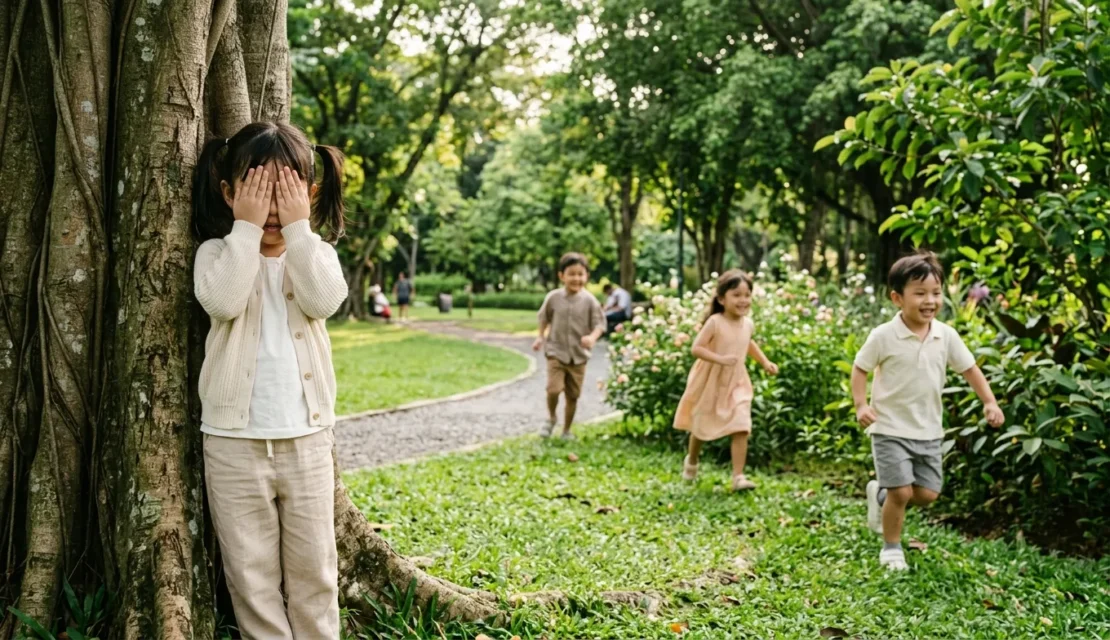
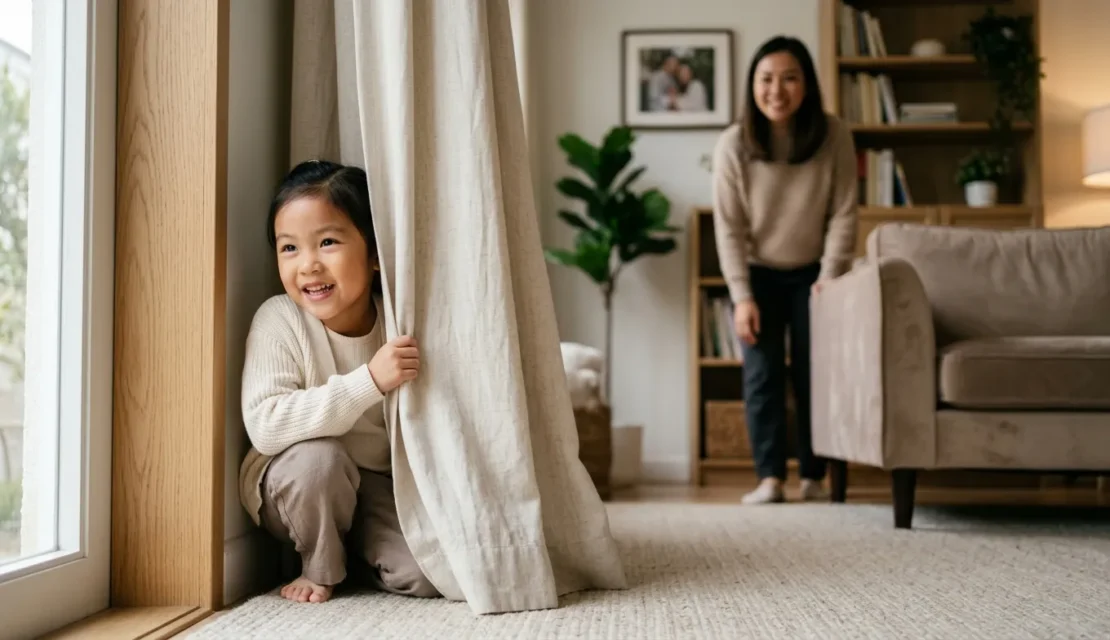
If you have ever played hide and seek with a preschooler, you already know the game is rarely subtle. One child hides behind a curtain with both feet sticking out, another covers only their eyes and feels completely invisible, and somehow everybody is having the time of their life. At Apple Tree Preschool BSD, located in Educenter bsd, we love simple games like this because the real Hide and seek benefits go far beyond filling ten cheerful minutes before snack time. What looks like pure fun is actually helping your child build courage, logic, focus, and confidence in wonderfully natural ways.
Parents sometimes assume children only learn through structured lessons, flashcards, or carefully planned activities. We understand the temptation. A game as old and simple as hide and seek can seem almost too ordinary to count as learning. But in early childhood, ordinary play is often where the richest learning happens.
Hide and Seek Benefits Go Far Beyond Playtime
One of the loveliest things about hide and seek is that children do not need convincing. The invitation is enough. The moment you say, “Ready or not, here I come,” the room changes completely. Suddenly, every cushion, curtain, and corner becomes part of a tiny strategy session.
That excitement matters because children learn best when they are emotionally engaged. The stronger the motivation, the more deeply the learning tends to stick. This is exactly why the Hide and seek benefits are so powerful in the preschool years.
Why simple games often teach the most
Young children do not need complicated systems to think deeply. They need experiences that ask them to choose, predict, wait, observe, and respond. Hide and seek does all of that without ever feeling like a lesson.
It also gives children immediate feedback. If a hiding spot is too obvious, they get found quickly. If they stay quiet and tucked away, their plan works better. That kind of instant cause and effect is brilliant for learning.
How Hide and Seek Benefits Support Courage
Courage in young children does not always look dramatic. It is not usually climbing mountains or giving big speeches. More often, it looks like trying something unfamiliar, waiting in uncertainty, or being willing to take part even when you feel a little nervous.
Children learn to be brave in small moments
For some children, hiding alone for a few seconds feels exciting. For others, it feels surprisingly big. Waiting quietly in a room, hearing footsteps get closer, and not knowing exactly when they will be found can stir up real feelings.
That is why one of the most overlooked Hide and seek benefits is emotional bravery. Children practise being uncomfortable in a safe and playful setting. They learn, little by little, that they can handle suspense, anticipation, and the mild nervousness of being apart for a moment.
Seeking takes courage too
We often focus on the child who hides, but the seeker is building courage as well. Searching rooms, opening doors, and checking behind furniture requires initiative. The child has to lead the action, make decisions, and keep going even when they are not immediately successful.
For preschoolers, that matters a lot. Many children build confidence by taking charge in games. A child who proudly announces, “I found you,” is not just celebrating a win. They are experiencing themselves as capable and brave.
Games create safe practice for independence
Children grow in confidence when they are given small chances to act independently. Hide and seek offers exactly that. They choose where to go, how to stay hidden, and when to move or stay still.
This kind of independence builds real inner strength. The game is playful, but the message underneath is important: “You can think for yourself, and you can trust your own choices.”
How Hide and Seek Benefits Build Logic and Thinking Skills
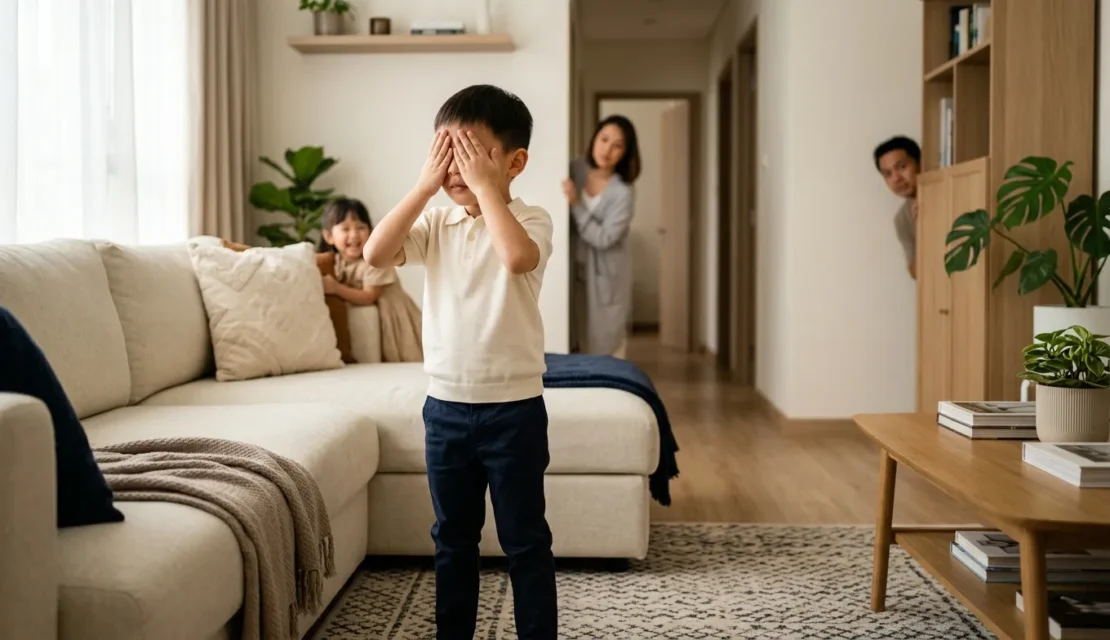
If courage is one side of the game, logic is the other. Hide and seek asks children to think ahead, solve simple problems, and make decisions based on what they know. That is quite impressive for a game often played in socks.
Children learn to plan ahead
A good hiding spot is not random. Even very young children begin thinking through questions like: Can I fit here? Can the seeker see me? Is this place too obvious? Those are early planning skills in action.
This is one of the clearest Hide and seek benefits for cognitive development. Children are learning to predict outcomes. They are testing ideas in real time, which is exactly how early logic grows.
Seeking encourages memory and deduction
The seeker is using a different set of thinking skills. They remember where they already looked, notice what seems unusual, and make guesses based on clues. A moving curtain, a little giggle, or a shoe peeking out from under a table becomes evidence.
That kind of reasoning is a lovely early form of logic. Children are not just searching randomly. They are observing, eliminating possibilities, and using memory to narrow things down.
The game teaches cause and effect
Hide behind the thin chair, get spotted immediately. Hide behind the sofa and stay quiet, last longer. Preschoolers learn quickly from these patterns. The game teaches cause and effect in a way they can feel and remember.
This is why the Hide and seek benefits are so practical. Children are not being told about reasoning. They are using reasoning, over and over again, through a game they genuinely love.
Social and Emotional Hide and Seek Benefits
There is another layer to this game that matters just as much. Hide and seek is not only about bravery and logic. It also supports connection, trust, and emotional regulation.
Children practise taking turns
Every game includes waiting. One child hides while another seeks. Then they switch. This sounds simple, but turn taking is a major skill in the preschool years, especially when a child strongly believes it should somehow always be their turn.
Through repeated play, children begin to understand fairness, patience, and shared rules. Those are important social foundations that help in classrooms, friendships, and family life.
The game helps children handle excitement
Hide and seek comes with suspense. There is the thrill of hiding, the tension of waiting, and the burst of joy when someone is found. Managing those emotions is part of the game.
This is one of the more surprising Hide and seek benefits. Children are practising emotional control while having fun. They learn to stay quiet, wait their turn, and recover if they are found quickly.
It strengthens connection with others
There is a special kind of laughter that comes from being found in a very obvious hiding spot. It is joyful, shared, and deeply connecting. Games like this build warm relationships between children and the adults who play with them.
At school, we see this all the time. Shared play creates trust. It helps children feel safe, seen, and ready to engage more confidently with others.
Easy Ways to Maximise Hide and Seek Benefits at Home
You do not need a huge house or elaborate setup to make this game meaningful. A few simple habits can help you bring out the best Hide and seek benefits at home.
Keep the rules clear and friendly
Young children do well with simple boundaries. Choose a safe play area and explain where hiding is allowed. This keeps the game fun and avoids the sort of panic that comes from briefly losing sight of a child who has discovered a wardrobe at the back of the house.
Let your child try both roles
Encourage your child to hide and to seek. Each role develops different strengths. Hiding supports planning and emotional control, while seeking supports observation, memory, and confidence.
Talk about the thinking behind the game
After a round, ask easy questions like:
- Why did you choose that hiding spot
- What made you look behind the chair
- What would you try next time
- Which spot felt safest or smartest
These little conversations help children notice their own thinking. That makes the Hide and seek benefits even stronger.
Where Simple Play Builds Strong Children
At Apple Tree Preschool BSD, we believe children grow best through experiences that feel joyful, meaningful, and active. Games like hide and seek may look simple, but they are full of learning. Courage, logic, turn taking, emotional control, and confidence are all quietly growing in the middle of the laughter.
If you would like to see how we support this kind of whole child development through play, movement, creativity, and guided learning, you can explore our programs. We care deeply about helping children grow smart and happy, together with their families.
Little Games, Big Growth
The real Hide and seek benefits are not hidden at all once you know where to look. This classic game helps children become braver, think more logically, manage their feelings, and connect more confidently with others. Not bad for a game that usually starts with somebody hiding behind the curtains and giggling immediately.
If you are looking for a warm preschool environment where playful learning is taken seriously, we would love to welcome your family. Chat with us on WhatsApp or call us at +62 888-1800-900. Come play and learn with other children at Apple Tree Preschool BSD.




Be the first to write a comment.