If you are parenting a child afraid of needles shots, you already know how quickly a simple medical appointment can start to feel like a full emotional event with suspense, negotiation, and at least one dramatic stare across the waiting room. At Apple Tree Pre-School BSD, near Educenter bsd, we hear this concern all the time from parents who want to help their little ones feel brave without turning every vaccination day into a family crisis. The good news is that fear around shots is very common, and with the right preparation, you can make the experience much calmer for your child and for yourself.
Most children are not being difficult when they panic about injections. They are reacting to something that feels unfamiliar, uncomfortable, and a little mysterious. Once you understand what your child needs before, during, and after the appointment, you can replace some of that fear with trust, predictability, and a little more courage than last time.
Why a Child Afraid of Needles Shots Reacts So Strongly
Shots involve all the things young children tend to dislike most. There is waiting, uncertainty, strange equipment, and an adult saying, “This will be very quick,” which children somehow never find especially reassuring. If your child has had one upsetting experience before, even a small one, their brain may already connect clinics and doctors with fear.
Children also borrow emotional cues from adults. If you look anxious, apologetic, or tense, your child may decide there is definitely something serious to worry about. This does not mean you have to perform as a perfectly calm superhero. It just means your steadiness matters more than you may realise.
What may be behind the fear
A few common reasons children become anxious about shots include:
- They remember pain from a previous injection
- They do not understand what will happen
- They are sensitive to new environments, smells, or sounds
- They fear being held still or losing control
- They sense adult anxiety before the appointment
That mix can feel big for a small child. The goal is not to erase every feeling. The goal is to make the experience feel manageable.

Child Afraid of Needles Shots, Start Preparing Before the Appointment
One of the kindest things you can do is prepare your child ahead of time. Not six seconds before entering the clinic, while holding a snack and searching for your parking ticket, but calmly and clearly before the day arrives. Preparation helps a scary event feel less mysterious.
Use simple, honest language
Children do best when we tell the truth in a way they can handle. Avoid saying, “It will not hurt at all,” if there is a chance it may sting. If the experience feels different from what you promised, trust can take a hit.
You can say something like this:
- “The doctor or nurse will give your arm a quick medicine poke”
- “It may feel like a pinch for a moment”
- “I will stay with you the whole time”
- “Then it will be over very quickly”
This kind of language is calm and honest. It gives your child something real to hold on to.
Practise through pretend play
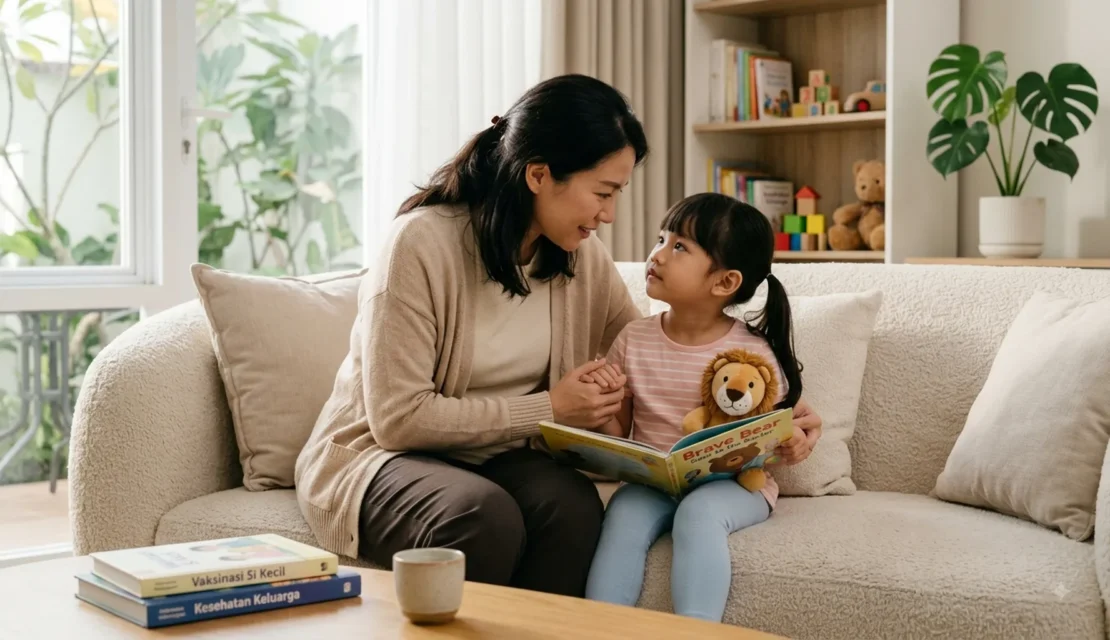
Pretend play works beautifully for children because it lets them explore big feelings in a safe way. Use a toy doctor set, a teddy bear, or even a stuffed dinosaur who is apparently due for very important vaccines.
You might let your child give the pretend shot first. Then switch roles and keep it light. When children play through the experience, they often feel more in control, and control is a big deal when you are four and life keeps happening at you.
Make the Appointment Day Feel Predictable
If your child is already nervous, the day of the appointment should feel as steady and simple as possible. This is not the ideal day for rushing, last minute surprises, or a heroic attempt to fit in three errands first.
Tell your child what will happen step by step
A short preview can work wonders. You do not need a speech. Just offer a calm sequence.
For example:
- “We will drive to the clinic”
- “We will wait a little”
- “The nurse will do the quick shot”
- “Then we will finish and go home”
Predictability lowers stress. Children usually cope better when they know what comes next, even if they are still not thrilled about it.
Bring comfort items that help your child regulate
A familiar object can make the experience feel much safer. This is not being dramatic, this is smart parenting.
Helpful things to bring include:
- A favourite stuffed toy
- A small blanket or comfort cloth
- Water
- A simple snack for after
- A quiet toy or book for waiting
Some children also feel calmer if they sit on your lap. If the clinic allows it, that can be a wonderful option.
What to Do During the Shot Itself
This is the part parents often dread most, but it helps to remember that the injection moment is usually very brief. What matters most is helping your child feel contained, supported, and safe.
Stay close and keep your voice calm
If your child is a child afraid of needles shots, your calm presence matters more than a complicated strategy. Use a low, steady voice and short phrases.
You might say:
- “You are safe”
- “I am right here”
- “Take a breath with me”
- “Squeeze my hand”
Keep your attention on your child, not on the needle. Children notice where you look. If you stare at the syringe like it is the final boss in a video game, they may decide the danger level is indeed very high.
Use distraction, but keep it simple
Distraction can be surprisingly effective, especially for preschoolers. Sing a favourite song, count the ceiling lights, look for something blue in the room, or ask them to blow imaginary birthday candles.
A few easy distraction ideas are:
- Blow slowly like cooling soup
- Count to five together
- Watch a favourite short video if allowed
- Tell them to spot something funny in the room
The point is to give their brain another place to go for a moment.

What Happens After Matters Too
Once the shot is over, your child is already building their memory of the experience. The way you respond afterwards helps shape whether the next appointment feels terrifying or simply uncomfortable but survivable.
Praise bravery in a realistic way
You do not have to wait for perfect stillness or zero tears to call your child brave. Real bravery often looks like crying, clinging, frowning, and still getting through it.
Try saying:
- “You were scared, and you still did it”
- “You held my hand and got through the hard part”
- “That was quick, and you were very brave”
This teaches children that courage is not the absence of fear. It is moving through fear with support.
Keep the story positive later on
Later that day, mention what went well. Keep the memory balanced.
You could say, “You were worried at first, but then you sat with me, took a breath, and finished.” That helps your child remember success, not just distress.
When Extra Support Makes Sense
If your child becomes extremely distressed for days before a shot, has panic that does not settle, or has had a very upsetting medical experience in the past, talk with your pediatrician. Some clinics have ways to help children cope better, and some children need a little more support than others. That is not failure, that is thoughtful parenting.
Growing Brave Hearts Through Gentle Preparation
At Apple Tree Preschool BSD, we believe children grow best when adults prepare them with honesty, warmth, and steady routines. Confidence does not appear overnight. It builds one supported experience at a time, whether a child is learning to separate at school, try new foods, or manage a doctor visit with a little less fear than before.
If you would like to explore our programs, we would love to show you how we help children grow smart and happy together with parents. Our location in the Educenter BSD Building also makes life a little easier for busy BSD families, and honestly, easier is a lovely word when you are raising young children.
A Calmer Appointment Can Start With Small Steps
If you are supporting a child afraid of needles shots, take heart. Honest preparation, simple routines, comfort, and calm follow through can make a real difference over time. You do not need your child to love shots, because frankly that would be a strange hobby, but you can absolutely help them face them with more confidence and fewer tears.
We would be happy to support your family with a warm preschool environment where emotional growth, independence, and joyful learning all grow side by side. Chat with us on WhatsApp or call +62 888-1800-900 to learn more.
Register now, and come play and learn with other children.





Be the first to write a comment.