Dental health for kids often sounds like one of those topics we will “deal with later,” right after laundry, snack prep, and trying to convince a tiny human that pants are, in fact, necessary. But the truth is, healthy brushing habits start much earlier than many parents expect, and those early routines can make a big difference in preventing cavities. At Apple Tree Pre-School BSD, located in the Educenter BSD, we see every day how children learn best when good habits feel simple, playful, and part of normal life.
If you have ever tried to brush a toddler’s teeth while they twist like a superhero escaping capture, you are definitely not alone. We have been there, and yes, sometimes it feels like a full body workout before 8 a.m. Still, when you teach brushing early and keep it consistent, children begin to see it as just another part of their day, like putting on shoes or asking for one more bedtime story.
Dental Health for Kids Starts With Small Daily Habits
When we talk about dental health for kids, we are really talking about routine. Children do not build healthy habits from one big lecture or one magical toothbrush. They build them from small, repeated moments that happen every single day.
That is why early brushing matters so much. When children get used to cleaning their teeth from a young age, they are more likely to carry that habit into preschool, primary school, and beyond. It is one of those tiny efforts now that can save you a lot of stress later.
Why baby teeth matter more than many parents think
We sometimes hear parents say, “They are just baby teeth, so it is probably okay.” We get it. It sounds practical. But baby teeth play a huge role in your child’s development.
They help children chew properly, speak clearly, and hold space for adult teeth to grow in the right position. If cavities appear early and are left untreated, children can feel pain, struggle with eating, and even become less confident about smiling. That is not exactly the childhood glow we are going for.
Healthy baby teeth also support comfort at school. A child with tooth pain may find it harder to focus, join activities, or enjoy snack time. So yes, those tiny teeth deserve big attention.
When should children start brushing their teeth?
Earlier than most people think. As soon as the first tooth appears, it is a good time to begin. At first, brushing is more about building familiarity than perfect technique.
For infants and toddlers, you can start with a soft toothbrush and a tiny amount of toothpaste appropriate for their age. The key is not perfection. The key is helping your child understand, “This is what we do every morning and every night.”
Once children are a bit older, they can begin practicing on their own, but you will still need to supervise and help. Most young children are enthusiastic brushers, but not always effective ones. They may proudly brush only the front two teeth and call it a day. We admire the confidence, but a little backup is still needed.
What causes cavities in young children?
Cavities do not appear out of nowhere. They usually build up from daily patterns, especially when brushing is inconsistent and sugary foods or drinks linger on the teeth.
Here are some common causes we often remind parents about:
- Brushing too quickly or skipping it when the day gets busy
- Drinking sweet milk or juice before sleep without cleaning the teeth afterward
- Snacking frequently on sugary foods
- Letting children brush without supervision too early
- Assuming that no complaints means no dental problem
Children are not always able to tell you clearly when something feels uncomfortable. Sometimes the first sign is not pain, but fussiness during meals or resistance when brushing.
Making Brushing Feel Fun Instead of Forced
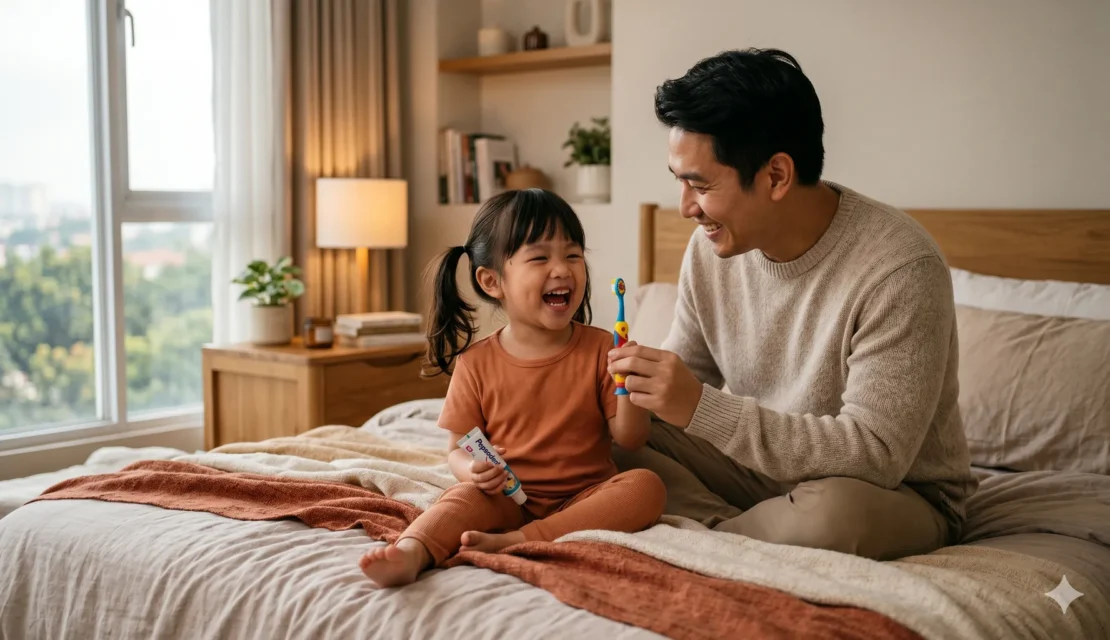
Here is the good news. Dental health for kids does not need to feel strict or scary. In fact, children respond much better when brushing feels playful and predictable.
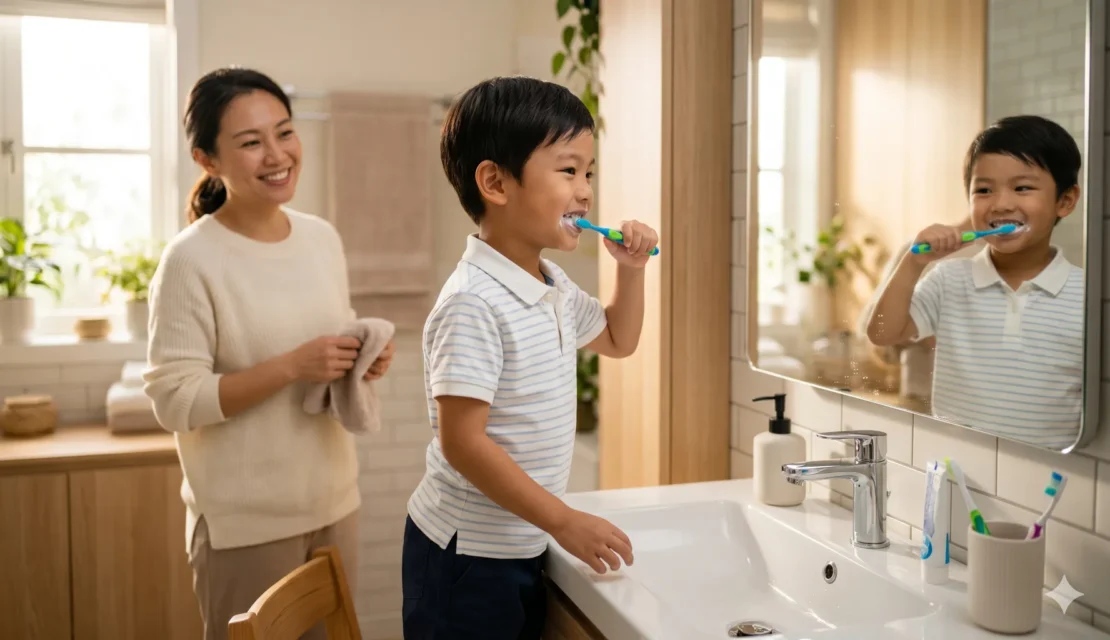
We have found that children love routines when they know what to expect. They also love copying the adults around them. So if they see you brushing your teeth happily, they are much more likely to join in.
Simple ways to make brushing easier at home
You do not need a complicated system. Usually, the simplest tricks are the ones that work best.
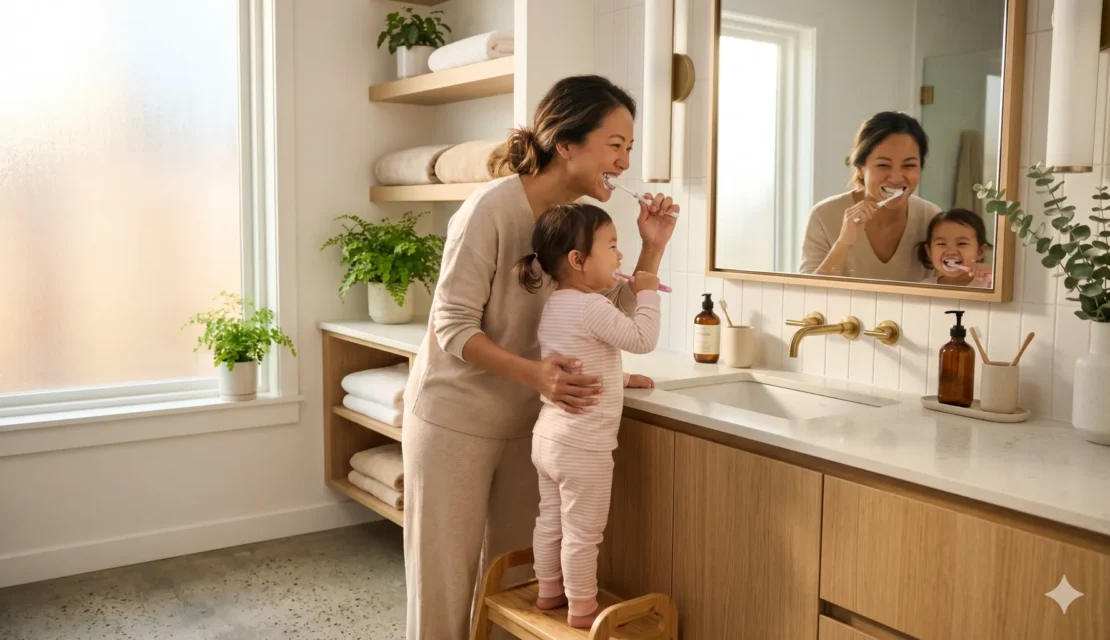
- Brush together in front of the mirror so your child can copy your movements
- Use a song or timer so brushing feels like a game
- Let your child choose their toothbrush color or cup
- Keep the mood light and cheerful, even when they are not cooperating
- Praise effort first, then improve technique little by little
One of our favorite approaches is to turn brushing into a tiny mission. We might say, “Let’s go catch the sugar bugs before they throw a party on your teeth.” Is it scientifically poetic? Not exactly. Does it work surprisingly well? Very often, yes.
Why consistency beats perfection
Some days will go smoothly. Some days your child will happily open wide and brush every corner like a tiny dental champion. Other days, they will act like the toothbrush is a personal insult.
That is normal. What matters most is consistency. A calm, repeated routine works better than expecting perfect cooperation every single time. Children learn through repetition, and they feel safer when expectations stay steady.
This is one reason many parents value structured learning environments. At Apple Tree Preschool BSD, children learn through routines that help them become more independent, confident, and aware of daily self care habits.
How School and Home Can Work Together
Young children thrive when the messages they hear at school match what they experience at home. If we encourage independence, hygiene, and healthy habits in class, and you reinforce them at home, children usually pick them up faster.
That teamwork matters. It helps children see brushing, handwashing, tidying up, and healthy eating as part of everyday life, not random instructions from adults.
Building healthy habits through daily routines
In early childhood education, routine is powerful. It gives children structure, security, and lots of chances to practice life skills. The same idea applies to dental health for kids.
When children learn to follow routines, they become more ready to care for themselves. They may not master everything at once, of course. We are talking about little children, not tiny lifestyle gurus. But step by step, they grow.
If you are looking for a nurturing place where children can learn through purposeful routines, play, and age appropriate guidance, you can explore our programs. We offer classes from toddler to kindergarten, designed to support children as they grow smart and happy together with parents.
A note for parents who feel they started late
If your child already dislikes brushing, please do not panic or feel guilty. Parenting has a funny way of making us feel late even when we are still right on time. The best moment to start a healthier routine is simply now.
Begin small. Stay calm. Keep the routine short, clear, and repeatable. And if needed, speak with a dentist for extra support. Progress is still progress, even if it starts with twenty dramatic seconds and a lot of toothpaste on the chin.
Bright Smiles Start With Little Steps
Teaching children to brush their teeth early is not just about preventing cavities. It is about helping them build confidence, independence, and healthy habits that stay with them as they grow. Dental health for kids becomes much easier to manage when brushing is introduced early, practiced consistently, and supported with patience and a little humor.
If you would like your child to grow in a warm learning environment that supports positive daily routines, we would love to welcome your family. You can Chat with us on WhatsApp or call us directly at +62 888-1800-900 to learn more about Apple Tree Preschool BSD and find the class that fits your little one best. Come learn, play, and grow with us, one happy smile at a time.





Be the first to write a comment.