

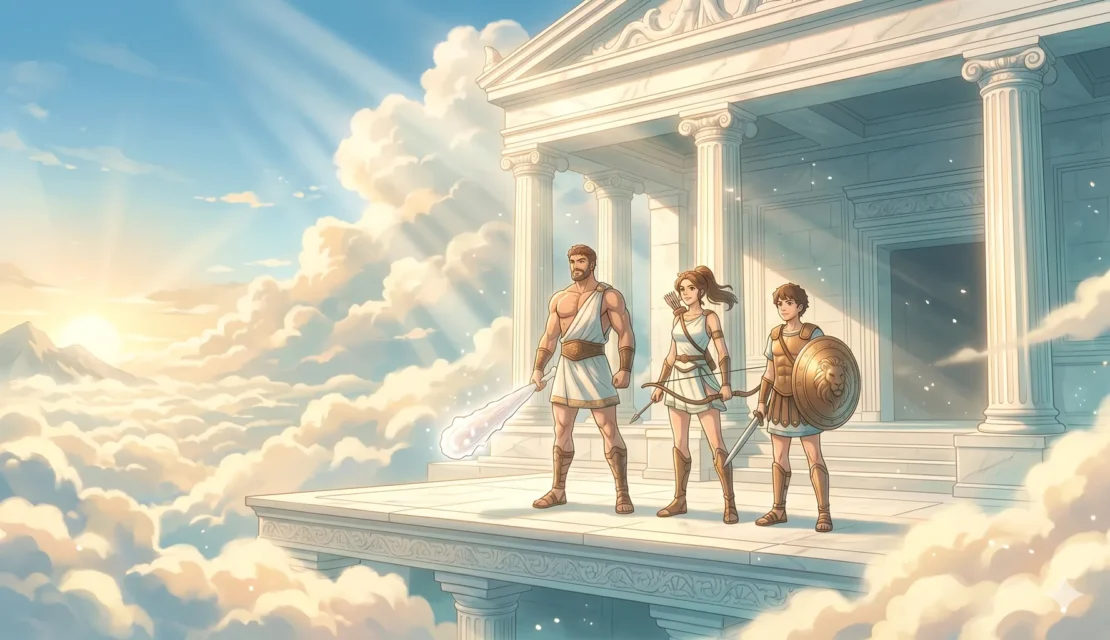
At Apple Tree Preschool BSD, right here in the Educenter BSD Building, we know great storytelling can stop a room in seconds, and these greek mythology stories do exactly that because they are dramatic, weird, wise, and honestly a little delightfully unhinged. If you have ever watched your child become completely obsessed with one bedtime story and ask for it again, and again, and again, you already understand why myths have survived for thousands of years.
We love stories that make you laugh, gasp, and think all at once. Greek myths do all three, sometimes in the same paragraph. One minute you are meeting a hero, the next minute someone is turning into a tree, fighting a snake haired monster, or making a truly terrible life decision. So yes, if you thought ancient stories would feel dusty and serious, Greek mythology is here to surprise you.
Greek Mythology Stories We Still Cannot Stop Talking About
These greek mythology stories are full of heroes, monsters, jealous gods, wild quests, and family chaos that still feel ridiculously entertaining today.
1. Prometheus and the Gift of Fire

Before human beings had fire, life was rough. We are talking cold nights, raw food, darkness everywhere, and very little chance of a cozy dinner. The gods had fire, of course, but Zeus decided humans were not worthy of it. Prometheus disagreed, and that disagreement changed everything.
Prometheus was a Titan, clever and rebellious, which in mythology is usually a sign that your week is not going to go smoothly. He looked at humanity and saw potential. Humans were fragile, confused, and honestly not very impressive yet, but he believed they could grow. Zeus, on the other hand, preferred control. He wanted the line between gods and humans to stay crystal clear.
So Prometheus did what bold mythological troublemakers do. He stole fire from Olympus. In some versions, he hid the spark in a fennel stalk and carried it down to earth. Imagine the moment humans first saw flame in their own hands. Suddenly they could cook, forge tools, stay warm, and gather around light instead of shivering in the dark. In one rebellious act, Prometheus gave humanity knowledge, progress, and the first real upgrade in living standards.
Zeus was furious. Not mildly annoyed, not disappointed in a fatherly way, but truly, thunderbolt level furious. As punishment, he had Prometheus chained to a rock. Every day an eagle came and ate his liver. Every night the liver grew back, which is both horrifying and an extremely efficient punishment design. Greek myths really do not do things halfway.
But that is not where the story ends. Prometheus became a symbol of sacrifice, courage, and the cost of helping others. He suffered because he believed human beings deserved a chance to build, create, and rise. That idea still lands today. We tell children stories about kindness and bravery all the time, and here is an ancient version with cosmic stakes.
What makes this one unforgettable is that it asks a huge question. Is it worth suffering if you are doing something right? Prometheus says yes. He pays dearly, but because of him, humanity moves forward. For a myth written thousands of years ago, that is still a pretty powerful message. Also, let us be honest, a guy stealing fire from the gods is cinematic enough to make any superhero jealous.
2. Persephone and the Reason the Seasons Change

This story begins with flowers, sunshine, and a young goddess enjoying a peaceful day. So naturally, in Greek mythology, that peaceful day does not last long. Persephone, daughter of Demeter, was gathering blossoms in a meadow when the earth cracked open and Hades rose from the underworld in his chariot.
Hades carried Persephone away to become queen of the underworld. It is dramatic, dark, and deeply unsettling, and her mother Demeter, goddess of the harvest, responded exactly how you would expect a heartbroken mother to respond. She searched everywhere. She wandered the earth in grief, refusing to let crops grow. Fields turned barren, fruit stopped ripening, and the world began to starve.
Now things got serious, because when people cannot eat, the gods have a problem on their hands. Zeus had to step in and negotiate. It was agreed that Persephone could return, but there was a catch. While in the underworld, she had eaten pomegranate seeds. In myth, eating the food of the underworld ties you to it. Because of those seeds, Persephone could not stay with Demeter all year.
So the seasons were born from a mother and daughter living in a painful rhythm of separation and reunion. When Persephone returns to Demeter, the earth blooms and spring begins. Summer follows in joy and abundance. When Persephone goes back to Hades, Demeter mourns, and autumn slips into winter.
What makes this story so lasting is its emotional truth. It is not just about gods and magic. It is about love, change, growing up, and the fact that life moves in cycles. Children understand rhythm, even if they cannot yet explain it. Parents do too. There are seasons of closeness, seasons of letting go, seasons when everything feels bright, and seasons when things slow down.
This myth also gives nature a heartbeat. Winter is not random. Spring is not just weather. In the Greek imagination, the whole world responds to the feelings of a mother. That is huge, poetic, and honestly rather beautiful. It turns the changing year into a family story, which may be one reason it still feels so personal. Also, any story that can make pomegranate seeds feel this dramatic deserves some respect.
3. Theseus and the Minotaur
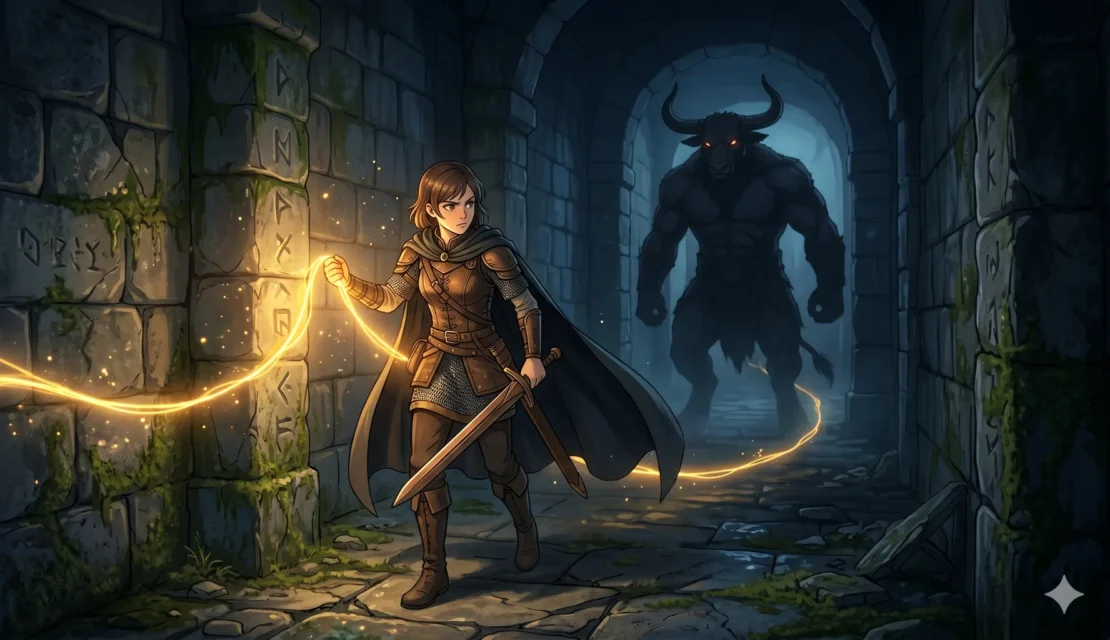
If you like labyrinths, monsters, royal drama, and one very brave teenager making dangerous choices, this one is hard to beat. The kingdom of Athens had been forced to send young people to Crete as tribute, where they were thrown into the Labyrinth, a giant twisting maze built to hold the Minotaur. The Minotaur was half man and half bull, which sounds like the sort of creature someone would invent after a nightmare and too much cheese before bed.
Theseus, prince of Athens, volunteered to go. He was not interested in watching his people live in fear forever. His plan was simple in the way only legendary plans can be simple. Enter the maze, kill the monster, get out alive. Easy to say. Quite a bit harder in practice.
When he arrived in Crete, Princess Ariadne fell in love with him and decided to help. She gave him a sword and, more importantly, a ball of thread. This is the kind of practical thinking we really appreciate. Heroism is wonderful, but heroism with good planning is even better. Theseus tied the thread at the entrance of the Labyrinth and unwound it as he walked deeper inside.
At the center he found the Minotaur. The battle was brutal, and different versions tell it differently, but Theseus won. He killed the beast and followed the thread back out. That thread became the difference between victory and getting hopelessly lost forever.
The story works so well because it is not just about defeating a monster. It is about facing fear with courage and using both strength and intelligence. Theseus is brave, yes, but he also listens, prepares, and accepts help. That matters. So many heroes charge in alone, as if teamwork is somehow less impressive. Greek myth slips in a nice reminder that a good idea can be just as powerful as a sharp sword.
There is also something wonderfully symbolic about the Labyrinth. Many of us know what it feels like to be stuck inside something confusing, whether it is a problem, a fear, or one of those weeks where everything feels tangled. The image of carrying a thread through darkness is still powerful today. You do not always need to see the whole way out. Sometimes you just need something steady to follow.
4. Perseus and Medusa
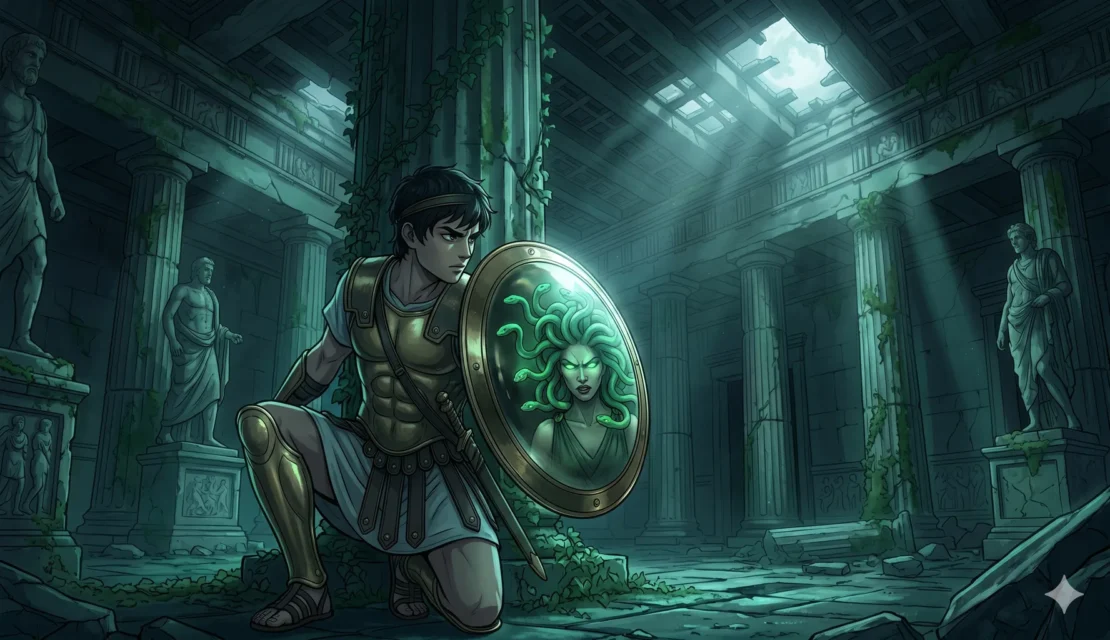
Perseus begins his adventure because a king wants him out of the way, which is honestly a common mythological workplace issue. King Polydectes sends Perseus on what is supposed to be an impossible mission, bring back the head of Medusa. Medusa was one of the Gorgons, a terrifying creature with snakes for hair whose gaze could turn people to stone.
Now, asking someone to kill Medusa is a bit like asking them to tidy the kitchen while casually leaving out the fact that the kitchen also contains instant death. But Perseus gets divine help. Athena gives him wisdom, Hermes gives him winged sandals, and he also receives a reflective shield, a curved sword, and a bag to carry the head. Greek heroes do love magical accessories.
The clever part of the story is that Perseus does not fight Medusa by looking directly at her. He uses the polished shield as a mirror. That way he can see her without meeting her eyes. It is one of the best examples in mythology of solving a problem sideways. He sneaks into the lair, sees Medusa only in reflection, and cuts off her head while she sleeps.
Even then the story does not slow down. From Medusa’s blood spring Pegasus and Chrysaor, because Greek myths always have one more surprise waiting in the wings. Perseus escapes her furious sisters, flies away, and later uses Medusa’s head as a weapon. He rescues Andromeda from a sea monster, returns home, and defeats the king who tried to get rid of him in the first place.
What keeps this myth so gripping is the combination of terror and strategy. Medusa is memorable because she is visually unforgettable, but Perseus stands out because he wins with courage and control. He does not rush blindly forward. He thinks. He adapts. He understands the danger and respects it.
There is another reason this story stays with people. Medusa is more than just a monster in later retellings. She becomes a symbol of fear, power, rage, and the consequences of being misunderstood. So even in a very old story, there is room for complexity. That gives the myth surprising depth. It is exciting on the surface, but the more you look, the more it asks about power, perception, and how we define monsters in the first place.
5. Orpheus and Eurydice

Some myths are loud and full of clashing swords. This one is quieter, and that is exactly why it hurts so much. Orpheus was a musician so gifted that his songs could charm animals, trees, rivers, and even stones. In a mythology packed with warriors, that already makes him unusual. His greatest power was not strength. It was beauty.
He fell deeply in love with Eurydice, and for a brief moment the story feels almost gentle. Then tragedy crashes in, as it tends to do in Greek myth. Eurydice dies after being bitten by a snake, and Orpheus is devastated. Instead of accepting the loss, he decides to do something no ordinary person would even attempt. He goes to the underworld to bring her back.
This part is incredible. Orpheus sings before Hades and Persephone, rulers of the dead, and his music moves them. Think about that. The king and queen of the underworld, who are not exactly famous for being sentimental, are so touched that they agree to let Eurydice return to the living world. There is only one condition. Orpheus must walk ahead of her and not look back until they have both reached the surface.
You can probably feel the tension already. He walks upward through darkness, hearing nothing, trusting everything. Step by step, closer to daylight, closer to hope. Then doubt creeps in. Is she really behind him? Did the gods trick him? Just before he reaches the world above, he turns.
Eurydice is there, but only for a second. Because he looked back too soon, she vanishes into the underworld forever.
This story stays with us because it understands grief in such a painfully human way. Orpheus fails not because he is weak, but because he is afraid. He wants certainty. He wants proof. And in reaching for it, he loses what he loves. That is devastating, but it is also deeply relatable.
We often think myths are all monsters and battles, yet here is one of the most moving love stories ever told. It reminds you that trust can be difficult, grief can make people unravel, and even extraordinary gifts cannot shield us from heartbreak. No exploding chariots required. Just one man, one impossible hope, and one look back that changes everything.
6. Daedalus and Icarus
Daedalus was brilliant. He was an inventor, architect, and problem solver of the highest level. If ancient Greece had a group chat for people who were absurdly talented and maybe a little too confident, Daedalus would have been very active in it. He built the Labyrinth for King Minos, but later found himself trapped on Crete with his son Icarus.
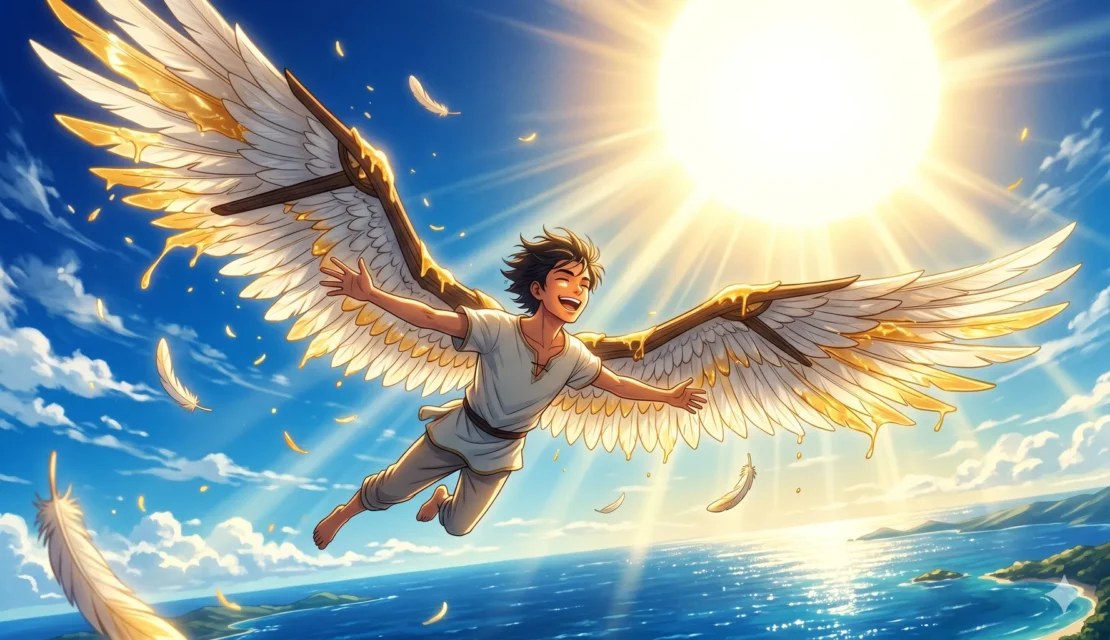
Since escape by land or sea was impossible, Daedalus came up with a plan that remains one of the boldest in mythology. He built wings from feathers and wax. It is genius with a hint of impending disaster, which is usually how Greek myths announce themselves. Before they flew, Daedalus warned Icarus carefully. Do not fly too low, or the sea will weigh down the feathers. Do not fly too high, or the sun will melt the wax.
At first, it worked. Father and son soared into the sky, leaving prison behind. You can imagine the thrill. Wind in their faces, the sea glittering below, freedom at last. But Icarus, caught up in the joy of flying, forgot the warning. Maybe he felt invincible. Maybe he wanted more. Maybe he was just young and thrilled and not especially interested in careful instructions, which, if you have ever spent time with children, you may recognize as a very ancient pattern.
He flew higher and higher. The sun melted the wax. Feathers scattered. Icarus fell into the sea and drowned.
The story is often told as a warning against pride, and that is certainly part of it. But it is also about youth, exhilaration, and the danger of losing yourself in a feeling. Icarus is not evil. He is not even foolish in a cartoonish way. He is intoxicated by possibility. That is what makes the story sad instead of smug.
Daedalus survives, but the triumph of escape is shattered by grief. His brilliant invention works, yet it costs him his son. That complexity gives the myth real staying power. It is about ambition, yes, but also about parenting, guidance, and the painful reality that love cannot always prevent mistakes.
We tell children to listen, and there is wisdom in that. But for adults, this myth also whispers something else. Brilliance is not enough. Freedom needs wisdom. Excitement needs balance. And sometimes the sky looks so beautiful that it is hard to remember there are limits at all.
7. Athena and Arachne
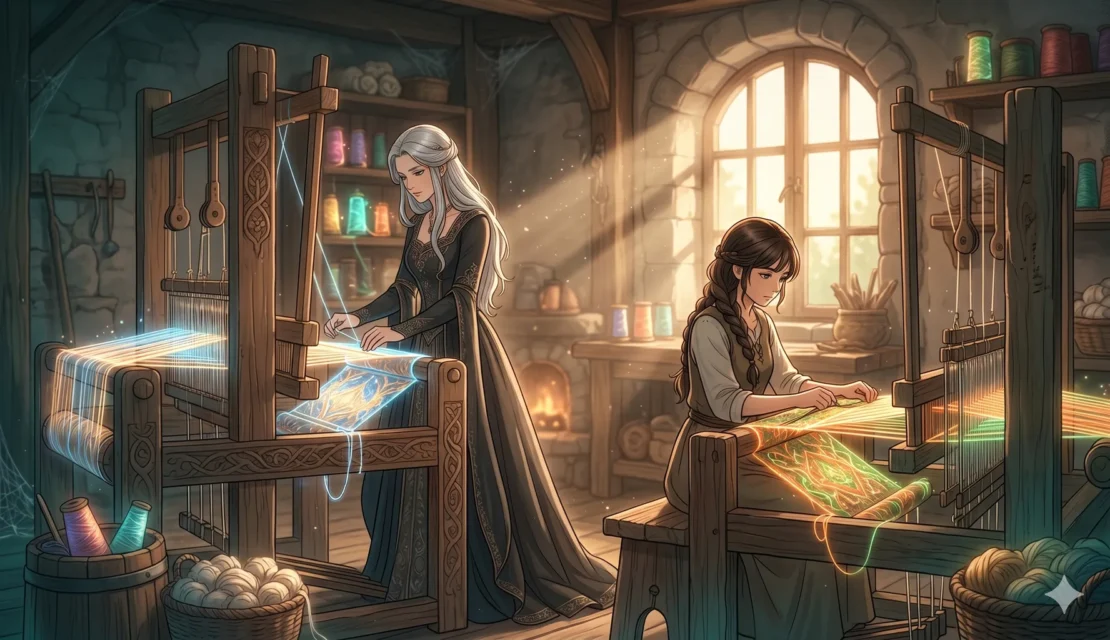
This is one of those myths that starts with a talent and ends with a warning. Arachne was an extraordinary weaver, so skilled that people came from far away just to admire her work. She was precise, imaginative, and proud of her talent. Fair enough, really. If you were producing masterpieces out of thread all day, you might feel pretty pleased with yourself too.
The trouble began when Arachne claimed she was better than Athena, goddess of wisdom and crafts. In Greek mythology, comparing yourself favorably to a god is usually not a great long term strategy. Athena hears the boast and decides to test her. Disguised as an old woman, she warns Arachne to be humble. Arachne refuses and demands a contest.
So the weaving match begins. Athena creates a tapestry celebrating the glory and power of the gods. Arachne creates something daring, a tapestry showing the gods behaving badly, tricking mortals, abusing power, and making a mess of things. The wild part is that Arachne’s work is flawless. She is not just bold. She is genuinely brilliant.
Athena is furious, not because Arachne lacks skill, but because she uses it to challenge divine authority. In rage, Athena destroys the tapestry. Arachne, overwhelmed by shame and despair, hangs herself. Athena then transforms her into a spider, condemning her to weave forever.
It is a strange and unforgettable myth because it deals with talent, pride, truth, and power all at once. Arachne is not a simple villain. She is gifted and fearless. Athena is not a simple hero either. She represents excellence and order, but she also reacts with jealousy and anger. That tension is what makes the story fascinating.
It also explains, in a wonderfully mythic way, why spiders spin webs. But beneath that transformation tale is a bigger question. What happens when real talent collides with authority? What does humility mean when you know you are truly good at something? Those are not ancient questions only. They still show up in classrooms, workplaces, and creative communities all the time.
So yes, the next time you spot a spider web sparkling in the morning light, you can thank Greek mythology for making even that feel dramatic.
8. Jason and the Golden Fleece
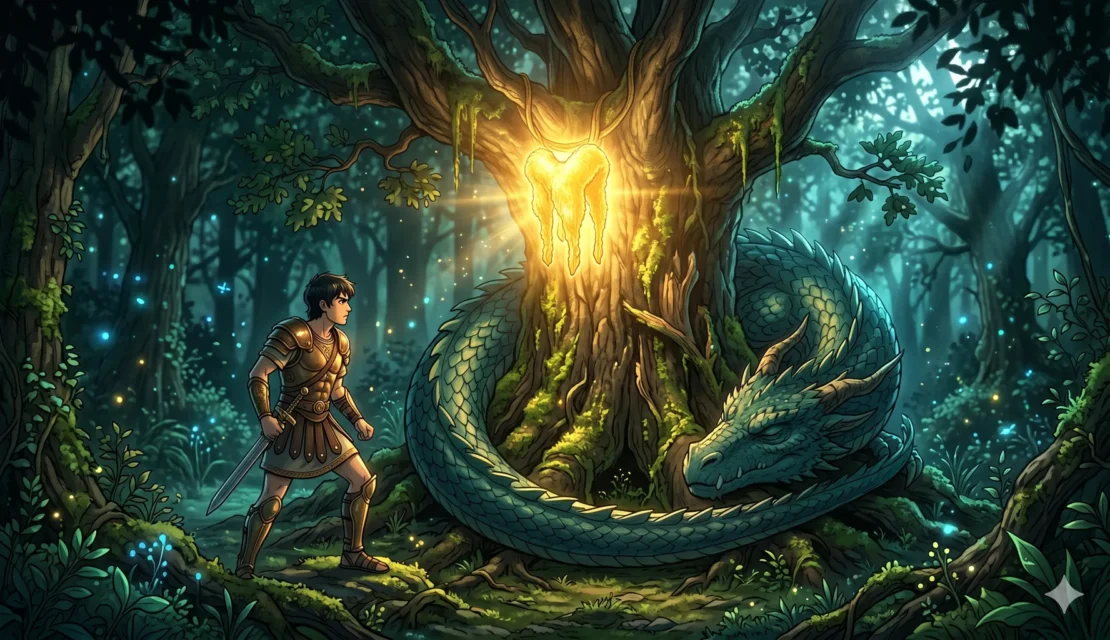
Jason’s story has everything you could want from an epic adventure, a stolen throne, a legendary ship, impossible tasks, dangerous strangers, and a magical prize that everyone suddenly cares about very intensely. Jason was the rightful heir to the throne of Iolcus, but his uncle Pelias had taken power. Pelias promised to give it back if Jason could fetch the Golden Fleece, which is exactly the sort of suspicious bargain that should make anyone say, “Absolutely not.”
Instead, Jason says yes and assembles a dream team of heroes called the Argonauts. Their ship, the Argo, becomes the ancient world’s version of a blockbuster ensemble cast. Along the journey they face harpies, clashing rocks, hostile kings, and enough peril to make a normal person turn around after day one.
Eventually Jason reaches Colchis, where the Golden Fleece is guarded by a dragon that never sleeps. But first King Aeetes sets impossible tasks. Jason must yoke fire breathing bulls, plow a field, and sow dragon’s teeth that grow into armed warriors. This is where Medea enters the story, and things get far more interesting. Medea, a powerful sorceress and the king’s daughter, falls in love with Jason and decides to help him.
With her magic, Jason survives the tasks. He defeats the warriors by making them fight each other, steals the Fleece, and escapes with Medea. It is thrilling, chaotic, and morally messy in exactly the way Greek myth often is. Heroes do brave things, but they are rarely tidy people.
The reason this myth remains so enjoyable is that it feels like the blueprint for adventure stories. You have a quest, a crew, magical objects, escalating danger, and a hero who survives only because courage teams up with help from others. Jason is bold, but without Medea he gets nowhere.
And that is part of the story’s edge. Victory comes at a cost. Relationships fracture. Loyalties shift. The ending, especially in the larger myth cycle, becomes much darker. But the Golden Fleece quest itself still shines as one of the great adventure narratives. It is fast, unpredictable, and packed with enough spectacle to make modern action franchises look politely restrained.
9. Heracles and the Twelve Labors
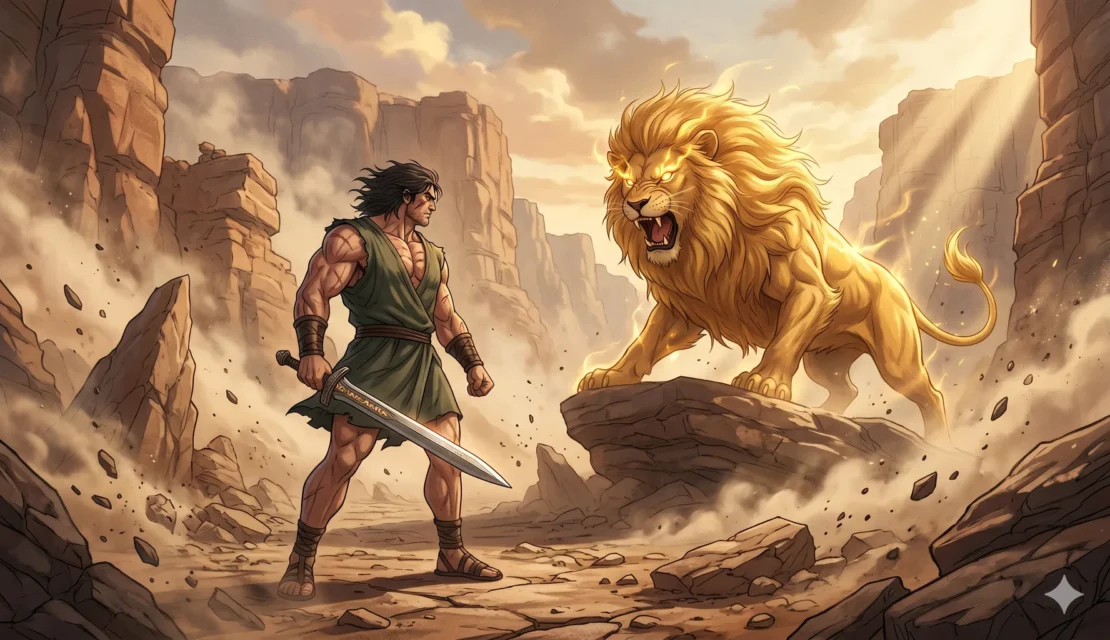
Heracles, or Hercules if you met him through Roman mythology and cartoons, is probably the most famous Greek hero of all. He was incredibly strong, legendary in battle, and deeply troubled. That combination shows up often in myth because ancient storytellers clearly understood that power does not magically fix a person’s inner life.
After being driven into madness by Hera, Heracles committed a terrible crime. When he recovered, he was consumed by grief and guilt. To atone, he was ordered to serve King Eurystheus and perform twelve impossible labors. These tasks were meant to destroy him. Instead, they made him legendary.
He killed the Nemean Lion, whose skin could not be pierced by weapons. He defeated the Hydra, a serpent that grew two heads for every one cut off. He captured the golden Ceryneian Hind, cleaned the Augean stables in a single day by rerouting rivers, drove away the Stymphalian birds, captured the Cretan Bull, stole the mares of Diomedes, obtained the belt of Hippolyta, took the cattle of Geryon, fetched the apples of the Hesperides, and even dragged Cerberus, the three headed dog of the underworld, into the light.
Each labor has its own flavor, but together they form a portrait of endurance. Heracles is not just strong. He is relentless. He keeps going through humiliation, danger, and impossible demands. That perseverance is part of why people still admire him.
But the story is not simply a victory parade. Heracles is complicated. He is capable of great heroism and great destruction. That moral complexity gives the myth weight. These are not clean tales where the good guy does everything right. They are stories about broken people trying, suffering, failing, and still fighting on.
For children, Heracles can be thrilling because the monsters are enormous and the tasks are outrageous. For adults, the deeper appeal is that his journey is about redemption. He cannot erase the past, but he can keep choosing courage in the present. That makes his story larger than action. It becomes about what it means to live with failure and still move forward.
10. Atalanta and the Calydonian Boar
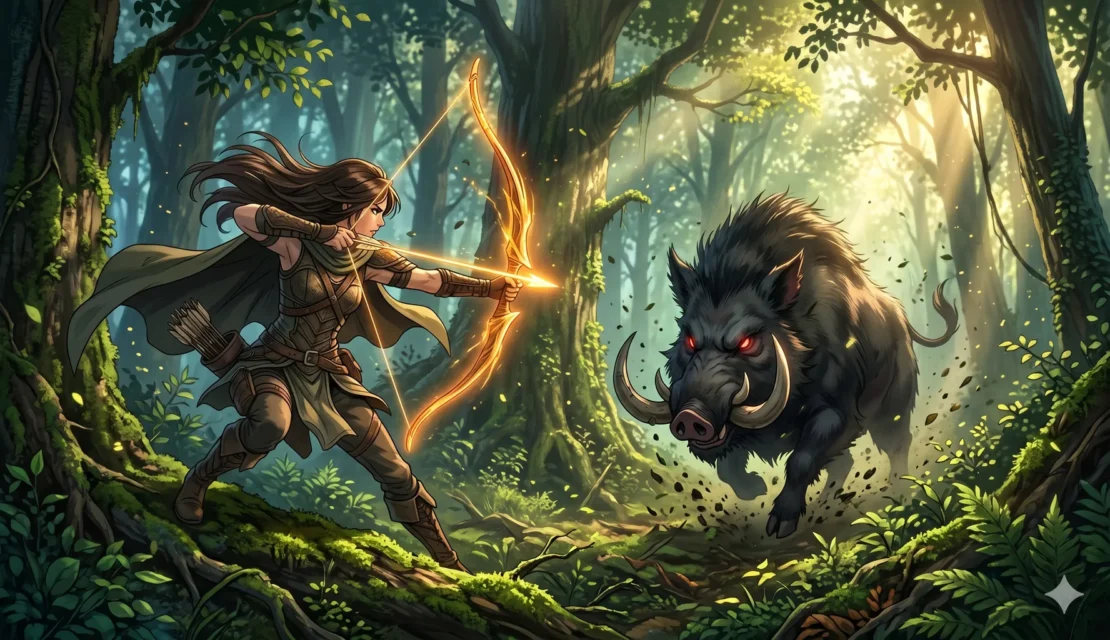
Atalanta is one of the coolest figures in Greek mythology, partly because she refuses to fit neatly into anyone else’s expectations. She was a fierce hunter, fast, skilled, and brave enough to stand alongside male heroes in a world that often preferred women to stay decorative and quiet. Atalanta clearly did not get that memo.
The Calydonian Boar was sent by Artemis to ravage the land after King Oeneus neglected to honor her properly. The beast was enormous and destructive, tearing through fields and killing hunters. So a group of heroes gathered to kill it, and Atalanta joined the hunt. Some men objected to her presence, because apparently surviving a giant monster was less important to them than maintaining their outdated opinions.
They learned quickly that Atalanta was not there for decoration. During the hunt, she was the first to wound the boar with an arrow. That strike changed everything. Meleager, one of the leaders, finished the kill, but because Atalanta had drawn first blood, he awarded her the hide and the glory.
This did not go over well with everyone. Male relatives objected, tempers flared, and the aftermath turned violent. As usual, Greek mythology proves that defeating the monster is often easier than dealing with people afterward. Still, Atalanta’s achievement remained unforgettable. She had entered a heroic space and excelled.
What makes this story so satisfying is how clearly it celebrates competence. Atalanta is not extraordinary because someone grants her permission. She is extraordinary because she is good. Very good. She earns respect through action, not titles, not approval, not polite applause.
Later myths about Atalanta include her famous footrace and the golden apples, but even in the boar hunt alone, she stands out as a hero in her own right. She is sharp, independent, and utterly unbothered by fragile egos around her. Honestly, we love that for her.
For young readers especially, Atalanta offers something refreshing. Heroism does not belong to one kind of person. Courage, discipline, and skill can come from anywhere. And when they do, the world should make room.
11. Bellerophon and Pegasus
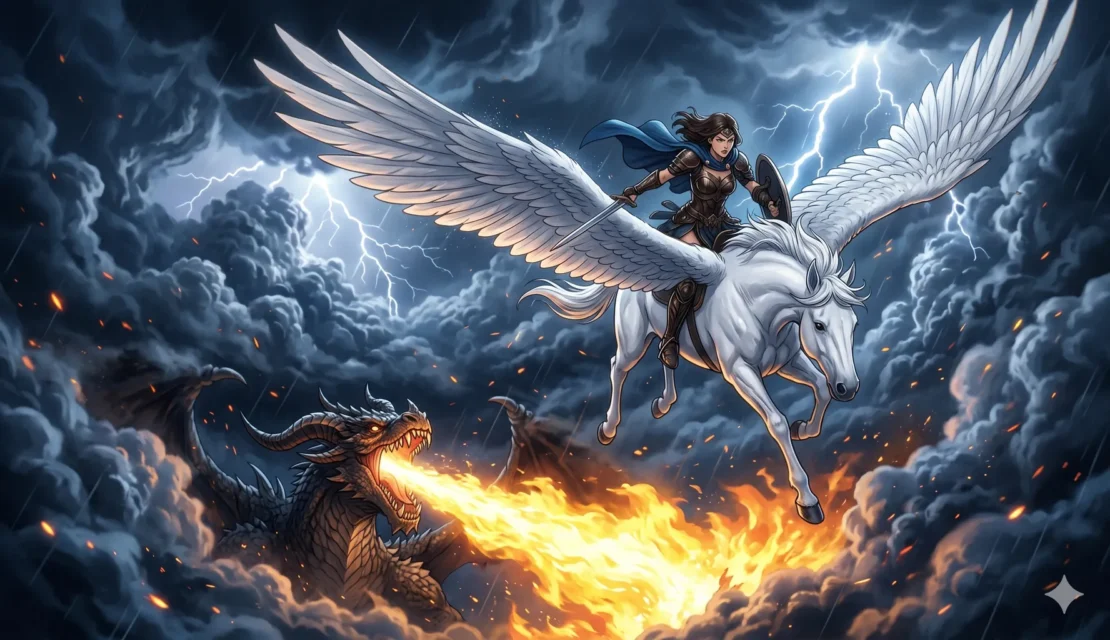
Some heroes earn a kingdom. Some defeat a monster. Bellerophon got a winged horse, and that alone is enough to get anyone’s attention. But his story goes much further than that. Bellerophon was a gifted warrior who managed to tame Pegasus, the magnificent flying horse born from Medusa’s blood. With Pegasus by his side, he became nearly unstoppable.
His greatest challenge was the Chimera, a terrifying creature with the body of a lion, a goat growing from its back, and a serpent for a tail. It also breathed fire, because apparently being three animals at once was not dramatic enough. Bellerophon was sent to kill it, partly because powerful people often preferred heroes to take on jobs with very low survival odds.
Riding Pegasus, Bellerophon attacked from the sky. He avoided the Chimera’s flames and used both bravery and tactical skill to defeat it. He later completed other dangerous tasks and became celebrated across the land. With each success, his confidence grew. Then it grew some more. Then it kept growing until it became the thing that would undo him.
Bellerophon decided he was worthy of joining the gods on Olympus. So he mounted Pegasus and tried to fly to heaven itself. Zeus was not impressed. He sent a gadfly to sting Pegasus, Bellerophon lost his seat, and he fell back to earth. He survived, but his glory was gone, and the rest of his life was marked by isolation and sorrow.
This myth lands because it combines triumph with warning in such a dramatic way. The first half is exhilarating. A hero on a flying horse battling a fire monster is pure spectacle. But the second half reminds you that success can distort a person if humility disappears.
It is not anti ambition. Greek myths rarely are that simple. It is more like a reminder that accomplishment and arrogance are not the same thing. You can rise very high and still lose everything if you begin to believe the rules no longer apply to you. Also, if you ever needed proof that ancient stories knew how to build a character arc, Bellerophon has you covered.
12. Odysseus and the Long Way Home
If we are talking about greek mythology stories that still feel wildly modern, Odysseus may be the champion. He is not the strongest hero. He is not the most noble all the time either. But he is clever, resilient, sarcastic in spirit if not always in text, and constantly dealing with consequences. That makes him feel very alive.
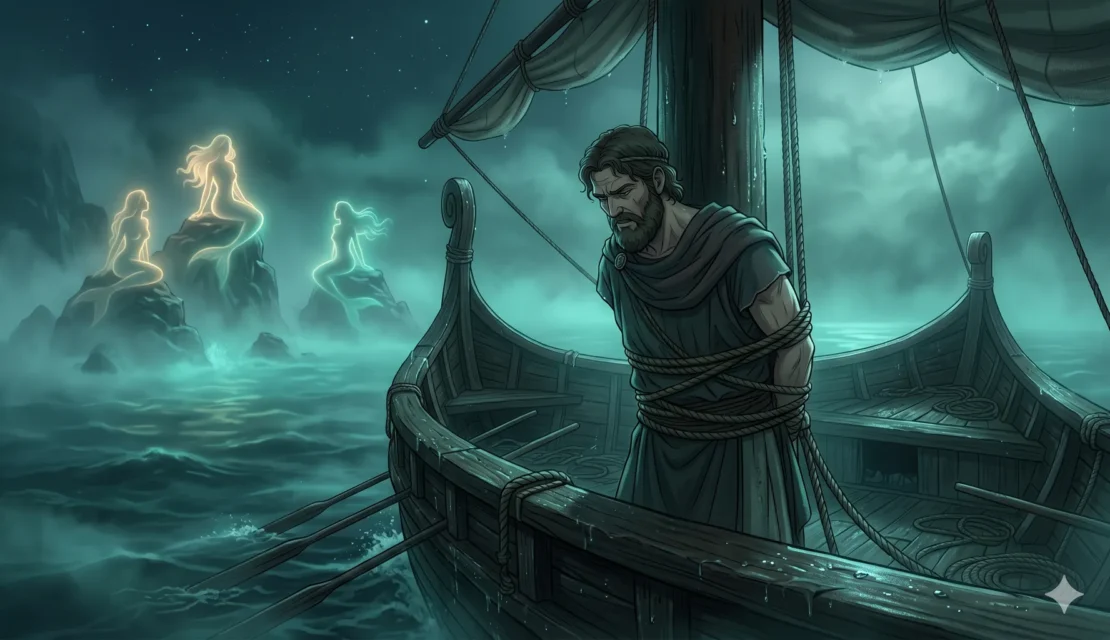
After the Trojan War, Odysseus tries to return home to Ithaca. It should have been a straightforward trip. Instead, it takes ten years. Along the way he faces the Cyclops Polyphemus, the enchantress Circe, the Sirens, the six headed Scylla, the whirlpool Charybdis, angry gods, mutinous crew members, and the deeply inconvenient habit of saying just a little too much after he wins.
One of the best episodes is with the Cyclops. Odysseus and his men become trapped in Polyphemus’s cave. Strength alone will not save them, so Odysseus uses cunning. He tells the Cyclops his name is “Nobody,” blinds him, and escapes by hiding beneath sheep. It is brilliant. It is also followed by the classic mistake of yelling his real name while sailing away, which brings Poseidon’s wrath crashing down on him. Very relatable, honestly. So many problems begin with, “I really should have stopped talking.”
The whole Odyssey is a test of patience, identity, and endurance. Odysseus longs for home, but getting there requires him to resist temptation, survive loss, and hold onto who he is in the middle of chaos. Meanwhile, back in Ithaca, Penelope waits and outsmarts the suitors trying to force her into remarriage. She is formidable in her own quiet way, which gives the story even more balance.
Why does this myth still work so well? Because it understands that the hardest journeys are not always about winning. Sometimes they are about returning, rebuilding, and becoming worthy of the life you almost lost. Odysseus is flawed, proud, clever, tired, and stubborn. In other words, very human.
That is why his story feels so rich. It has monsters and magic, yes, but at its core it is about home. And most of us, in one way or another, know exactly why that matters.
Why These Greek Mythology Stories Still Matter
When you look closely, these greek mythology stories are not just old tales about impossible creatures and moody gods. They are stories about courage, jealousy, grief, identity, family, trust, and the choices people make under pressure. That is why they still connect with you, whether you are reading for fun, sharing stories with your child, or simply remembering how much you loved a good adventure when you were younger.
We also love them because they give children so much to respond to. You can talk about bravery with Theseus, consequences with Icarus, perseverance with Heracles, and curiosity with Odysseus. Even when the plots get wild, and wow, they really do, the emotional core is familiar.
Some of the reasons these myths stay memorable include:
- They are packed with strong images like winged horses, giant mazes, snake haired monsters, and magical fire.
- They carry meaningful life lessons without sounding like a lecture in a school assembly.
- They spark language and imagination because every story invites questions, predictions, and retellings.
- They open great conversations about feelings, choices, mistakes, and what real courage actually looks like.
That storytelling magic matters to us as educators. When children hear rich, vivid narratives, they build vocabulary, empathy, listening skills, and confidence in expressing ideas. That is one reason we care so much about meaningful learning experiences at school.
Big Stories Start Small, Just Like Big Learners
If your child lights up when a story gets exciting, dramatic, funny, or just a little magical, we would love to welcome you to our programs and show you how we help children grow through language, creativity, and joyful discovery. At Apple Tree Preschool BSD, we believe great learning should feel warm, engaging, and full of wonder, the same way great stories do.
You can explore how we support children from toddler through kindergarten, all in a caring environment where they can grow smart and happy together with parents. If you are curious about classes, routines, or the right fit for your little one, Chat with us on WhatsApp or call us directly at +62 888-1800-900.
And if your child ever comes home talking about heroes, monsters, gods, or a flying horse they now desperately need to know more about, well, we completely understand. Great stories have a way of sticking around. That is kind of their superpower.




Be the first to write a comment.