

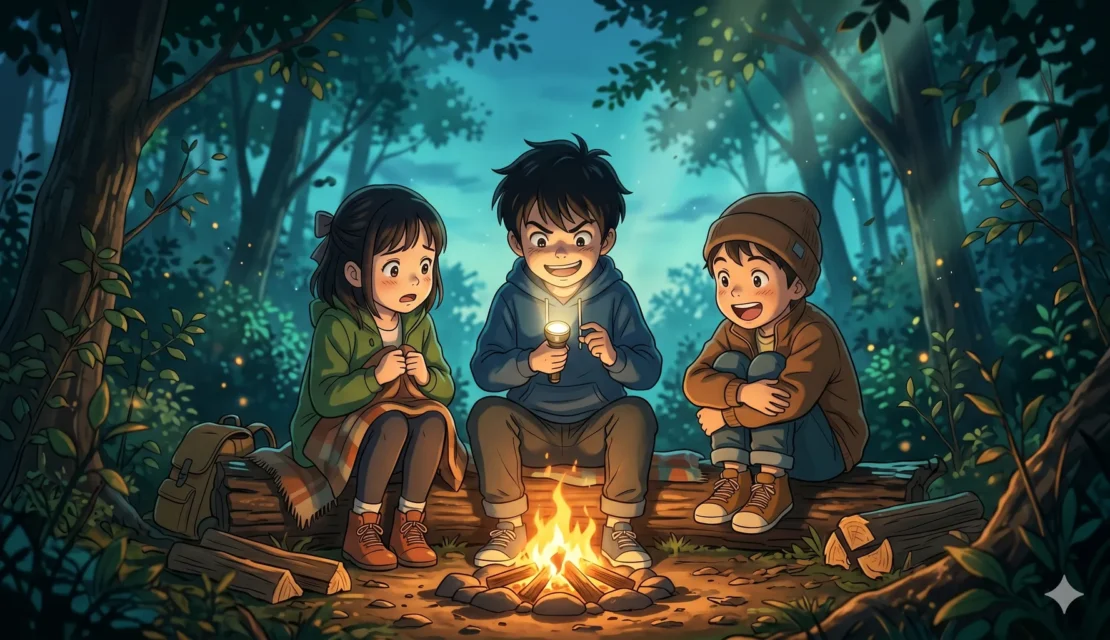
Campfire stories have a funny way of turning even the calmest weekend into a full blown staring contest with the dark. Here at Apple Tree Pre-School BSD, located in the lovely Educenter BSD Building, we know that a great story can light up a child’s imagination faster than a pile of toasted marshmallows disappears. If you are looking for campfire stories that feel spooky, playful, and memorable, you are in exactly the right place.
We have seen it again and again, give children and families a circle of light, a little night air, and one really good creepy story, and suddenly everyone is wide awake. Not because they are terrified, hopefully, but because stories invite you to lean in, guess what happens next, and then shriek a little when you were completely wrong. Frankly, it is one of the best parts of being around children.
If you want to spook your friends this weekend without crossing into anything too intense, these stories are perfect. They are eerie, imaginative, and just unsettling enough to make you check behind your chair once or twice. That is the sweet spot, if you ask us.
Campfire Stories for a Weekend Full of Chills
These spooky campfire stories, ghost tales, eerie legends, and creepy fireside adventures are perfect for sleepovers, family nights, and late weekend storytelling.
1. The Last Lantern at Pine Hill
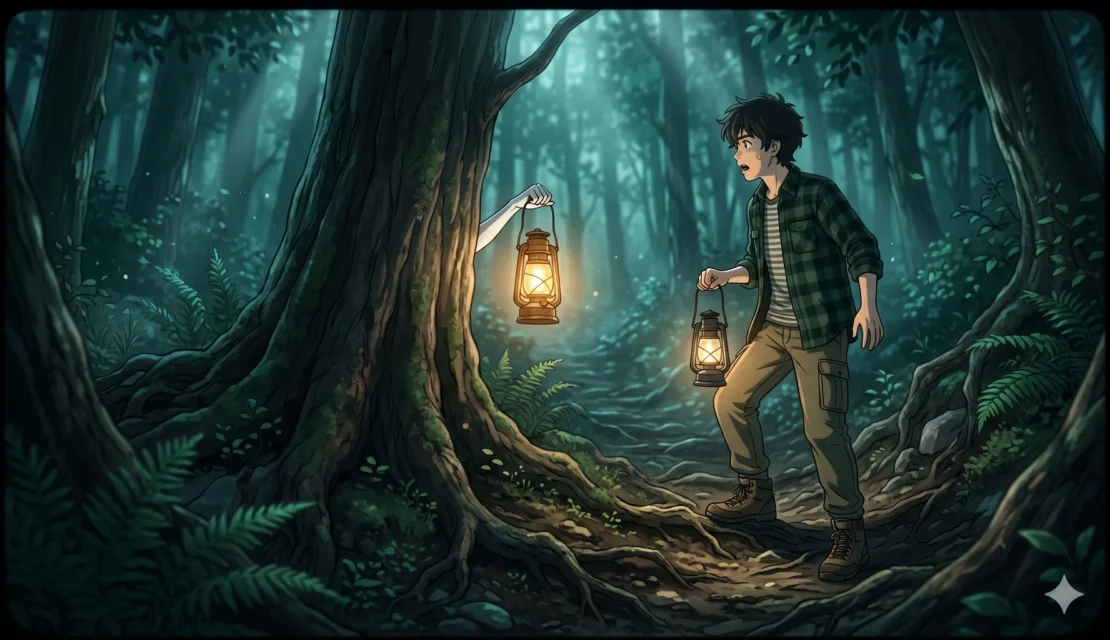
Every year, a group of friends hiked up Pine Hill with blankets, snacks, and one old camping lantern that barely worked. The rule was simple, the last person awake had to carry the lantern back down the hill alone. Nobody liked the rule, which of course meant everybody pretended to love it.
One Saturday, a boy named Dimas stayed awake the longest. He grinned, grabbed the lantern, and started down the trail while the others laughed behind him. Halfway down, he noticed another light moving through the trees below him, bobbing slowly, as if someone else was carrying a second lantern.
He called out, thinking it was one of his friends playing a trick. No answer. The light stopped moving, then suddenly appeared much closer than it should have been. Dimas froze. The path between them was steep and packed with roots, so nobody could have reached him that fast.
He lifted his lantern higher and saw a pale hand holding the second light. The rest of the person stayed hidden behind the trees. Then a voice, soft as dry leaves, whispered, “You took mine.”
Dimas ran all the way back to the campsite, nearly tripping over his own feet. The friends laughed until they noticed he was shaking too hard to speak. The next morning, the old park keeper looked at their lantern and quietly asked where they had found it.
When they told him, he went pale. Years ago, he said, a camper had vanished on Pine Hill while carrying that exact lantern. They never found the camper, only the broken handle, buried near the trail.
The old keeper took the lantern from Dimas, turned it over, and showed them something scratched into the metal bottom. It was a name. Not Dimas’s. Not anyone they knew. And right beside it, very freshly carved, was a second message.
“Returned.”
2. The Boy Who Heard His Name in the Lake
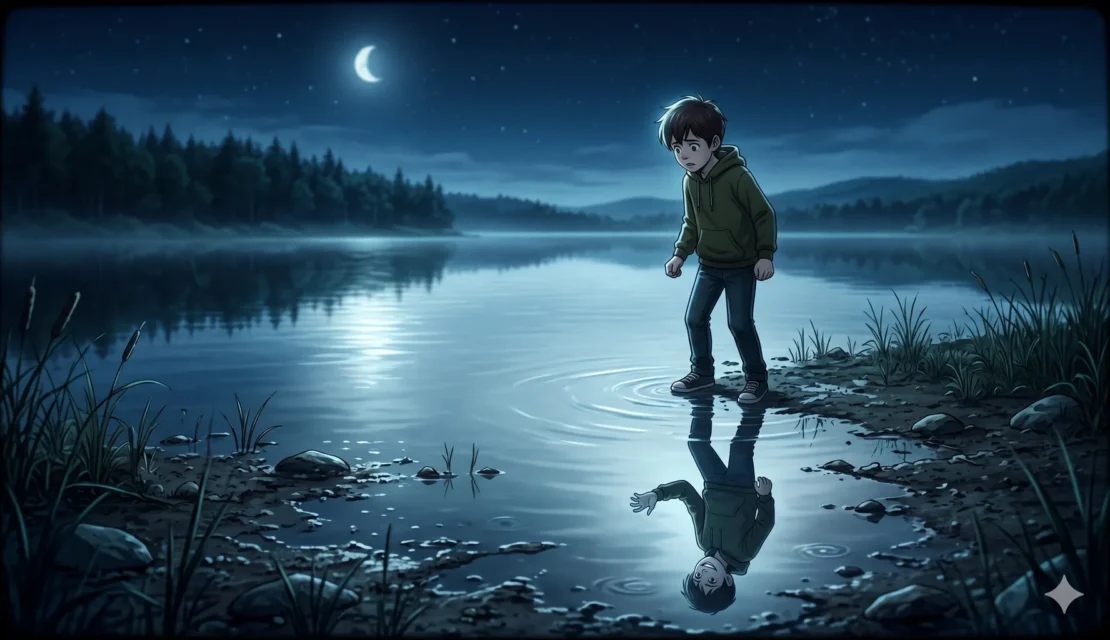
At Lake Cermin, the water was so still at night it looked like black glass. People said if you stared into it long enough, you would see things you were not meant to see. Naturally, that made every child want to stare into it immediately.
A boy named Arga was on a weekend camping trip with his cousins when he first heard it. He had walked down to the shore to wash sticky marshmallow off his hands when a voice from the water said, very clearly, “Arga.”
He spun around, expecting a prank. Nobody was there. The camp was uphill, and he could still hear his cousins arguing about who burned the sausages. Then the lake said it again, a little louder this time. “Arga. Come closer.”
He should have run. Instead, he took one step forward, then another. The water looked strangely bright near the edge, almost silver. In its reflection, he saw himself standing there, except the reflection was smiling, and he absolutely was not.
Arga backed away so fast he slipped in the mud and landed hard on the shore. The smiling reflection did not slip. It stayed standing. Then it lifted one hand and beckoned him forward.
He screamed so loudly his cousins came charging down with flashlights and a frying pan, which was not useful but was emotionally supportive. By the time they reached him, the lake was dark and still again.
Their grandmother refused to let anyone go near the shore after sunset. She told them an old story about a spirit in the lake that borrowed children’s reflections when it wanted company. It could not cross onto land, but it could call you close enough to fall in.
The next morning, Arga looked into the lake one last time from a safe distance. His reflection looked normal. Then, just before he stepped back, it smiled again.
3. The Empty Tent
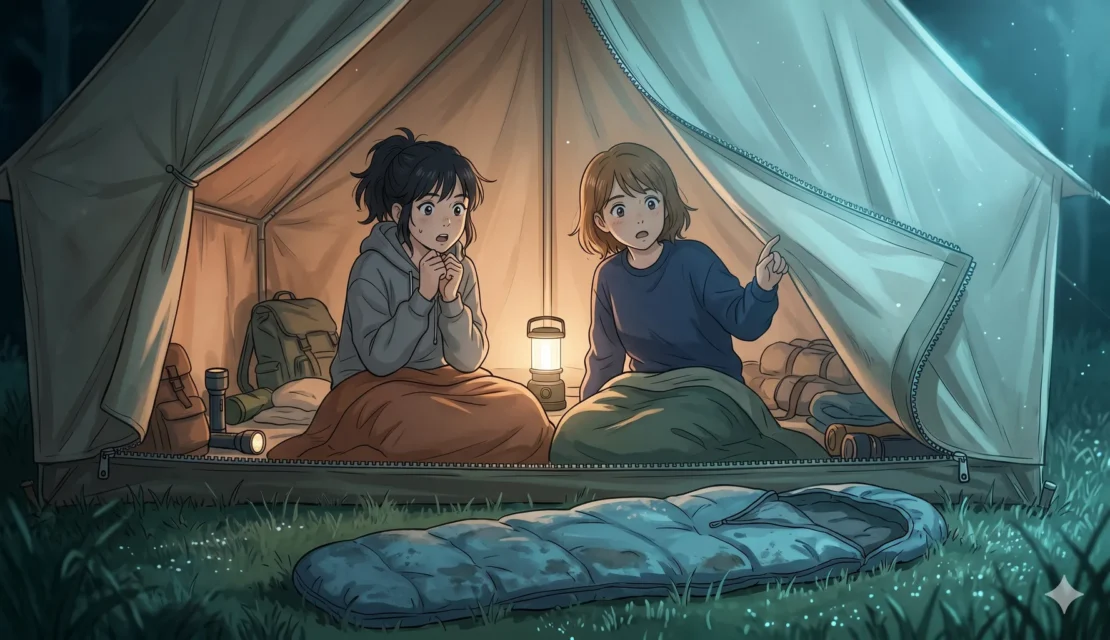
Nobody wanted Tent Four because it smelled weird and sat slightly apart from the others. It was not a horrible smell, just damp canvas mixed with something oddly sweet, like flowers left too long in the sun. Still, every year somebody got stuck with it.
This time it was Naya and her older cousin Sita. They joked about ghosts while setting up their sleeping bags, then promised each other they were far too brave to care. Which, as we all know, is exactly the sort of thing people say five minutes before regretting everything.
At midnight, Naya woke to the sound of someone unzipping the tent from the outside. She nudged Sita, but Sita was already awake, staring at the entrance with huge eyes. The zipper moved slowly down, inch by inch, until the flap fell open.
Nobody was there.
They waited. The trees rustled. Crickets chirped. Then footsteps circled the tent, one careful step at a time, pressing the grass flat. Naya grabbed Sita’s arm so tightly that Sita complained, which was actually reassuring because it meant both of them were still alive and solid.
The footsteps stopped behind their heads. Then a voice whispered through the canvas, “This is my place.”
The girls ran from the tent so fast they left both pillows behind. The camp leader checked the area with a torch and found no person, no animal, nothing at all. But the next morning, when everyone went back to Tent Four, there was a third sleeping bag neatly laid out between theirs.
It was old, faded blue, and damp with dew. Sewn into the corner was a name tag from a summer camp held there fifteen years earlier. The camp leader stared at it for a long time, then quietly folded the tent away.
Nobody slept in Tent Four again.
4. Grandma’s Whistling Road
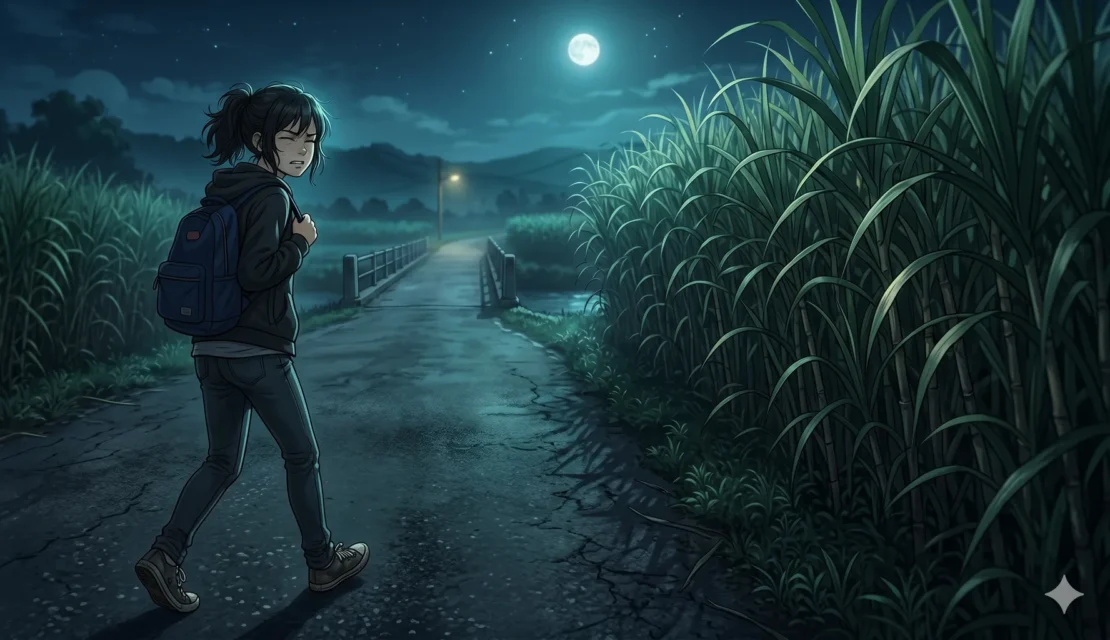
There was a road behind Hana’s grandmother’s house that nobody used after dark. It curved past a sugarcane field, crossed a narrow bridge, and vanished into a line of old trees. During the day it looked harmless. At night it whistled.
Not windy whistling. Not birds. A human whistle, low and slow, the kind somebody makes when they already know exactly where you are.
Hana laughed when Grandma warned her about it. She was thirteen, very sensible, and absolutely sure grownups made up spooky stories for entertainment. Then one evening she lost track of time at her cousin’s house and had to walk home alone.
When she reached the road, she heard it. One clear whistle behind her.
She turned around. Nobody. She walked faster. The whistle came again, closer this time, followed by the sound of bare feet slapping softly against the pavement. Hana did not look back. Every story she had ever heard suddenly seemed like excellent advice.
By the time she reached the bridge, the footsteps were right behind her. Then Grandma’s warning returned to her in full. “If you hear the whistling road, do not run, do not answer, and whatever you do, do not look into the river.”
Hana squeezed her eyes shut and kept walking. The whistling moved to her left ear, then her right, as if someone was pacing her from both sides at once. When she finally reached her grandmother’s gate, the sound stopped.
Grandma opened the door before Hana could knock. She took one look at Hana’s face and handed her a glass of water without asking questions.
The next morning, they went back to the bridge. On the damp ground behind Hana’s footprints was a second trail. Small, narrow, barefoot prints that ended exactly at Grandma’s gate.
None of them led away.
5. The Girl in the Red Raincoat
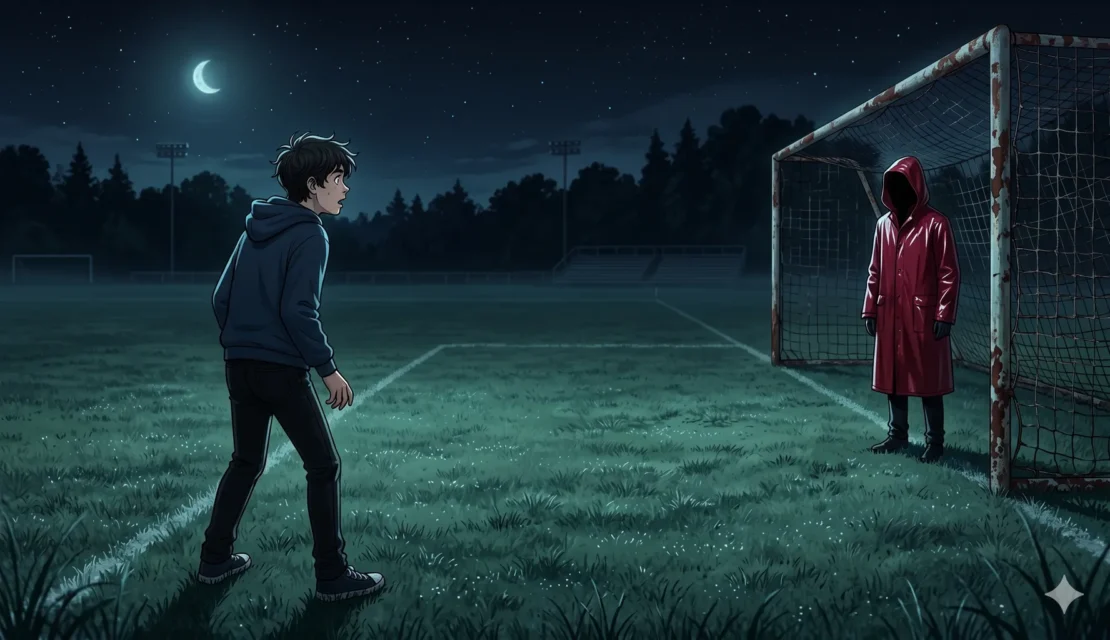
It started with a simple dare. Whoever crossed the old football field at midnight and touched the rusted goalpost would win everyone’s snacks for the week. Honestly, children will risk quite a lot for chips and chocolate.
Rafi volunteered first. The field was flat and open, with no trees, no buildings, nowhere for anyone to hide. So when he made it halfway across and saw a girl in a red raincoat standing beside the goalpost, he assumed one of his friends had cheated and gone ahead.
He kept walking, annoyed now. The girl stood completely still, head tilted down, raincoat gleaming under the moonlight even though it had not rained in days. When Rafi called out, she did not answer.
Then he noticed something odd. The grass around her was not bending. There was no shadow under her feet.
Rafi stopped. The girl slowly raised one arm and pointed behind him. He turned, expecting the others. Nobody was there. When he looked back, she was suddenly closer, standing only a few steps away.
Her hood slipped back.
There was no face inside. Just darkness, deep and moving, like smoke trapped under cloth.
Rafi bolted. He ran so hard he lost one sandal and did not stop until he crashed into his friends near the fence. They all looked across the field together.
The girl in the red raincoat was back at the goalpost, standing exactly where he had first seen her. Beside her, hanging from the crossbar, was his missing sandal.
The field was closed the next week after an old groundskeeper mentioned a child who had disappeared there during a storm years earlier. She had been wearing a red raincoat.
To this day, if it gets windy near that goalpost, children say you can hear wet footsteps moving across dry grass.
6. The Campfire That Wouldn’t Die
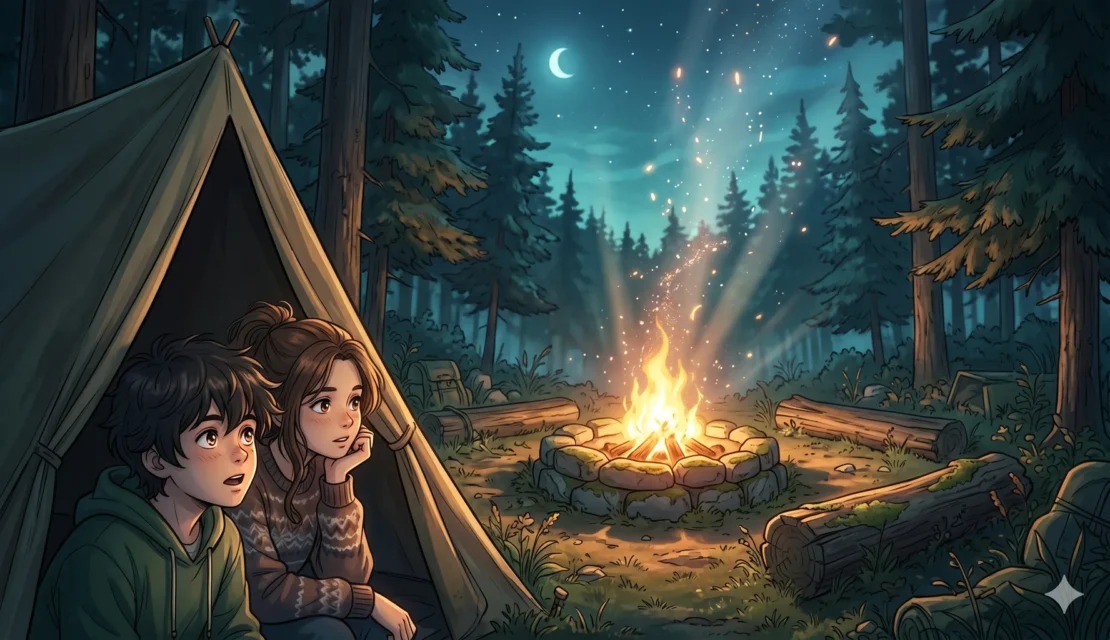
At first, everybody thought it was funny. The fire at the centre of the old campsite simply would not go out. Rain fell on it, buckets of water were thrown over it, even the ranger stamped the ashes flat with his boots. Each time, the flames vanished for a few seconds, then came back, smaller but brighter.
The campsite had been closed for years before Mila’s family visited the area. The ranger only let them stop there because all the other spots were full. “Do not light a fire,” he said, looking oddly serious. “There’s already one here.”
That night, even though nobody had struck a match, a little flame flickered in the stone pit. Mila and her brother watched it from inside their sleeping bags. It was pretty, in a creepy, deeply unnecessary kind of way.
At midnight, voices started rising from the fire. Not loud voices, more like the sound of people talking from another room. Mila pressed closer to the tent flap and realised the voices were repeating the same phrase.
“Tell the story right.”
She woke her parents, but by the time they looked, the fire was quiet again. In the morning, the ranger explained. Years ago, a storyteller had camped there every weekend, gathering travellers and children around the flames. One night he told a story about a spirit in the woods, but he laughed halfway through and changed the ending to make everyone feel better.
He never made it home.
Now, people say the fire waits for somebody to tell the story properly. Mila, who had no interest in helping any cursed campfire complete its artistic vision, packed up immediately. But before they left, her little brother stared at the coals and whispered, “Sorry.”
The flames flared high for one second, almost as if something had sighed.
Then, for the first time in years, the fire went out.
7. The Knock from the Treehouse
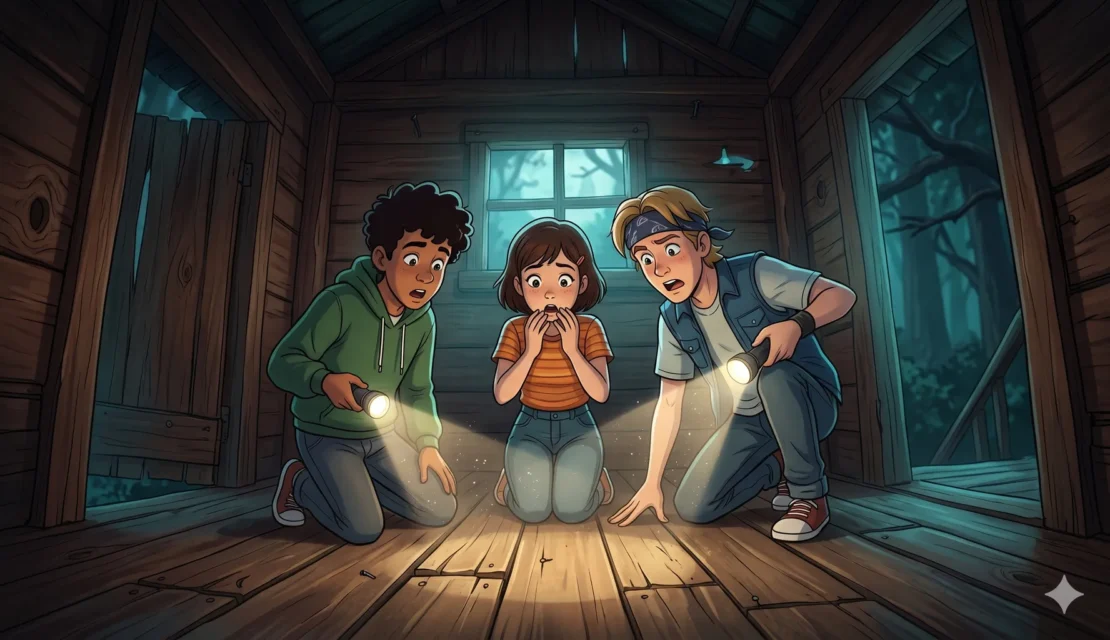
Reno and his cousins built a treehouse in their grandfather’s yard using old planks, bent nails, and a level of confidence that was not supported by engineering. It leaned slightly to one side, but they loved it anyway.
The only strange thing about it was the knocking. Every night at exactly 9:17, three knocks sounded from under the floorboards. Not on the ladder, not on the wall, but from beneath the wood itself. Their grandfather told them to ignore it, which of course made them wildly determined to investigate.
One evening they hid inside with flashlights, snacks, and exactly zero common sense. At 9:17, the knocks came. Three slow taps right under Reno’s feet.
He knelt and pressed his ear to the boards. A voice below him whispered, “Let me up.”
All three children screamed at once, which was efficient. They scrambled down the ladder and burst into the house so fast Grandfather nearly dropped his tea.
When he heard what happened, he went very quiet. Then he admitted there had once been an older treehouse there, years before, when he was a boy. One rainy night, his best friend had climbed up to retrieve a comic book and fallen through a rotten plank. He survived, but Grandfather said he had knocked from below for nearly an hour before anyone heard him.
The next day they pried up the new treehouse floorboards. Underneath, tucked between two beams, they found a ruined old comic book.
Its last page was still readable.
“Wait for me. I’m coming back up.”
8. The Visitor at Campsite Nine
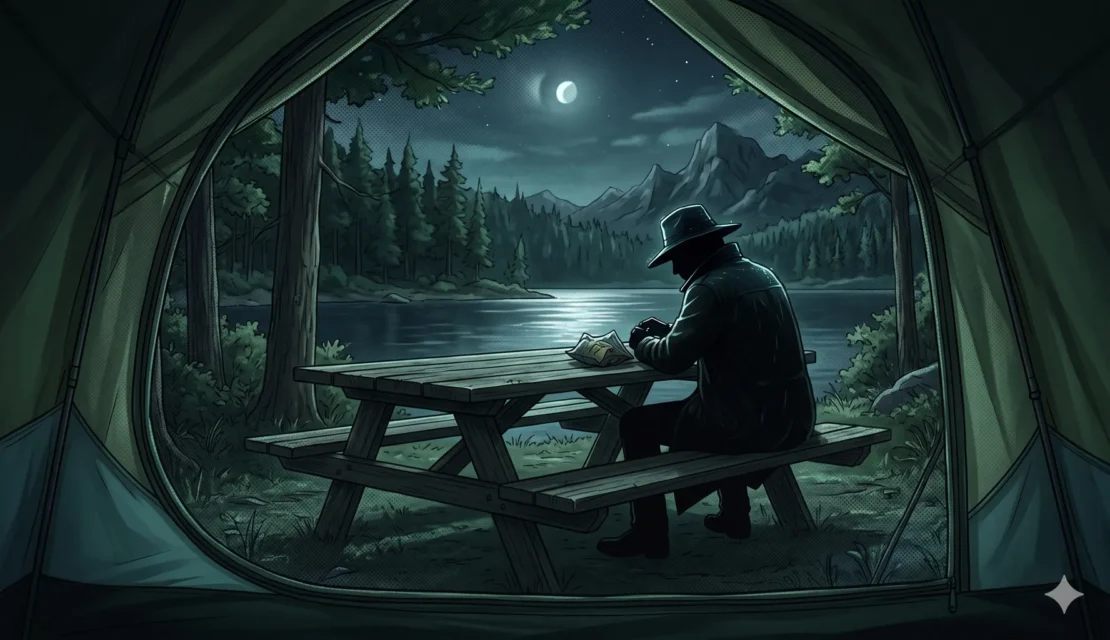
Campsite Nine looked normal in daylight. The grass was trimmed, the picnic table was solid, and the lake view was actually lovely. But every family who stayed there reported the same thing, an extra guest after midnight.
When Farah’s family booked it by accident, the ranger offered to move them. Her father, who has the confident energy of someone who has never personally experienced anything spooky, laughed and said they would be fine.
At 1:00 AM, Farah woke to the sound of somebody chewing. Slowly. Right outside the tent.
She peered through the mesh and saw a figure sitting at the picnic table, hunched over their snack bag. The figure wore a broad hat and an old coat, both dripping wet though the night was dry. Farah nudged her father awake.
By the time he looked, the figure was gone. But the snack bag remained on the table, open and empty. Her father checked around with a flashlight and found muddy footprints leading from the lake to the bench, then from the bench straight to their tent.
There were no footprints leaving the tent.
At sunrise, the ranger sighed when he saw their faces. He told them about a fisherman who had drowned near the shore decades ago after returning to camp for one last meal. Ever since then, people at Campsite Nine left a sandwich on the table before bed.
“Does it work?” Farah asked.
The ranger shrugged. “Only if it’s tuna.”
9. The Marshmallow Counting Game
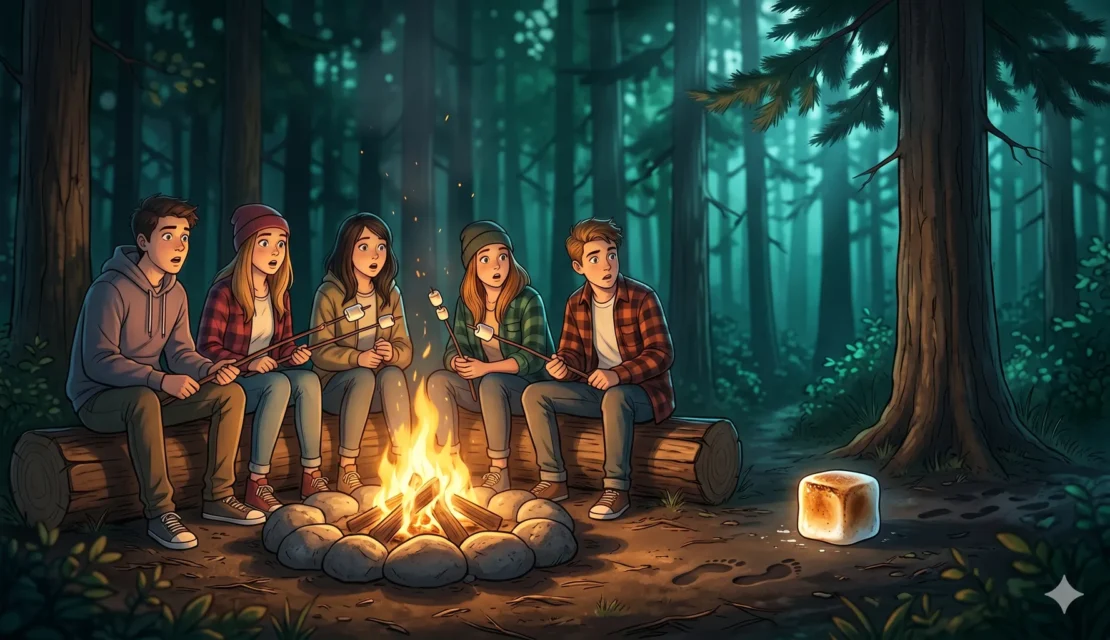
One summer, a group of cousins invented a silly game around the fire. Each person roasted exactly five marshmallows, and if you accidentally ended up with six, you had to tell the next spooky story. It sounded harmless until everyone started counting carefully and realised something impossible.
No matter how many marshmallows they began with, somebody always ended up with one extra.
They blamed each other, obviously. One cousin accused another of cheating. Another claimed the bag was haunted, which was said as a joke until Grandma quietly told them to stop counting out loud.
Years earlier, she explained, there had been a child at that very campsite who always wanted “one more.” One more story, one more snack, one more minute before bed. One night the child wandered away from the fire and was never found.
The cousins laughed nervously and kept roasting. Then little Juno, the youngest, held up her stick and said, “I have six again.”
Nobody had given her an extra marshmallow.
That would have been bad enough, but then a small voice from the darkness beyond the fire asked, very politely, “Can I have one too?”
Grandma stood up so fast her chair tipped over. She took the whole bag, tossed one marshmallow into the dark, and told everyone to get inside immediately.
In the morning, the marshmallow was gone. On the dirt near the tree line were tiny footprints circling the fire pit, stopping at every chair except Juno’s.
Beside her seat was a sixth marshmallow, perfectly toasted.
10. The Phone with No Signal
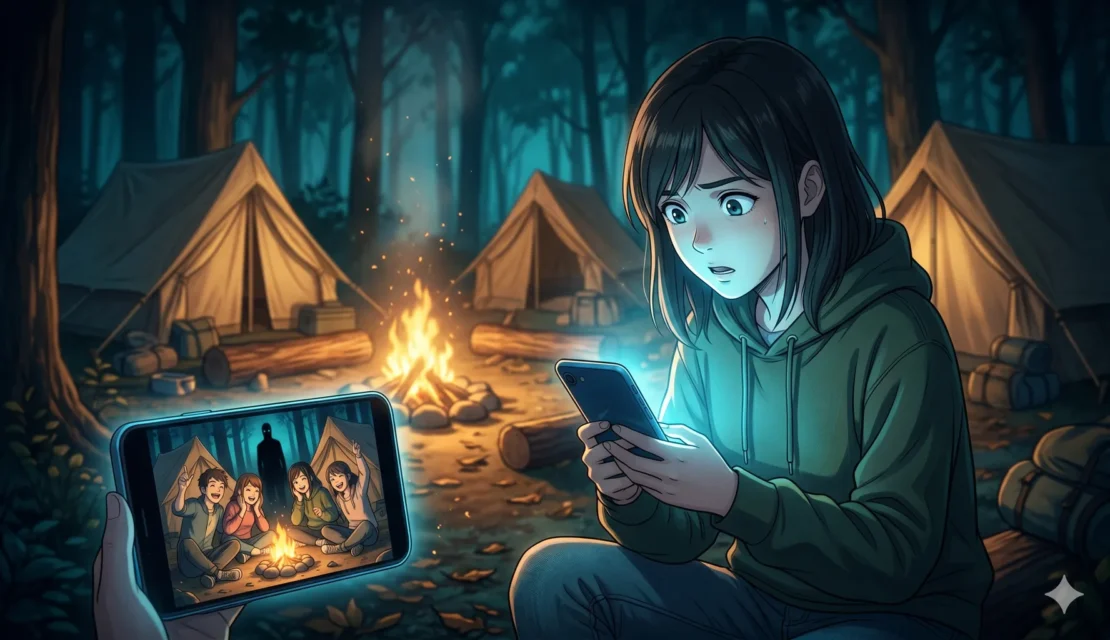
Zee prided herself on not being scared easily. She also prided herself on always having her phone, even on a camping trip where there was supposedly no signal at all. “Good,” she said, waving it around. “If something creepy happens, I’ll record it.”
Around midnight, while her friends were halfway through telling the world’s slowest ghost story, her phone buzzed. One new message. No number. No name.
“Look behind you.”
Everyone laughed when she showed them. Clearly one of the others was pranking her. Then the phone buzzed again.
“I said do not turn around.”
Now nobody laughed. Zee stared at the screen while the fire crackled and the trees creaked overhead. Another message appeared.
“It is standing between the tents.”
Her friend Bimo whispered, “This is not funny.”
The phone camera suddenly switched on by itself. On the screen, behind the group, between two tents, stood a tall shape darker than the trees. It had no face, just a long outline and two hands hanging at its sides.
Zee spun around anyway. Nothing. The space between the tents was empty.
When she looked back at the screen, the figure was gone, replaced by one final message.
“Too late.”
Every tent zipper opened at the exact same moment.
None of the friends slept again that night. By morning, Zee’s battery had dropped from eighty percent to zero. When she finally got signal on the drive home, she checked her messages.
There was no record of any of them.
Only a single photo saved to her gallery, taken at 12:03 AM. It showed the group around the fire.
And someone standing behind Zee, smiling.
11. The Story Nobody Was Supposed to Finish
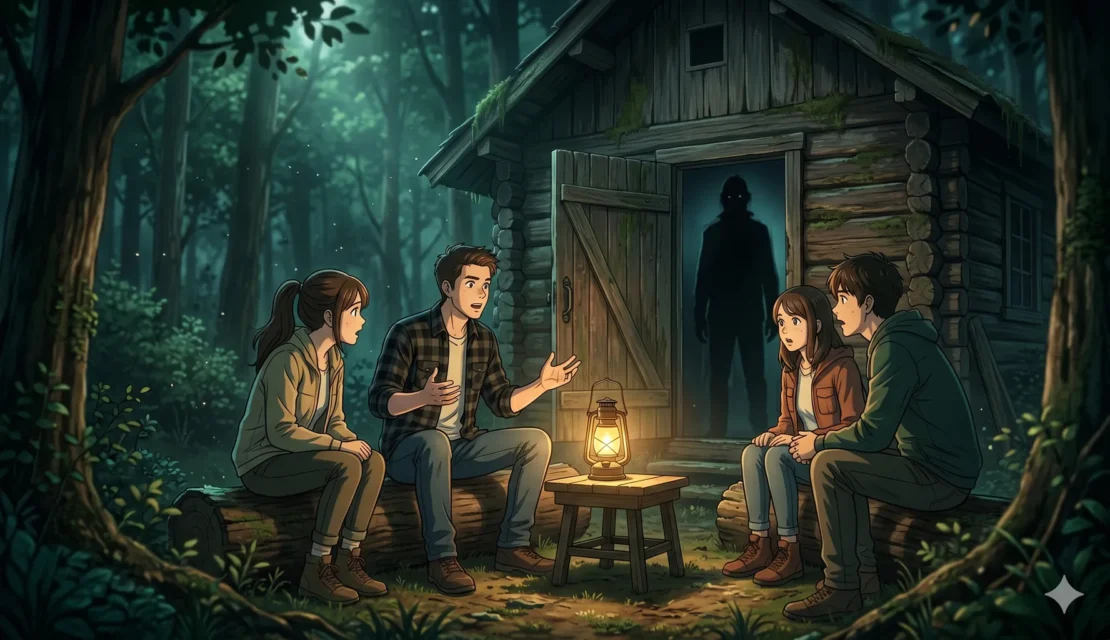
At a scout camp years ago, there was one story the leaders refused to tell all the way through. They would always stop at the same point, right when the stranger reached the cabin door. Children begged for the ending every year. The leaders always said the same thing. “Some stories are safer unfinished.”
Naturally, a boy named Iqbal decided to finish it himself.
One night, after the leaders had gone to bed, he gathered the others and repeated the story exactly as he had heard it. A stranger in the woods. A knock at the cabin. A voice asking to be let in. Then Iqbal leaned closer to the fire and invented the rest.
He described the cabin door opening. He described the stranger stepping inside. He described the smell of wet earth and the sound of something dragging across the floor.
Right as he spoke the final sentence, somebody knocked on the real cabin wall behind them.
Every child went silent.
Three more knocks came, slower this time, followed by a voice from outside that said, “That’s not how it happened.”
Nobody moved. One leader rushed out with a lantern, but there was no one there, only muddy tracks leading in a circle around the cabin and back into the woods.
The next morning, an older caretaker heard what happened and looked furious. The unfinished story, he said, was based on a real event from decades earlier. The leaders stopped before the ending because the last line was always followed by knocking.
Iqbal never told stories after dark again.
He also never admitted what the last sentence had been.
12. The Eyes in the Hammock
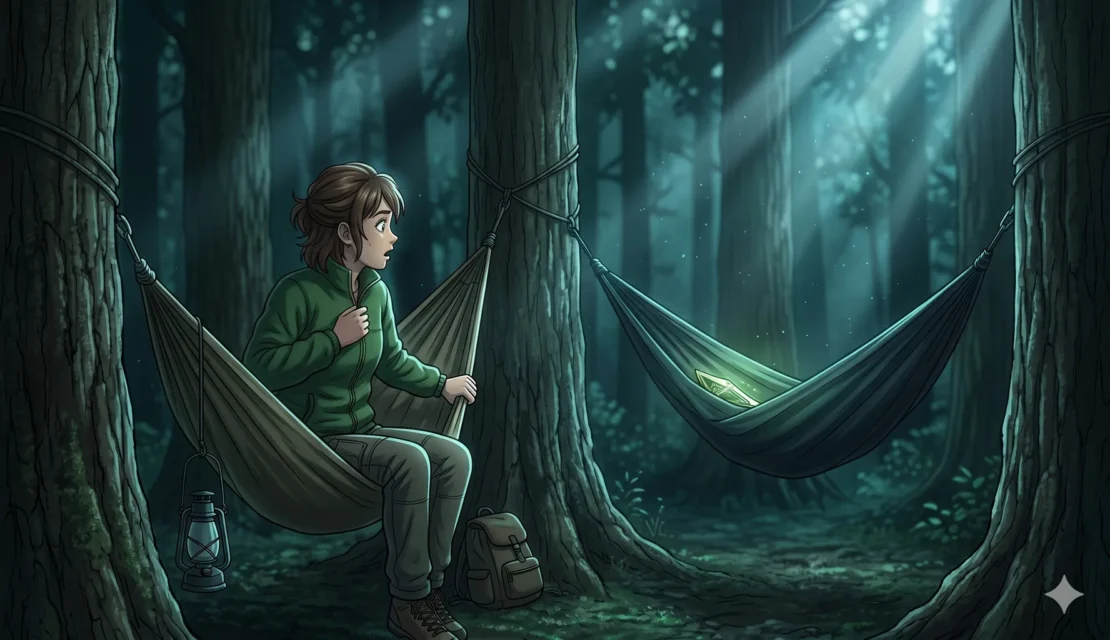
Lina loved hammocks. Everybody else thought they were just fabric traps designed to dump you onto the ground in the least graceful way possible, but Lina could climb into one and fall asleep in seconds.
During a family camping trip, she insisted on sleeping in a hammock strung between two trees instead of sharing a tent with her noisy cousins. She looked smug about it too, which made what happened later feel, in a storytelling sense, extremely inevitable.
At some point after midnight, she woke to the feeling that the hammock was swaying. Not gently. Deliberately. Someone was pushing it.
“Very funny,” she muttered, assuming it was her cousin Fikri. The pushing stopped. Then it started again from the other side.
Lina sat up. The fire had died down. The tents were zipped shut. Nobody was awake.
Then she noticed a second hammock hanging between the trees opposite hers.
It had not been there when she went to sleep.
At first it looked empty. Then two eyes opened inside it.
Lina made a sound she would later describe as “not my best moment” and launched herself out of the hammock onto the ground. By the time the adults arrived with flashlights, the second hammock was gone.
There was no rope, no fabric, nothing.
Only two deep impressions in the grass beneath the trees, as if something heavy had been lying there for a long time, watching her swing.
13. The Picnic Table Shadow
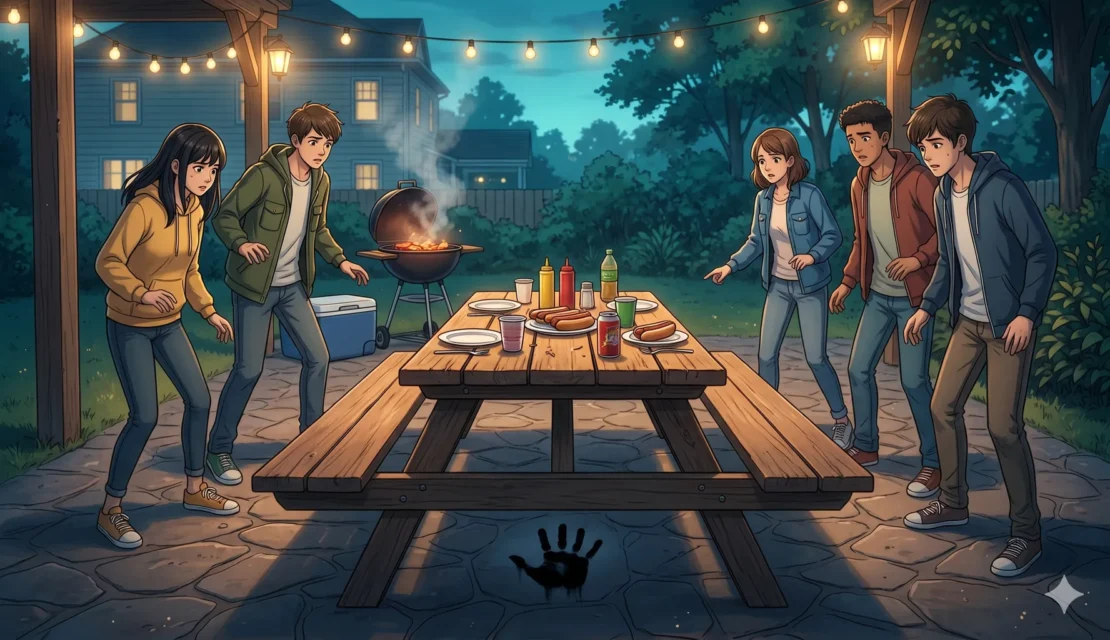
Some shadows behave normally. This one absolutely did not.
During a late evening barbecue, a group of friends noticed a dark shape under the picnic table that stayed perfectly still while everything else moved around it. Even when someone dragged the table slightly to the left, the shadow remained in the exact same patch of ground.
At first they joked about it. They waved their feet through it. One boy, trying far too hard to impress everybody, leaned down and asked, “Got a name?”
The shadow answered, “You can give me one.”
Nobody spoke for a full five seconds, which in a group of children is basically a historical event. Then all six of them backed away so quickly the drinks tipped over.
The adults thought they were exaggerating until the family dog approached the table, whined, and refused to come closer. Dogs are wonderful that way. They do not care whether you feel silly. They care whether something is wrong.
Near midnight, the host’s grandfather came outside, took one look under the table, and muttered, “Still there, then.” He explained that when he was a child, he had also seen the strange shadow and been told never to sit above it alone.
“Why?” one girl whispered.
Grandfather shrugged. “Because if you do, it starts sitting with you everywhere.”
They did not ask for details.
The next morning, the shadow was gone. But on one chair, directly beneath where the most curious boy had been sitting, there was a dark handprint burned into the wood.
14. The Bell in the Woods
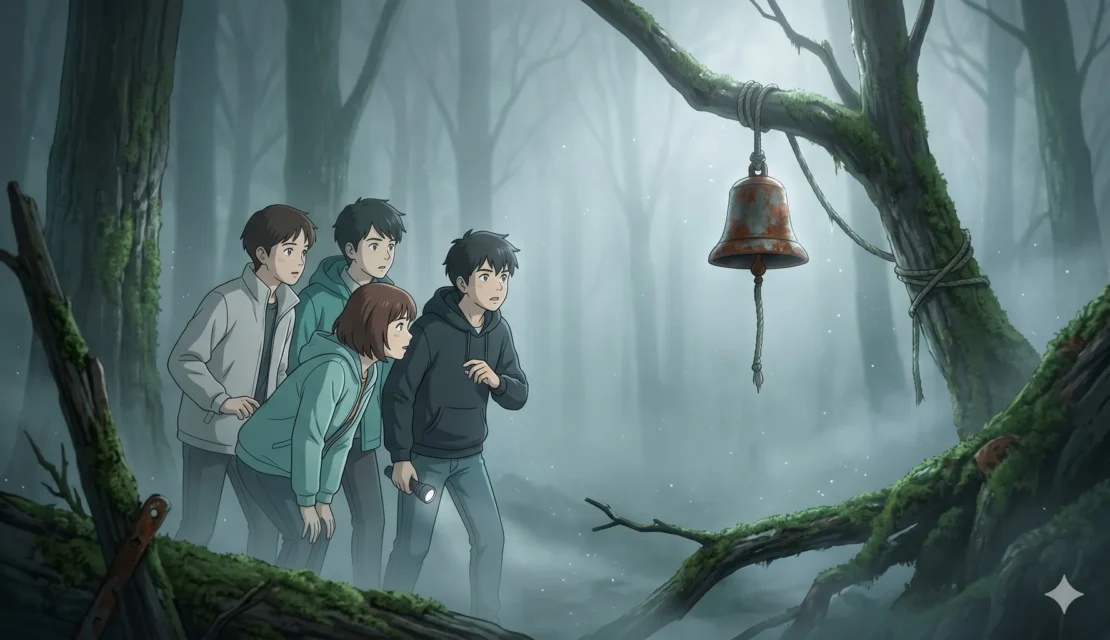
Near an old campground in the hills stood a rusted service bell tied to a bent tree branch. No one knew who had hung it there. The bell rope had rotted away years ago, yet locals said it rang on nights when someone got lost.
A group of teenagers heard this and, in the time honored tradition of teenagers everywhere, decided to test it. They hiked into the woods after sunset, staying close enough to the trail to feel brave and far enough to feel dramatic.
At first, nothing happened. They laughed, took photos, and mocked the story. Then fog rolled in so quickly it swallowed the trees one by one.
The trail vanished.
One friend said they should stop moving. Another said they should keep walking downhill. Before the argument could properly begin, the bell rang. One clear clang from somewhere ahead.
They followed it. Clang. Then again, slightly to the right. Clang.
Each time the sound came, they changed direction, weaving through fog and tree roots until they finally stumbled out onto the main path, gasping with relief. The fog lifted almost immediately.
Back at the campground, an old cleaner listened to their story and frowned. He said the bell had not hung in the woods for years. It had been taken down after a storm.
“So what did we hear?” one of them asked.
The cleaner did not answer. He only pointed toward the trail entrance.
There, tied neatly to the signpost, hung the missing bell rope, dripping wet.
15. The Last Story of the Night
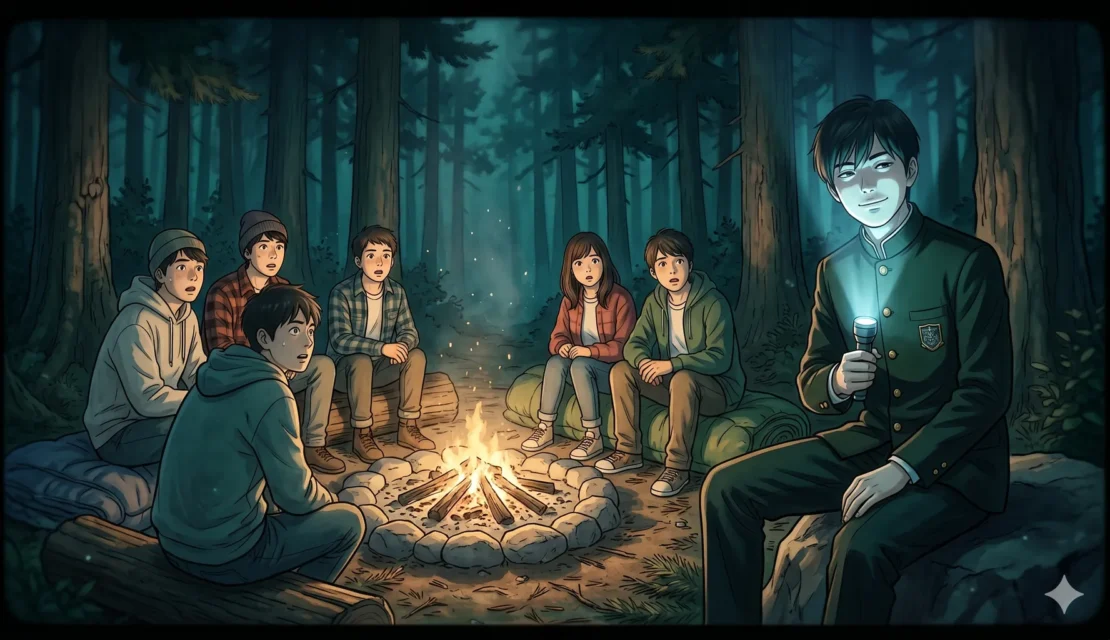
On the final night of a school trip, the teacher allowed one last round of campfire stories before lights out. Everyone was sleepy, full of snacks, and just brave enough to keep going. The rule was simple, one person tells a story, then passes the flashlight to the next.
It went smoothly until the flashlight landed in the hands of a boy nobody recognised.
That part, in hindsight, was the first problem.
He sat slightly outside the circle, just at the edge of the firelight, wearing the same school jacket as the others. His face was ordinary enough that nobody noticed anything strange at first. He smiled, took the flashlight, and said, “I know one.”
His story was about a camp exactly like theirs, with a fire exactly like theirs, and children sitting in the same order around it. He described the teacher clearing his throat, the girl in the yellow hoodie dropping a biscuit, the crack in the stone near the logs. Every detail was right.
Then he said, “And when the story ended, they counted the circle again.”
The teacher stood up immediately. “Alright,” he said too quickly, “that’s enough.”
But the children were already counting.
One, two, three, four.
When they reached the end, the extra boy was gone.
The flashlight was still lying on the ground where he had been sitting, warm as if someone had just set it down. Burned into the dirt beside it were the words:
“Thanks for letting me join.”
Nobody told another story that night. According to three separate children, somebody was still sitting just beyond the edge of the fire until dawn.
Why Campfire Stories Still Work So Well
We love campfire stories because they do more than scare you for a minute and then send you giggling into your blanket. They build attention, imagination, language, and confidence in a way that feels effortless.
Here is why these spooky tales still have so much power:
- They invite children to listen closely and picture every detail in their minds.
- They help children play with fear in a safe, controlled, story shaped way.
- They create shared memories, and honestly, shared squealing is a very underrated bonding activity.
- They open the door to bigger conversations about courage, choices, and how stories travel across generations.
At Apple Tree Preschool BSD, we see this kind of magic in the classroom too. Through stories, dramatic play, music, movement, and rich discussion, children learn to express themselves, build empathy, and explore ideas with real joy. If you would like to see how we support that kind of growth every day, have a look at our programs.
Keep the Story Going With Apple Tree Preschool BSD
These campfire stories may be spooky, but the real takeaway is something warm and wonderful. A good story brings people closer, sparks imagination, and gives children something to talk about long after the fire has gone out.
If you want your child to grow in a place where storytelling, creativity, and confidence are part of everyday learning, we would love to welcome your family. Our teachers create playful, meaningful experiences that help children grow smart and happy together with their parents.
Register now and come play and learn with other children! Chat with us on WhatsApp or call us directly at +62 888-1800-900. We would be so happy to meet you and your little storyteller.





Be the first to write a comment.