

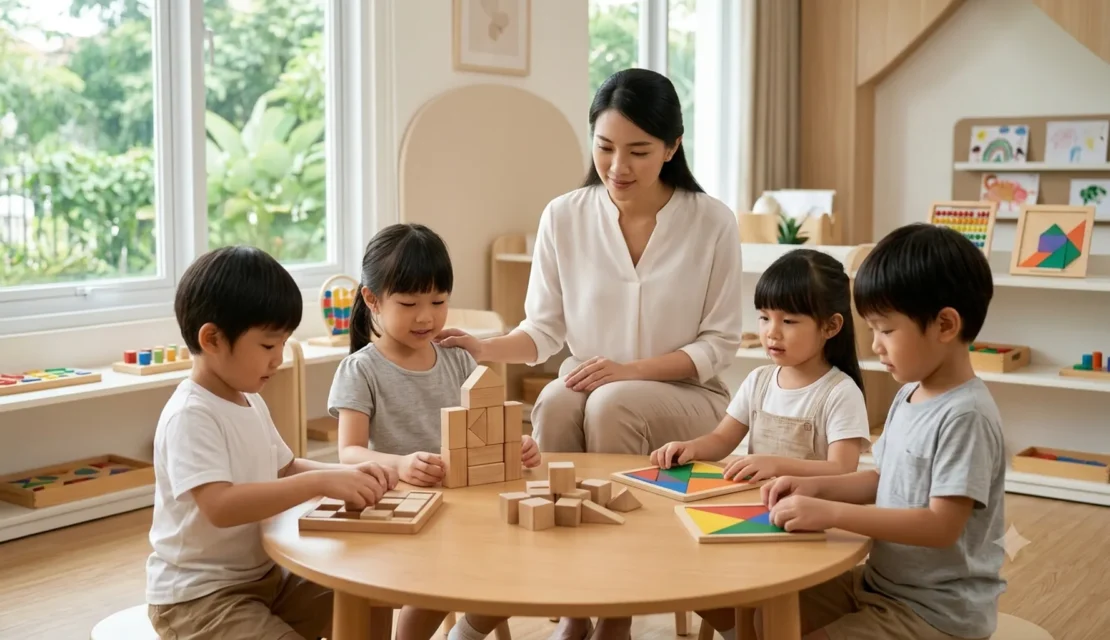
When you are teaching child problem solving, you quickly realize something funny: your child can figure out how to open a snack you hid on the top shelf, but somehow “put your shoes on” becomes a full mystery movie. We see this all the time at Apple Tree Pre-School BSD, and honestly, it is normal. We are based in the Educenter BSD Building, and with so many busy BSD families, we know you want practical strategies that actually work on a regular Tuesday, not only on the day your child feels cooperative.
Problem solving is not just “being smart.” It is a life skill your child uses to handle puzzles, friendships, school tasks, and little daily dramas like “my banana broke in half.” The good news is that problem solving can be taught gently, through routines and play, without turning your home into a strict training camp.
By the end of this, you will have simple tools you can use at home, plus a clear picture of how we build problem solving in class so your child grows smart and happy, together with you.
Teaching Child Problem Solving, What It Really Means
Problem solving is your child’s ability to notice a challenge, stay calm enough to think, try a strategy, and adjust if it does not work. For young children, that last part, adjusting, is huge. Adults call it “flexibility,” kids call it “Nooooo, I cannot,” and we all call it “a moment.”
When we focus on teaching child problem solving, we are not trying to raise a tiny genius who never struggles. We are trying to raise a child who can handle struggle without falling apart. That is the difference between “I cannot do it” and “I cannot do it yet.”
Here is what problem solving often looks like in real life:
- Trying different ways to build a block tower that keeps collapsing
- Figuring out how to ask a friend for a turn without grabbing
- Deciding what to do when a pencil breaks, again
- Finding another idea when the first idea fails
Why Some Kids Seem “Better” At Problem Solving
Some children are naturally more patient, more verbal, or more willing to experiment. Others are fast thinkers but easily frustrated, or cautious and afraid of being wrong. None of these are “good” or “bad,” they are starting points.
A common hidden factor is experience. A child who is always rescued quickly does not get many chances to practice. A child who is allowed to try, fail safely, and try again builds confidence over time.
So if you feel like your child struggles more than others, do not jump to panic. Start by checking how often they get the chance to work through small problems independently.
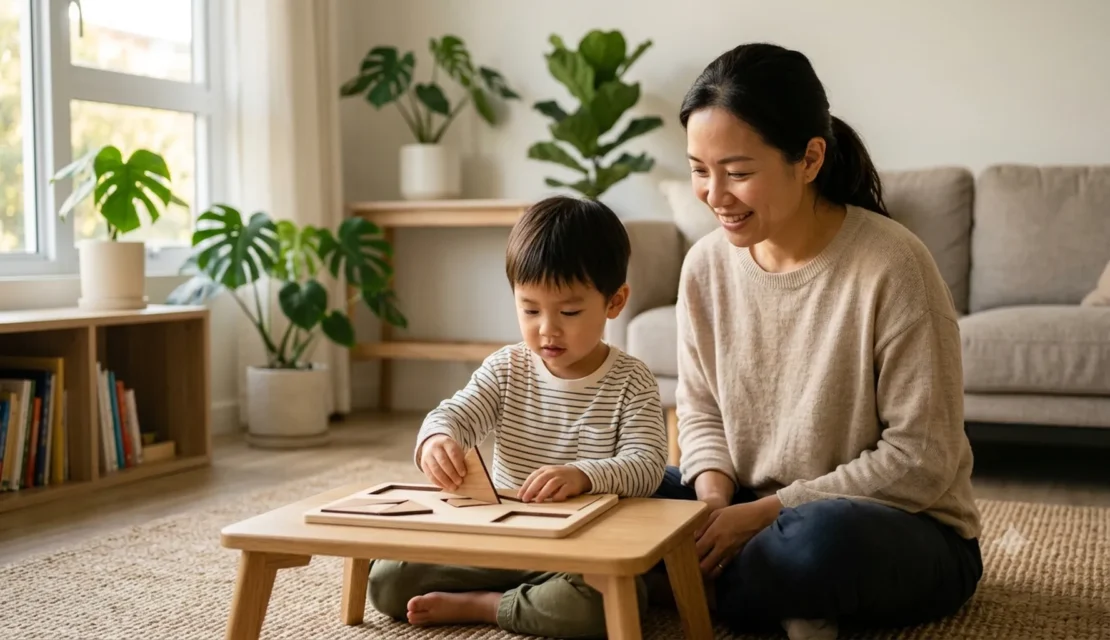
How To Teach Problem Solving Skills At Home Without Stress
You do not need special worksheets. You need daily moments where you slow down just enough to coach instead of fixing. That is hard, because you are busy, and also because it is often faster to do it yourself.
We get it. We have all tied shoes at lightning speed while saying, “We are calm, we are calm,” through clenched teeth.
Use The “Pause Before Rescue” Rule
When your child hits a snag, pause for five seconds before you help. This tiny pause tells your child, “You can try first.” It also gives their brain time to search for a solution, which is exactly the skill you want.
If they start spiraling, you can still support them, but try support before rescue. Support sounds like, “Show me what you tried,” or “Let’s take one breath and look again.”
A simple parent script that works well:
- “What is the problem?”
- “What could you try?”
- “What happened when you tried that?”
- “What will you try next?”
Teach A Simple Problem Solving Routine Your Child Can Remember
Young children do better with a short routine repeated many times. We like routines that feel almost like a game.
Try this three step pattern:
- Stop and look: “What is happening?”
- Think of two ideas: even silly ideas count at first
- Try one idea: then check if it helped
If your child only thinks of one idea, that is fine. The goal is to build the habit of thinking, not to win an award for “Most Solutions Generated.”
Ask Better Questions, Not More Questions
If your child is stuck and you ask ten questions in a row, they will either shut down or walk away. Keep it simple and warm.
Helpful questions:
- “What do you need right now?”
- “Where could we find that?”
- “What is another way to do it?”
Questions to avoid when you can:
- “Why did you do that?”
- “How many times do I have to tell you?”
Those usually trigger shame or defensiveness, and a defensive brain does not solve problems well.
Everyday Activities That Build Problem Solving Fast
If you want teaching child problem solving to feel natural, attach it to things you already do. The key is giving your child a real job with a real outcome, not a pretend task you will redo later.
Let Them Struggle A Little, On Purpose
Yes, a little struggle is healthy. Think of it like muscles, no resistance, no growth.
Good “safe struggle” moments:
- Opening lunch containers
- Putting on socks and shoes
- Packing a small bag
- Cleaning up toys into the right bins
When they get stuck, you can give a hint instead of doing it. For example, “Try turning it,” or “Look at the picture on the lid,” or “Which piece is the corner piece?”
Play That Builds Problem Solving Without Your Child Noticing
Play is the most natural training ground. Children practice planning, experimenting, and adjusting while having fun, which is exactly what you want.
Try activities like:
- Puzzles, starting with small piece counts
- Building blocks or magnetic tiles
- Simple board games that involve turn taking
- Pretend play with “problems,” like a shop running out of apples
- Treasure hunts with clues around the house
If you join, try not to take over. Be the sidekick, not the director.
Teach Emotional Problem Solving, Not Just Thinking Skills
A child who cannot calm down cannot think clearly. So part of teaching child problem solving is teaching emotional regulation, gently and consistently.
We often coach children with phrases like:
- “Your face says you feel stuck.”
- “Let’s breathe, then we try again.”
- “Mistakes help our brains learn.”
You can also model your own calm problem solving out loud. “I cannot find my keys. I will check my bag, then the table, then the car.” Your child is learning even when they are pretending not to listen.
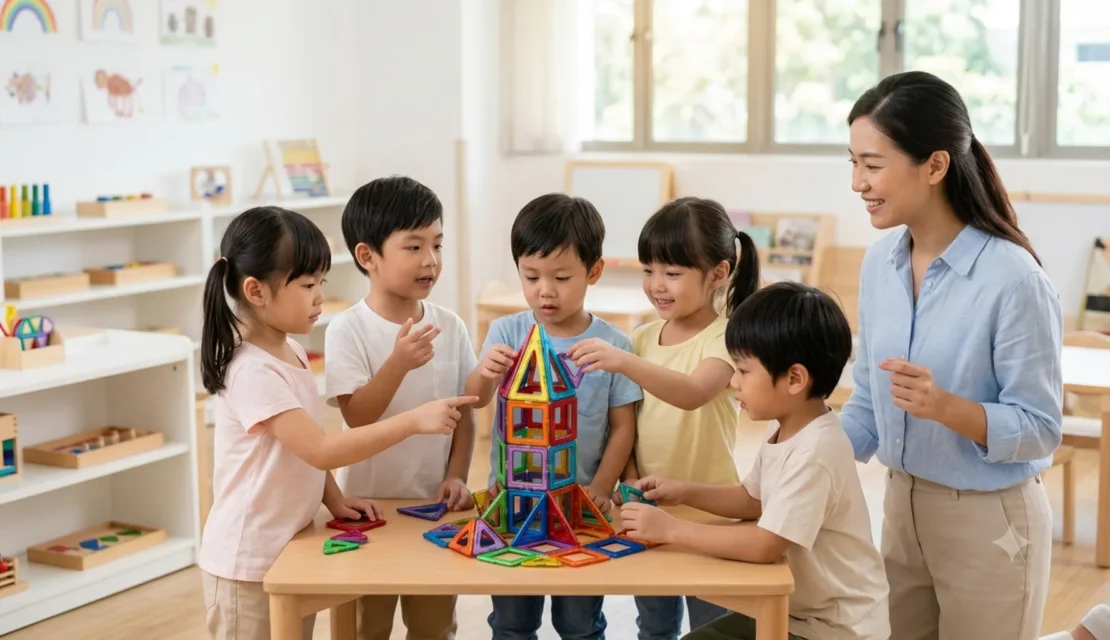
How We Teach Problem Solving At Apple Tree Pre School BSD
In our classrooms, problem solving is built into everyday learning. We use an adopted Singapore curriculum covering English, Mathematics, Chinese, Creativity, Social Studies, Science, Bahasa, Moral, Music, Physical Education, and Phonics, and we teach children to think, not just memorize.
We do this through structured routines, guided play, and teacher language that supports independence. We also use group activities, because social problem solving is a big part of school readiness. Sharing, negotiating, waiting, and taking turns are basically advanced problem solving for young children.
Our programs are designed by age and class size, so children get both support and space to try:
- Toddler two times per week, age 1.5 to 2 years, 12 children per class
- Toddler three times per week, age 1.5 to 2 years, 12 children per class
- Pre Nursery, age 2 to 3 years, 16 children per class
- Nursery, age 3 to 4 years, 20 children per class
- Kindergarten 1, age 4 to 5 years, 20 children per class
- Kindergarten 2, age 5 to 6 years, 20 children per class
If you want to explore schedules and class details, you can visit our programs and see which class matches your child’s stage.
What To Do When Your Child Refuses To Try
Some children avoid problem solving because they fear being wrong. Others avoid because they are tired, hungry, or overstimulated. So before you push, check the basics.
A quick reset that often works:
- Give water or a small snack
- Offer a two minute break with movement
- Restart with a smaller task
Then use encouragement that focuses on effort, not performance. “Try one step,” is more effective than “Do it perfectly.”
Ready For More Calm, Confident Problem Solving At Home?
Teaching child problem solving is not about making life harder for your child, or for you. It is about building a steady habit of “I can try again,” so your child becomes more independent, more flexible, and less overwhelmed by small bumps in the day.
If you want your child to practice these skills with caring teachers, consistent routines, and friends to learn alongside, we would love to welcome you at Apple Tree Preschool BSD in the Educenter BSD community.
Chat with us on WhatsApp Direct phone: +62 888-1800-900
Register now, come play and learn with other children, and let’s grow problem solvers who feel smart, happy, and ready for whatever comes next.





Be the first to write a comment.