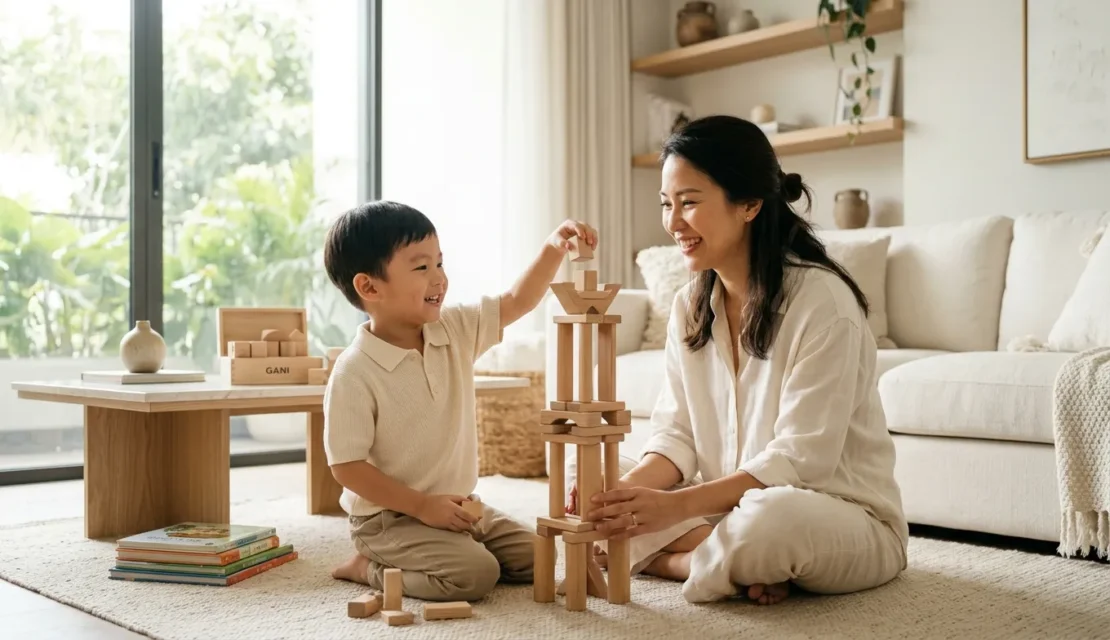
If you have ever watched a child stack three blocks, knock them down, and then rebuild the whole thing with the seriousness of a tiny architect, you already understand why Building blocks benefits matter so much. At Apple Tree Pre-School BSD, located in Educenter bsd, we see every day how simple toys can create powerful learning moments. What looks like ordinary play is often doing extraordinary work in a child’s brain, especially when it comes to spatial intelligence, problem solving, and confidence.
Many parents are surprised by how much learning can come from a basket of blocks. They do not flash, sing, or come with a complicated instruction booklet that makes you feel like you need a degree in engineering before breakfast. Yet blocks quietly help children think, plan, test, adjust, and imagine. That is a pretty impressive job for a toy that mostly sits there looking innocent.
Building Blocks Benefits for Spatial Intelligence
When we talk about spatial intelligence, we mean your child’s ability to understand shapes, positions, patterns, distance, and how objects fit together in space. In simple terms, it is the skill that helps children know whether something will balance, fit, stack, turn, or fall over in dramatic slow motion. And yes, preschoolers learn a lot from that dramatic slow motion.
The wonderful thing about Building blocks benefits is that they support spatial thinking in a way that feels completely natural. Children are not being asked to memorise abstract ideas. They are learning by touching, moving, rotating, and experimenting with real objects in real time.
What spatial intelligence looks like in early childhood
Spatial intelligence begins long before formal maths lessons. It appears when your child lines up blocks from biggest to smallest, turns a piece around until it fits, or realises the tower keeps falling because the base is too narrow. Those are not random moments. They are early signs of real cognitive growth.
This is one reason we value block play so highly in preschool. It helps children build mental flexibility, visual understanding, and early engineering habits without ever making the activity feel heavy or forced.
How Building Blocks Benefits Support Brain Development
One of the best things about block play is that it develops several skills at once. Your child may think they are “just building a castle,” but their brain is doing far more than that behind the scenes.
Blocks teach children to visualise and plan
Before children place a block, they often have an idea in mind. Maybe they want a tall tower, a bridge, or a house for a toy animal that somehow ends up looking more like a parking garage. Either way, they are visualising a goal before they build it.
That process is a huge part of Building blocks benefits. Children begin to picture shapes and structures in their mind, then work out how to bring that idea into the real world. This is the kind of thinking that later supports maths, science, writing, and even daily problem solving.
Blocks strengthen logic and cause and effect
Children quickly learn that if a block is crooked, the next one may wobble. If the base is too small, the tower may collapse. If a heavier piece goes on top of a weak structure, things get interesting very quickly.
These moments teach logic in a wonderfully practical way. Children are not just hearing about cause and effect. They are seeing it, feeling it, and sometimes watching it crash onto the carpet with great emotional intensity.
Blocks encourage trial and error without fear
One of the most powerful Building blocks benefits is that blocks make mistakes feel normal. A structure falls down, and children simply try again. They move a piece, change the design, and keep going.
That kind of resilience matters deeply. Children learn that mistakes are not the end of the activity. They are part of the activity. Honestly, that is a lesson many grown ups still need from time to time.
Building Blocks Benefits for Motor Skills and Focus
Spatial intelligence is a big part of block play, but it is not the only part. Blocks also support fine motor development, hand and eye coordination, and concentration.
Fine motor control gets stronger with every block
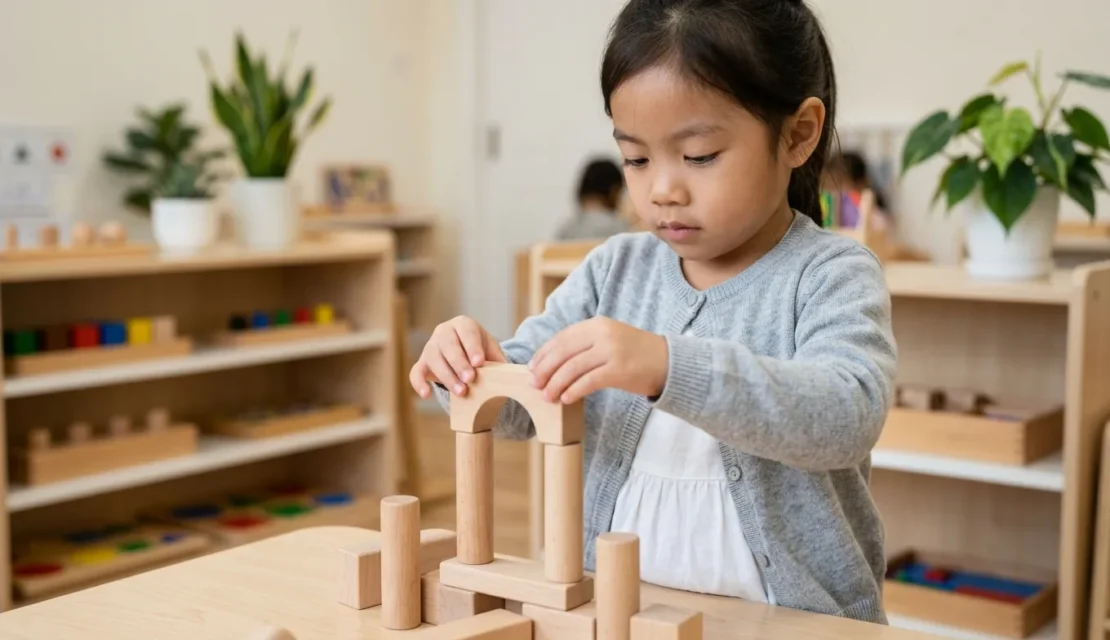
Picking up blocks, balancing them carefully, and placing them with control all help strengthen the small muscles in the hands and fingers. These are the same muscles children need later for writing, cutting, buttoning clothes, and using classroom tools.
This makes Building blocks benefits especially valuable in the preschool years. The activity is fun, but the skill building underneath is very real.
Focus and patience grow naturally
Children often stay with block play far longer than adults expect. There is something deeply satisfying about building, adjusting, and trying again. A child who is focused on getting the roof to stay up is practising sustained attention without even noticing.
That is one reason we love open ended play. It invites concentration in a way that feels self motivated. Nobody has to say, “Please focus now.” The blocks do the work.
Social and Emotional Building Blocks Benefits
If your child builds with siblings, classmates, or parents, block play becomes even richer. It turns into a shared activity filled with conversation, negotiation, and a few strong opinions about where the dinosaur should live.
Children learn to cooperate and communicate
When children build together, they have to share materials, explain ideas, and solve little conflicts. One wants a bridge, another wants a tower, and suddenly there is a full construction meeting happening on the floor. It is excellent practice for communication.
These social moments are an important part of Building blocks benefits. Children learn to listen, compromise, and combine ideas, all of which support healthy relationships and classroom readiness.
Confidence grows through visible success
There is something wonderfully concrete about building. Your child can see what they made. They can point to it, show it to you, and feel proud. Even a simple tower can create a real sense of accomplishment.
That confidence matters. Children who feel capable during play are often more willing to take positive risks in other learning situations too.
Best Types of Building Blocks for Young Children
Not all blocks need to look the same to be valuable. The best choice often depends on your child’s age, interests, and stage of development.
Good options for preschoolers
Here are a few types of blocks that work beautifully:
- Wooden blocks for classic open ended building
- Large foam blocks for younger children and active play
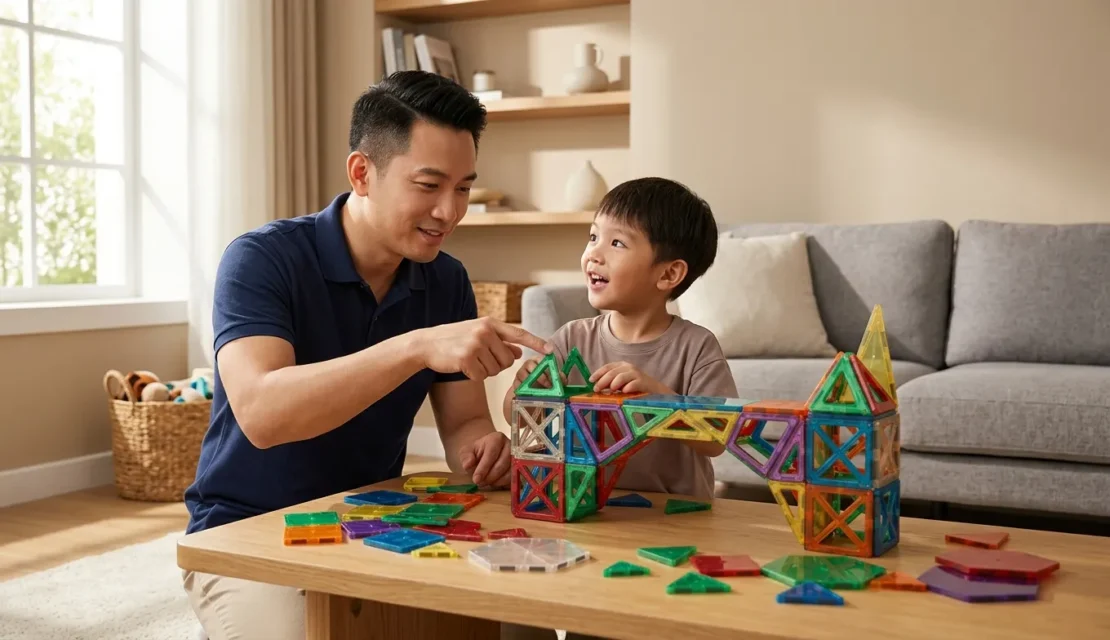
- Magnetic tiles for shape exploration and design
- Interlocking blocks for structure and stability
- Natural blocks with different sizes and textures
Each type offers slightly different Building blocks benefits, but all of them encourage spatial thinking, creativity, and experimentation.
What to look for when choosing blocks
Try choosing blocks that are safe, durable, and easy for little hands to hold. Open ended sets usually work better than heavily themed kits, because children can use them in more imaginative ways. A plain block can become anything, and children are very good at filling in the rest.
How to Make Block Play More Meaningful at Home
You do not need to turn block time into a formal lesson. In fact, that usually ruins the mood rather quickly. Instead, stay nearby, notice what your child is doing, and ask a few helpful questions.
You might ask:
- What are you building today
- How can we make it taller
- Which block fits best here
- What do you think will happen if we move this one
- Can you build a bridge for the car
These simple prompts strengthen the Building blocks benefits without taking over the play. Your child stays in charge, and you gently extend the thinking.
Where Little Builders Become Big Thinkers
At Apple Tree Pre-School BSD, we believe simple materials often create the deepest learning. Block play helps children build spatial intelligence, problem solving, fine motor control, focus, language, and confidence, all through joyful hands on exploration. That is exactly the kind of learning we want for young children.
If you would like to see how we nurture these skills through meaningful everyday experiences, you can explore our programs. We design our learning environment to help children grow smart and happy, together with their families.
Small Blocks, Big Possibilities
The real Building blocks benefits go far beyond keeping your child busy on the floor for twenty happy minutes. Blocks help children think in three dimensions, solve problems, test ideas, and build confidence one piece at a time. For a toy with no batteries and no dramatic theme song, that is a pretty amazing contribution.
If you are looking for a preschool where curiosity, creativity, and strong foundations grow side by side, we would love to welcome your family. Chat with us on WhatsApp or call us at +62 888-1800-900. Come play and learn with other children at Apple Tree Pre-School BSD.



Be the first to write a comment.