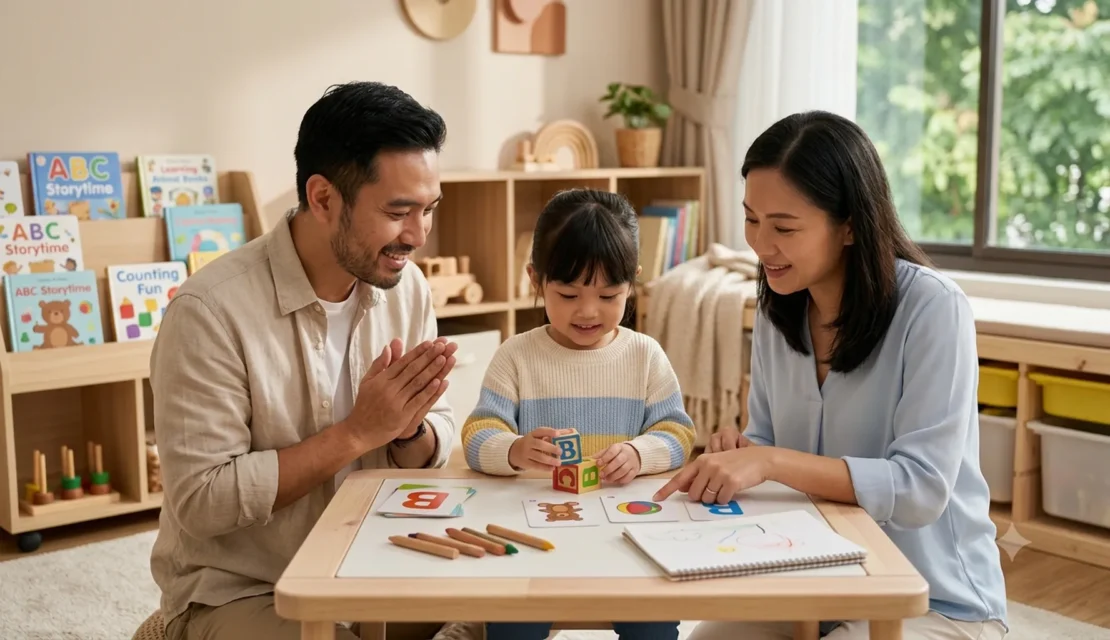
When a child learns differently from others, it can feel like you are watching two movies at once. Your child is trying hard, but the world is moving at a pace that does not always match how their brain prefers to work. We see this often at Apple Tree Preschool BSD in the Educenter BSD Building, where children come in with beautifully unique strengths and very different learning rhythms.
If you have ever thought, “Why does this seem easy for other kids but so tiring for mine,” you are not alone. And no, it does not automatically mean something is “wrong.” It means you need a plan that fits your child, not a plan borrowed from someone else’s child.
We are going to keep this practical, warm, and realistic for everyday family life. You do not need to turn your home into a therapy center or a test-prep factory. You need supportive routines, smart communication, and an environment where your child can grow without feeling labeled.
Supporting a Child Who Learns Differently From Others: What It Really Means
A child learns differently from others for many reasons. Sometimes it is language exposure, temperament, or maturity. Sometimes it is attention, sensory needs, or a specific learning difference that becomes clearer over time.
What matters most is this: “different” does not automatically mean “behind.” It often means “needs a different route.”
Common ways learning differences show up in young children
You might notice patterns like these:
- Your child understands verbally but struggles to show it on paper
- Your child can focus deeply on interests but tunes out during group instruction
- Your child remembers stories but forgets multi step instructions
- Your child avoids tasks that involve writing, cutting, or fine motor control
- Your child gets overwhelmed by noise, crowds, or transitions
These can be signs of a skills gap, an environment mismatch, or a developmental timing issue. Your job is not to diagnose from one checklist. Your job is to observe, support, and seek guidance when needed.
The biggest risk is not “learning slower,” it is “feeling not good enough”
When a child learns differently from others, the real danger is that they start believing they are less capable. Confidence drops, then effort drops, and then progress slows further.
So our priority is protecting motivation and self worth while building skills steadily.
Why Comparisons Make Things Worse (Even When You Mean Well)
Most parents compare accidentally. You are tired, you are worried, you want to help, and you say something like, “Your cousin can do this already.” It is human.
But for a child who already feels different, comparison often lands as shame.
Better alternatives to comparison language
Instead of comparing your child to others, compare your child to their own progress:
- “Last month you could not do this, and now you can.”
- “You worked through the tricky part today.”
- “Your effort is getting stronger.”
Progress based language keeps your child in the game.
Practical Strategies That Help When Your Child Learns Differently
You do not need 50 strategies. You need a few that you can repeat consistently.
Break tasks into smaller steps, then celebrate the steps
Many children struggle because the task feels too big. Shrink it until it becomes doable.
If the task is “write a word,” the steps might be:
- Hold the pencil comfortably
- Trace one letter
- Copy one letter
- Copy the whole word
This is not lowering expectations. This is building the bridge to the expectation.
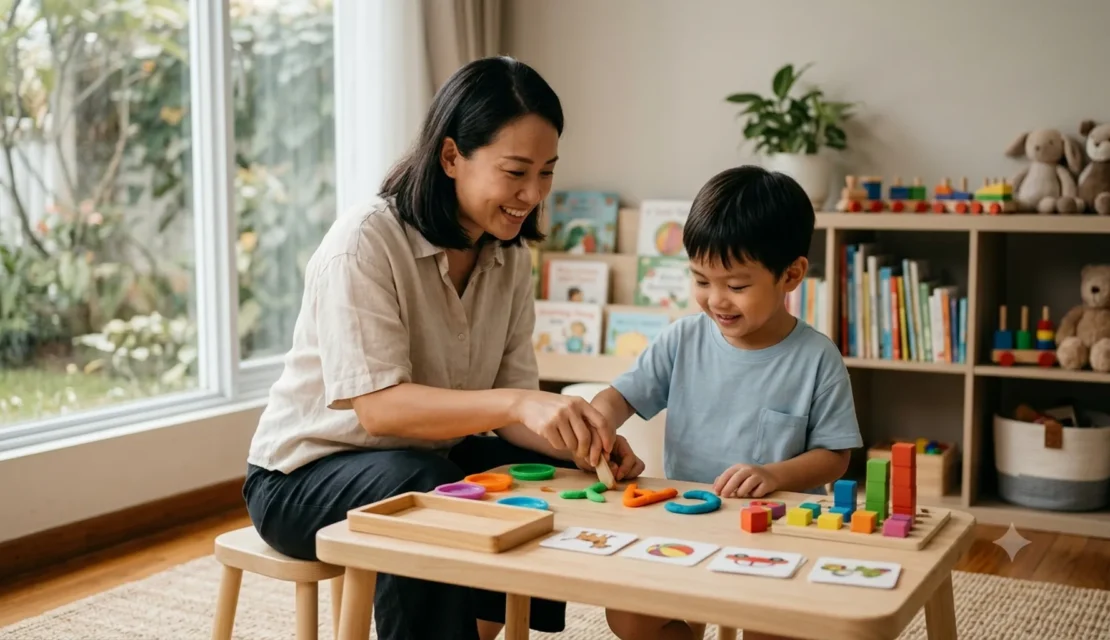
Use multi sensory learning at home
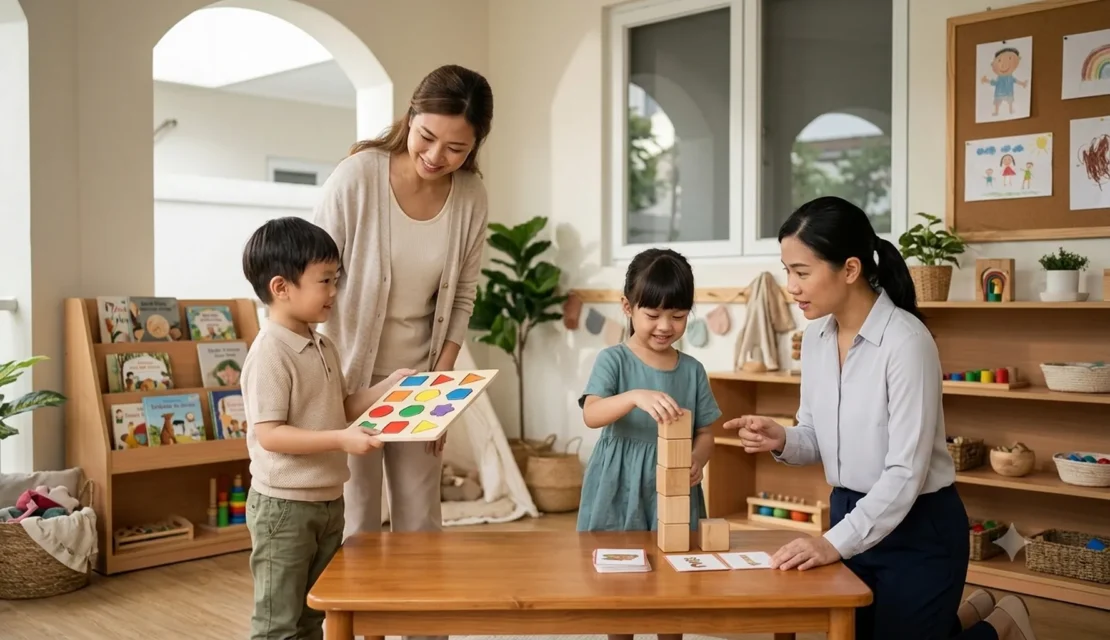
A child learns differently from others often benefits from learning that includes movement, touch, and visuals. You can do this without fancy tools.
Try:
- Letters formed with playdough
- Counting with snacks or blocks
- Matching cards, puzzles, and sorting games
- “Jump to the answer,” where your child hops to a number or letter you call out
Multi sensory learning makes concepts stick, especially for young children.
Reduce overload before you expect focus
If your child is dysregulated, learning will not land. Start with regulation, then learning.
Quick resets that work for many children:
- Two slow breaths, “smell the flower, blow the candle”
- A one minute movement break, jumping, stretching, wall push
- A drink of water and a calm tone, not a lecture
When the body feels safe, the brain can learn.
How to Advocate for Your Child Without Turning It Into a Fight
You can be supportive and firm without being confrontational. The goal is collaboration with teachers, not conflict.
Share specific observations, not labels
Instead of “My child is lazy” or “My child has trouble,” use clear examples:
- “They can answer verbally but freeze on worksheets.”
- “They do better with one instruction at a time.”
- “They focus longer when they can use hands on materials.”
Specific data helps teachers adjust support more effectively.
Ask for adjustments that are realistic
Small adjustments can make a huge difference:
- Shorter instructions, one step at a time
- Extra time to complete a task
- A quieter seat away from distractions
- Allowing verbal answers sometimes
- Using visuals and routines to support transitions
These are not special favors. They are ways to help your child show what they know.
Strength Based Parenting: The Confidence Shortcut That Actually Works
If you focus only on what is hard, your child starts to feel like a collection of problems. If you build on strengths, your child feels capable and tries more.
Find your child’s learning strengths
Many children who learn differently shine in specific ways:
- Strong memory for stories
- Great curiosity and big questions
- Excellent spatial skills with blocks and puzzles
- High empathy and social awareness
- Creative thinking and imaginative play
Use strengths as the entry point. A child who loves stories may learn letters through storybooks. A child who loves building may learn maths through construction play.
Praise effort and strategy, not “smart”
If you praise only results, children fear mistakes. If you praise the process, children keep trying.
Use phrases like:
- “You tried a new way, that is good problem solving.”
- “You kept going even when it felt hard.”
- “You asked for help, that is a strong learner move.”
This builds resilience, which matters more than speed.
When to Seek Extra Support
Sometimes a child learns differently from others because they need targeted help. Early support often makes learning easier later.
Signs it may be time for professional guidance
Consider speaking to a pediatrician, psychologist, or therapist if you see consistent struggles across settings, over time, such as:
- Ongoing speech and language delays that limit communication
- Significant difficulty following instructions compared to peers
- Extreme sensory sensitivity that blocks participation
- Persistent attention and impulse issues that disrupt daily life
- Strong anxiety around learning tasks
Getting support is not a label. It is a tool.
How We Support Different Learners at Apple Tree
At Apple Tree Preschool BSD, we see children with different learning styles every day. We support them through predictable routines, hands on learning, and a warm classroom culture where mistakes are safe and effort is respected.
Our Singapore based curriculum covers English, Mathematics, Chinese, Creativity, Social Studies, Science, Bahasa, Moral, Music, Physical Education, and Phonics. But the delivery matters as much as the content. We use play, movement, songs, storytelling, and guided practice to help children access learning in different ways.
If you want to see class options by age and readiness, explore our programs. Matching home support with school routines often helps children progress faster and feel calmer.
A Simple Home Plan You Can Start This Week
If your child learns differently from others, consistency beats intensity. Keep the plan small so you actually do it.
Try this weekly structure:
- Daily: 10 minutes of reading or storytelling, you and your child together
- Daily: 5 minutes of fine motor play, cutting, playdough, stickers, tracing
- 3 times per week: 10 minutes of maths through play, sorting, counting, patterns
- Once per week: “progress check,” look at old work and notice improvement
- Anytime: one calm down tool practiced when calm, not only during meltdowns
You are building skills and confidence at the same time.
Let’s Make Learning Feel Possible and Safe
When a child learns differently from others, the goal is not to “catch up overnight.” The goal is steady progress without shame, plus routines that help your child feel capable. With small steps, strength based language, and supportive environments, children usually grow more than you expect.
If you would like a school environment that understands different learning styles and builds strong foundations with warmth and structure, come visit us at the Educenter BSD Building. We would love to help you find the best class fit and share strategies you can use at home too.
Register now, or come play and learn with other children!
Chat with us on WhatsApp or call +62 888-1800-900 to ask about schedules and availability.




Be the first to write a comment.