Raising academically successful child can feel like you need a full-time strategy team, a color-coded calendar, and maybe a second brain. We get it, and we see this conversation almost daily at Apple Tree Preschool BSD inside the Educenter BSD Building, where parents are trying to do “the right thing” without turning childhood into a never-ending exam season.
You probably want your child to be confident with learning, do well in school, and still enjoy being a kid. That balance is the whole game. The good news is academic success is rarely about pushing harder, it’s about building strong learning foundations early, then keeping them steady.
Let’s make this practical, realistic, and friendly to real family life in Indonesia, where traffic is real, grandparents have opinions, and your child can suddenly decide socks are “unacceptable” right when you are late.
Raising Academically Successful Child: What Really Predicts School Success
Academic success in early childhood is not just about reading early or doing maths worksheets. Those can help, but they sit on top of deeper skills that actually make learning easier.
The real foundations behind strong grades later
In our experience, children who thrive academically usually have these basics in place:
- Language exposure, lots of talking, storytelling, and vocabulary
- Attention stamina, the ability to stay with a task for a short time
- Emotional regulation, the ability to recover from mistakes and frustration
- Curiosity, the habit of asking questions and exploring
- Consistency, routines that make learning predictable
If you build these, reading and maths become smoother, because the brain is ready to learn.
Why “pressure” often backfires
Pressure can create quick compliance, but it can also create anxiety, perfectionism, or avoidance. A child who learns “I’m loved when I perform” may become terrified of mistakes, and school is basically one long series of mistakes and corrections. If your goal is raising academically successful child long term, confidence matters as much as content.
Build a Home Environment That Makes Learning Feel Normal
You do not need a fancy setup. You need a home rhythm where learning happens naturally, like brushing teeth, not like an event that requires emotional preparation.
Create a tiny daily learning routine
A simple daily routine works better than occasional big “study sessions.” For preschool ages, aim for short and predictable.
A realistic routine might look like this:
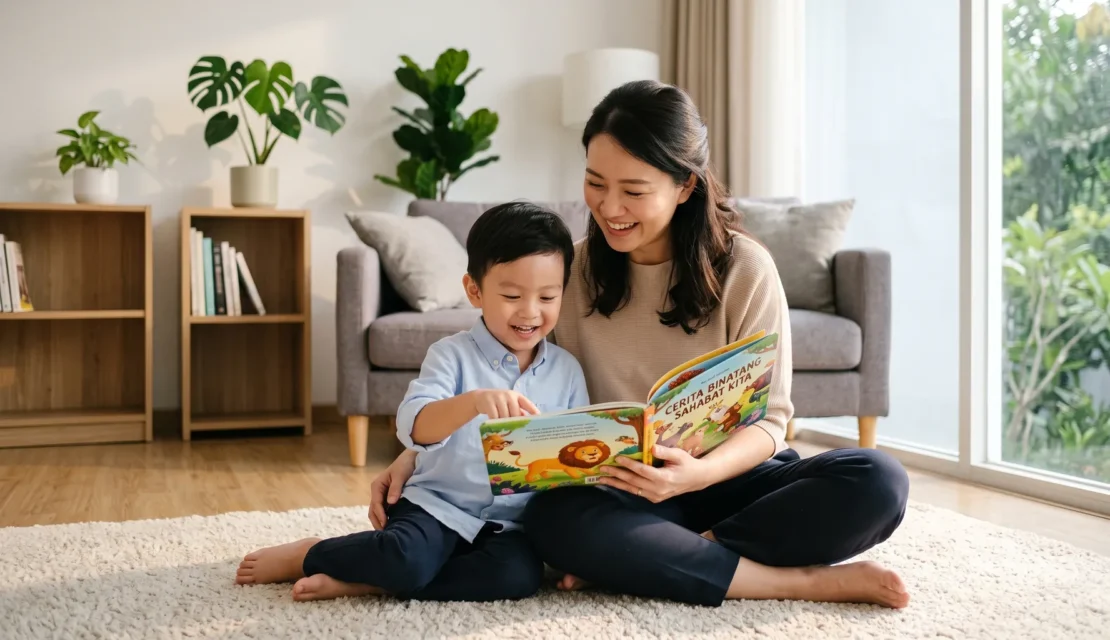
- 10 minutes story time or read-aloud
- 5 minutes letter sounds or phonics play
- 5 to 10 minutes counting or simple puzzles
If you do that most days, you are already doing a lot for academic readiness.
Reduce distractions during learning time
If the TV is on, toys are everywhere, and snacks are being negotiated, focus will collapse. Keep it simple: one activity on the table, one clear start, one clear finish.
Try using a timer. When your child knows it ends, they resist less. Adults are the same, we just call it “a meeting with an agenda.”
Language and Literacy: The Fastest Path to Academic Growth
Strong language skills support everything, including maths. Children who understand instructions, explain ideas, and ask questions have an easier time across subjects.
Talk more, correct less
You do not need to correct every grammar mistake. Keep the conversation flowing, then model the correct version naturally.
Example: if your child says, “He goed home,” you can respond, “Yes, he went home,” and keep going. That teaches without turning conversation into a courtroom.
Read aloud, even after your child can read
Reading aloud builds vocabulary, comprehension, attention, and general knowledge. Choose stories with emotion, humor, and a bit of challenge.
A few easy ways to keep reading engaging:
- Let your child choose between two books
- Ask one question per story, not ten
- Re-read favorites, repetition helps mastery
This is one of the simplest habits for raising academically successful child without stress.
Maths Readiness Without Worksheets Everywhere
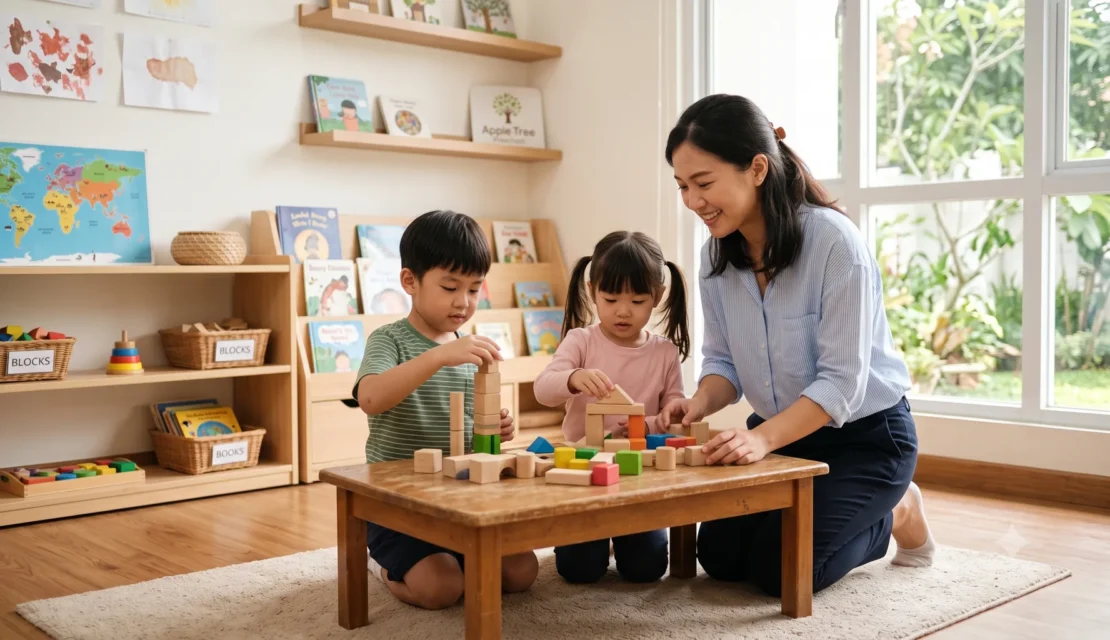
Maths in early childhood is not about doing pages of sums. It is about noticing patterns, quantities, and relationships in daily life.
Turn everyday moments into maths moments
You can practice maths skills without your child realizing it’s “math.”
Try these:
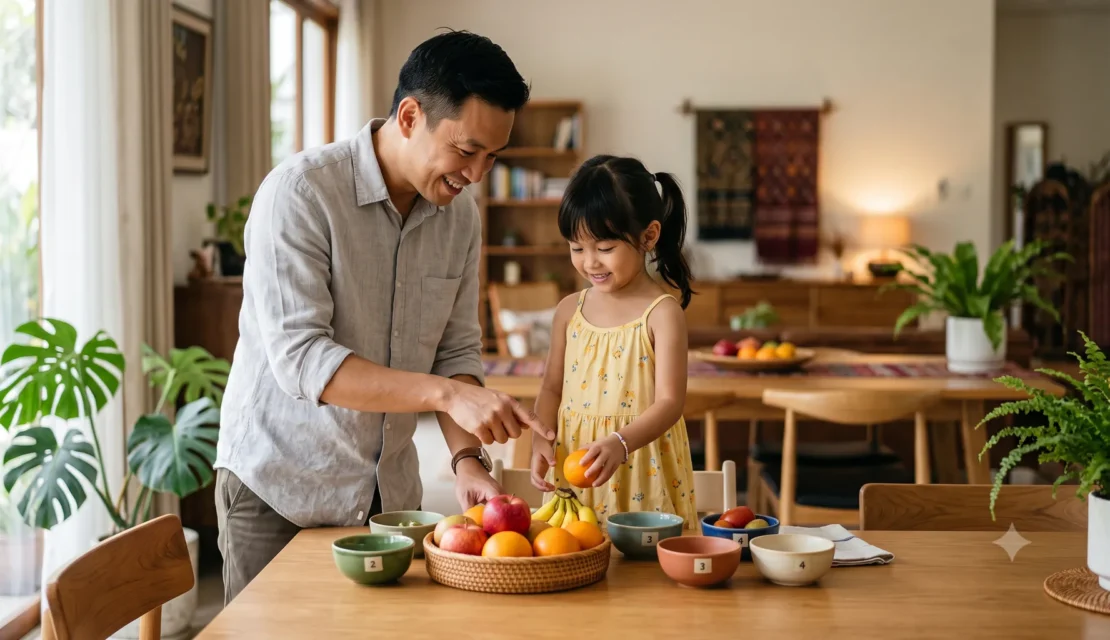
- Count fruit while washing it, “How many grapes?”
- Compare sizes, “Which cup is bigger?”
- Sort laundry by color or by owner
- Measure ingredients while cooking
This builds real number sense, which is far more valuable than memorizing answers early.
Teach problem-solving, not only answers
When your child is stuck, avoid giving the answer immediately. Ask a guiding question: “What could we try next?” or “What happens if we move this piece?”
Children who learn to persist through confusion become stronger learners. Confusion is not failure, it’s the doorway to learning.
Emotional Skills: The Hidden Engine of Academic Success
If your child melts down over mistakes or gives up quickly, academics will feel harder than they need to be. Emotional regulation is not separate from learning, it’s part of learning.
Teach your child how to handle mistakes
We like simple phrases that make mistakes feel safe:
- “Mistakes help your brain grow.”
- “Not yet, but soon.”
- “Let’s try a smaller step.”
Then show them what “smaller step” actually looks like. Break one big task into two tiny ones.
Praise effort and strategy, not only results
If you only praise outcomes, your child may fear trying anything challenging. Praise the process so they build resilience.
Good examples:
- “You kept going, even when it was hard.”
- “You tried a different way, smart thinking.”
- “You asked for help, that was brave.”
These are the habits behind raising academically successful child long term.
Build Strong Study Habits Without Making Your Child Hate Studying
Study habits should feel like routines, not punishments. The goal is to make learning doable, not dramatic.
Keep sessions short and end on success
If your child falls apart at minute twelve, do ten minutes. Ending on a win makes tomorrow easier.
A helpful guideline:
- Ages 2 to 3: 5 to 10 minutes
- Ages 3 to 4: 10 to 15 minutes
- Ages 4 to 6: 15 to 25 minutes, depending on the child
Use “first, then” to avoid daily battles
This is a simple parenting tool that works well for learning routines.
Examples:
- “First puzzle, then snack.”
- “First reading, then play.”
- “First tidy up, then screen time.”
Your child learns structure, and you stop negotiating like you’re in a trade agreement summit.
Why the Right Preschool Environment Matters
Home habits are powerful, but children also grow through social learning and structured routines. The classroom is where children practice listening, turn-taking, speaking up, and sticking with tasks even when they are not the easiest kid in the room.
At Apple Tree Preschool BSD, we use an adopted Singapore curriculum that supports English, Mathematics, Chinese, Creativity, Social Studies, Science, Bahasa, Moral, Music, Physical Education, and Phonics. Academics matter, but we deliver them through routines and hands-on learning that children can actually enjoy. That combination supports both skill growth and confidence.
If you want to see what fits your child’s age and stage, you can explore our programs. It often helps parents align home routines with school expectations, which makes everything feel smoother.
Small Changes You Can Start This Week
If you try to change everything at once, you will burn out. Pick two or three shifts and repeat them.
Here are easy starters:
- Protect a daily 10-minute reading pocket
- Add one maths moment during cooking or shopping
- Practice one calm-down tool, two slow breaths before learning time
- Keep one learning activity set up in a simple box so starting is easy
Consistency beats intensity, every time.
Come Grow Smart and Happy With Us
Raising academically successful child is not about pushing your child to be the best in the class. It’s about helping your child build strong foundations, steady habits, and confidence that survives mistakes. When learning feels safe and normal, children grow faster, and they actually enjoy it.
If you would like a school environment that supports these skills daily, we would love to welcome your family to Apple Tree. You can visit us at the Educenter BSD Building and see how our classrooms support both academic readiness and joyful learning.
Come play and learn with other children!
Chat with us on WhatsApp or call +62 888-1800-900 to ask about schedules and class availability.




Be the first to write a comment.