Parenting has always been a moving target. Just when you feel like you’ve figured something out, the world shifts, your child shifts, and suddenly you’re back to square one with a new challenge you definitely did not read about in any book. The difference in 2026 is that the conversation around parenting is shifting in a way that feels genuinely important, and honestly, quite overdue.
The biggest 2026 parenting trends aren’t about the latest educational gadget or the perfect sleep schedule. They’re about something much more fundamental: mental health. For children and for parents. At the same time, together, without apology. If that feels like a relief to read, you are absolutely not alone, and this article is written specifically for you.
The 2026 Parenting Trends That Are Changing How Families Thrive
This year, parents across the world are moving away from the relentless pressure of “doing it all perfectly” and toward something more sustainable, more honest, and more connected. The 2026 parenting trends we’re seeing reflect a collective exhale, a recognition that healthy children grow from healthy families, and healthy families need more than a good curriculum and a packed schedule.
Here are the key trends shaping how the most thoughtful parents are approaching family life right now.
Trend 1: Parental Mental Health Is Finally Being Treated as a Child Development Issue
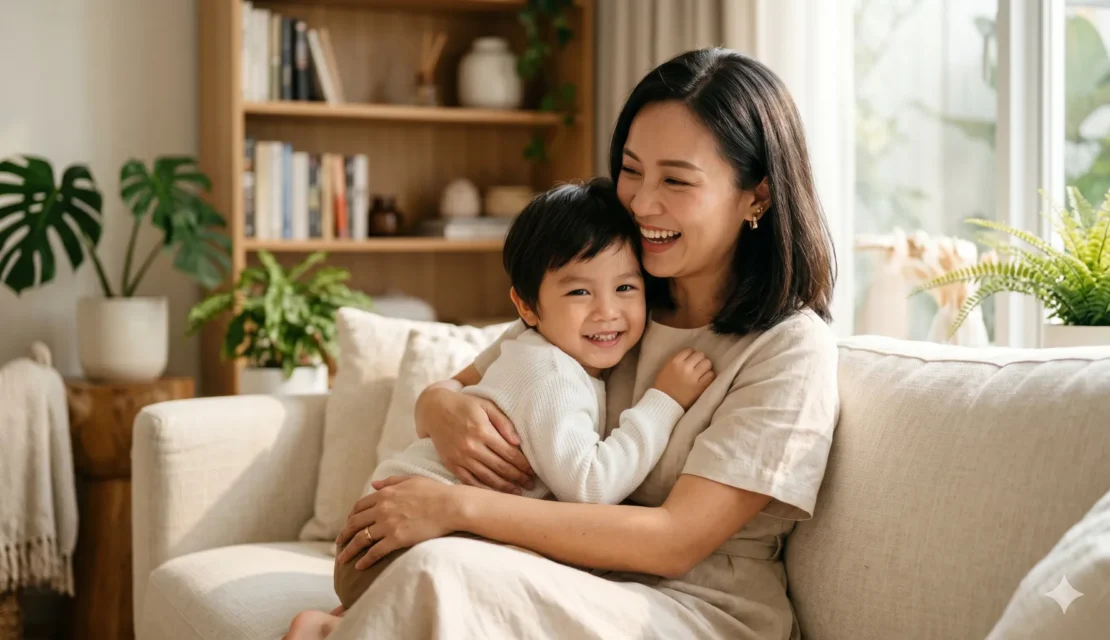
For a long time, parental wellbeing was treated as a separate category from child development. You took care of yourself over here, and your child’s growth happened over there. The 2026 parenting conversation is firmly rejecting that false separation.
Research has consistently shown that a parent’s emotional state is one of the strongest predictors of a child’s social and emotional development. Children are extraordinarily attuned to the adults around them. They don’t just notice when you’re stressed. They absorb it, mirror it, and internalise it in ways that affect their own ability to regulate emotions, build relationships, and feel safe in the world.
This year, more parents are actively investing in their own mental health, not as a luxury or a guilty indulgence, but as a direct act of care for their children. Therapy, peer support groups, honest conversations with partners, and the simple but radical act of saying “I’m not okay right now” are all becoming more normalised in parenting communities, including right here in BSD.
What this looks like in practice:
- Choosing rest over productivity when the body and mind genuinely need it
- Talking to children age-appropriately about big emotions, including your own
- Asking for help from family, school, and community without the weight of shame
- Treating your own emotional needs as legitimate and worth attending to
Trend 2: Gentle Parenting Is Maturing Into Something More Nuanced
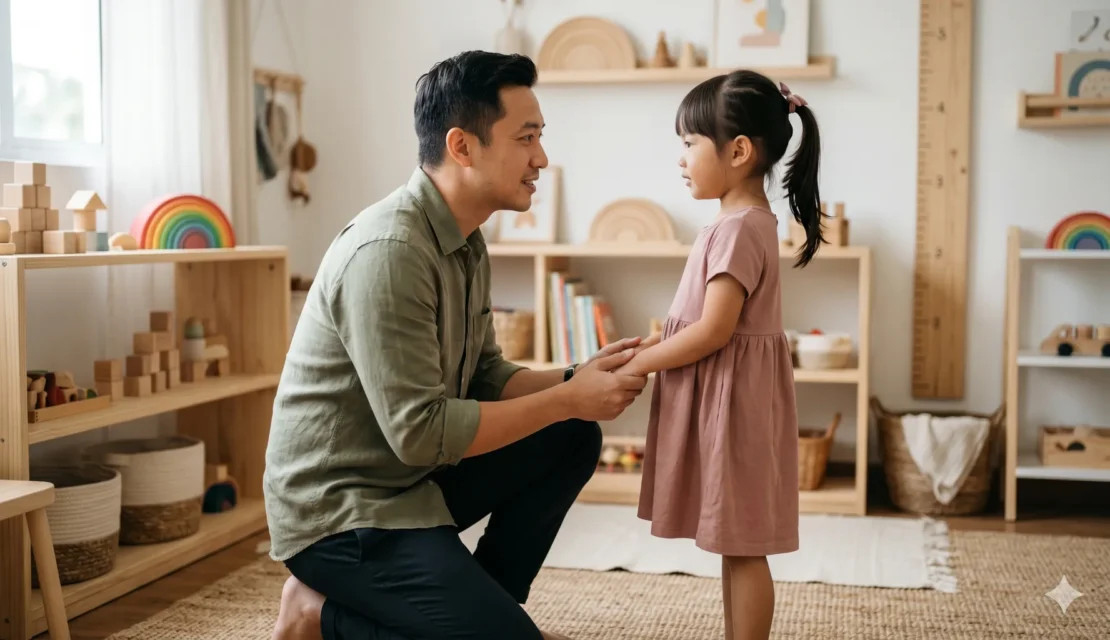
Gentle parenting had its moment, and a lot of what it brought to the table was genuinely valuable. Empathy, connection, understanding the developmental reasons behind behaviour rather than just reacting to it. These are things we champion fully at Apple Tree Preschool BSD.
But one of the notable 2026 parenting trends is that the conversation around gentle parenting is growing up a little. Parents are finding the balance between being emotionally attuned and being clear, consistent, and firm when necessary. The emerging understanding is that children need both warmth and structure. Not warmth instead of structure, and not structure at the expense of warmth. Both, woven together.
This more nuanced approach is sometimes called “authoritative parenting” in research literature, and the evidence behind it is very strong. Children raised with both high warmth and clear, consistent expectations tend to develop better self-regulation, stronger academic outcomes, and healthier social relationships than those raised with either extreme alone.
In practical terms, this means:
- Validating your child’s feelings while still holding the boundary (“I understand you’re upset that it’s bedtime. Bedtime is still now.”)
- Explaining the reasons behind rules in age-appropriate language, rather than simply enforcing them
- Following through consistently, because predictability is one of the greatest gifts you can give a young child’s nervous system
- Recognising that saying “no” with love is not unkind. It is, in fact, one of the more loving things a parent can do
Trend 3: Play Is Being Reclaimed as Serious Business
There is a quiet but powerful pushback happening in 2026 against the over-scheduling of early childhood. Enrichment classes every afternoon, structured activities from dawn to dusk, and the pressure to make every moment “productive” are giving way to a renewed appreciation for something much simpler: free, unstructured play.
This is one of the 2026 parenting trends that makes us smile most, because it aligns completely with what we see every single day in our classrooms. Children learn through play. Not as a nice metaphor, but as a literal neurological fact. Unstructured play develops executive function, creativity, language, social skills, and emotional regulation in ways that no worksheet or app can replicate.
The children who have time to be bored, to invent games, to negotiate the rules of imaginary worlds with their friends, are the ones developing the exact cognitive and social tools they will need for every challenge ahead of them.
What reclaiming play looks like for your family:
- Protecting at least one chunk of completely unscheduled time in your child’s daily routine
- Resisting the urge to fill every quiet moment with screens or structured activities
- Playing alongside your child sometimes, following their lead entirely, even if it means spending forty-five minutes building a train track that immediately gets dismantled
- Trusting that “they’re just playing” is always enough
Trend 4: Mindfulness for Children Is Going Mainstream
A few years ago, teaching mindfulness to young children felt slightly niche. In 2026, it is firmly in the mainstream, and the evidence base behind it is growing rapidly.
Simple mindfulness practices, breathing exercises, body scans, noticing emotions and naming them, taking a deliberate pause before reacting, are being introduced in schools and homes around the world with genuinely impressive results. Children who practise basic mindfulness show improved attention, better emotional regulation, and reduced anxiety. Teachers report calmer classrooms. Parents report fewer meltdowns.
The beauty of mindfulness for young children is that it doesn’t need to be complicated or formal. It can be as simple as “let’s take three big breaths together” before a tricky moment, or “can you feel your feet on the floor right now?” after an emotional storm. These tiny practices, done consistently, build neural pathways that serve children for life.
Trend 5: Community and Co-Parenting With Schools Are Being Prioritised
One of the most meaningful 2026 parenting trends is the return to the idea that raising a child is genuinely a community effort. The isolation many parents felt in the years following the pandemic has created a real hunger for connection, support, and shared experience.
Parents are actively seeking schools, communities, and spaces where they feel genuinely partnered with, not just serviced. The most effective early childhood programmes are those where teachers and parents work together as a genuine team, sharing observations, aligning on values, and communicating openly about each child’s individual needs and growth.
This is something we hold close to the heart of everything we do at Apple Tree Preschool BSD. Our mission has always been to help children grow smart and happy together with parents, and that “together” is not decorative. It is the actual method. When school and home are aligned, children feel consistent, supported, and safe. That safety is the foundation on which all learning is built.
What These Trends Mean for Your Family Right Now
The 2026 parenting trends we’ve explored all point in the same direction: toward connection, consistency, balance, and a genuine investment in wellbeing for the whole family. None of them require perfection. All of them require intention.
If you’re already doing some of these things, give yourself real credit. If you’re just starting to think about them, welcome. You’re in good company and there’s no requirement to do everything at once.
What we know for certain, from years of working with children and families here in BSD, is that when parents feel supported and informed, children thrive. The two really are that closely linked.
At Apple Tree Preschool BSD, located in the Educenter BSD Building, our programmes are built around exactly the values at the heart of these trends. Warm, structured environments. Intentional social and emotional learning woven into every day. A genuine partnership with every family we work with. Our full range of classes from Toddler through Kindergarten 2 are designed to nurture children who are not just academically ready, but emotionally strong, socially confident, and genuinely happy.
Parenting in 2026 Is About Growing Together
The most encouraging thing about the 2026 parenting trends is what they say about where we are as a generation of parents. We are less interested in appearing perfect and more interested in being present. Less focused on producing high-achieving children and more committed to raising whole, healthy, happy human beings.
That shift matters enormously. And you are already part of it by simply caring enough to stay informed and to keep asking the right questions.
We would love to be part of your family’s journey. Whether your little one is just 18 months or getting ready for primary school, we have a programme and a community waiting to welcome you both.
Register now and come grow smart and happy together with us at Apple Tree Preschool BSD! Chat with us on WhatsApp or call us directly at +62 888-1800-900. We would genuinely love to hear from you!


Be the first to write a comment.