Building child self discipline sounds simple until you watch your child negotiate “five more minutes” like they trained with a courtroom drama. We deal with this daily at Apple Tree Preschool BSD in the Educenter BSD Building, and we can tell you this: self discipline is not something you magically “install” in a child. It is something you build, slowly, through routines, skills, and lots of tiny do overs.
If you want your child to follow instructions, finish tasks, handle waiting, and bounce back after disappointment, you are really asking for self discipline. The good news is you do not need a strict household or a naturally “easy” child. You need a clear structure that makes good choices easier than chaotic ones.
Building Child Self Discipline: What It Is (And What It Is Not)
Self discipline is not blind obedience. It is the ability to pause, think, and choose a helpful action even when you feel like doing something else. For young children, that might mean stopping when asked, cleaning up toys, waiting for a turn, or trying again after a mistake.
Self discipline is skill plus support
A child who “can’t” control themselves is often a child who has not learned the skills yet, or who is too tired, hungry, overstimulated, or confused to use them. We get better results when we treat self discipline as training, not as a personality test.
Common myths that slow progress
Some ideas sound tough but usually fail in real life:
- “They must learn the hard way,” because fear may create compliance but not self control
- “They’re just being naughty,” because labels do not teach replacement skills
- “If I’m consistent, it will work immediately,” because habits take time even with perfect consistency
If you want building child self discipline to actually stick, aim for steady improvement, not overnight transformation.
Why Kids Struggle With Self Discipline (Especially Under Age 6)
Young children have big feelings and developing brains. Their impulse control system is still under construction, like a road project that somehow takes years, and yes, it will test your patience.
The three biggest reasons discipline collapses
When you see refusal, tantrums, or impulsive behavior, it often comes from:
- Low capacity: tired, hungry, sick, or overwhelmed
- Low clarity: unclear rules, too many instructions at once
- Low skills: they do not yet know what to do instead of the behavior
If you fix capacity and clarity first, teaching skills becomes much easier.
The Core Habits That Build Child Self Discipline at Home
You do not need a complicated system. You need a few repeatable routines that create structure without turning your home into a military base.
Use predictable routines, not constant reminders
If you are saying “brush your teeth” twelve times, the problem is not your child’s memory. The problem is the routine is not automatic yet.
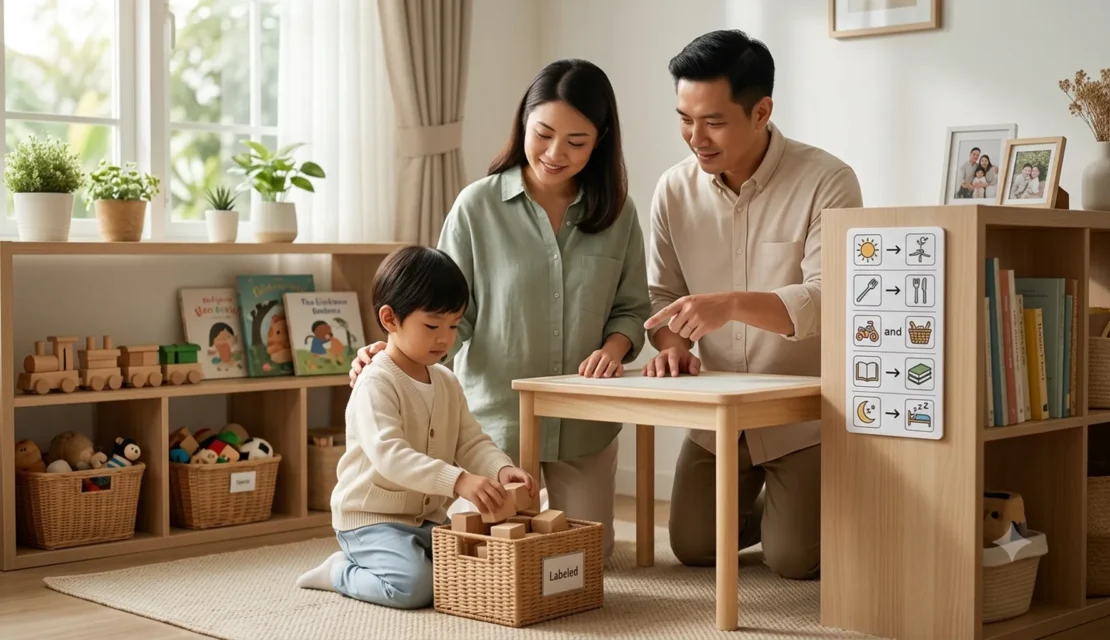
Try making routines visual and consistent:
- Morning routine in the same order daily
- A simple bedtime sequence, bath, pajamas, story, sleep
- A fixed cleanup time, for example right before dinner
Routines reduce decision fatigue for your child, and for you.
Give fewer instructions, but make them clearer
Many children “don’t listen” because they get too much information.
Instead of: “Put your toys away, then wash your hands, then change your clothes, and stop running,” try: “Toys in the box.” Then wait. Then: “Hands wash.” One step at a time works better for self discipline than long speeches.
Teach waiting in small doses
Waiting is a discipline muscle. You build it gradually.
Start with tiny practice:
- “Wait for ten seconds while I pour water.”
- “Wait while I count to five.”
- “Wait until the timer rings.”
Praise the waiting, not the outcome. “You waited, that was strong self control.”
Gentle Boundaries That Actually Work
Self discipline grows when boundaries are consistent and calm. Loud boundaries teach fear, calm boundaries teach structure.
Use “first, then” to reduce power struggles
This is one of the simplest tools for building child self discipline because it makes the sequence predictable.
Examples:
- “First tidy up, then snack.”
- “First shoes on, then playground.”
- “First reading time, then play.”
You are not arguing. You are describing reality.
Make consequences logical, not dramatic
If your child throws crayons, the consequence is crayons are put away for a while. If your child refuses to turn off the TV, the consequence is the TV is not available tomorrow at that time. Logical consequences teach cause and effect without shame.
Avoid consequences that are too big or unrelated, because they create resentment instead of learning.
Motivation: How to Encourage Without Bribing Forever
It is easy to accidentally create a system where your child only behaves for rewards. Rewards can help at the start, but the end goal is internal motivation.
Use rewards as training wheels
If you want to use a sticker chart, keep it short term and specific. For example, “three days of brushing teeth without fighting.” Then phase it out.
A good reward system focuses on behaviors that build self discipline:
- Starting on time
- Finishing a small task
- Waiting calmly
- Using words instead of yelling
Praise effort, strategy, and recovery
This is where discipline becomes internal. Try phrases like:
- “You stopped your body when I asked, well done.”
- “You calmed down and tried again, that was brave.”
- “You followed the routine without reminders, that is real self discipline.”
Your child learns that control feels good, not just that it avoids trouble.
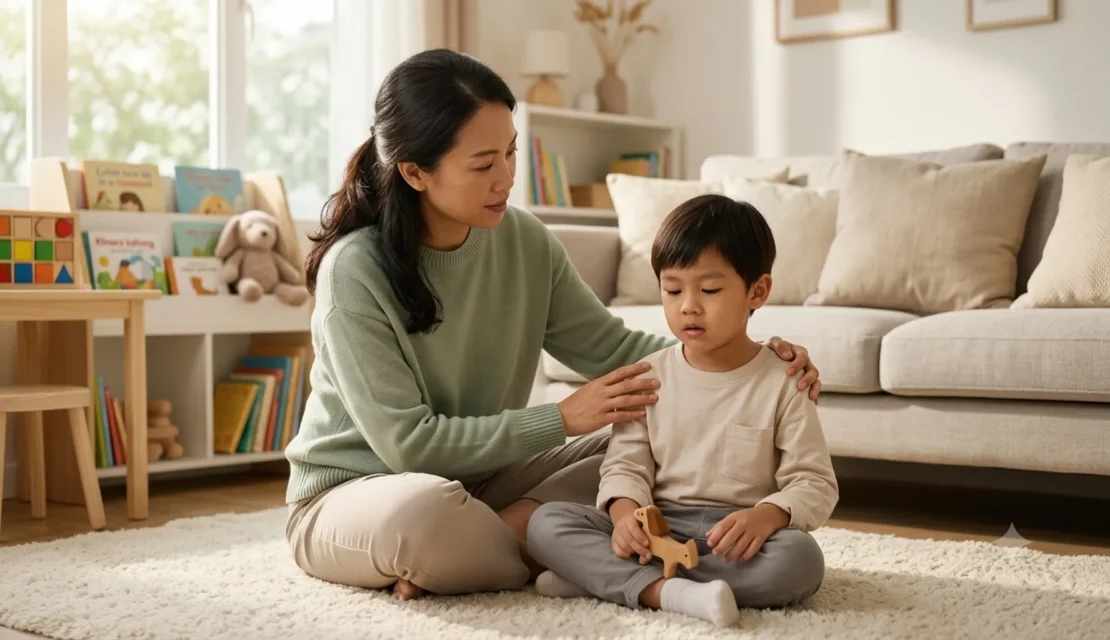
What to Do When Your Child Melts Down
Self discipline disappears during a meltdown. The goal in that moment is regulation first, learning second.
Use a simple three step reset
Keep it short:
- Connect: “I’m here.”
- Calm: two slow breaths together
- Coach: “We try again with smaller steps.”
Long lectures during big emotions rarely work. Your child’s brain is not available for a speech right then.
After the storm, teach the skill
When your child is calm, do a quick replay:
- “What happened?”
- “What can we do next time?”
- “Let’s practice the words.”
This is where building child self discipline actually happens, in the calm repair, not in the heat.
How We Build Self Discipline at School Every Day
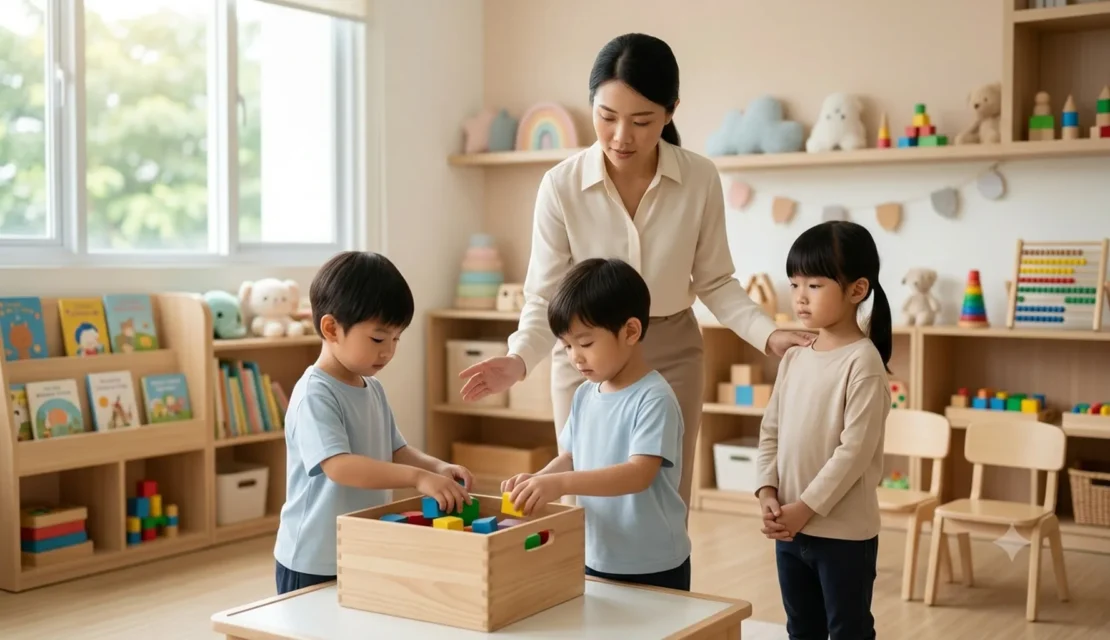
At Apple Tree Preschool BSD, we build self discipline through consistent routines, clear expectations, and warm guidance. Children practice lining up, taking turns, finishing activities, cleaning up, and using words in social conflicts. That is self discipline training in real life, with teachers who coach the skill instead of shaming the child.
Our Singapore curriculum includes English, Mathematics, Chinese, Creativity, Social Studies, Science, Bahasa, Moral, Music, Physical Education, and Phonics, and self discipline supports all of it. A child who can focus, follow routines, and persist through challenge learns faster and feels more confident doing it.
If you want to see how our classes are structured by age, you can explore our programs.
A Simple Weekly Plan You Can Start Today
If you want a doable plan, keep it small and repeatable:
- Choose one routine to tighten, bedtime or cleanup
- Choose one self control skill to practice, waiting for ten seconds
- Use “first, then” daily for transitions
- Praise one discipline moment every evening
- Keep screens on a schedule, not on demand
Do this for two weeks before you change anything. Consistency is the secret ingredient.
Come Build These Skills With a Community That Gets It
Building child self discipline is easier when your child experiences the same structure at school that you are trying to build at home. If you want daily routines, social learning, and guided practice that helps your child become more independent and self controlled, we would love to meet your family at the Educenter BSD Building.
Register now, or come play and learn with other children.
Chat with us on WhatsApp or call +62 888-1800-900 to ask about schedules and class availability.




Be the first to write a comment.