When was the last time you let your child just… be? No schedule, no enrichment class, no structured activity with a learning objective attached to it. Just a Tuesday afternoon with nowhere to be and nothing to accomplish. If you’re having trouble remembering, this article is for you, and we say that with the warmest possible intention.
There is a growing movement among parents, educators, and child development researchers that is quietly but firmly pushing back against the relentless pace of modern childhood. It’s called slow parenting, and the benefits of slow parenting are turning out to be far more significant than most people initially expected. Not just for children, but for the parents who are exhausted from trying to optimise every waking hour of their family’s life.
We see this tension in our community at Apple Tree Preschool BSD all the time. Parents who genuinely love their children and genuinely want the best for them, pouring enormous energy into doing more, scheduling more, providing more, and somehow ending up with children who are more anxious, less resilient, and harder to settle than ever. Slow parenting offers a different path, and the research behind it is genuinely compelling.
The Real Benefits of Slow Parenting for Your Child and Your Family
Slow parenting is not about being a hands-off parent or caring less about your child’s development. It is, in fact, the opposite. It is about being more intentional, more present, and more attuned to what your individual child actually needs, rather than what the parenting culture around you is telling you they should need.
The core idea is beautifully simple: children develop best when they have time, space, and safety to grow at their own pace, without the constant pressure of adult-directed achievement hanging over every moment of their day.
Let’s look at the specific benefits of slow parenting that make the most difference in early childhood.
Benefit 1: It Reduces Chronic Stress in Children and Parents
One of the most well-documented benefits of slow parenting is its effect on stress levels, in both children and the adults raising them. Over-scheduled children, particularly those in the preschool and early primary years, show measurably elevated cortisol levels compared to children with more unstructured time. Cortisol is the body’s primary stress hormone, and chronic elevation of it in early childhood has real consequences for brain development, immune function, and emotional regulation.
Children are not built to move from class to class to activity with barely a breath between. Their nervous systems need downtime, not as a reward for a productive day, but as a genuine biological requirement for healthy development.
The same applies to parents. When you step off the treadmill of constant scheduling and stop measuring your child’s worth by how many skills they’re acquiring this month, something in your own nervous system relaxes too. The benefits of slow parenting flow in both directions across the family, and that is one of its most underappreciated qualities.
Benefit 2: It Builds Stronger Intrinsic Motivation
Here is something we find genuinely fascinating in our work with young children: the children who are given the most freedom to pursue their own curiosity tend to be the most enthusiastic and persistent learners. Not because they’ve been pushed, but because they’ve been trusted.
When a child chooses what to play with, what to build, what story to act out, or what question to investigate, they are exercising intrinsic motivation, the internal drive to explore and understand the world that is every human being’s most powerful learning engine. One of the key benefits of slow parenting is that it protects and nurtures this intrinsic motivation rather than gradually replacing it with external rewards, performance anxiety, and the habit of waiting to be told what to do next.
Children who grow up with plenty of child-led time and play tend to carry this self-directed curiosity into school and beyond. They are the ones who ask unexpected questions, stick with difficult problems longer, and approach new challenges with confidence rather than apprehension.
Benefit 3: It Supports Healthier Emotional Development
Young children are doing enormous emotional work every single day. Learning to manage frustration, navigate friendships, handle disappointment, express needs appropriately, and recover from upsets. This work takes time, space, and an adult who is present and calm enough to support it.
One of the most meaningful benefits of slow parenting is that it creates the conditions for this emotional work to actually happen. When the day is not packed from start to finish, there is room for the messy, non-linear process of a child working through their feelings. There is time for the conversation that follows a difficult moment. There is space for repair, reflection, and the gradual development of emotional intelligence that no class or app can shortcut.
Children raised with a slower, more connected pace tend to show stronger empathy, better conflict resolution skills, and a more secure sense of self. These are the qualities that predict wellbeing and relationship success far into adulthood.
Benefit 4: It Strengthens the Parent-Child Bond
This one seems obvious, but it is worth saying clearly. One of the most consistent benefits of slow parenting is the quality of the relationship between parent and child that it tends to produce.
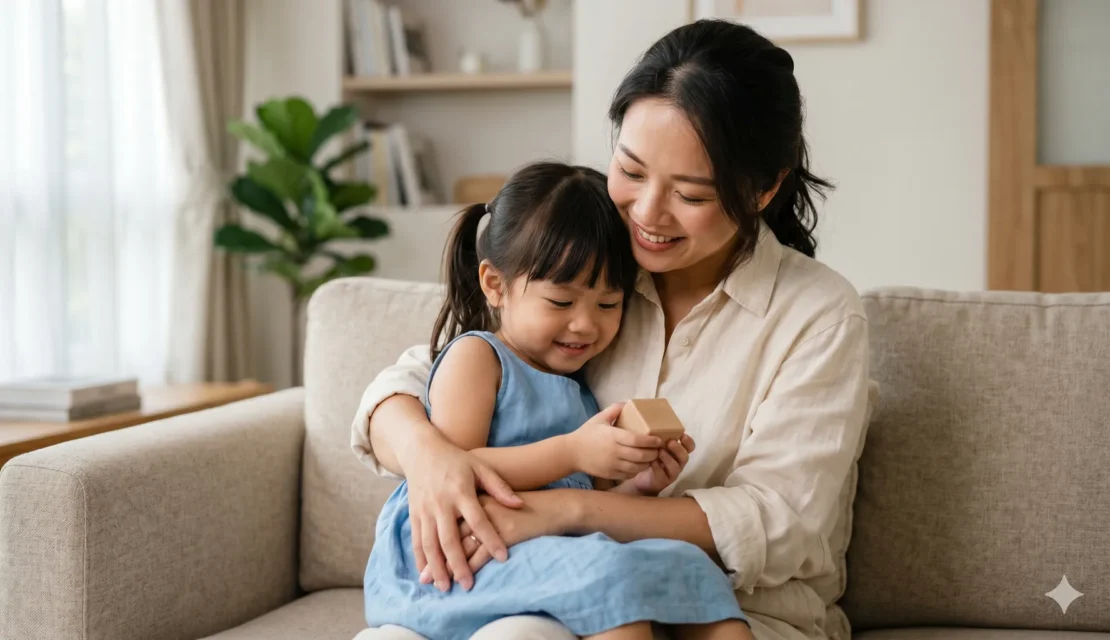
When you are not constantly rushing your child from one obligation to the next, when you have time to follow their train of thought, to get genuinely interested in whatever they are obsessing over this week, to sit on the floor and play without checking your phone, the connection between you deepens in ways that matter enormously. Children who feel truly known and seen by their parents develop a security that protects them across every area of life.
This doesn’t require hours of scheduled “quality time.” It requires genuine presence in the small moments you already share. The slow parenting approach gives you more of those moments simply by protecting them from being crowded out.
Benefit 5: It Gives Children Space to Discover Who They Are
Perhaps the most profound benefit of slow parenting is also the hardest to measure: it gives children the time and freedom to develop a sense of self.
When every hour is structured by adult intention, children never quite get the chance to discover what they like, what bores them, what they’re naturally drawn to, and what brings them genuine joy. These discoveries are not trivial. They are the foundation of identity, confidence, and eventual purpose.
A child who has spent hundreds of hours playing freely, choosing their own adventures, following their own whims, and recovering from their own small failures, knows themselves in a way that a child who has been perpetually directed simply does not. That self-knowledge is one of the greatest gifts slow parenting can offer.
Practical Ways to Bring Slow Parenting Into Your Daily Life
Understanding the benefits of slow parenting is one thing. Applying it in a real BSD household, with real competing demands, real family expectations, and real parenting pressures, is another conversation entirely. Here are some entry points that genuinely work.
- Protect one daily block of completely unstructured time. No screen, no organised activity, no objective. Even thirty to forty-five minutes makes a real difference to a young child’s nervous system and sense of agency.
- Resist the urge to fill silence. When your child says “I’m bored,” try sitting with that for a few minutes before jumping in with suggestions. Boredom is often the precursor to genuine creativity.
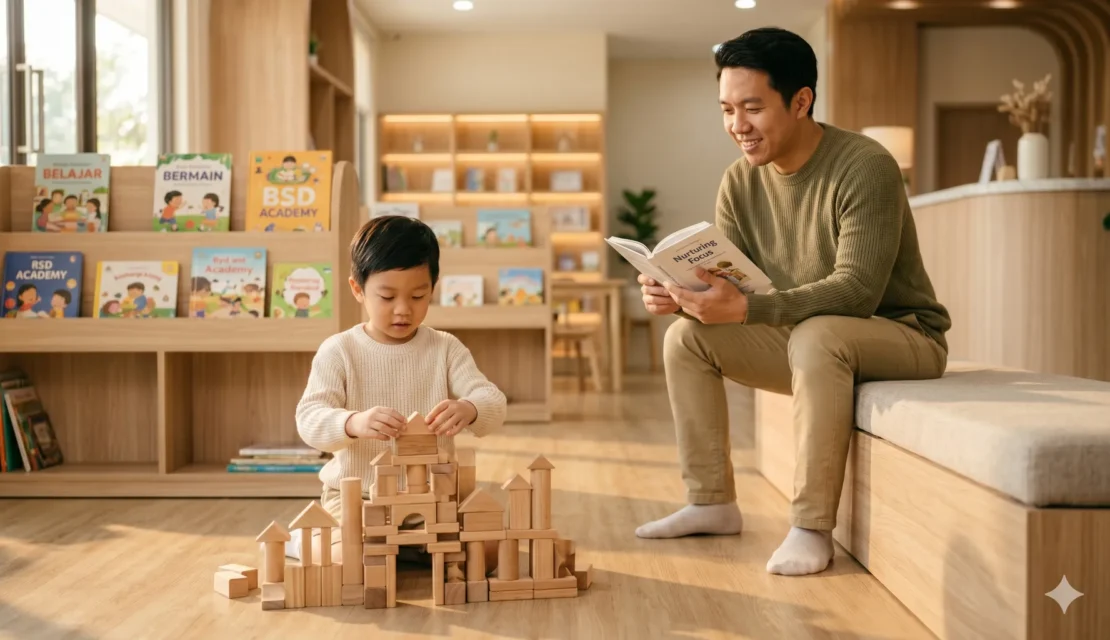
- Follow their lead during play. Join your child’s play on their terms rather than directing or teaching. Ask what they’re building, what role they’d like you to play, and then actually play that role. The attunement this creates is deeply nourishing for both of you.
- Say no to one commitment this term. Look at your child’s current schedule and ask honestly whether every item on it is there because your child loves it, or because you are afraid of missing out on something. Give yourself permission to simplify.
- Be present at transitions. The moments between activities, the drive home from school, the ten minutes before bed, are often where the most meaningful conversations happen. Put the phone away and stay in those moments.
Slow Parenting and Great Early Education Are a Perfect Match
The benefits of slow parenting don’t mean your child misses out on wonderful early learning. In fact, the best early education environments are ones that embody exactly the same values: child-led exploration, unhurried discovery, warm adult relationships, and trust in each child’s natural developmental pace.
At Apple Tree Preschool BSD, located in the Educenter BSD Building, our approach is built on exactly this foundation. Through our Singapore curriculum, we create rich, stimulating environments where children are genuinely engaged and genuinely free, learning through play, creativity, social connection, and guided discovery rather than pressure and performance.
Our programmes from Toddler through Kindergarten 2 are designed to give every child the right balance of structure and freedom, challenge and rest, learning and just being. We believe deeply that smart and happy are not competing goals. They grow from the same soil, and slow parenting helps cultivate exactly that soil at home.
The Permission You Might Need to Hear
The benefits of slow parenting are real, they are well-supported, and they are available to every family willing to try. But more than a strategy, slow parenting is a permission slip. Permission to stop racing. Permission to trust your child’s natural pace. Permission to value presence over productivity, and connection over achievement.
You don’t have to do it perfectly. You just have to start doing a little less, a little more slowly, and a lot more intentionally.
We would love to partner with you on that journey. Whether your little one is 18 months or heading toward primary school, our team is here to support your family every step of the way.Register now and come grow smart and happy together with us at Apple Tree Preschool BSD! Chat with us on WhatsApp or call us at +62 888-1800-900. We’d love to hear from you and meet your family!




Be the first to write a comment.