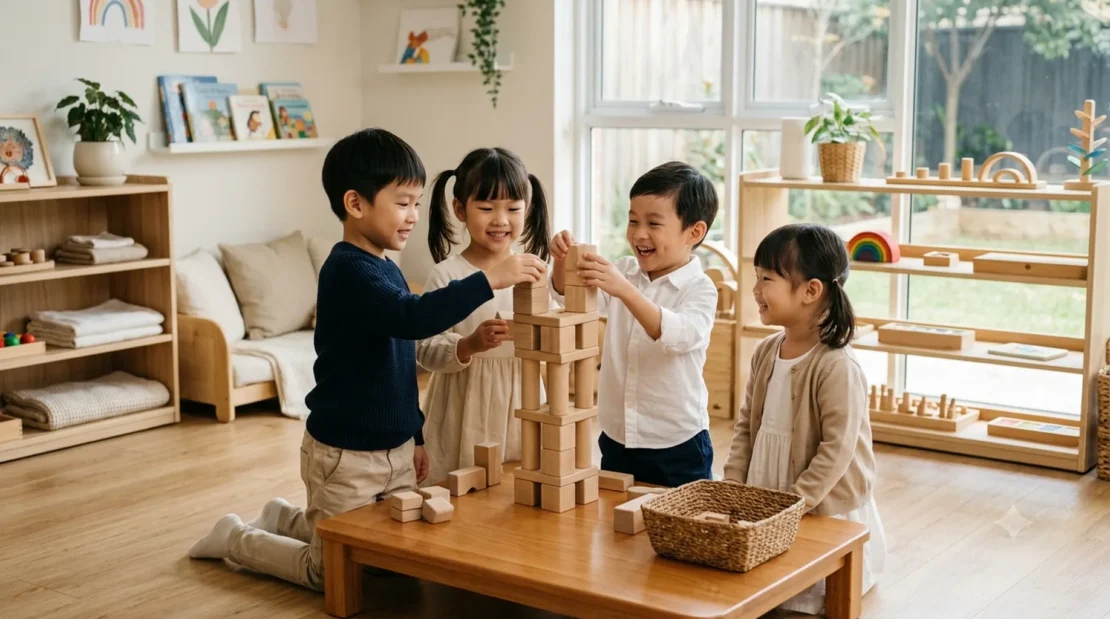
Have you ever watched your child announce, with complete confidence, “I’m going to build the biggest block tower ever,” only to give up three minutes later because one block fell over? We see moments like this all the time, and they are exactly why teaching child goal setting can be so valuable from an early age. At Apple Tree Preschool BSD, located in the Educenter BSD Building, we help children learn how to dream, plan, try, adjust, and celebrate progress in ways that still feel playful and age appropriate.
Goal setting for young children is not about turning preschool into a tiny corporate meeting. No one needs a spreadsheet before snack time. We simply want children to understand that a big idea can become a series of small, manageable steps.
Teaching Child Goal Setting in a Simple, Playful Way
Children think differently from adults. A goal such as “become more responsible this month” is too abstract for a three year old, but “put your crayons back after drawing” is clear, visible, and achievable.
That is why teaching child goal setting works best when goals are concrete and connected to daily life. Children need to understand what success looks like, with plenty of encouragement along the way.
You can start with simple goals such as:
- Putting toys back in the basket after playtime
- Finishing a short puzzle without giving up immediately
- Learning to write one new letter
- Taking turns during a game
- Trying one new food without pressure
Small goals may look ordinary to us, but for children, they can feel like major victories.
Help Your Child Choose a Goal They Actually Care About
Children are more motivated when the goal feels like theirs. If we choose every goal for them, they may follow instructions, but they miss the chance to develop ownership.
Try asking, “What would you like to get better at?” or “What is something you want to do by yourself?” You may hear highly important life goals such as, “I want to draw a dinosaur with bigger teeth.”
That is perfectly fine. The content matters less than the process of choosing, trying, and improving. For younger children, we can offer two or three simple choices so the decision feels manageable.
Break Big Goals Into Tiny Steps
A big goal can feel overwhelming, even for adults. We have all had that moment when a weekend cleaning plan somehow turns into staring at one cupboard for ten minutes.
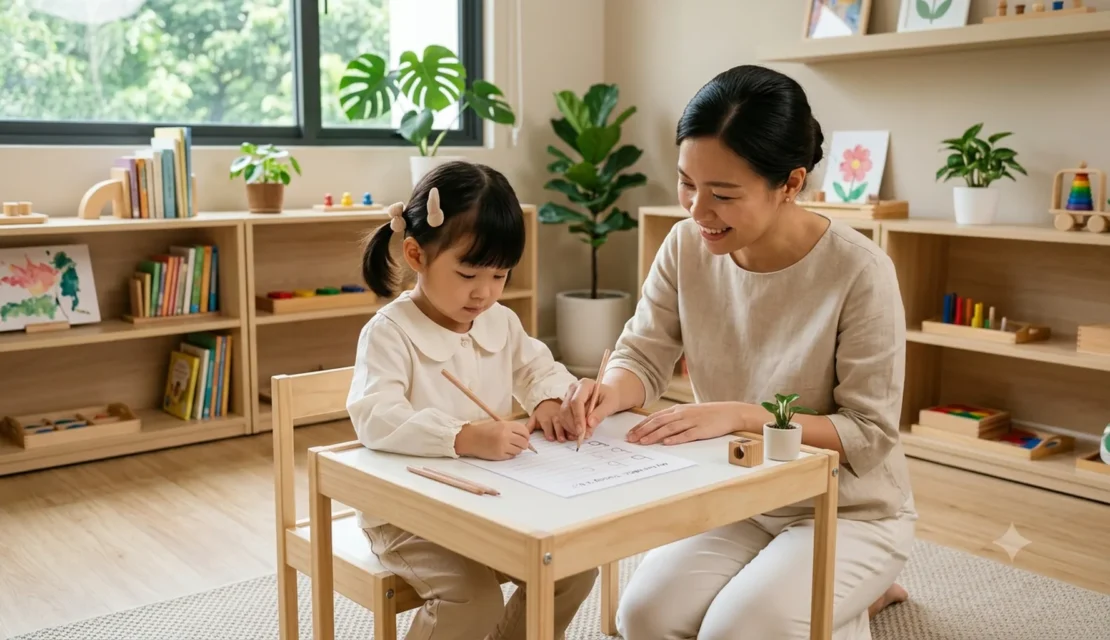
If your child wants to learn to write their name, we can begin with the first letter, move to tracing, then copying, and finally writing the name independently.
This is an important part of teaching child goal setting because it shows children that progress does not happen all at once. It happens one step at a time.
At school, we use similar thinking across English, Mathematics, Chinese, Phonics, Science, Creativity, Music, Physical Education, Bahasa, Social Studies, and Moral learning. Skills grow through practice, encouragement, and chances to try again.
Make Progress Easy to See
Young children love visible progress. A sticker chart, a row of stars, a simple drawing, or moving a paper clip along a homemade progress path can make a goal feel exciting.
The key is to focus on effort rather than perfection. Instead of saying, “You got everything right,” we can say, “You kept trying even when it was difficult.”
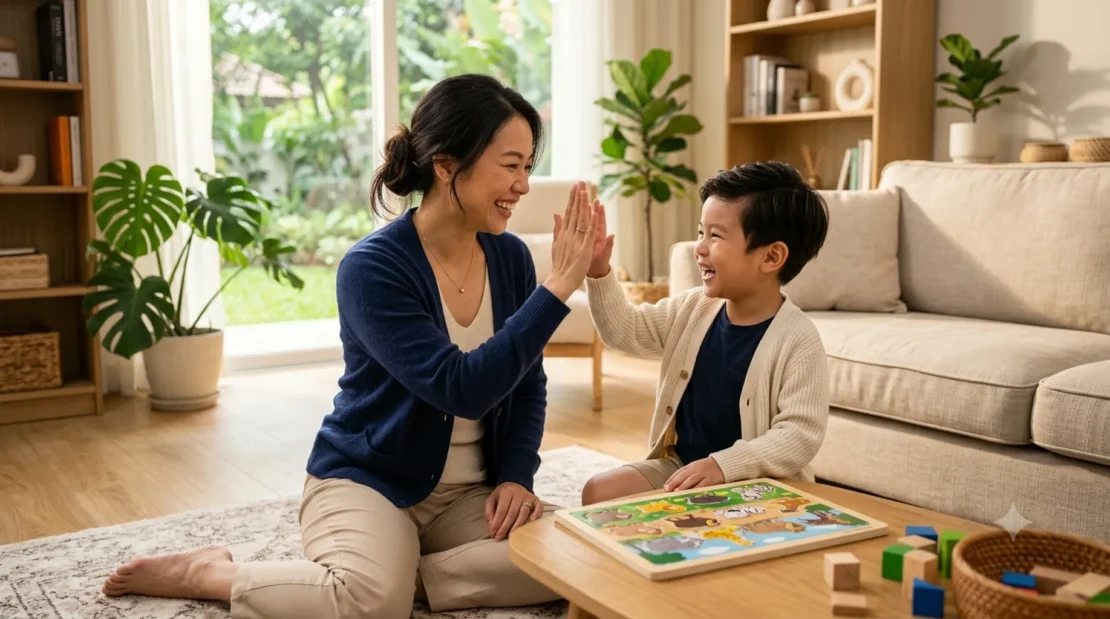
A high five, choosing the bedtime story, or leading a family game can also feel special without turning every goal into a reward hunt.
Teach Children What to Do When Things Do Not Go to Plan
Goals do not always work out neatly, and young children can become frustrated when reality does not match the picture in their heads.
When that happens, we can ask, “What can we try next?” This shifts attention away from failure and toward problem solving.
If a block tower keeps falling, we might ask whether the bottom needs to be wider. If a child keeps forgetting an item for school, we can create a simple visual reminder near the door.
Teaching child goal setting also means teaching flexibility. Sometimes the plan changes, and that is not a disaster. It is simply new information.
Celebrate Effort, Reflection, and Growth
Children need to know that reaching the goal is exciting, but the journey matters too. We can ask, “What was easy?” “What was tricky?” and “What helped you keep going?”
We also avoid comparing one child’s progress with another child’s progress. One child may shine in reading, while another may shine in movement, music, creativity, social interaction, or problem solving.
How We Support Goal Setting at Apple Tree Preschool BSD
In preschool, children have many opportunities to practise goal setting without it feeling like a formal lesson. They may work toward completing a craft project, remembering classroom routines, mastering a phonics sound, joining group activities, or solving a simple maths challenge.
Through our programs, we support children from Toddler classes through Kindergarten 2 with learning experiences suited to their age and stage. This includes Toddler options for children from 1.5 to 2 years old, followed by Pre Nursery, Nursery, Kindergarten 1, and Kindergarten 2.
Our Singapore based curriculum offers a balanced mix of academic, creative, social, physical, and character learning. This helps us guide children toward goals involving communication, cooperation, persistence, independence, and knowledge.
Small Goals Today, Stronger Confidence Tomorrow
Teaching child goal setting does not need to be complicated. Start small, choose goals your child understands, break them into manageable steps, make progress visible, and celebrate effort along the way.
When we approach goals with patience and a little humour, children learn that improvement is something they can participate in. They begin to see challenges as things they can work through rather than things they must avoid.
At Apple Tree Preschool BSD, we love helping children grow smart and happy together with their parents. If you are looking for a warm learning environment where your child can build confidence, independence, curiosity, and everyday learning habits, we would be happy to welcome your family.
Come play, learn, and grow with other children in our classes. Chat with us on WhatsApp or call us directly at +62 888 1800 900 to learn more about registration and available places.



Be the first to write a comment.