

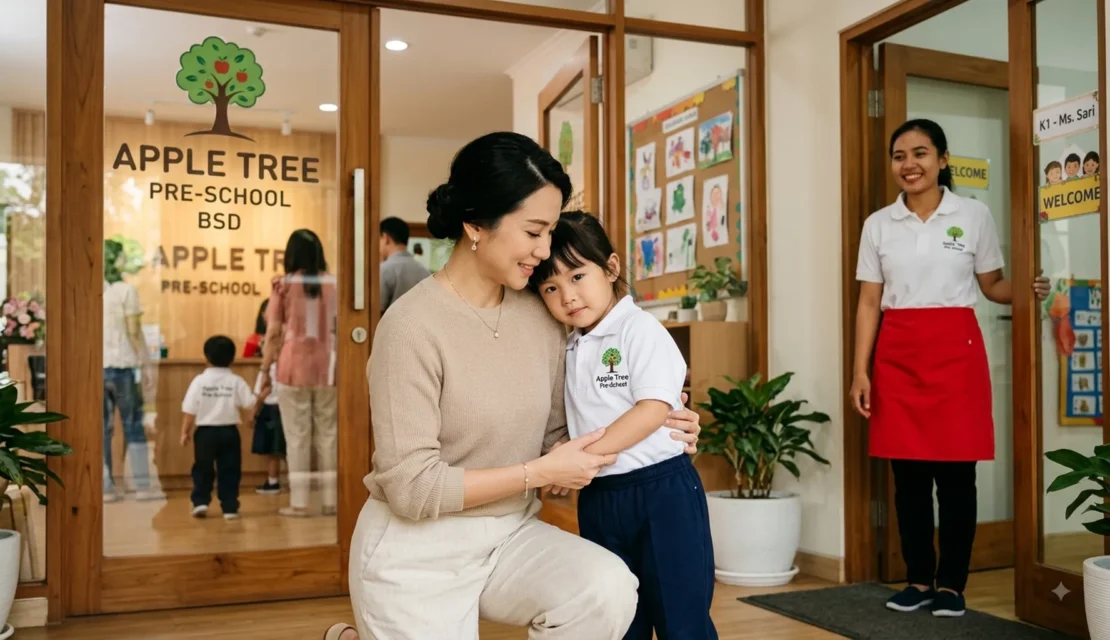
If you are dealing with child separation anxiety parents know all too well, you probably understand that strange emotional mix of guilt, worry, and trying to smile bravely while your child clings to your leg like a tiny, very determined koala. At Apple Tree Preschool BSD, located in the Educenter BSD Building, we speak with families about this all the time, because even the most confident children can suddenly fall apart when it is time to say goodbye. The comforting truth is that separation anxiety is common, very human, and usually a sign of strong attachment, not a sign that something has gone terribly wrong.
For many parents, the hardest part is not just the crying. It is the feeling that you are causing it. You leave, your child cries, and your heart does that unpleasant little flop in your chest. But with the right support, steady routines, and a school environment that understands early childhood deeply, separation can become much calmer for both you and your child.
Understanding Child Separation Anxiety Parents Often Face
When we talk about child separation anxiety parents experience, we are talking about a very normal stage of child development. Young children form strong attachments to the adults who care for them, and that bond helps them feel safe in the world. So when you walk away, especially in a new or stimulating environment, your child may feel uncertain, overwhelmed, or worried that you are not coming back.
That fear can look dramatic, but it is not manipulation. It is usually an honest emotional response from a young child whose brain is still learning that goodbyes are temporary.
Why separation anxiety happens
There are several common reasons children struggle more with separation:
- A new school or unfamiliar environment
- A change in routine at home
- A naturally cautious or sensitive temperament
- Tiredness, hunger, or overstimulation
- A recent illness or a big family transition
- Strong attachment to one primary caregiver
Sometimes the cause is obvious. Sometimes it is not. Childhood has a funny way of making huge emotional announcements over what looks like a very ordinary Tuesday.
What separation anxiety can look like
Not every child reacts the same way. Some cry loudly the moment you mention school. Some cling silently and refuse to let go. Some seem completely fine at drop off, then burst into tears once they realise the goodbye was real.
You may notice:
- Crying or screaming at drop off
- Clinging to your clothes or body
- Refusing to enter the classroom
- Complaining of tummy aches
- Begging you not to leave
- Becoming extra clingy at home too
All of this can be exhausting, but it is also workable.
Child Separation Anxiety Parents Can Ease With Predictable Routines
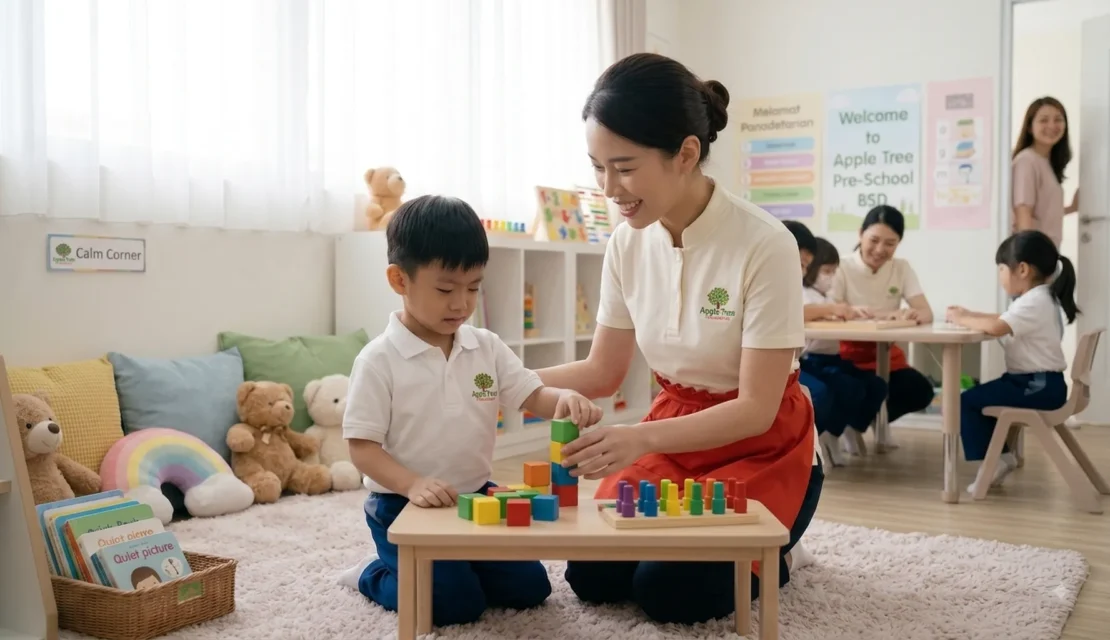
One of the most effective ways to reduce separation anxiety is to make the routine feel predictable. Children relax when they know what to expect. Surprises are great for birthday cake, not always for school drop off.
Build a simple goodbye routine
A short, loving, repeatable goodbye can do wonders. The key is to keep it warm and clear, not dramatic and endlessly extended. Long goodbyes often make children more anxious because the separation feels uncertain.
A helpful routine might be:
- Arrive calmly
- Put bag and shoes in the usual place
- One hug
- One kiss
- One simple goodbye phrase
- Leave confidently
It can feel a little robotic at first, but children often find it deeply reassuring. Repetition builds safety.
Keep your words clear and honest
If your child is upset, it can be tempting to sneak away. We understand why. Nobody enjoys being the star of the goodbye scene. But disappearing without saying goodbye can make anxiety worse, because your child starts worrying that you may vanish unexpectedly again.
Instead, try saying something like, “I am going to work now, and I will come back after snack time,” or “I will see you after school.” Simple, honest, and calm works best.
Helping Your Child Feel Safe Before You Leave
A lot of separation anxiety work happens before the actual goodbye. If your child goes into the morning feeling rushed, confused, or emotionally unsteady, drop off will usually be harder.
Prepare your child ahead of time
Talk about school in a positive, grounded way. You do not need to make it sound like a magical kingdom where every moment is perfect. Children can tell when adults are overselling. Just keep it warm and realistic.
You might say:
- “You will play, sing, and learn with your teacher”
- “I will leave, and then I will come back”
- “Your teacher will help you if you feel sad”
- “You are safe at school”
These small messages matter because they help build trust before the hard moment comes.
Let your child bring something familiar
Comfort items can be incredibly helpful, especially in the early stages. A small handkerchief, family photo, or favorite soft toy can act like an emotional bridge between home and school.
We have seen children hold onto a little comfort object like it contains actual magic. To be fair, sometimes it kind of does.
What Parents Should Do When the Tears Start
This is where many parents feel stuck. If your child cries, should you stay? Should you leave? Should you come back? Should you move to another country and start over? We joke, but we know how heavy this moment can feel.
Stay calm, even if you feel guilty
Children read your face faster than you think. If you look panicked, uncertain, or heartbroken, your child may decide there is indeed a serious reason to worry. That does not mean you need to act like a cheerful robot. It just means your calm helps your child borrow calm.
Try to keep your voice steady and your expression reassuring. Think of yourself as the emotional weather in the room.
Trust the teacher and the process
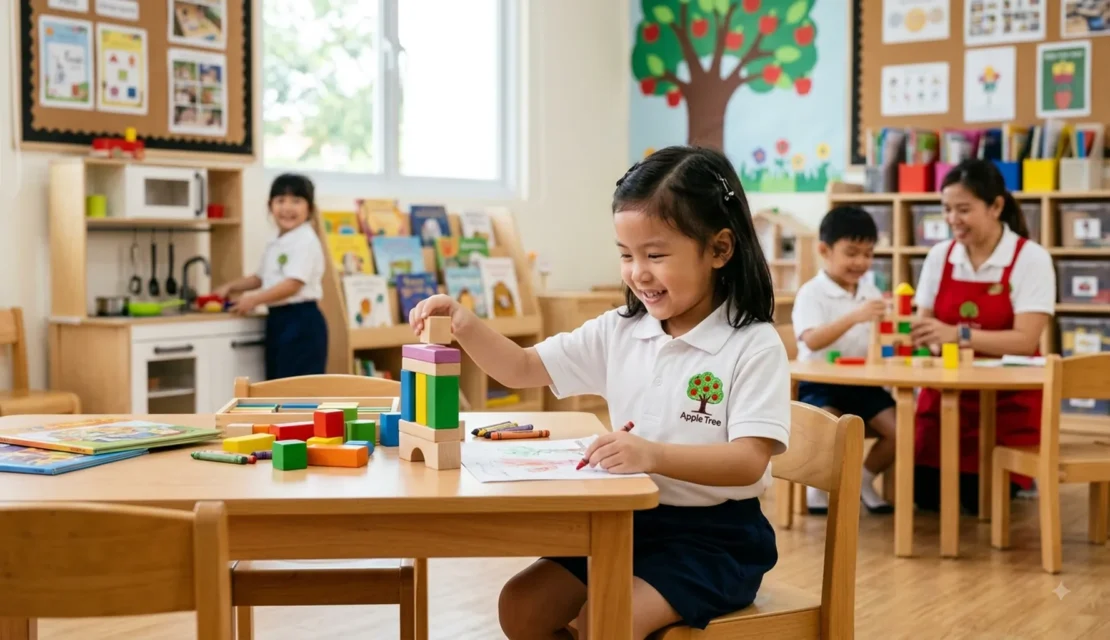
At a nurturing preschool, teachers know how to support children through these moments. Once you leave, many children settle much faster than parents expect. This is one of the great early childhood mysteries, right up there with why children reject the sandwich they asked for.
At Apple Tree Preschool BSD, we work closely with families to help children transition gently. We understand that separation is not just a child issue. It is a parent issue too, and both deserve compassion.
Child Separation Anxiety Parents Can Reduce With Connection at Home
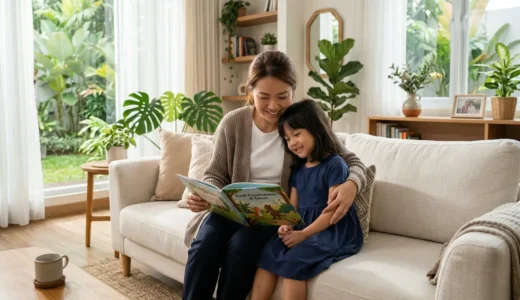
Sometimes parents worry that encouraging independence means becoming emotionally distant. It does not. In fact, strong connection at home often helps children separate better.
Fill your child’s emotional cup
When children feel connected, seen, and secure, they usually cope better with time apart. Small rituals at home can make a big difference.
Helpful ideas include:
- A few calm minutes together before school
- Special one on one playtime after pickup
- A bedtime check in about the day
- Consistent routines at home
Connection gives children a stable base. Independence grows from security, not from pressure.
Celebrate small progress
If your child walked into class with only a few tears instead of a full body protest, that counts. If they let the teacher hold their hand, that counts too. Progress is often quiet before it becomes obvious.
Try praising courage in specific ways. You can say, “You felt sad, but you still went in,” or “You were brave even when it felt hard.” That teaches your child what bravery really looks like.
When It May Be Time for Extra Support
Most separation anxiety improves with time, routine, and support. But if the anxiety is intense, continues for a long period, or affects your child’s daily functioning significantly, it may be worth speaking with a pediatrician or child psychologist.
Extra support can be helpful if your child:
- Panics daily for a long time
- Cannot settle even after extended adjustment
- Has severe sleep or appetite changes
- Shows intense distress in many separation settings
- Seems fearful far beyond the school situation
Getting help is not a failure. It is simply good parenting.
Growing Confidence One Goodbye at a Time
At Apple Tree Preschool BSD, we believe children thrive when school and parents work together with warmth, consistency, and trust. Our classrooms are designed to help children feel secure, curious, and gradually more independent, all while knowing they are deeply cared for. If you would like to explore our programs, we would love to show you how we help children grow smart and happy together with parents in a supportive environment at the Educenter BSD Building.
A Gentler Start Can Change the Whole Day
If child separation anxiety parents worry about has been making mornings feel heavy, please remember that this stage is often temporary and very treatable with patience. Small routines, confident goodbyes, strong home connection, and the right school support can make a remarkable difference over time. You do not need a perfect drop off, just a steadier one.
We would be happy to support your family with a warm preschool experience where emotional security and joyful learning grow side by side. Chat with us on WhatsApp or call +62 888-1800-900 to learn more.
Register now, and come play and learn with other children.




Be the first to write a comment.