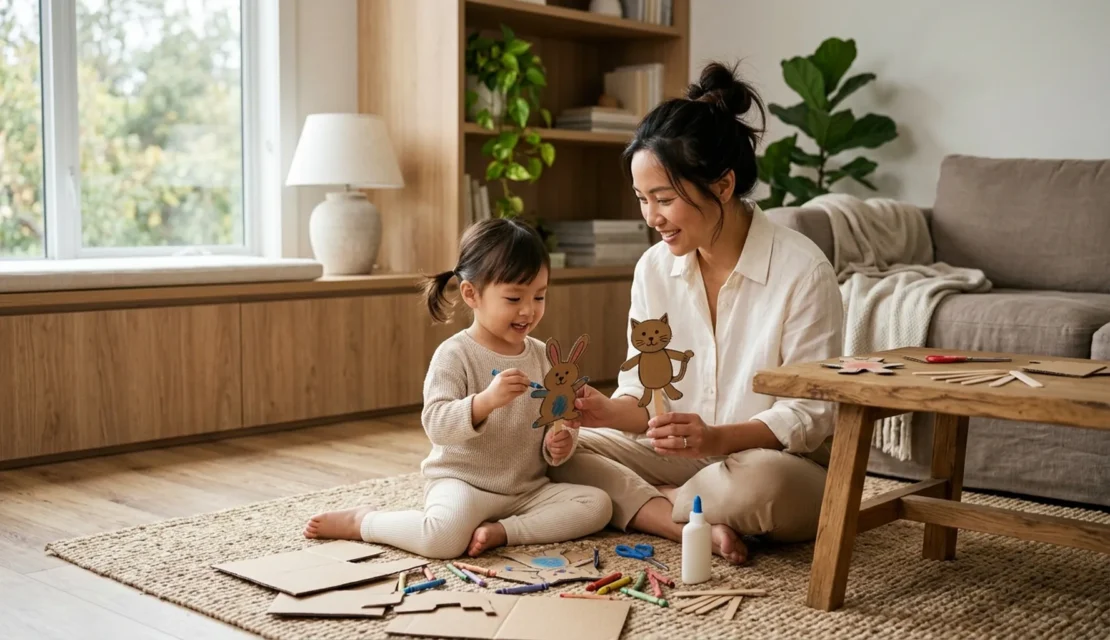
Some of the best childhood activities start with things you were honestly about to throw away. A cereal box, a few crayons, a lopsided pair of safety scissors, and suddenly you are making Cardboard puppets on the living room floor. At Apple Tree Pre-School BSD, based in Educenter bsd, we love activities like this because they look simple on the surface, but quietly build creativity, language, confidence, and problem solving in ways that really stick.
If you have ever watched a child turn a cardboard circle into a lion, a princess, a dinosaur, or a very dramatic potato with feelings, you already know the magic is real. Children do not need expensive toys to imagine big worlds. They just need a little invitation, a little freedom, and sometimes a grown up who does not panic when the glue ends up somewhere unexpected.
Cardboard Puppets and Why Children Love Them So Much
There is something wonderfully open ended about cardboard puppets. They do not come with flashing lights, batteries, or an instruction manual that makes you question your life choices. They simply wait for your child to decide who they are.
That is exactly why children love them. A puppet can become anyone, say anything, and go anywhere. One day it is a sleepy rabbit going to school. The next day it is a brave dragon who refuses to eat broccoli. Frankly, we have heard worse storylines.
Cardboard puppets give imagination room to grow
When children make their own puppets, they are not just doing craft time. They are inventing characters, choosing colours, and making decisions about personality and story. That process is gold for imagination.
A child might decide, without any warning at all, that their puppet is afraid of butterflies but also dreams of becoming a chef. Does it make perfect sense? Not always. Is it wonderful for creative thinking? Absolutely.
Cardboard puppets support language and confidence
Puppet play often helps children talk more freely. Some children who feel shy in everyday conversation suddenly become quite chatty when a puppet is doing the speaking. It is as if the puppet takes the pressure off and says, “Don’t worry, I will handle this.”
This is one reason we use creative storytelling activities in early years learning. Children practise vocabulary, expression, turn taking, and storytelling naturally through play. They are learning without feeling like they are in a lesson, which, if we are honest, is usually the best kind of learning.
How to Make Simple Cardboard Puppets at Home
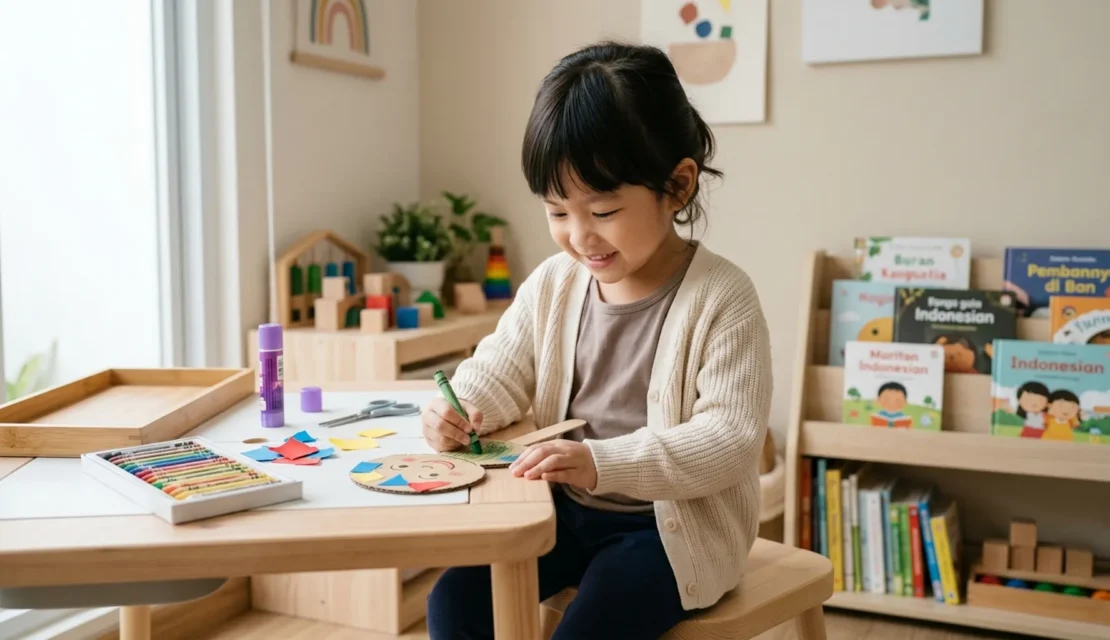
The good news is that making cardboard puppets is refreshingly easy. You do not need a craft cupboard that looks like a stationery shop exploded. You just need a few basic materials and a willingness to let things be a little gloriously imperfect.
What you need for simple cardboard puppets
You can gather most of these from around the house:
- Cardboard from a cereal box, snack box, or delivery box
- Child safe scissors
- Crayons, markers, or coloured pencils
- Glue
- Ice cream sticks, paper straws, or craft sticks
- Googly eyes, yarn, buttons, or coloured paper if you want extra decoration
If you do not have all of that, do not worry. A plain cardboard face on a stick can still become a star performer.
Easy steps to make cardboard puppets
Here is a simple way to make them with young children:
1. Draw a character on cardboard
Start with something easy like an animal, a person, or a funny monster. Keep the shape bold and simple so little hands can help.
2. Cut out the shape
If your child is still young, you may want to do the cutting while they supervise like a very serious art director.
3. Decorate the puppet
Add eyes, hair, clothes, spots, stripes, or any tiny masterpiece details your child dreams up. This is usually the part where creativity takes a sharp and delightful turn.
4. Attach a stick to the back
Glue or tape the stick firmly so your child can hold the puppet easily.
5. Let it dry, then start the show
Once the puppet is ready, the storytelling begins almost immediately. No one ever makes just one puppet and then calmly stops there.
Painting Personality Into Cardboard Puppets
This is where the activity gets especially fun. Once your child has made a puppet, you can help them think beyond what it looks like and into who it is. This is where imagination really stretches its legs.
Ask simple questions like:
- What is your puppet’s name
- What does your puppet love to eat
- Is your puppet brave, silly, shy, or bossy
- Where does your puppet live
- What problem does your puppet have today
These little prompts help children build stories with a beginning, middle, and end. They also encourage emotional understanding. A child might create a worried bear, an excited cat, or a lonely bird, and through that character they often express feelings they cannot yet explain directly.
Let your child lead the story
It can be tempting to jump in and organise the whole thing. We get it. Adults love a tidy structure. Children, on the other hand, are often quite happy with a pirate unicorn who lives on the moon and runs a bakery.
Try to let your child lead as much as possible. When they take charge of the story, they practise decision making, confidence, and original thinking. Your role is not to perfect the plot. Your role is to enjoy the ride.
How Cardboard Puppets Boost Imagination in Everyday Play
The beauty of cardboard puppets is that they do not need a special event or a Pinterest worthy setup. They can slip into ordinary afternoons and turn them into something memorable.
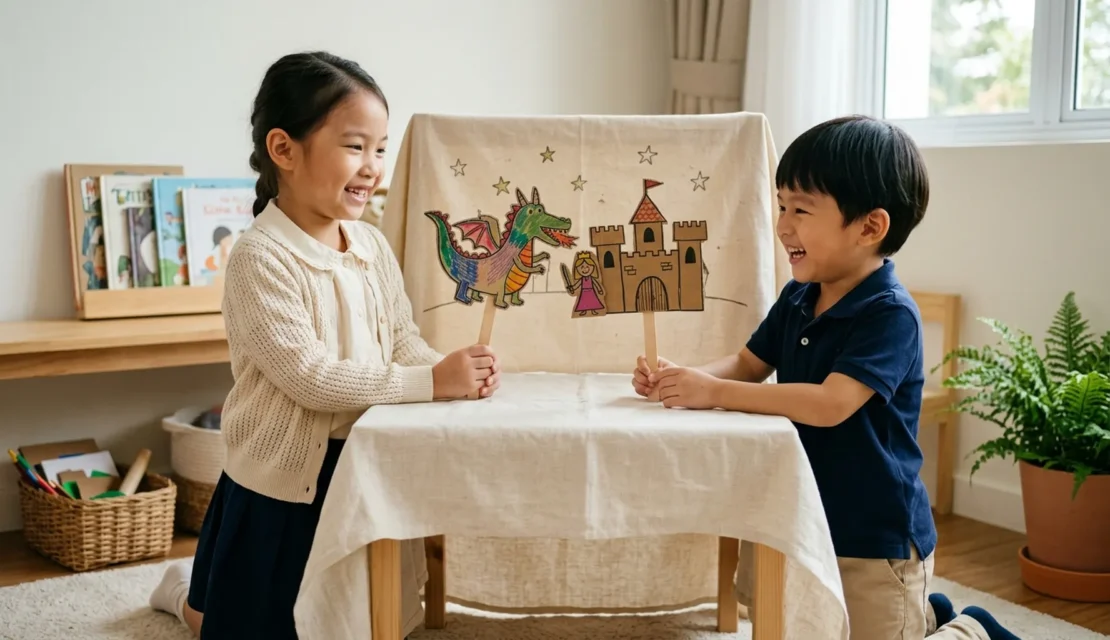
Turn a simple corner into a puppet stage
You can make a very easy puppet area with a table, a blanket, or even the back of the sofa. Suddenly your child has a stage. And once there is a stage, there is usually a performance. Sometimes several. Sometimes all before lunch.
This kind of pretend play helps children practise sequencing, storytelling, and social communication. If siblings or friends join in, it becomes an excellent lesson in cooperation too, with a little negotiation thrown in for free.
Use cardboard puppets for daily routines
Puppets can also help with routines at home. A puppet can remind your child to brush their teeth, tidy up toys, or get ready for bed. Somehow advice from a cardboard tiger is often received with much more enthusiasm than advice from a parent who has already asked three times.
We have seen this work beautifully with young children. A playful puppet voice can turn resistance into laughter, and laughter is a very useful parenting tool.
Keep creativity more important than perfection
Your cardboard puppets do not need to look polished. In fact, some of the most charming puppets are the slightly wonky ones with one giant eye and hair that appears to have had a difficult morning.
What matters is the process. When your child creates something from scratch and then brings it to life through play, they are building imaginative confidence. That confidence shows up later in speaking, writing, social interaction, and problem solving.
Creative Learning That Grows With Your Child
At Apple Tree Pre-School BSD, we believe simple creative experiences can lead to powerful learning. Activities like cardboard puppets support communication, fine motor development, emotional expression, and independent thinking, all while feeling playful and relaxed. That is exactly the kind of learning environment we want for every child.
If you would like to see how we nurture imagination, curiosity, and joyful growth in our classrooms, take a look at our programs. From toddlers to kindergarten, we create spaces where children can explore, create, and grow smart and happy together with their families.
Where Little Stories Begin
Cardboard puppets may start as a simple craft, but they often become something much bigger. They become stories, conversations, giggles, and those lovely unexpected moments when your child shows you just how much is going on in their imagination. That is why we keep coming back to activities like this. They are simple, affordable, and full of possibility.
If you are looking for a preschool where creativity is taken seriously, but never too seriously, we would love to meet you. Chat with us on WhatsApp or call us at +62 888-1800-900. Come play and learn with other children at Apple Tree Pre-School BSD.




Be the first to write a comment.