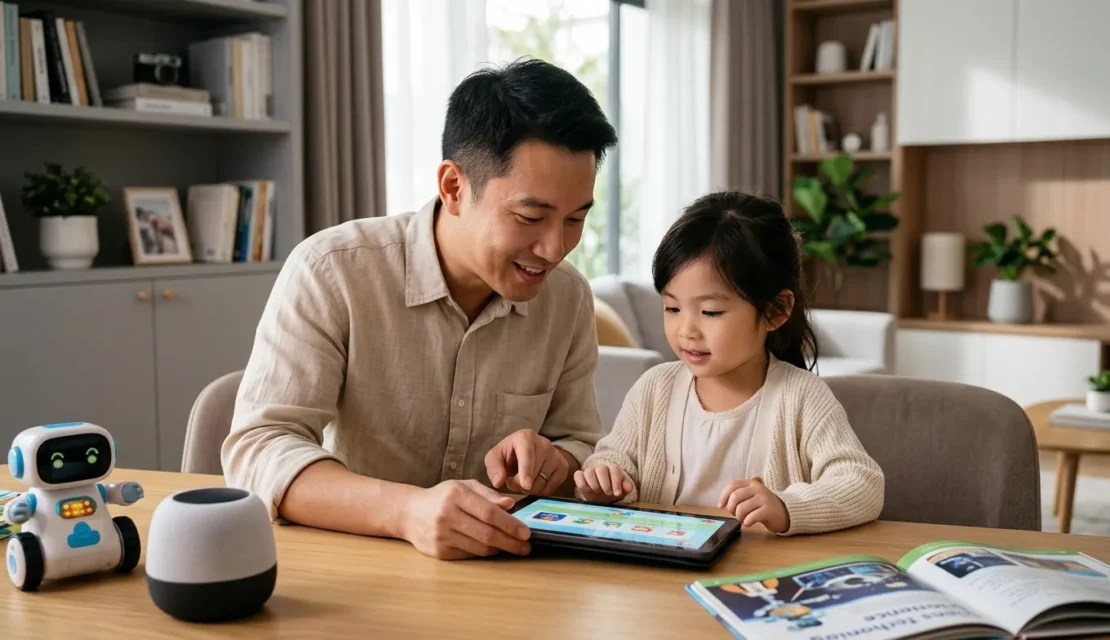
If your child has ever asked why a phone can recognize a face, why YouTube seems to know their favourite song, or whether a robot can be their best friend, you are already standing at the perfect starting point for an Intro to AI for kids. At Apple Tree Pre-School BSD, near Educenter bsd, we love moments like these because they show how naturally curious children are about the world. And honestly, once children start asking technology questions, they rarely ask just one and then move on politely.
The good news is that you do not need to be a computer engineer to explain artificial intelligence to a young child. You just need simple language, real life examples, and a little patience when the conversation takes an unexpected turn and somehow ends with, “So can the rice cooker think?” Fair question, to be honest.
Intro to AI for Kids Starts with Everyday Life
The easiest Intro to AI for kids begins with something familiar. Children do not need a big, technical definition first. They need examples they can see, hear, and connect with in daily life.
A simple way to explain AI is this: artificial intelligence is when a computer or machine is taught to notice patterns, make choices, or do helpful tasks that usually need human thinking. It is not exactly like a human brain, and it definitely does not need bedtime stories, but it can still do some surprisingly clever things.
What children can understand about AI
Young children understand ideas best when they are concrete. Instead of saying, “AI uses data driven models to generate outputs,” which would make most adults quietly stare into the distance, try something simpler.
You can say:
- AI helps machines learn from lots of examples
- AI can spot patterns very quickly
- AI can make guesses or suggestions
- AI does not have feelings like people do
- AI still needs humans to guide it
That last point matters a lot. Children should know that machines can be smart in certain ways, but people are still the ones responsible for using them well.
Easy AI examples children already know
A good Intro to AI for kids often works best when you point out technology they already use or see around them.
You might mention:
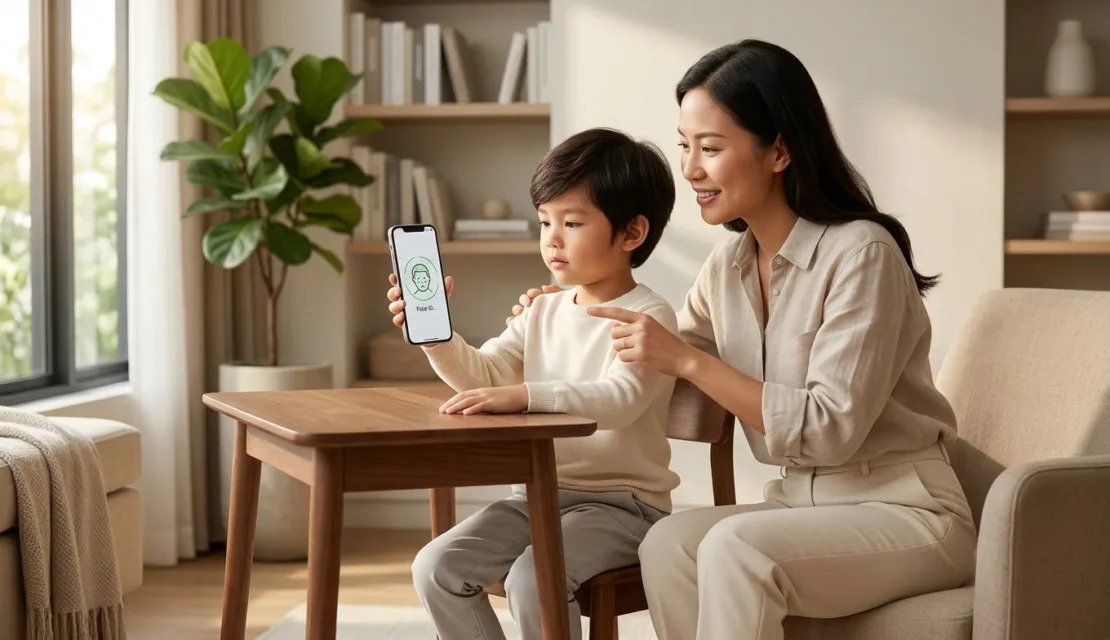
- A phone unlocking by recognizing a face
- Video apps suggesting songs or cartoons
- Voice assistants answering simple questions
- Maps suggesting faster routes
- Online shops recommending toys or books
Once children realise AI is already part of everyday life, the idea feels less mysterious and much easier to discuss.
How to Explain AI in a Child Friendly Way
When we teach young children, we usually start with comparison. Children love comparisons because they make big concepts feel less intimidating. AI becomes much easier to understand when you compare it to how people learn.
Compare AI to learning by practice
You can explain that just like children learn by seeing many examples, machines can also learn from examples. A child learns what a cat looks like by seeing lots of cats in books, pictures, and real life. In a similar way, AI can be shown many cat pictures until it gets better at noticing what makes a cat a cat.
Of course, children often find this very funny. They immediately imagine a computer studying cats like a very serious little student. That image is actually helpful, so we tend to go with it.
Explain that AI is smart, but not human
This is an important part of any Intro to AI for kids. Children can sometimes assume that if something sounds smart, it must feel emotions or think exactly like a person. That is where gentle clarification helps.
You can say that AI can answer, sort, suggest, and recognize things, but it does not love, worry, dream, or feel proud the way people do. It does not know what a hug feels like. It does not understand kindness in the deep human way children do. That is one reason human values still matter so much.
Keep the conversation playful
Children learn best when the mood stays light. Ask fun questions like, “Do you think a robot could brush its teeth by itself?” or “Could AI tell if your teddy bear is grumpy?” The goal is not to turn your home into a formal technology lecture. The goal is to build comfort and curiosity.
In our experience, when children laugh, imagine, and ask their own follow up questions, the learning tends to stick much better.
Simple Activities for an Intro to AI for Kids
You do not need a fancy app or a coding kit to begin. Some of the best Intro to AI for kids activities are low tech and playful.
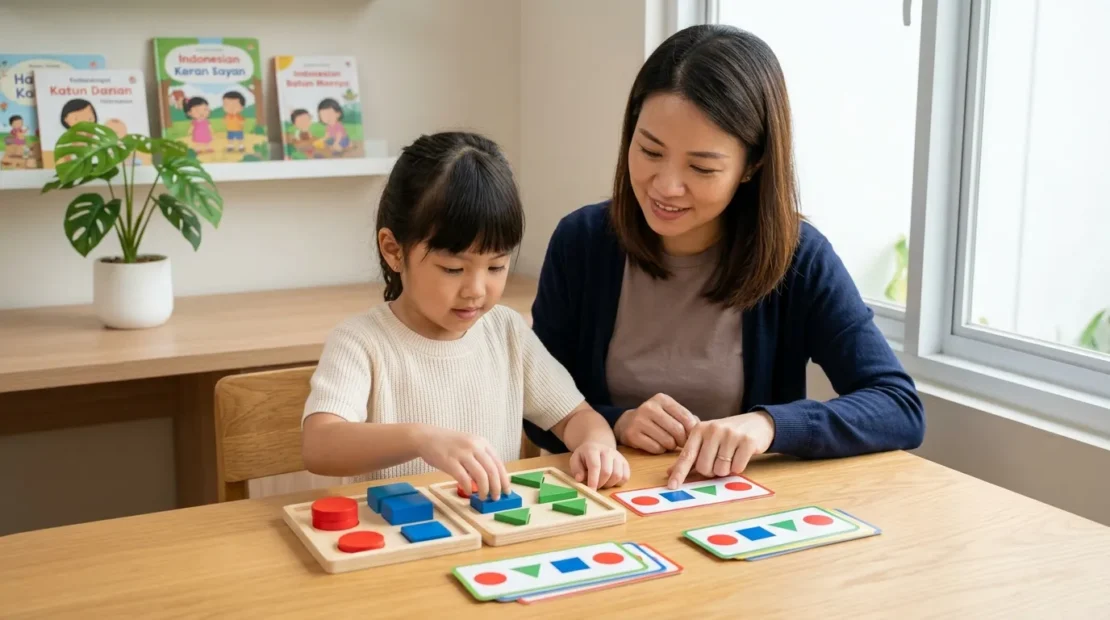
Sorting games
Ask your child to sort objects by colour, shape, or size. Then explain that AI often learns by sorting and noticing patterns too. This helps children understand that recognizing differences and similarities is a basic part of machine learning.
It also gives you a chance to use toys, blocks, socks, or snack containers, which is very convenient because most homes with children already look like a sorting exercise happened there anyway.
Guessing games
Play a guessing game where you describe something step by step. For example, “It has wheels, it is big, it carries people, it stops at bus stops.” Your child guesses “bus.” Then explain that AI also makes guesses based on clues and patterns.
This is a lovely way to show that AI is often working with information, not magic.
Recommendation games
Ask your child, “If you liked this storybook, what other storybook might you like?” Then explain that some apps do something similar. They look at choices and suggest new ones.
This is one of the easiest ways to explain recommendation systems without making it sound intimidating.
Why Intro to AI for Kids Matters in Early Childhood
You might wonder whether preschool is too early for this topic. We would say no, not if it is done simply and thoughtfully. Young children do not need deep technical detail, but they absolutely can begin learning how the modern world works.
It builds digital awareness
Children are growing up surrounded by smart devices, voice tools, and content suggestions. A gentle Intro to AI for kids helps them understand that technology is designed by people and used for specific reasons. That kind of awareness is healthy and empowering.
It encourages critical thinking
When children learn that machines make choices based on information, they begin asking better questions. How does it know that? Why did it suggest that? Can machines make mistakes? Those are excellent questions, and we want children asking them.
It keeps human values at the center
Perhaps most importantly, teaching children about AI gives adults a chance to talk about kindness, responsibility, and judgment. Machines can help, but people decide what is fair, safe, and caring. That is a lesson worth planting early.
How We Support Curious Thinkers at School
At Apple Tree Preschool BSD, we believe children thrive when learning feels relevant, imaginative, and connected to real life. Whether we are exploring science, language, creativity, or early problem solving, we want children to ask questions boldly and think with confidence. Technology topics like AI can absolutely be part of that journey when introduced in the right way.
Our classrooms are designed to help children build strong foundations in thinking, communication, and curiosity through the Singapore curriculum and hands on learning experiences. If you would like to explore how we nurture these skills through our programs, we would love to show you more. Being located in the Educenter BSD Building also makes it easy for families in the BSD community to feel connected to a wider learning environment.
Big Questions Start Small
A good Intro to AI for kids does not have to be complicated. It can begin with a simple question, a familiar app, a sorting game, or a curious child asking why a machine seems so clever. When you explain AI in warm, everyday language, children begin to see technology not as something mysterious, but as something they can understand thoughtfully and use wisely.
If you are looking for a preschool where curiosity is welcomed, creativity is encouraged, and smart questions are never too big for little learners, we would be delighted to meet your family. Chat with us on WhatsApp or call us at +62 888-1800-900. Come play and learn with other children at Apple Tree Pre-School BSD.




Be the first to write a comment.