

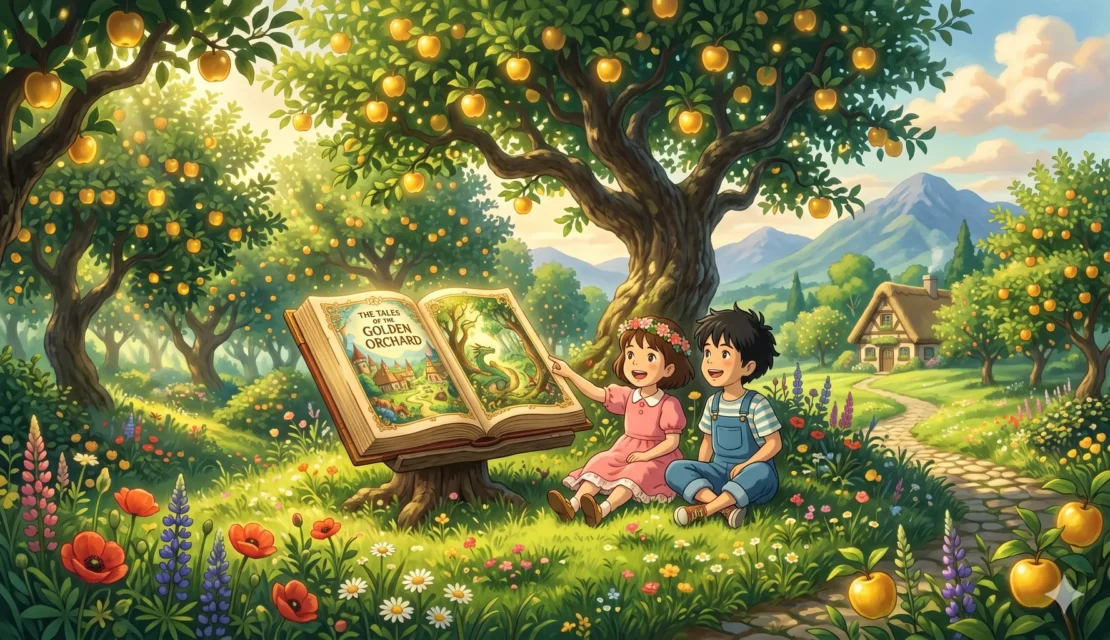
Character isn’t something you hand to a child along with their school bag and lunch box. It grows, slowly and steadily, through the experiences they have, the conversations you share, and the stories they hear when the world is quiet enough to really listen. That’s why moral stories for kids have survived every generation, every technology shift, and every change in how we raise children. They work, and they keep working, because the human heart responds to story in a way it simply doesn’t respond to instructions.
We collect and tell moral stories for kids every week at Apple Tree Preschool BSD, and we see it firsthand. A child who hears a story about honesty carries it differently than a child who is simply told to be honest. Something clicks. Something settles in. Here are 10 original moral stories that we hope will do exactly that for your little one.
10 Moral Stories for Kids That Build Character From the Inside Out
From tales about generosity and courage to stories exploring honesty, patience, and kindness, these character-building moral stories for children are perfect for reading aloud at bedtime or sharing at the dinner table.
1. The Two Buckets
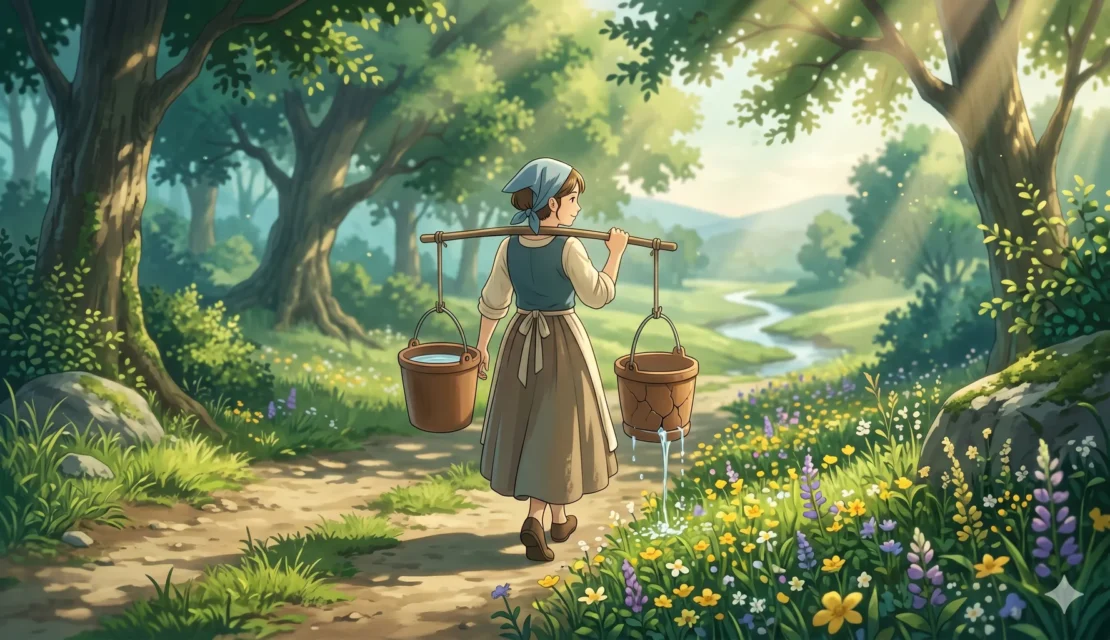
In a village at the edge of a wide river, there lived a water carrier named Hana who made her living carrying water from the river to the houses in town. She did this every morning using two large clay buckets hung on either side of a long wooden pole balanced across her shoulders.
One bucket was perfect. Its walls were smooth and even, and it held every drop of water from river to doorstep without losing a single bit. The other bucket had a small crack near the bottom, and by the time Hana arrived at her destination, it had always lost about half its water along the way.
The cracked bucket knew about its flaw. It had known for a long time, and it carried the knowledge with a quiet, heavy shame. One morning, after months of this, the cracked bucket finally spoke.
“Hana,” it said, “I owe you an apology. Every day I try my best, and every day I fail you. I lose half of what you put in me. The perfect bucket delivers everything. I deliver half. You would be better off replacing me.”
Hana set down her pole and looked at the cracked bucket for a long moment. Then she said, “Look down at the path on your side.”
The bucket looked. Running all along the left side of the path, in a long, cheerful line, were wildflowers. Yellow ones and purple ones and small white ones that smelled of honey in the early morning. They grew in abundance, bright and healthy and beautiful.
“When I found out about your crack,” said Hana, “I planted seeds on your side of the path. Every morning you water them. Every morning I walk to work through something beautiful. Because of you, the families I deliver to have flowers on their tables. Because of you, this path is something worth walking.”
The cracked bucket was very quiet for a moment.
“You made something good out of my flaw,” it said at last.
“You were already doing something good,” said Hana. “I just helped you see it.”
She picked up the pole, settled it across her shoulders, and walked on. The flowers nodded in the morning breeze on the left side of the path, exactly as they always did.
Moral: Our imperfections often have a purpose we can’t see from where we stand. What feels like a flaw may be exactly what makes you uniquely valuable.
2. The Painter and the Critic
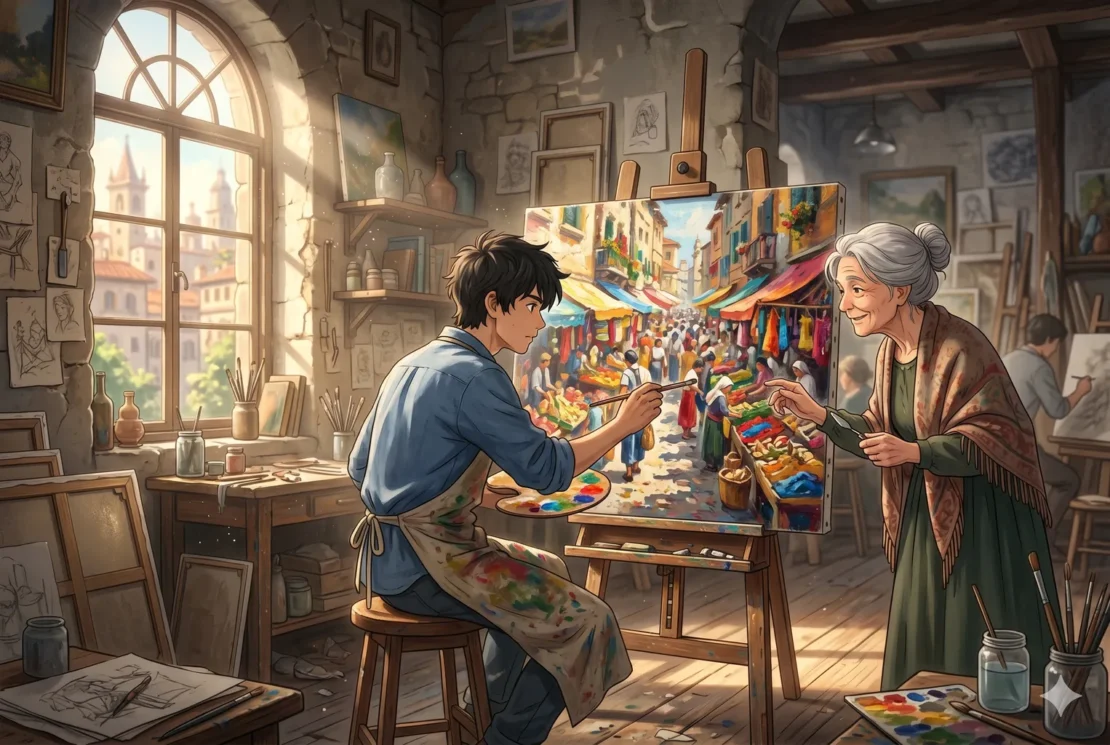
In a busy city full of galleries and coffee shops and people with opinions, there lived a young painter named Sol who had been working on the same painting for three months. It was a large canvas showing a market scene, full of colour and movement and small details that Sol had painted and repainted until they felt exactly right.
On the day he finally hung it in the gallery, a well-known critic came in, stood in front of the painting for about forty seconds, and said loudly that the colours were wrong, the perspective was off, and the whole thing looked amateurish.
Sol went home and stared at his painting. He added more detail to the perspective. He toned down the colours. He changed three sections entirely based on what the critic had said.
He brought the painting back. The same critic came in, stood in front of it for about the same amount of time, and said it was worse than before.
Sol went home again. This time he sat in front of the blank canvas for a long time and didn’t paint anything.
His neighbour, an elderly sculptor named Marta who had been working in the same building for thirty years, knocked on his door that evening.
“You look like someone took something from you,” she said.
Sol told her what had happened. Marta listened with her full attention, which was a thing she was exceptionally good at.
“Did you love the painting before he saw it?” she asked.
“Yes,” said Sol. “Very much.”
“Then here is what I think,” said Marta. “There are two kinds of feedback in this world. The kind that helps you grow, and the kind that just tells you about the person giving it. You listened to the wrong kind.”
Sol looked at his changed canvas. He could still remember exactly where the original colours had been and why he had chosen them.
He painted over the changes. He put the original colours back. He hung it again.
This time he didn’t wait for the critic. He stood in front of it himself and felt what he had felt the first time.
That was enough.
Moral: Learn to tell the difference between feedback that helps you grow and noise that only shrinks you. Not every opinion deserves equal weight.
3. The King Who Listened to the Rain
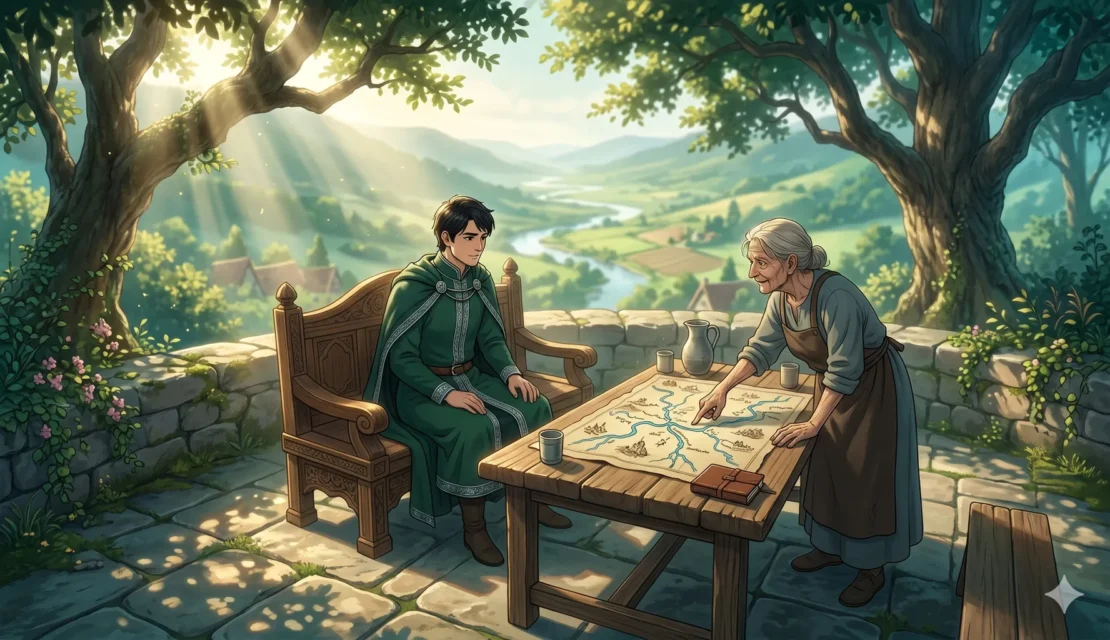
There was once a kingdom ruled by a young king named Aldric who was extraordinarily good at making decisions. He made them quickly, confidently, and without much hesitation, and for the first few years of his reign, this served him quite well.
Then came the summer of the great drought.
The rivers ran low. The crops struggled. The farmers came to the palace with worried faces and complicated problems. Aldric called together his advisors and, within an hour, had decided on a solution. He would redirect water from the northern lake through a new system of canals. Work would begin immediately.
His advisors nodded. The plans were drawn. The workers were sent.
An old farmer named Wren, who had worked the land around the lake for fifty years, came to the palace and asked for an audience. She was kept waiting for three days.
When she finally sat before the king, she said simply: “The northern lake feeds the underground wells that supply the eastern villages. If you redirect that water, the wells go dry. The eastern villages will have no water at all by winter.”
Aldric looked at his plans. He looked at Wren. He thought about the three days she had spent waiting in the corridor.
“Why didn’t my advisors know this?” he asked.
“Because none of them have ever farmed the land,” said Wren. “They know maps. I know water.”
Aldric cancelled the plan. He spent the next week visiting every farm around the lake himself, asking questions and listening to answers. The solution they eventually found was smaller and slower and less impressive than his original plan, but it worked, and it worked without taking anything from the people it was supposed to help.
Wren was given a permanent seat on his council after that.
“I should have listened first,” Aldric told her once.
“You listened eventually,” said Wren. “That’s what matters.”
Moral: Making a quick decision and making the right decision are not always the same thing. The wisest leaders listen before they act, especially to the people closest to the problem.
4. The Butterfly Who Wanted to Skip the Cocoon

In a garden full of marigolds and climbing roses and a very opinionated tortoise named Bernard, there lived a caterpillar named Luca who had heard about butterflies and decided he wanted to become one as soon as possible.
He had done his research. He knew that the process involved a cocoon, a period of waiting, and then a transformation. What he objected to was the waiting part. The cocoon seemed, in his view, like an unnecessary step. Surely there was a faster way.
He went to an old butterfly named Sera who rested most afternoons on the largest rose in the garden.
“Is there a way to skip the cocoon?” he asked.
Sera opened one wing slowly. “Why would you want to?”
“Because waiting is hard,” said Luca. “And I already know what I want to become. The in-between part seems like wasted time.”
Sera was quiet for a long moment.
“The cocoon is not the waiting room,” she said at last. “The cocoon is where the work happens. Everything that makes me able to fly was built in that darkness. My wings. My strength. My sense of direction. None of it existed before the cocoon. All of it came from it.”
Luca looked at Sera’s wings. They were remarkable, deep orange with black borders, strong enough to carry her considerable distances on days when the wind was against her.
“So the thing I’m trying to skip,” said Luca slowly, “is the thing that actually builds me.”
“Yes,” said Sera simply.
Luca went away and built his cocoon the very next morning. It took time. The time was dark and still and occasionally alarming. But when he emerged, his wings opened slowly in the morning light, and he understood at a cellular level something that Sera had only been able to put into words.
Some processes cannot be rushed. The waiting is the work.
Moral: Growth that matters takes time and discomfort. The difficult middle part is not the obstacle. It is the transformation itself.
5. The Village With No Mirrors
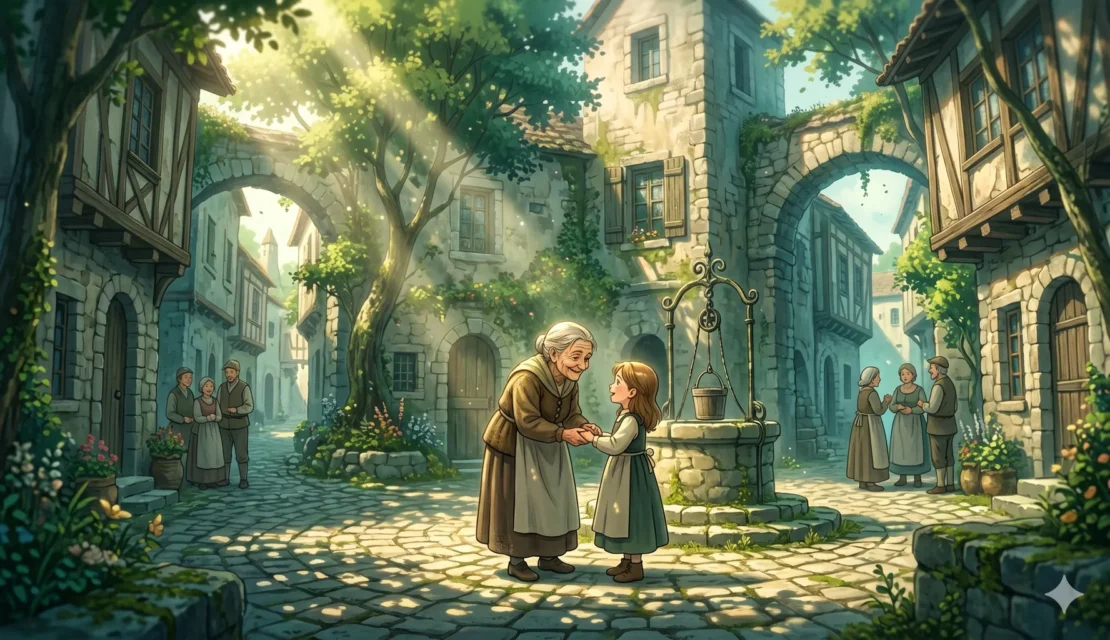
There was once a village where, for reasons lost to history, there were no mirrors anywhere. Not in the houses. Not in the market. Not anywhere. The people of the village had never seen their own faces.
Instead, they knew themselves only through what others told them.
If you wanted to know whether you looked well today, you asked your neighbour. If you wanted to know whether a new outfit suited you, you asked the baker. If you were uncertain whether you looked frightened or confident before an important moment, you looked at the person beside you and asked.
This had an interesting effect on the village. The people listened to each other very carefully, because what they heard was the only information they had about themselves. They were also, by the observation of every visitor who passed through, extraordinarily kind in how they described one another. Not falsely kind, but specifically kind. They had learned, over generations, that the words they used to describe others were the only mirrors those people had.
A traveller once asked an old woman at the well why the village had such an unusual quality of warmth.
“Because we know that we see ourselves in each other’s eyes,” the old woman said. “So we take care with what we reflect back.”
The traveller thought about this for a very long time as he continued on his journey.
That evening he wrote it in his notebook: what you say about someone is the mirror they carry with them. Make it one that serves them well.
Moral: The way you speak about others shapes how they see themselves. Your words are a mirror. Choose what you reflect with care.
6. The Boy Who Gave Away His Coat

In a city where winters came early and stayed late, there lived a boy named Tomás who owned one good winter coat. It was not fancy, but it was warm and it fit him well, and he was proud of it in the uncomplicated way that children are proud of things they genuinely need and use.
One December morning, walking to school, he passed a girl sitting on the front steps of a building. She was young, perhaps five or six, wearing a thin summer cardigan despite the cold, her arms wrapped tightly around herself, her breath coming out in small white clouds.
Tomás stopped.
He looked at his coat. He looked at the girl. He did a quick internal calculation that took longer than he wished it had.
Then he took off his coat and held it out.
The girl looked up at him with wide, uncertain eyes.
“It’ll fit you,” he said. “It’s a bit big on me anyway.”
It was not a bit big on him. It fit him perfectly.
He walked the rest of the way to school in his school uniform, teeth chattering slightly, hands jammed into his pockets. When his teacher asked where his coat was, he said he’d left it at home.
That afternoon, his mother found out. He expected to be in trouble. Instead she sat with him at the kitchen table for a long time without saying anything.
“Was she warm?” she finally asked.
“I think so,” said Tomás.
His mother nodded and said nothing else. But the next morning there was a new coat on the chair by the door. Not fancy, but warm. And it fit him well.
He wore it for three years. Every winter he thought about the girl on the steps and hoped she was somewhere warm.
Moral: Real generosity costs something. Giving what is easy is kind. Giving what you need is something more.
7. The Ant and the Grain of Wheat

In a field at the edge of a forest, a colony of ants was preparing for winter. All summer they had been collecting food, carrying grains many times their own weight across distances that would tire an animal far larger than themselves. The work was relentless and entirely unglamorous.
A grasshopper who lived in the same field had spent the summer doing considerably more interesting things. He had composed several songs. He had visited the far side of the field twice. He had spent a remarkable amount of time sitting on a particularly comfortable blade of grass watching the clouds.
As autumn arrived, the grasshopper noticed the ants were still working with intense purpose.
“Don’t you ever rest?” he called out to a young ant named Mira who was hauling a grain of wheat three times her size.
“We rest in winter,” said Mira, not slowing down.
“Why not rest now, when the weather is beautiful?” he asked.
Mira set down her grain for a moment and looked at him with genuine curiosity rather than judgement. “Because the beautiful weather is exactly why we can work now. Winter doesn’t wait to arrive until we’re ready.”
The grasshopper thought about this briefly and then went back to his blade of grass. It was too fine a day for serious thinking.
When winter arrived, the ant colony was warm and well-fed inside their carefully prepared store. The grasshopper came to the entrance of the colony, thin and shivering, and asked for help.
Mira brought him inside and gave him food, not because he had earned it, but because kindness doesn’t ask for receipts.
“Next summer,” she said, “come work with us. Just for a few hours. You’ll find it less boring than you expect.”
He did. She was right.
Moral: Preparation is how you give your future self a fair chance. And kindness doesn’t wait for someone to deserve it before it shows up.
8. The Echo in the Valley

A long time ago, a boy named Ren discovered the echo valley on the far side of his village. It was a place where the surrounding mountains were shaped in such a way that any sound you made would return to you, clearly and completely, a few seconds later.
Ren was fascinated by this. He went back many times.
On his first visit, he shouted his own name, and it came back to him, which he found extremely satisfying.
On his second visit, he shouted greetings, and the valley returned them warmly.
On his third visit, frustrated about something that had happened at school, he stood at the edge of the valley and shouted something unkind about a classmate who had upset him. The words came back loud and clear and slightly more awful than they had sounded going out. He stood there listening to them returning and felt uncomfortable in a way he hadn’t expected.
He went home and thought about it all evening.
The next day he went back and shouted kind words, specific ones, about the same classmate. He said the things he actually thought were true about this person, the things he had never thought to say aloud. The valley sent them back to him, and hearing them in his own voice made them feel more real and more permanent than they had seemed in his head.
He started going to the valley more often after that, not to vent, but to practise. He practised saying kind things aloud until they stopped feeling awkward and started feeling natural.
Years later, he was known in the village as a person who always seemed to know exactly the right thing to say to someone who needed to hear something true and good.
Nobody knew about the valley. He never told them.
Moral: What you send out into the world returns to you. Practise kindness out loud until it becomes the voice you use without thinking.
9. The Fisherman’s Honest Mistake
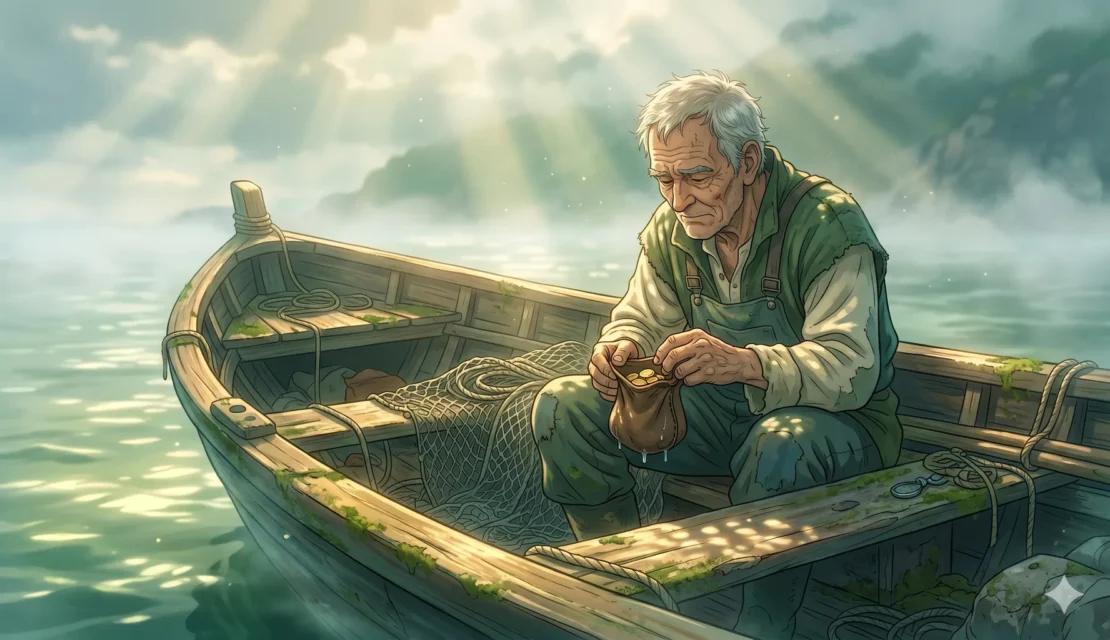
On the coast of a small fishing town, an old fisherman named Domingo went out every morning and came back every evening with whatever the sea chose to give him. Some days it was generous. Some days it was not. He had learned, over many years, not to take either personally.
One morning he pulled in his net and found, tangled in it, a small leather pouch. Inside the pouch were gold coins, more than he earned in six months of fishing. There was no name on the pouch, no indication of where it had come from.
He sat with the pouch in the bottom of his boat for a long time.
When he got back to shore, he told no one. He put the pouch on the shelf above his fireplace and left it there.
For three days he left it there and thought about it.
On the fourth day, he took the pouch to the town hall and handed it to the mayor, explaining where he had found it and how much was inside.
The mayor looked at him with something between surprise and respect. “You know this may never be claimed,” he said. “You could have kept it.”
“I know,” said Domingo.
“Then why didn’t you?”
Domingo thought about this for a moment. “Because the coins didn’t come from the sea,” he said. “They came from someone’s life. They might still be needed.”
Months later, a merchant from two towns over came forward. The pouch had fallen overboard from his boat during a storm. He had given it up for lost. He wept when it was returned to him.
He offered Domingo a reward. Domingo took a small portion, enough for new rope for his nets, and left the rest.
He went back out the next morning exactly as he always did.
Moral: Honesty is not always the easy choice. It is often a choice you make quietly, with no audience, and no guarantee of reward. That is exactly what makes it count.
10. The Star That Kept Shining

Far above the earth, in the part of the sky where the oldest stars lived, there was a small star named Vela who had been shining for a very long time. Not the brightest star in the sky. Not the largest. She sat in a modest corner of the universe, doing her work steadily and without much fanfare.
One night a young star nearby came to her with a complaint.
“Nobody looks at us,” the young star said. “The bright stars get all the attention. The constellations get names. Nobody has named us. Nobody draws lines between us. We just shine out here and nobody notices.”
Vela considered this.
“Do you know what I see from here?” she said.
“Nothing,” said the young star. “We’re too far away to see anything properly.”
“I see a planet,” said Vela. “A small one, blue-green, quite beautiful. And on it, I see light. Small, scattered, flickering light. I’ve been watching it for a long time.”
“What is it?” asked the young star.
“People,” said Vela. “They light small fires and put candles in windows and switch on lamps in rooms where someone is sitting up late, worrying or reading or waiting for someone they love to come home. They make small lights in the dark.”
The young star was quiet.
“Are they noticed?” it asked.
“By the people who need them,” said Vela, “yes. Always.”
She turned back to the business of shining, which she had been doing without interruption for a very long time, and which she intended to continue doing for a very long time more.
Moral: You don’t need to be the biggest or brightest to matter. Small, steady, faithful light is exactly what most people in the dark are looking for.
Why Moral Stories for Kids Are Worth Making Time For
We know your evenings are full. Between dinner, bath time, homework, and trying to get everyone into bed before 9 PM, adding a story might feel like one more thing on an already crowded list. But moral stories for kids require nothing more than a few minutes and a willing reader, and the return on that small investment is genuinely extraordinary.
Stories Plant Seeds That Grow for Years
A child who hears the story of Domingo the fisherman won’t necessarily understand the full weight of integrity in that moment. But the image of a man sitting with a pouch of gold on his shelf, deciding quietly what kind of person he wants to be, will stay somewhere in their memory. Years later, in a moment when they face their own version of that choice, something may surface. That is how moral stories for kids do their deepest work.
Every Story Is an Invitation to Talk
At Apple Tree Preschool BSD, nestled in the Educenter BSD Building, we use storytelling as a gateway to conversation every single day. After sharing a moral story with your child, try asking one gentle question: “What do you think you would have done?” The answers often surprise parents and open up conversations that might not have happened any other way.
Through our Singapore curriculum, your child’s Moral and Social Studies learning is built on exactly this kind of reflective, story-based approach. Our Toddler, Pre-Nursery, Nursery, and Kindergarten programmes are all designed to develop children who are not just academically strong but genuinely good, curious, and kind in all the ways that matter most.
Grow a Good Heart, One Story at a Time
Good character is not built in a single lesson or a single conversation. It is built story by story, choice by choice, over the whole of a childhood. These 10 moral stories for kids are your starting point for tonight, and we hope they open up something wonderful in your home.
If you would love for your child to spend their days in a place where these kinds of values are woven into everything, from the books on the shelves to the way we speak to each other in the hallways, we would love to meet your family.Register now and come grow, learn, and become your best self together at Apple Tree Preschool BSD! Chat with us on WhatsApp or call us at +62 888-1800-900. We can’t wait to welcome your little one!




Be the first to write a comment.