

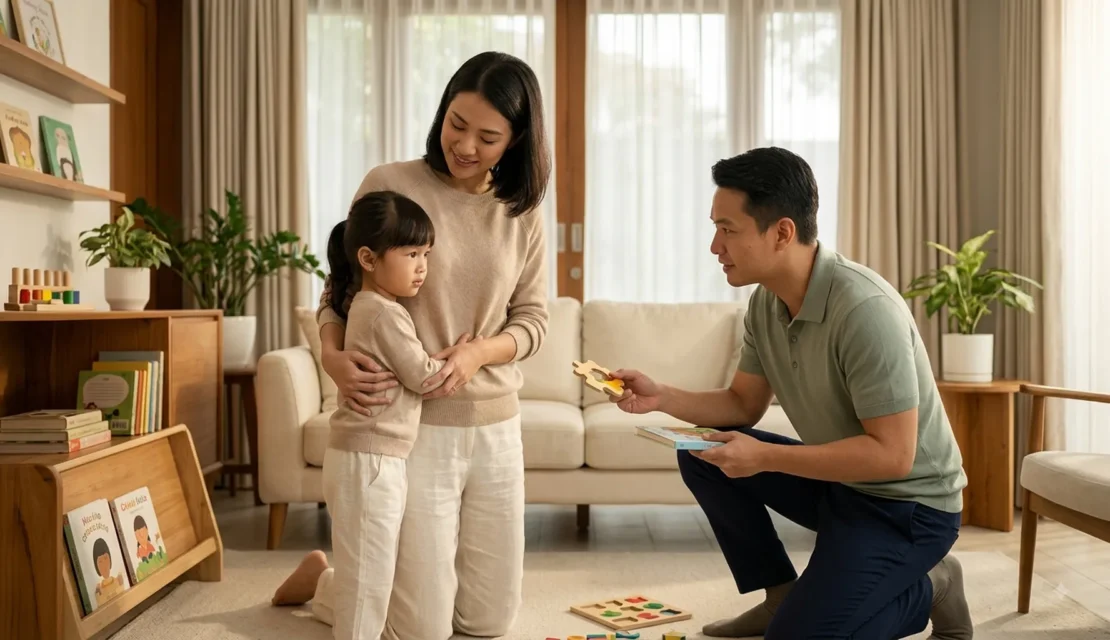
If your child clingy to mother only has suddenly decided that only Mum may pour the water, zip the bag, read the book, and exist within a two centimetre radius, you are very much not alone. At Apple Tree Pre-School BSD, near Educenter bsd, we hear this from parents all the time, because clinginess can make family life feel oddly lopsided and just a little bit exhausting. One parent becomes the entire emotional support department, while the other parent, grandparent, or helper gets treated like they have shown up uninvited to a very exclusive club.
The reassuring part is this, this pattern is common in early childhood, and it usually does not mean anything is wrong with your child, your partner, or your family. It means your child is leaning hard on the person who feels safest in that moment. The goal is not to shame the clinginess away. The goal is to gently widen your child’s circle of comfort so they can feel secure with other loving adults too.
Why a Child Clingy to Mother Only Often Acts This Way
When a child becomes attached to one parent, it can look personal. It can even feel a bit brutal for Dad, especially when he walks in cheerfully and gets met with a dramatic, “No, I want Mummy.” But most of the time, this behaviour is not a rejection of Dad or anyone else. It is a sign that your child is using their strongest attachment figure as a home base.
Young children often cling most when they are tired, overwhelmed, unwell, adjusting to change, or simply going through a developmental leap. In those moments, they are not making a careful social statement. They are grabbing the emotional equivalent of their favourite blanket.
It is usually about safety, not preference
A child who wants Mum for everything may be responding to several things at once:
- Mum may be the parent who handles more daily routines
- Your child may associate Mum with comfort and predictability
- Recent changes may have increased separation anxiety
- Dad or other caregivers may feel less familiar in stressful moments
- Your child may simply be in a clingy developmental phase
This can be frustrating, yes, but it is also very normal. Children often show their strongest dependency right before they begin growing more independent, which is one of childhood’s stranger habits.
Big changes often make clinginess stronger
If your child has recently started school, welcomed a sibling, been unwell, moved house, changed routines, or even just had a run of overtired days, clinginess can intensify quickly. Their emotional system becomes more sensitive, and they may try to stay close to the person who feels most steady.
We see this often in early education settings. A child who was happy with several adults last month may suddenly want only Mum this month. That does not mean progress is lost. It usually means the child needs a bit more security while they adjust.
How to Respond When Your Child Clingy to Mother Only
The best response is calm, warm, and steady. You want to reassure your child without accidentally teaching them that only Mum can meet every need forever. It is a delicate balance, but it is very doable.
Stay loving, but do not disappear into the role completely
It makes sense to comfort your child when they are upset. Of course it does. But if Mum always rushes in instantly for every small frustration, the clinginess can become more deeply reinforced.
Instead, try being reassuring without making yourself the only solution. You can say, “Daddy is helping you with this, and I am still right here,” or, “You are safe, and Grandma can do it today.” This keeps the connection warm while gently expanding your child’s trust.
Avoid turning it into a family drama
Children notice adult emotion very quickly. If Dad feels hurt, Mum feels trapped, and everyone starts discussing the issue in front of the child like a tiny emotional summit meeting, the clinginess can get more attention than it needs.
Try to keep your tone matter of fact. Your child does not need to feel guilty for wanting Mum. They just need calm guidance toward accepting comfort and care from others too.
Help Dad and Other Caregivers Build Their Own Bond
One of the biggest mistakes families make is trying to copy Mum exactly. That usually does not work, and honestly, it does not need to. Children do not need every caregiver to feel identical. They just need each relationship to feel safe, warm, and reliable.
Let other adults connect in their own style
Dad may play differently, talk differently, and soothe differently. That is not a weakness. That is just another kind of relationship, and children benefit from learning that comfort can come in more than one form.
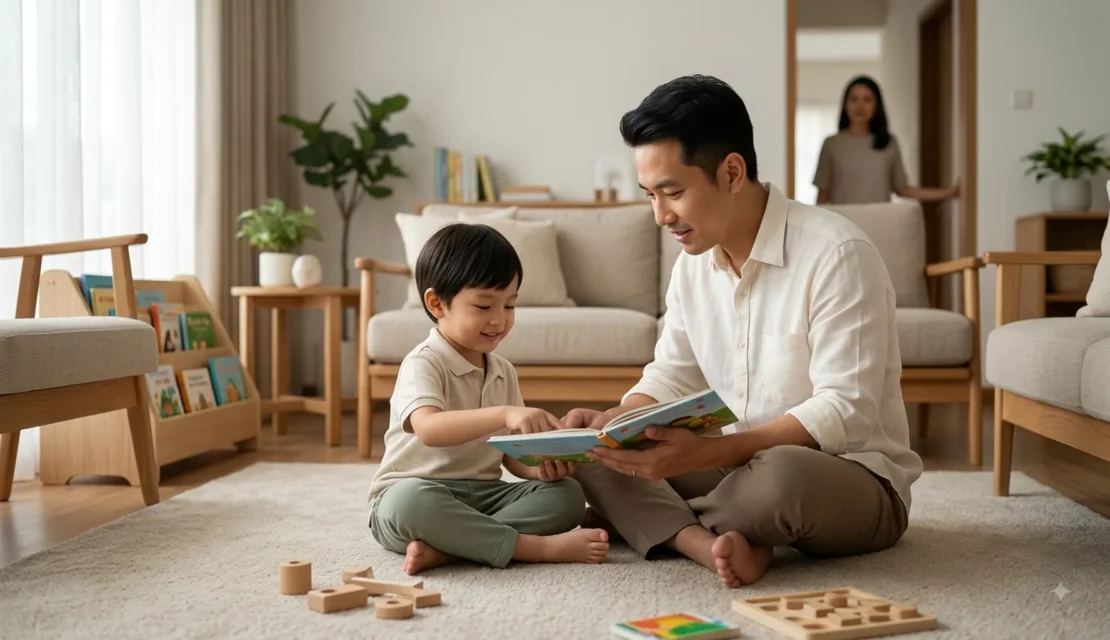
Encourage regular one on one time that feels low pressure and enjoyable. Good bonding moments might include:
- A short walk outside
- Bedtime stories with Dad
- Simple snack time together
- Building blocks or puzzles
- School drop off with a favourite song in the car
The key is consistency. Small, repeated moments often do more than one grand outing.
Start during calm times, not crisis moments
If your child only gets handed to Dad when they are already exhausted, sick, or mid meltdown, that handoff will feel harder for everyone. Try building connection when your child is relaxed and happy.
This gives the relationship room to grow without the pressure of distress. A child who laughs with Dad during play is more likely to accept Dad during harder moments later.
Make Separation Smaller and More Predictable
If your child clings to Mum the second she leaves the room, do not jump straight to dramatic long separations. Think smaller. Children build confidence step by step.
Use short, successful separations
Start with little moments your child can manage. Mum steps away for a few minutes while Dad plays. Mum says goodbye clearly, then comes back when she said she would. That predictability matters.
You might try:
- Mum goes to another room for five minutes
- Dad handles one daily routine from start to finish
- Grandma stays for play while Mum has a short break
- Your child practises saying goodbye and hello in a cheerful way
These mini separations teach your child something powerful, Mum can go, and I am still okay.
Keep routines consistent
Children feel safer when they know what to expect. If Dad always handles bath time, or Grandpa always does the park walk, that pattern becomes familiar and comforting over time.
This is one reason routine matters so much in early childhood. At school and at home, consistency helps children relax enough to trust other caring adults.
What Not to Do When Clinginess Shows Up
A few well meaning responses can accidentally make things harder. We have all done at least one of them, usually when tired.
Try not to force, shame, or tease
Pushing a child away from Mum before they are ready can increase panic. Teasing them with “You are such a mummy’s baby” may sound lighthearted, but it can create shame around a very normal attachment need.
Try to avoid:
- Forcing abrupt separations
- Mocking or shaming the clinginess
- Sneaking away without saying goodbye
- Giving in to every demand instantly
- Framing Dad as second best
Children do better when they feel secure, respected, and gently stretched, not embarrassed or tricked.
Growing Confidence Beyond One Safe Person
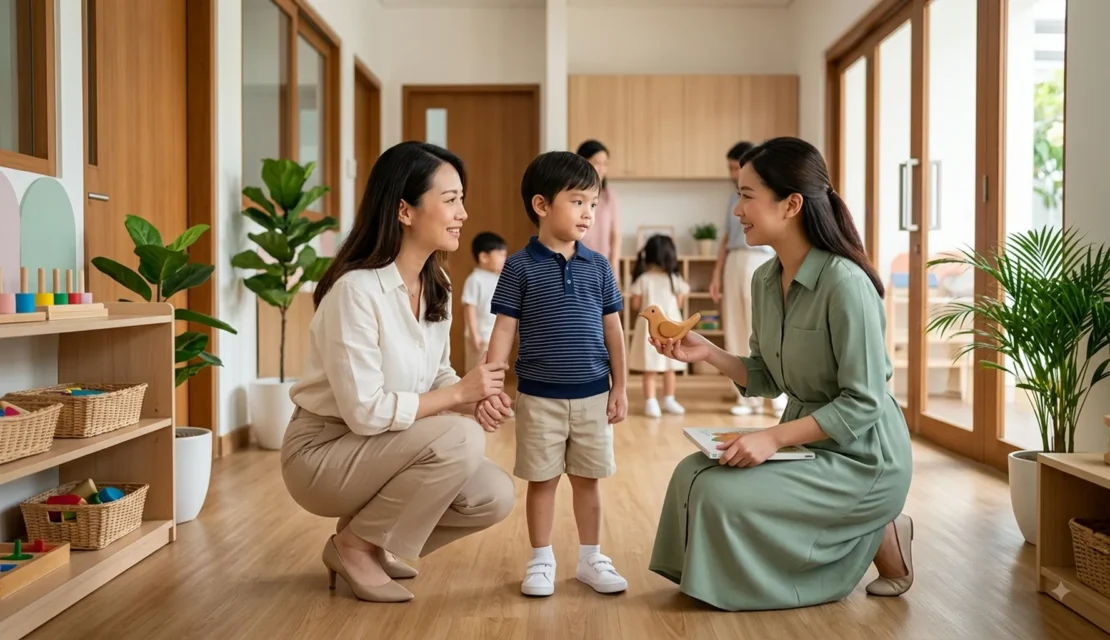
The wonderful thing about early childhood is that growth often happens quietly. A child who cried when Dad offered help may, a few weeks later, happily go with him to wash hands or read a book. These changes are rarely dramatic in the beginning, but they matter.
At Apple Tree Preschool BSD, we support children through exactly these stages with warm routines, gentle transitions, and strong relationships with trusted adults. If you would like to explore our programs, we would be happy to show you how we help children grow smart and happy together with parents. Our location in the Educenter BSD Building also makes daily routines easier for many busy BSD families.
A Wider Circle of Comfort Can Begin at Home
If your child clingy to mother only right now, try not to see it as a problem that needs to be defeated. It is usually a sign that your child feels deeply attached and still needs help learning that love and safety can come from more than one person. With patience, predictable routines, and steady support from Mum, Dad, and other caregivers, that circle of trust usually grows beautifully.
We would love to support your family with a preschool environment where children build confidence, independence, and secure relationships every day. Chat with us on WhatsApp or call +62 888-1800-900 to learn more.
Register now, and come play and learn with other children.



Be the first to write a comment.