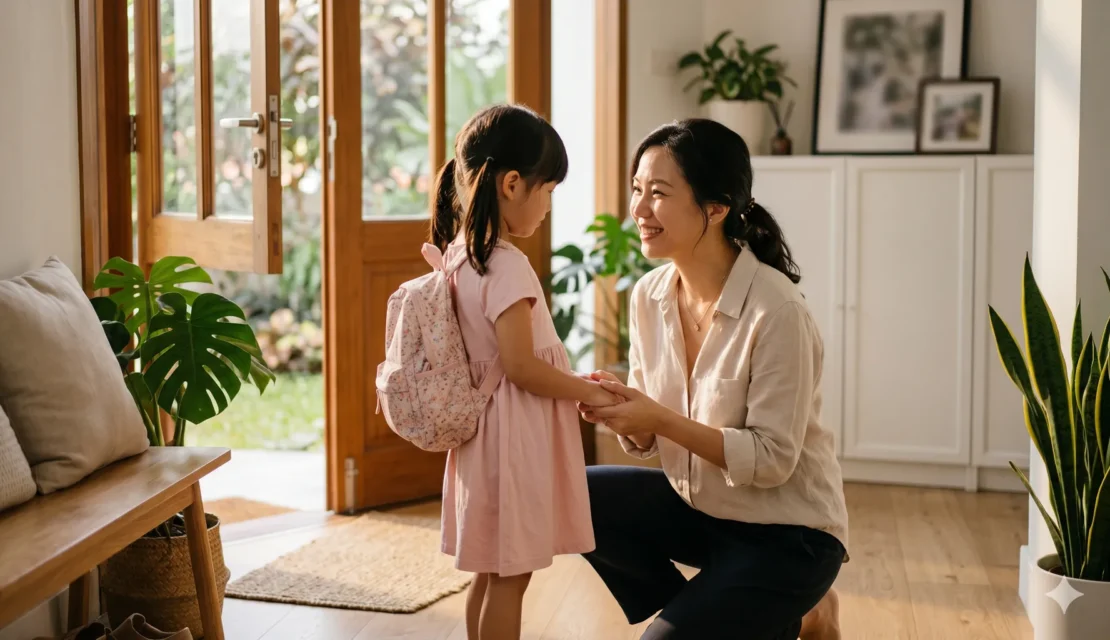
When you have a shy child at school, the smallest moments can feel surprisingly big. A simple goodbye at the classroom door can turn into a clingy little koala situation, and suddenly you are smiling bravely while your heart does cartwheels. At Apple Tree Preschool BSD, located in the Educenter BSD Building, we often remind parents that shyness is not a flaw, and with the right support, your child can grow into the classroom with real confidence.
We have seen this many times. A child who barely whispers in week one can be the same child singing loudly during music time a few months later, usually with dramatic hand gestures and a very strong opinion about tambourines. If you are wondering how to help your child feel braver at school, you are absolutely not alone, and yes, there are gentle ways to do it without turning mornings into a negotiation summit.
Shy Child at School: Understanding What Is Really Happening
When people hear the phrase shy child at school, they sometimes picture a child who has a problem that needs to be fixed quickly. We do not see it that way. Many shy children are thoughtful, observant, and emotionally sensitive, which can actually be wonderful strengths in the classroom.
Often, a shy child is simply taking time to feel safe. They may want to watch first, understand the room, and decide who feels trustworthy before joining in. Honestly, many adults do the exact same thing at social events, except we hide behind coffee cups instead of our parents.
A shy child at school is not always unhappy
This is one of the biggest misunderstandings we see. Quiet children are not automatically struggling, and outgoing children are not automatically confident. Sometimes your child is simply processing the environment in their own careful way.
That said, if your child seems consistently withdrawn, anxious, tearful, or afraid to participate, that is when extra support matters. The goal is not to turn your child into the loudest person in the room. The goal is to help you and your child feel secure, connected, and capable.
Confidence grows when children feel safe first
Children do not build confidence because adults keep saying, “Go on, be brave.” They build confidence when they experience small successes in a setting that feels warm and predictable. Safety comes first, then participation, then confidence.
That is why routines, gentle transitions, and supportive teachers matter so much. When your child knows what to expect, they can spend less energy worrying and more energy engaging.

How to Support a Shy Child at School Without Pushing Too Hard
If you want to help a shy child at school, the best approach is usually steady and patient. Big pressure often makes children pull back even more. Gentle encouragement works far better than performance mode.
We always tell parents that confidence is more like growing a garden than flipping a switch. You water it, give it sunlight, and stop digging it up every five minutes to check whether it is working.
Prepare your child before the school day
Children do better when they know what is coming. Before school, you can talk through the day in simple language and keep your tone calm and positive. This helps your child build a mental picture of what to expect.
Here are a few ways you can do that:
- Tell your child who will greet them and what the first activity might be.
- Practice short goodbye routines at home so drop off feels familiar.
- Let your child bring a small comfort item if the school allows it.
- Keep your goodbye warm, loving, and brief.
Long goodbyes can be tough for a shy child at school because they stretch out the worry. A short hug, a clear promise that you will return, and a confident smile often work better than ten extra minutes of emotional bargaining.
Build confidence through one small step at a time
You do not need your child to suddenly join every group activity by Friday. A much better goal is one small, meaningful step. Maybe today your child says hello to the teacher. Maybe tomorrow they sit with the group during story time. That counts.
We love celebrating progress like this because it teaches your child that confidence is built, not born. Small wins are still wins, even if they do not look dramatic on the outside.
Help your child make one friend first
For many children, school starts to feel easier once there is one familiar face in the room. Friendship can be the bridge between feeling nervous and feeling comfortable. It does not have to be a giant social circle right away.
You can support this by arranging a simple playdate, speaking positively about classmates, or asking the teacher who your child seems drawn to. A shy child at school often blossoms faster when they have just one buddy to wave to in the morning.
What Teachers and Parents Can Do Together
Confidence grows best when home and school work as a team. Children notice when the adults around them are calm, encouraging, and consistent. If you and the teacher share the same gentle approach, your child benefits from that stability.
At times, parents feel tempted to apologize for their child being quiet. We would gently say, please do not. Your child does not need to feel like their personality is a problem that adults are discussing over their head.
Use specific praise, not big labels
Instead of saying, “You are so brave now,” try noticing the exact thing your child did. You might say, “We saw you put your bag away by yourself,” or “You joined circle time even though you felt nervous.” Specific praise feels more real and more helpful.
This matters for a shy child at school because children need to understand what success looks like. When you name the action, you make it easier for them to repeat it.
Avoid comparisons with other children
Few things shrink confidence faster than comparison. If your child hears, “Look, your friend can do it,” they may feel even more self conscious. Every child has their own rhythm, and quiet children often need space to grow at that pace.
We always encourage parents to compare their child only with their own past self. If your child now walks into class more calmly than last month, that is progress worth noticing.
How We Support a Shy Child at School at Apple Tree Preschool BSD
At Apple Tree, we believe confidence grows through relationships, routine, and joyful learning. We support children through a balanced Singapore based curriculum that includes English, Mathematics, Chinese, Creativity, Social Studies, Science, Bahasa, Moral, Music, Physical Education, and Phonics. That range gives children many different ways to participate and shine.
Some children speak confidently during story time. Others open up during music, art, or movement. We have learned that when you offer children different paths into learning, they often surprise you in the best possible way.
Small classes help children feel seen
A shy child at school usually benefits from an environment where teachers can notice the little things. Small class sizes and age appropriate groupings make a real difference because children feel less lost in the crowd. They get more chances for gentle support, meaningful interaction, and comfortable participation.
Our classes are designed with that in mind, from toddler through kindergarten. If you would like to explore our programs, you can see options that support children at different stages of development.
Confidence grows through play, not pressure
We do not believe confidence should be forced. We believe it should be invited. Through play based learning, warm teacher guidance, and consistent routines, children begin to trust the classroom as a safe place where they belong.
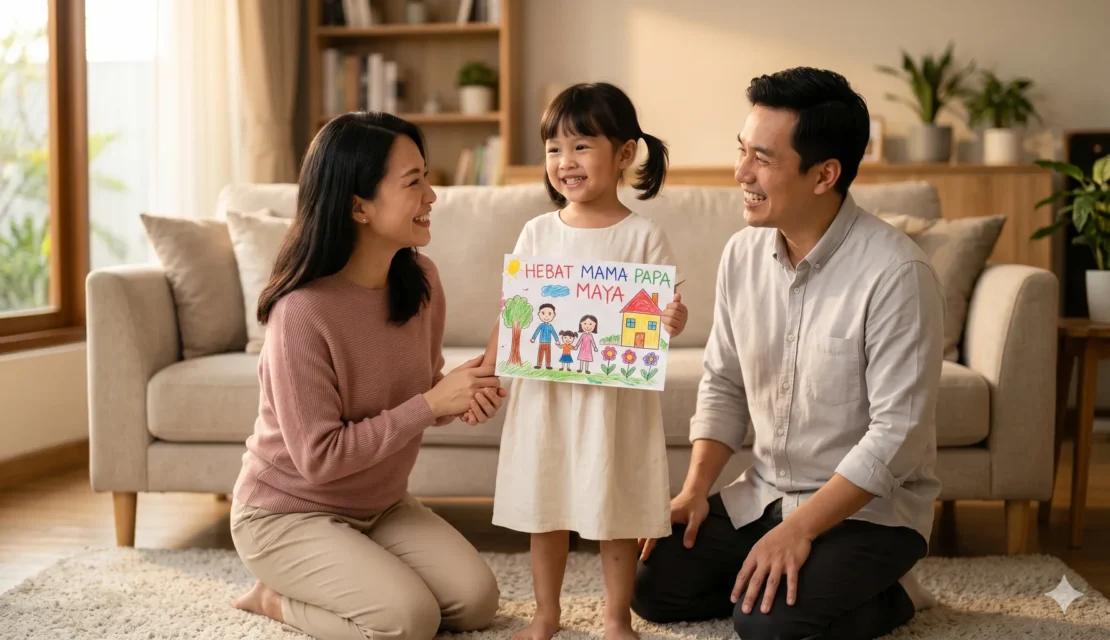
And once children feel that sense of belonging, wonderful things happen. The quiet child who once hid behind your leg may suddenly volunteer to sing, answer questions, or proudly show everyone a drawing that is somehow both a family portrait and a dinosaur map.
Conclusion
Helping a shy child at school become more confident takes patience, empathy, and a lot of trust in small steps. When you focus on safety, routine, friendship, and gentle encouragement, your child can build confidence in a way that feels natural and lasting. You do not need to change who your child is. You simply need to help them feel secure enough to show more of themselves.
If you are looking for a warm and supportive place where your child can grow smart and happy together with you, we would love to welcome your family to Apple Tree Preschool BSD. Register now and let your little one come play and learn with other children in a joyful environment. You can Chat with us on WhatsApp or call us directly at +62 888 1800 900. We are happy to help you find the right class for your child.




Be the first to write a comment.