

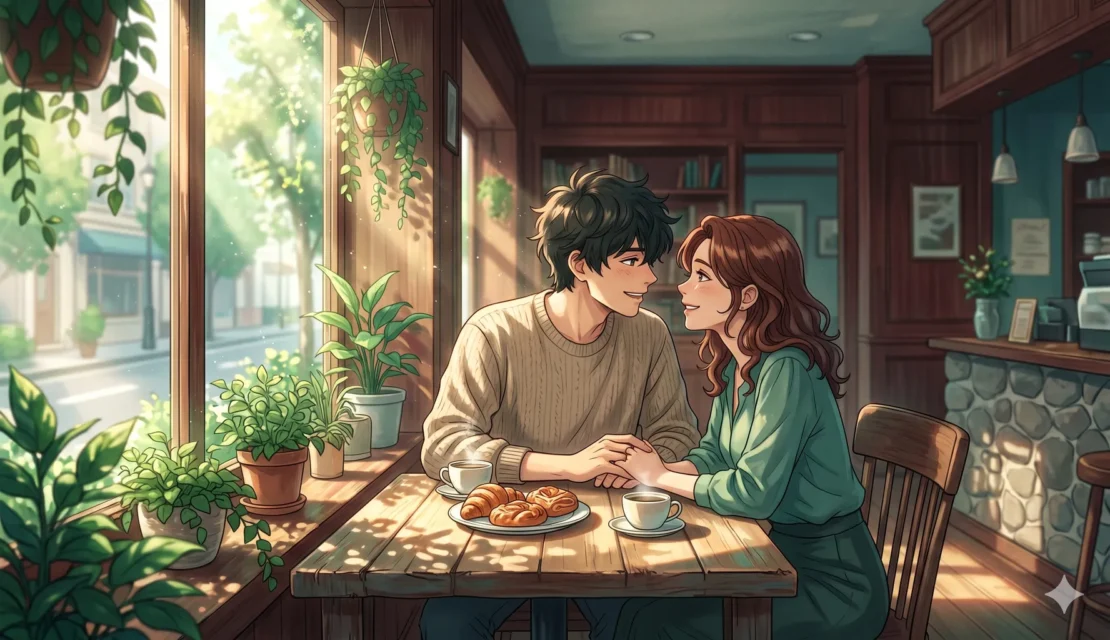
Rain has a way of slowing everything down, doesn’t it? The kind of afternoon where the sky goes soft grey, the smell of petrichor drifts through the window, and suddenly you have the most perfect excuse in the world to curl up with something that makes your heart feel a little fuller. Romantic short stories have that exact power. They don’t ask for much of your time, but they give you everything in return: a flutter, a sigh, sometimes a quietly happy tear you weren’t expecting.
We think about love a lot at Apple Tree Preschool BSD, though perhaps in a slightly different way than you might expect. Because the first love stories children ever witness are the ones happening in their own homes, between the people they look up to most. The warmth, the kindness, the patience you show each other shapes everything they come to believe about how people can treat one another. And we get to build on that foundation every single day from our home in the Educenter BSD Building.
So settle in. Here are 8 original romantic short stories written to warm your heart, whether it’s raining outside or not.
8 Romantic Short Stories for Slow Afternoons and Full Hearts
From coffee shop meetings to late-night letters, these short love stories, sweet romance tales, and tender couple stories will remind you why love, in all its ordinary and extraordinary forms, is always worth telling.
1. The Same Table Every Tuesday
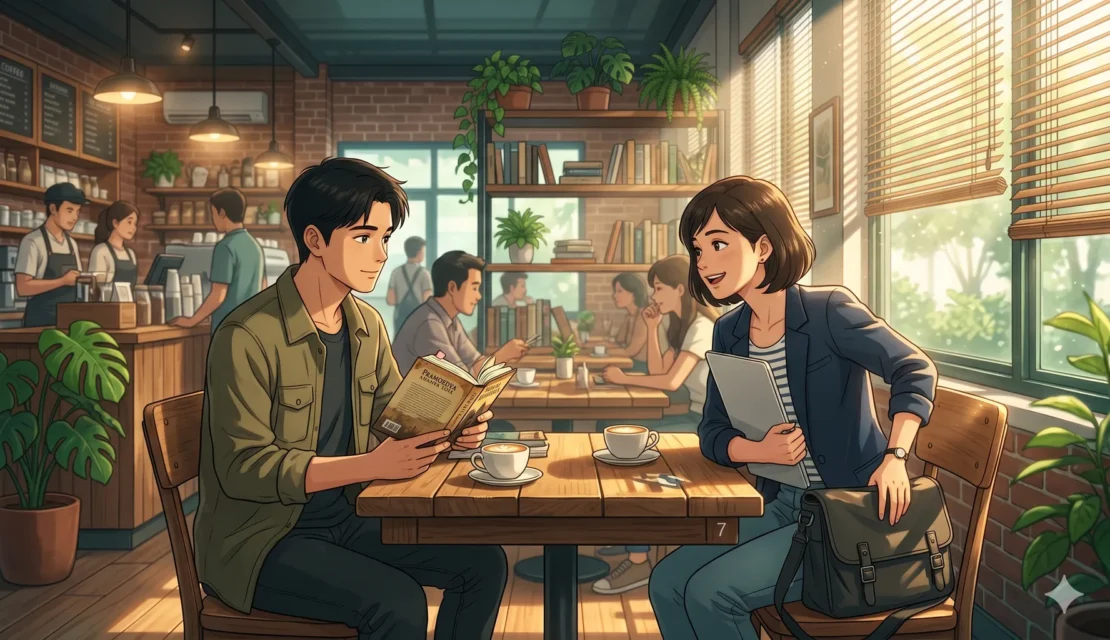
Maya had been coming to the same coffee shop on Jalan Raya Serpong every Tuesday for eleven months. It had started as a work habit, a place to open her laptop and pretend she was the kind of person who had their life together, but it had quietly become something else entirely. It had become, if she was being honest, the best part of her week.
And it was mostly because of the man at table seven.
She didn’t know his name. She only knew that he arrived at 9:15, ordered a flat white without sugar, always brought a dog-eared novel that he held with both hands like it might try to escape, and had the kind of quiet, concentrated presence that made everything around him feel slightly more meaningful by association.
She had not spoken to him. She was not, she would argue firmly, a person who spoke to strangers in coffee shops. She was a person who observed strangers in coffee shops from a safe and sensible distance while writing project proposals and eating croissants.
This arrangement continued for eleven months.
Then one Tuesday in October, she arrived to find a small folded note on her usual table. Her name was written on the outside in handwriting that was careful and unhurried.
She stood looking at it for a full thirty seconds before sitting down.
Inside it said: I’ve been trying to figure out how to introduce myself for about eight months. I’ve drafted this note four times. I’m at table seven if you’d like to try a conversation. If not, I will absolutely pretend this never happened and we can go back to our comfortable silence. Either way seems fine. My name is Rafi.
Maya looked up. Table seven. Rafi had his book open but he was not reading it. He was looking at his flat white with the focused attention of a man who had used up all his courage and was now waiting very quietly to find out what happened next.
She thought about it for exactly as long as it took her to finish the last of her croissant. Then she picked up her laptop and her bag and her coffee and walked across the cafe.
“Your handwriting is very neat for someone who’s nervous,” she said, sitting down across from him.
He looked up. “How do you know I was nervous?”
“Four drafts,” she said.
He laughed, a real one, surprised out of him. “Fair point. Hi. I’m Rafi.”
“I know,” said Maya. “It says so on the note.”
They talked for three hours. Her project proposal did not get written. She did not mind even slightly.
The following Tuesday, Rafi was at her table when she arrived. Her flat white was already there. He had, she noticed, remembered that she took it with one sugar.
She sat down. She didn’t say anything about the coffee. She just opened her laptop and smiled at the screen.
Some things don’t need words. They just need showing up, week after week, at the same table, with exactly the right amount of sugar.
2. What the Kitchen Smelled Like
Dian always said she fell in love with Arman in his kitchen.
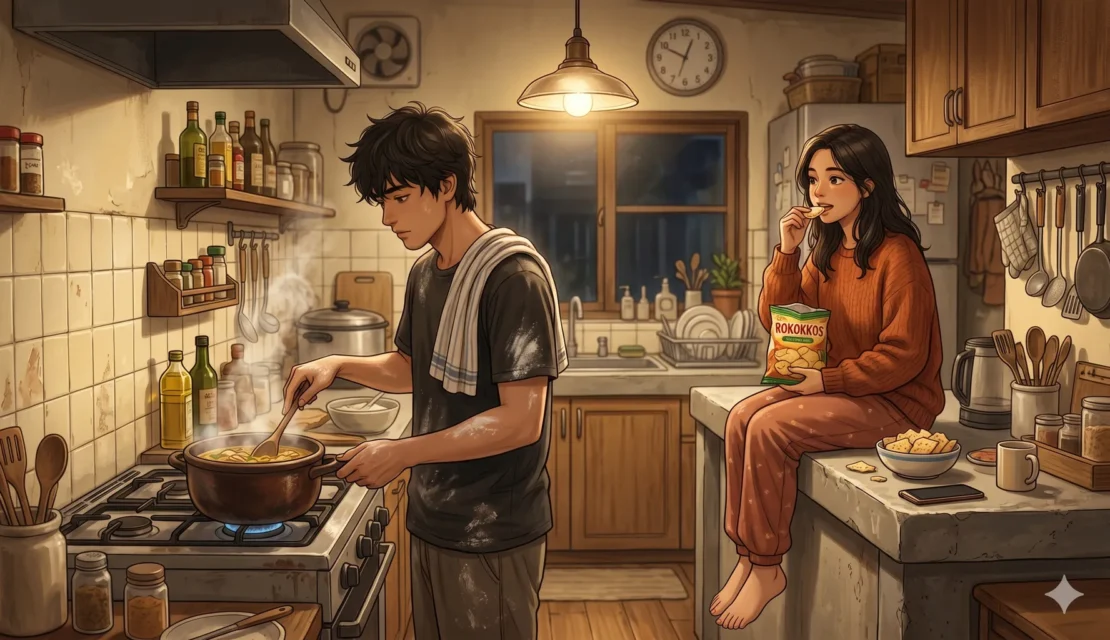
Not because of anything dramatic. There was no candlelight, no grand gesture, no moment that would look good in a film. It happened on a Wednesday night at 8:47 PM when she was sitting on his kitchen counter eating crackers from the packet because she had arrived too early and dinner wasn’t ready yet, and Arman was standing at the stove with a dish towel over one shoulder, arguing gently with a pot of soup that was refusing to behave.
“You have to talk to it,” he told the soup, completely seriously.
“The soup?” said Dian.
“My grandmother always talked to her cooking. She said food could tell when you were impatient with it and it would punish you.” He stirred thoughtfully. “I’m not saying I believe that. I’m just saying her soup was extraordinary and mine is… working on it.”
Dian looked at him from her perch on the counter. He had flour on his sleeve from the bread he’d baked earlier, which she hadn’t even known he was going to bake. The kitchen smelled of garlic and something sweet and the specific warmth of a home that was being properly used.
She had been on dates with people who took her to impressive restaurants and ordered confidently and said the right things at the right moments. She had never once felt what she felt sitting on Arman’s counter at 8:47 on a Wednesday.
She felt like she was exactly where she was supposed to be.
“Does it work?” she asked. “Talking to it?”
“Tonight’s attempt is still under evaluation,” he said. “You can be the judge.”
The soup, as it turned out, was wonderful. Not perfect, a little too much salt, not quite enough time, Arman narrated all of its flaws before she could even taste it. But it was full of the kind of care that you cannot fake and cannot buy, and it tasted like someone had been thinking about her comfort while they made it.
She told him it was the best soup she had ever eaten.
He looked genuinely pleased and slightly disbelieving, which was one of her favourite combinations in a person.
They did the washing up together. She washed, he dried, and they talked without stopping for two hours about nothing in particular and everything that mattered. By the time she left at midnight, she knew that she would come back. Not because he had been impressive, but because being in his kitchen felt like breathing properly after a long time of not quite getting enough air.
She came back the following Wednesday.
And the one after that.
And eventually she stopped going home at midnight at all.
The kitchen still smelled of garlic and warm bread, and Arman still talked to his soup, and Dian never got tired of sitting on the counter watching him do it.
3. The Letter That Took Seven Years
The letter sat in a drawer for seven years.
Hendra had written it the night before Sari left for graduate school in the Netherlands, in the particular kind of desperation that visits people who have been in love with their best friend for two years and have absolutely no idea what to do about it. He had written everything. All of it. The whole embarrassing, enormous thing, twelve pages in his cramped handwriting, starting from the first afternoon they had sat next to each other in a university library and he had borrowed her pen and never wanted to give it back.
Then he had read it back to himself and folded it very carefully and put it in a drawer and said, out loud to his empty room, “Absolutely not.”
He drove her to the airport the next morning. She hugged him goodbye. He said have a safe flight, keep in touch, I’ll miss you. She said she would, and she did. They messaged constantly, called every few weeks, caught up properly whenever she was home for the holidays.
He dated other people, as one does. None of it led anywhere particularly meaningful, which he attributed to various reasonable-sounding causes that had nothing to do with a folded letter in a drawer.
Sari came home for good after five years abroad. She was different in the ways that time and distance and a full education make a person different, which is to say more herself than ever. She had opinions about things, strong ones, and she shared them without apology. She had learned to cook Dutch food, which she said was fine but ultimately confirmed that Indonesian cooking was the superior cuisine in all possible ways, a position Hendra agreed with entirely.
They slipped back into each other’s company the way you slip back into a favourite jacket. Easy. Correct. Like no time had passed even though a great deal had.
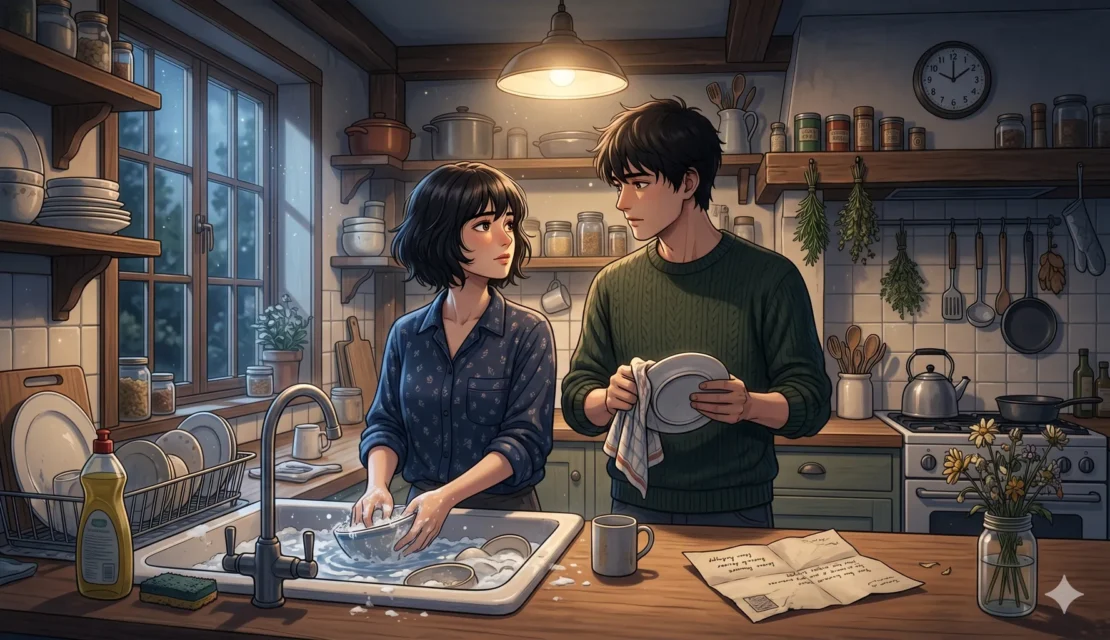
On the night of her welcome-home dinner, when everyone else had left and they were washing dishes together in her mother’s kitchen, she said, quite casually, “You know, I thought about you a lot when I was away.”
Hendra put down the plate he was drying. “Thought about me how?”
Sari turned to look at him. The way she looked at him was not casual at all. “I think you know how.”
The letter was still in the drawer. He had moved apartments twice and it had come with him both times, tucked into a box of things he couldn’t bring himself to throw away.
“I wrote you a letter,” he said. “Before you left. I never gave it to you.”
She was quiet for a moment. “What did it say?”
“Everything,” he said. “Twelve pages of everything.”
Sari dried her hands on the dish towel. She looked at him for a long moment with an expression he had never quite been able to read, until now, when he suddenly could.
“I have time,” she said. “If you want to tell me.”
He told her. Not from the letter, which was not quite the same person he was anymore, but from himself, the current version, who had carried the feeling through seven years and two apartments and a drawer that had travelled more than most things he owned.
It took considerably less than twelve pages.
It was, by every measure that mattered, completely worth the wait.
4. Thirty-Four Floors Up

They met in a lift.
This was, Clara would later tell people, either the most clichéd meet-cute in history or proof that some things are genuinely meant to happen, and she had never been able to decide which.
She was on her way to a job interview on the thirty-fourth floor of a building in central BSD. She was early, which was her natural state, and she was reviewing notes on her phone with the focused concentration of someone who had prepared thoroughly and was now terrifying herself by reviewing the preparation.
He got in on the twelfth floor. Tall, holding two coffees, looking at his phone with the expression of a person who had just received a message that required a significant amount of thought.
The lift stopped on the fifteenth floor. The doors opened. No one got in.
The doors did not close.
They stood there for a moment.
“This happens sometimes,” said the man, without looking up from his phone. “There’s a sensor. Give it a second.”
Clara looked at the open doors. “How do you know?”
“I work on twenty-six,” he said. “This lift and I have a complicated relationship.”
Clara almost smiled. The doors stayed open.
After about thirty seconds, the man looked up from his phone, pressed the door-close button, and the lift obliged.
“Interview?” he said, nodding at her notes.
“That obvious?”
“The notes. And you’ve been on the balls of your feet since you got in, like you’re about to sprint somewhere.”
Clara looked down at her feet. She was, in fact, slightly on the balls of her feet. “Nervous habit,” she said.
“You’ll be fine,” he said, in a tone that was matter-of-fact rather than reassuring, which she found significantly more useful than reassurance.
“You don’t know that.”
“No,” he agreed. “But you prepped, you’re early, and you look like someone who finishes what they start.”
The lift reached twenty-six. The doors opened.
“Good luck,” he said, stepping out. He handed her one of the coffees. “I was going to give this to a colleague but I think you need it more. Extra sugar.”
Clara looked at the coffee. “You don’t know how I take my coffee.”
“Neither do I,” he said, as the doors began to close. “But everyone needs extra sugar before a job interview. Ask for my number from the front desk on twenty-six if you get the job.”
The doors closed.
Clara stood in the lift holding a coffee that was, as it turned out, exactly how she liked it.
She got the job.
She went to the front desk on twenty-six.
His name was Bimo. He was, as she would discover over the following months, the kind of person who paid attention to things, small things, the kind most people missed. He remembered how she liked her coffee after that first accidental one. He remembered which songs made her turn the radio up. He remembered things she had mentioned once in passing and brought them back in ways that made her feel genuinely and completely known.
The lift in that building still stops sometimes on the fifteenth floor for no apparent reason.
Clara considers it a friend.
5. The Garden Fence

For two years, Nita and the man next door communicated exclusively through the gap in the garden fence.
It had started with a tomato plant. Nita had bought it optimistically in April without fully understanding the commitment involved, and by June it had grown through the fence and was enthusiastically annexing the garden next door. She had knocked on her neighbour’s door to apologise and found no one home, so she had left a note.
He had written back and left the reply tucked in the same gap in the fence.
His name was Edo. He worked from home, like her. He had a rescued cat named Bureaucracy, called Buro for short, who had apparently been attempting to eat the tomato plant from his side. He wrote in short, dry sentences that made her laugh before she had finished reading them.
She wrote back. He replied. The tomato plant, which had started the whole thing, died in August from what Edo diagnosed as overconfidence, and they kept writing anyway.
They wrote about small things. The neighbourhood café that had changed its menu. A film they had both watched the same week without knowing. The particular sound the rain made on her roof versus his and whether there was a meaningful difference. His cat’s increasingly dramatic relationship with a local pigeon.
They never ran out of things to say.
After six months, she realised she was writing the notes on nice paper. After nine months, she was choosing her words more carefully than she chose anything else she wrote professionally. After a year, she sat down one morning with a note she had been drafting in her head for two weeks and looked at it for a long time before folding it.
It said: I think I’d like to have this conversation face to face. If you’d like that too, I’ll be at the gate at 8 on Saturday morning. I make good coffee. Nita.
She tucked it in the fence.
On Saturday morning at 7:58, she heard his gate open.
She opened hers.
Edo was exactly as she had imagined, and completely different, and she liked both versions immediately.
“You make good coffee?” he said.
“Exceptional,” she said.
“Buro will want to join.”
“Buro is welcome,” she said.
They sat in her garden until noon. The conversation was as easy as every note had been, easier even, because they could watch each other laugh. When he left, she stood at the fence for a moment, then looked at the gap where the notes had lived for two years.
She didn’t need it anymore.
She patched the fence the following weekend. Edo helped. They didn’t particularly hurry.
6. Every Night at 11:11

Rina had not meant to start a tradition. It had happened by accident, the way the best things sometimes do.
She had been awake at 11:11 PM on a November night, staring at her phone in the particular wired-tired state that follows a day that has asked more of you than you had to give. She had texted her friend Farid, who she had known since they were both struggling through the same university economics course, a class they had survived primarily by complaining to each other about it.
The text said: 11:11. Wish I had better news to report from the trenches.
He had replied within two minutes. 11:11 here too. Trench report: cat knocked over my water glass. Third time this week. I think she’s making a point.
She had laughed out loud in her dark room.
They texted for an hour. She went to sleep feeling considerably lighter than she had at 11:10.
The next night, at 11:11, he texted first. Trench report. The cat has accepted my apology. Conditional peace.
She replied. They talked again.
This became the thing they did. Every night, at 11:11, one of them would start, and the other would answer, and they would talk until one of them fell asleep mid-sentence, which they could tell because the replies would become shorter and slower and then stop, and the other would type goodnight and close their phone smiling.
They talked about everything across those late nights. Worries they hadn’t said out loud to anyone else. Memories that had come back that day for no clear reason. Embarrassing things that had happened, funny things, small victories, petty grievances about inefficient lifts and bad food and meetings that could have been emails.
Farid was her first call when she got the promotion she’d been working toward for two years. She was the first person he told when his father got sick, sitting in a hospital waiting room at midnight, typing on a phone with the brightness turned all the way down.
They met in the middle, which in their case was a warung near Bintaro that stayed open late and had the best es teh in the greater Jakarta area, according to Farid, who had strong opinions about this.
He was already there when she arrived, and he stood up when he saw her, which was a small thing and also somehow the most significant thing anyone had done in her general direction in years.
“Hi,” he said.
“Hi,” she said.
“Strange to see you with a face,” he said.
“You have a face too,” she said. “It’s good. Very face-like.”
He laughed. They sat down. They talked for four hours, the same way they had for the past eight months, except now she could watch his expressions as he talked, the way he tilted his head when he was thinking, the way he smiled before the funny part of a story arrived.
She had not known, until that night, how much she had missed seeing someone’s face.
She knew, by the end of it, that she would not miss his again.
7. The Last Train Home
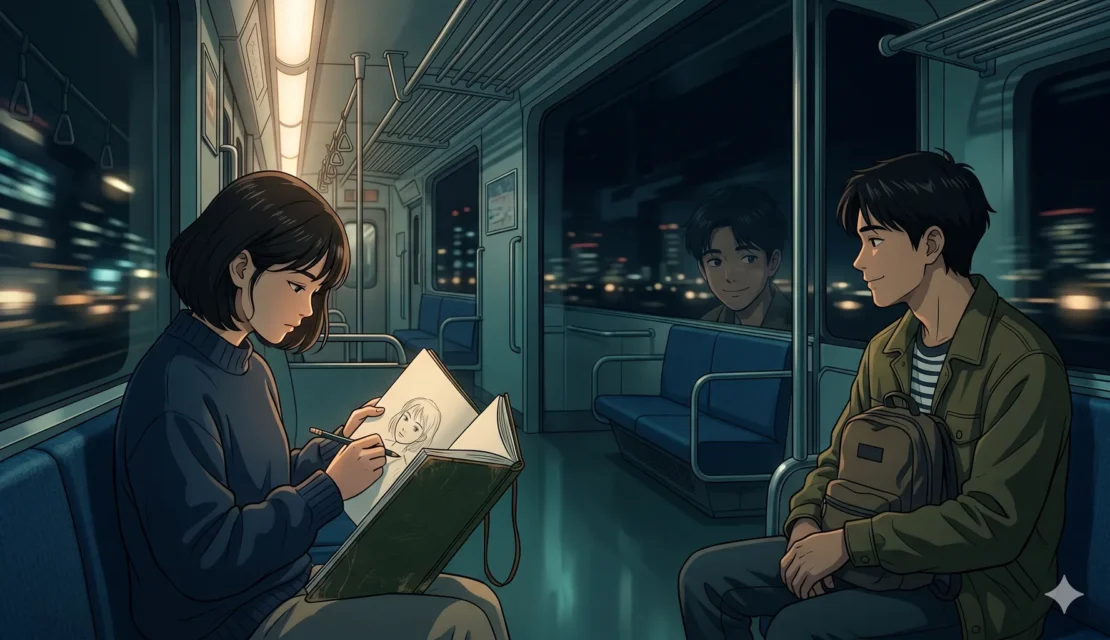
It was the last train, and Wulan had almost missed it.
She had run for the platform with her bag bouncing and her dignity entirely sacrificed, and she had made it through the doors with approximately one second to spare, arriving in the nearest available seat in a state of breathless, dishevelled relief.
The man sitting next to her looked at her sideways with the expression of someone trying very hard not to smile.
“Made it,” he said.
“I noticed,” said Wulan.
“You dropped this on the platform,” he said, and held out a small notebook, dark green with a worn spine.
She took it with a wave of disproportionate relief that must have shown on her face, because his expression shifted from amused to genuinely curious.
“Important?” he said.
“It’s my sketchbook,” she said. “Everything’s in it.”
“May I?” he asked, which was such a polite question about something so personal that she found herself nodding before she had quite thought it through.
He turned the pages carefully. She watched him look. The sketches were of ordinary things, the view from her apartment window at different times of day, the hands of the old man who sold fried bananas near her office, a series of studies of the exact colour the sky turned over BSD just before rain.
“These are extraordinary,” he said, not looking up. “The sky ones especially.”
“They’re just practice,” she said.
“Practice implies there’s something more serious you’re working toward,” he said. “What are you working toward?”
No one had ever asked her that in quite that way. She thought about it properly.
“I want to paint the places that people pass through without looking at,” she said. “Train stations. Hospital waiting rooms. Airport gates. The places where people are on their way to somewhere else and too preoccupied to notice where they are.”
He was quiet for a moment. He looked at her.
“That is one of the most interesting things I have heard in a long time,” he said.
His name was Bagas. He was an urban planner, which meant they spent the rest of the journey arguing companionably about whether spaces were shaped by people or people by spaces, and never arriving at a conclusion, and not particularly wanting to.
His stop came first. He stood and returned her sketchbook.
“I’d genuinely like to see the finished paintings someday,” he said.
“I don’t know when they’ll be finished,” she said.
“That’s fine,” he said. “I’m patient.” He held her gaze for just a moment longer than necessary. “I’m also at this station most weekday mornings around seven, if the universe wants to do something useful with that information.”
The doors closed.
Wulan looked at her sketchbook in her lap.
She opened it to a new page and, while the city moved past the dark window, she started sketching the shape of a face from memory, the exact way it looked when it was trying very hard not to smile.
8. Three Hundred and Twelve Steps
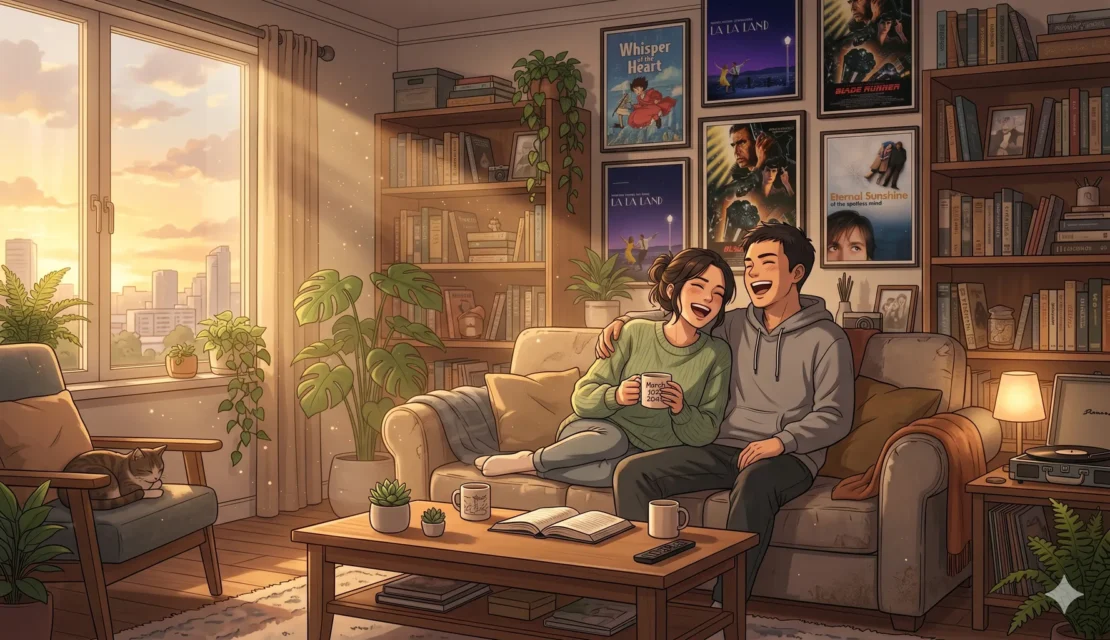
Laila knew exactly how many steps it was from her apartment to his.
Three hundred and twelve, if she took the longer route past the warung. Two hundred and eighty-seven if she cut through the park. She knew this the way you know things that your feet have learned without asking permission from your brain, from eighteen months of walking that route at various hours, in various weathers, for various reasons.
His name was Dimas, and they had been, in the technical and frustrating sense of the word, friends.
It had started simply enough. They had met at a mutual friend’s birthday, standing at the same table near the food because they were both, as they discovered, deeply committed to arriving at the food table before anyone else did. They had talked for three hours and left with each other’s numbers and a plan to argue further about whether the satay or the gado-gado had been superior.
They had been arguing, companionably and extensively, ever since.
They watched films together on weekday evenings. They went to pasar malam and bought things neither of them needed. They were each other’s first call when something good happened and the first message when something had gone wrong. When Dimas’s mother was ill, Laila had shown up at his apartment with food she had cooked herself, which was a significant act of love given her extremely complicated history with the stove. When Laila lost her job and spent three days staring at the ceiling, Dimas had sat with her on the floor and not once told her it would all work out, which she had appreciated more than any reassurance could have been.
She had fallen in love with him somewhere around the fourth month, on an ordinary evening when they had been cooking dinner together in his kitchen and she had looked over at him concentrating very hard on chopping something and thought, with a clarity she had not expected, oh. it’s you.
She had not said anything. He was her person. The idea of getting that wrong was more frightening than anything she had in her own life to worry about.
So she had said nothing. And three hundred and twelve steps continued to feel like both too many and not enough.
Then, on a Tuesday evening in March, she was sitting on his sofa half watching something on TV when he said, without warning or preamble, “I need to tell you something.”
She looked at him. He was looking at the television.
“I’ve been trying to figure out how to say this for about eight months,” he said, “and I’ve decided that I am simply going to say it, because apparently I am not capable of subtlety and it was probably obvious to everyone except possibly you.” He turned and looked at her properly. “I’m in love with you. I have been for a very long time. And I think you should know that, even if it changes things, because I am terrible at pretending and I am getting worse.”
Laila looked at him.
“Dimas,” she said.
“Yes.”
“I have known since November of last year.”
He stared at her. “November.”
“November,” she confirmed.
“That’s,” he said, “that’s over a year ago.”
“Yes.”
“And you didn’t say anything?”
“You didn’t say anything,” she pointed out.
They looked at each other for a moment that stretched out in the way that only moments containing large, overdue feelings can stretch.
Then they both started laughing, the kind of laughter that comes out of relief and absurdity and the particular joy of realising that the thing you wanted has been waiting for you the whole time.
Three hundred and twelve steps.
She had walked them so many times.
And somehow she had been home the whole way.
Why Love Stories Matter, Even for Little Ones
You might be wondering what romantic short stories have to do with raising children. More than you might think, actually.
Children who grow up surrounded by warmth, by the sight of adults who communicate kindly, express care openly, and choose to be patient with each other, build a template for how love looks and feels that they carry with them for life. The stories we tell ourselves about love, and the love stories we live out in front of our children, both matter.
The Values in Every Love Story
Every one of these romantic short stories carries something a child will also need one day: patience, honesty, courage, showing up consistently, and choosing kindness over pride. These aren’t just romantic values. They are human values, and they start forming in the earliest years.
Growing Happy Families Starts Here
At Apple Tree Preschool BSD, we believe the happiest children come from families who feel supported, seen, and part of a community. Our our programs are built to nurture every child from 18 months through to age 6, in an environment that reflects the warmth and care that the best love stories are made of.
Bring That Same Warmth to Your Child’s Early Education
We hope these 8 romantic short stories gave you exactly the kind of rainy-day reading you needed. Love, in all its patient, ordinary, quietly extraordinary forms, is worth celebrating.
And if you’re ready to give your little one the most loving, stimulating, and joyful start to their education, we are right here waiting to welcome your family.Register now and come learn and grow with us at Apple Tree Preschool BSD! Chat with us on WhatsApp or call us directly at +62 888-1800-900. We would love to hear from you!





Be the first to write a comment.