

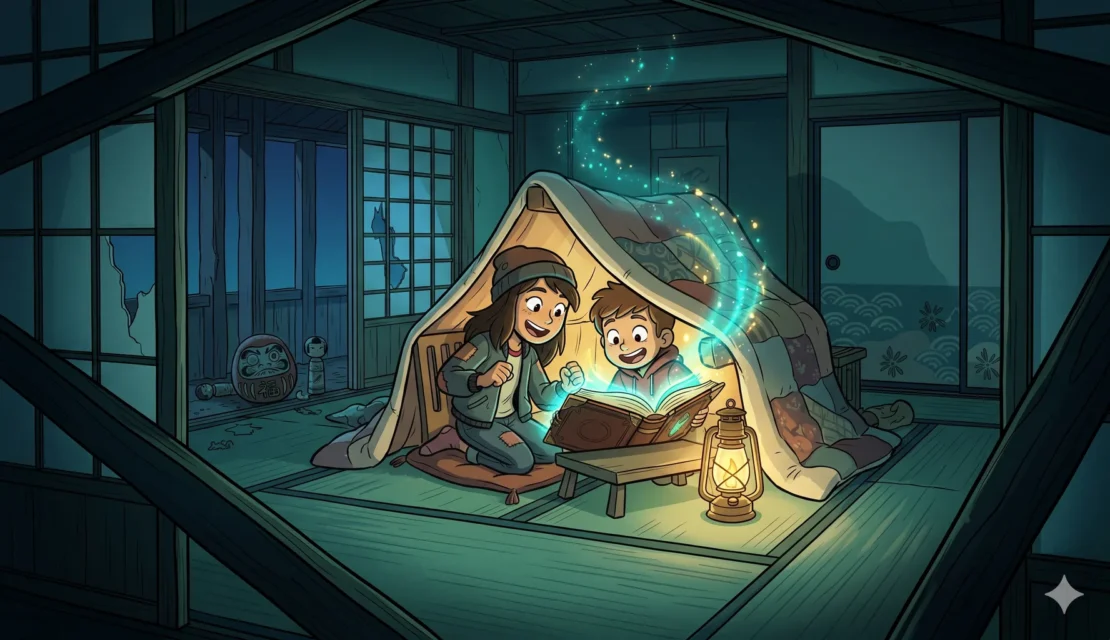
You’ve turned off most of the lights. The house is quiet. Everyone else is asleep, or at least they were the last time you checked. You’ve settled in with a cup of tea that’s gone slightly cold, and you’ve decided, for reasons you can’t entirely explain, to read something a little bit scary tonight.
We completely understand. There is a particular pleasure in a good scary story, especially the kind that makes the hairs on your arms stand up and sends your eyes darting toward the window to check that the curtains are properly closed. Scary stories have been shared around fires and in darkened rooms for as long as humans have gathered together, and there is a reason they have never stopped being told. Fear, when it arrives safely inside a story, is actually thrilling. It is the adrenaline of the imagination, and it is entirely, wonderfully harmless.
At Apple Tree Preschool BSD, we believe in the power of all kinds of stories, including the ones that make you want to sleep with the light on. So here are 7 original scary stories that are atmospheric, genuinely creepy, and best read, we’d suggest, with someone sitting close by. You’ve been warned.
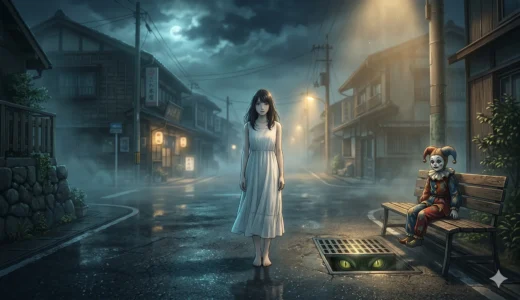
7 Scary Stories to Read When You’re Feeling Brave Enough
From ghostly visitors and whispering houses to mirrors that show the wrong reflection, these creepy stories, chilling short tales, and atmospheric ghost stories will follow you to bed tonight.
1. The Knock at 3 AM
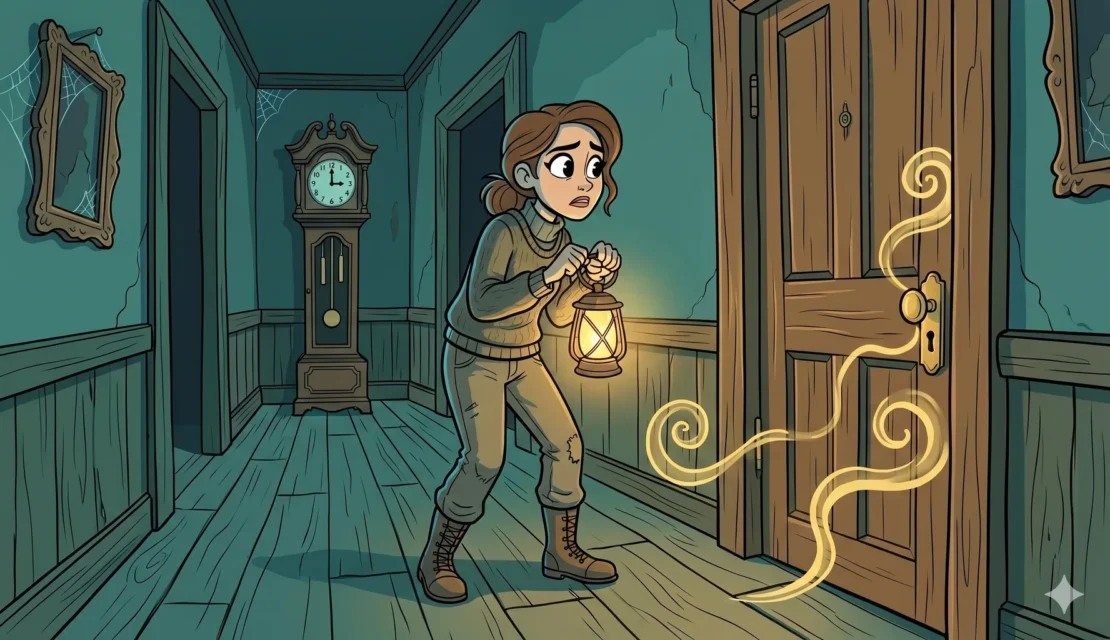
Everyone who has ever lived in the house at the end of Vellore Street knows one thing before they move in, because the neighbours always mention it within the first week, with the casual matter-of-factness of people sharing information about which bins go out on which days. At exactly three in the morning, there will be three knocks on the front door.
Not every night. But often enough.
Mara moved into the house on a Thursday in November, alone, because she was thirty-two and practical and the rent was extraordinarily reasonable, which she had correctly identified as either a red flag or an opportunity and had decided, on balance, to treat as an opportunity. The neighbours told her about the knocking on Saturday morning while she was bringing in groceries.
“Three knocks,” said the woman from number fourteen. “At three o’clock. Don’t answer it.”
“What happens if you do answer it?” said Mara.
The woman from number fourteen looked at her for a moment. “Nobody has,” she said. And went back inside.
Mara unpacked her groceries and decided this was local superstition and she was not the kind of person who reorganised her life around local superstition.
The first knock came on Tuesday.
She was awake already, because there is something about a house that wakes you in the small hours when you are still learning its rhythms. She was lying in the dark when the grandfather clock in the hallway struck three, and then, into the silence that followed, came the knocks. Three of them. Measured. Patient. The kind of knock that is not requesting entry so much as reminding you that someone is there.
Mara sat up.
She did not go downstairs. This was not cowardice. It was the particular intelligence of someone who has read enough stories to know that some doors are better left unopened.
She sat in the dark and listened to the silence that followed the knocks, which was somehow louder than the knocks themselves.
In the morning she was completely fine and the front door showed no marks and the path outside was empty. She called the woman from number fourteen.
“How long has it been happening?” she asked.
“Since before the house was built,” the woman said pleasantly. “Have a lovely day.”
Mara lived in the house for six years. She never answered the door at three in the morning. She never entirely slept through it either.
Some things, she learned, you simply make your peace with.
The chill: It is not what knocks at 3 AM that will stay with you. It is the fact that it has been knocking since before the house existed.
2. The Mirror in the Hallway
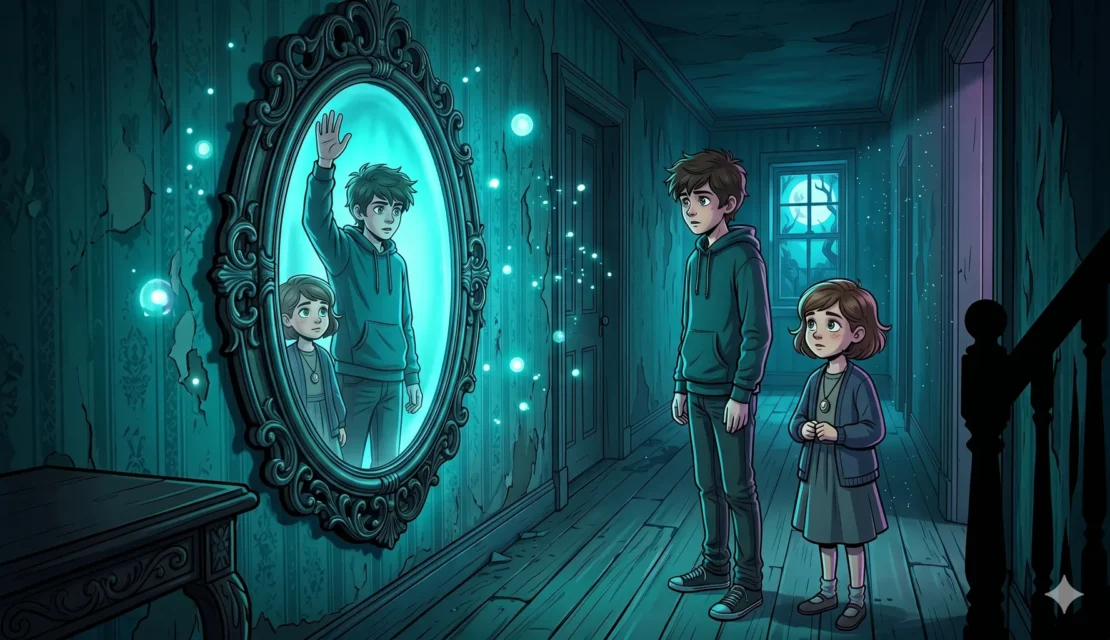
The mirror had been in the house when the Osei family moved in, hung in the entrance hallway, tall and dark-framed with an oval glass that reflected the hallway and the staircase and the front door in a slightly different quality of light than seemed strictly necessary.
They had kept it because it was useful. A last-minute glance before leaving the house. An assessment of whether the children’s school uniforms were presentable. The ordinary, daily business of a mirror.
The youngest child, a girl named Petra who was seven and who noticed things that the rest of the family was too busy to catch, started pausing in front of it.
“The mirror shows things slower,” she told her mother one afternoon.
Her mother was looking for her keys. “What do you mean, slower?”
“When I walk past it,” said Petra, “my reflection takes a moment to follow.”
Her mother found her keys and said “Mm” in the way that parents say “Mm” when they are listening with half their attention and have assessed the remaining half as sufficient for the current conversation.
Two weeks later her older brother Marcus, who was fourteen and thoroughly uninterested in anything that couldn’t be explained by physics, happened to stop in front of the mirror on a Tuesday evening.
He stood very still.
He raised his right hand.
In the mirror, the reflection raised its left hand. Which was correct. Which was what reflections do.
Then he lowered his hand.
The reflection kept its hand raised for one second longer than it should have.
Marcus stood in the hallway for a long time without moving. He was running calculations. He was applying the physics. He was arriving, repeatedly, at a conclusion that the physics did not support.
He went and found Petra.
“The mirror,” he said.
“I know,” she said.
They stood in the kitchen doorway looking at it from a distance that felt, in that moment, like the right amount of distance.
The mirror reflected the hallway. It reflected the staircase. It reflected the front door.
It did not, from where they stood, reflect either of them.
Which should have been impossible from that angle.
They didn’t move it. They didn’t cover it. They didn’t tell their parents, because there are some things that are worse when adults decide they need to investigate them properly.
They just stopped walking past it alone.
The chill: A mirror that shows you slightly wrong is frightening. A mirror that doesn’t show you at all raises questions you probably don’t want answered.
3. The Empty Room at the End of the Hall
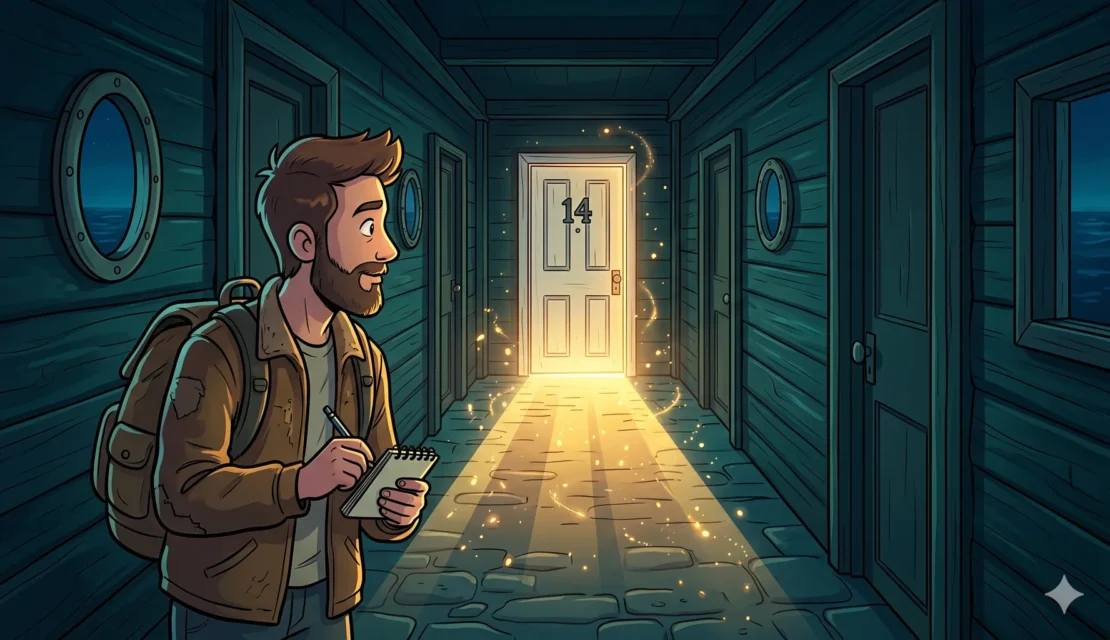
In a guesthouse in a small coastal town, there was a room at the end of the third-floor corridor that was never rented out.
The owner, a quietly spoken woman named Mrs. Hendricks, had been running the guesthouse for nineteen years. She maintained the room. She cleaned it every Monday. She opened the windows on warm days to air it out. She changed the bedding regularly even though nobody slept in it. She simply did not rent it.
Guests who noticed asked about it occasionally. She always gave the same answer: “That room is spoken for.”
A travel writer named Daniel, staying for a long weekend to write about the town, asked her about it on his second evening.
“Who is it spoken for?” he asked.
Mrs. Hendricks poured his tea. “The previous guests,” she said.
He waited for her to continue. She didn’t.
He went up to the third floor that night, as writers investigating things tend to do, and stood outside the door at the end of the corridor. It was a perfectly ordinary door. White painted wood. A brass number on the front. He could see the light under the door, the warm yellow of a bedside lamp.
He stood there for a moment.
Then he went back to his room, because he had learned, in a long career of going places he perhaps shouldn’t, that some things feel like invitations and some things feel like warnings, and the light under that door felt very specifically like neither.
In the morning at breakfast he noticed the guestbook on the reception desk. Nineteen years of signatures. He paged through it idly.
Every few months, the same room number appeared in the guestbook. Signed in, signed out, dates filled in correctly. Room 14.
The room at the end of the third-floor corridor.
He looked up at Mrs. Hendricks.
“The previous guests,” she said again, before he had asked anything. She refilled his tea. “Will you be staying another night?”
He checked out that afternoon.
The review he eventually wrote said the guesthouse was charming and the breakfasts were excellent and he would strongly recommend it to the right kind of traveller.
He never specified what kind.
The chill: The most frightening part of this story is not the room. It is the guestbook. Proof of signature tends to imply the ability to hold a pen.
4. The House That Remembered You

There are houses that forget their occupants the moment the keys are handed over to someone new. The walls absorb new paint and new voices and new cooking smells and move on with the impassive efficiency of a space that has no personal investment in who fills it.
And then there are houses like the one on Carmichael Road.
A family named Ashby moved in on a bright Saturday in September, and from the first evening they had the particular sense of being observed, not watched from outside, but regarded from within, by the house itself. The way a very attentive host watches a dinner party guest to anticipate needs before they’re expressed.
The house was warm when they arrived, though no heating had been running. The kitchen tap that had been described as temperamental worked perfectly from the first day. The room that everyone agreed felt like it should be the study functioned, they discovered, with the quality of focused quiet that genuine concentration requires, as if it had been doing this for years and knew its job.
But it was the small things that accumulated into something harder to dismiss.
The living room lights dimmed slightly when the children fell asleep on the sofa in the evenings. Not every time. Enough times.
The front door, which had a stiff lock, became easier on days when it was raining heavily outside, as if the house was reducing the friction of arrival.
The night the youngest child had a fever, the house was warmer than the thermostat explained.
The father mentioned these things to a neighbour one afternoon, cautiously, expecting to be told he was imagining it.
The neighbour nodded slowly.
“It’s a good house,” she said. “It looked after the family before you too. You’ll get used to it.”
He considered this.
“Is it meant to feel like being watched?”
“No,” said the neighbour. “It’s meant to feel like being looked after. You’re just not used to the difference.”
He went home and sat in the kitchen, which was warm and well-lit and entirely quiet.
After a while, it occurred to him that she was right.
The chill: A house that watches you is unsettling. A house that cares for you without being asked raises a different kind of question: what does it want in return?
5. The Girl Who Followed You Home
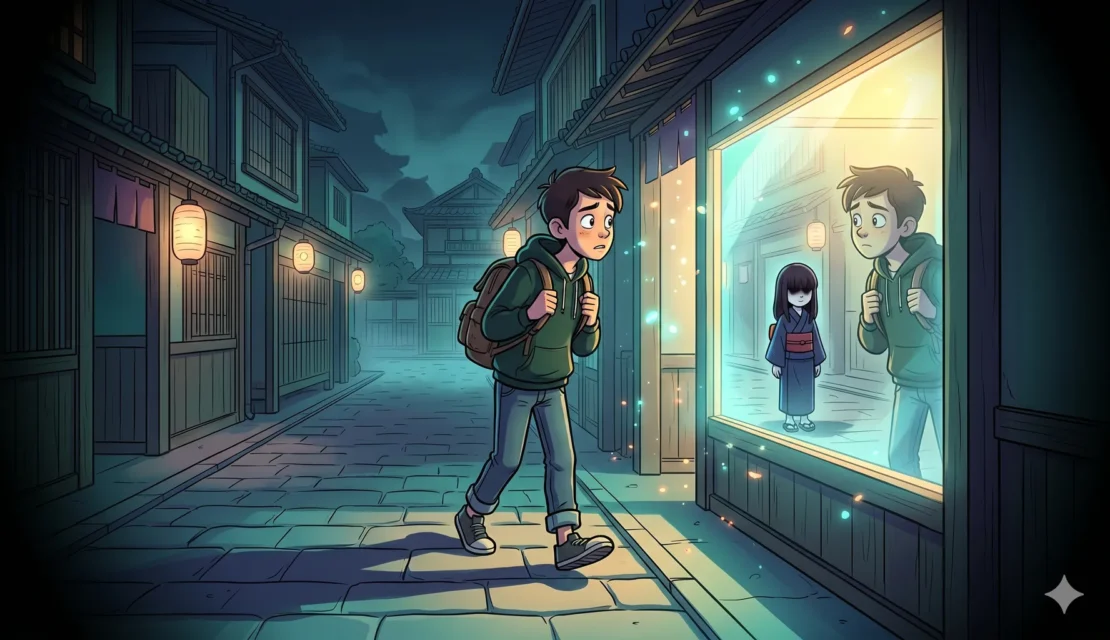
This is the kind of scary story that people who grew up in Indonesian towns will recognise in their bones, because versions of it have been told in every neighbourhood, in every province, by every grandmother who wanted to make sure the children came home before dark.
It starts like this: you are walking home alone in the evening. You notice someone behind you. A girl, young, dressed strangely for the weather, walking at exactly your pace. Not gaining. Not falling behind. Matching you, step for step, in the way that would be unremarkable in a busy street and is distinctly remarkable on a quiet one.
You speed up. She speeds up.
You cross to the other side of the road. She crosses too.
You stop to look in a shop window. In the reflection, you can see her standing in the middle of the street behind you, perfectly still, watching your reflection watch hers.
You do not turn around.
You walk home faster than you have ever walked in your life. You go inside. You lock the door, and then, because locking it once doesn’t feel sufficient, you check it a second time.
You wait.
Nothing happens.
In the morning you tell yourself it was a coincidence, someone going the same way, someone with an unfortunate tendency to walk at the same pace, someone who stopped because they too wanted to look in that shop window.
Then your neighbour knocks on your door.
“Did you see anyone outside last night?” she asks. Her face is doing something careful and controlled.
“Why?” you say.
She looks at the path outside your door for a moment.
“There are footprints,” she says. “On your front step. Going up to the door. But none going back.”
You both look at the step.
The footprints are small. Like a child’s.
And they stop, precisely, at your door.
The chill: The footprints that don’t return anywhere are the kind of detail that will occur to you at exactly the wrong moment tonight.
6. The Last Photograph
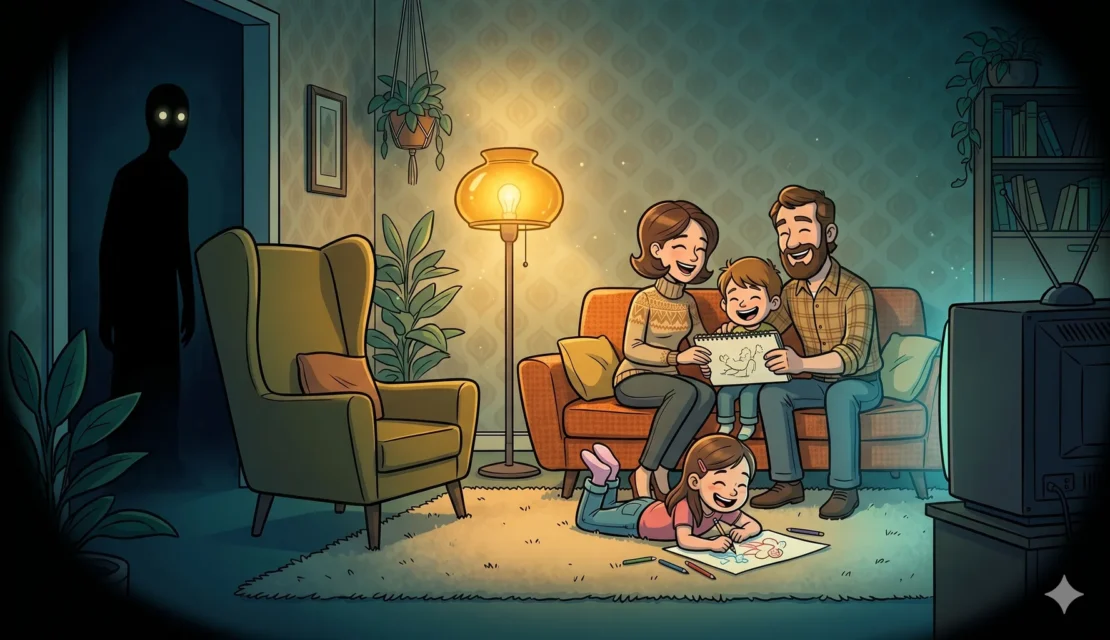
Maya was sorting through old photographs on a Sunday afternoon when she found the one she didn’t recognise.
It was in the box with the family pictures from her childhood, filed between a birthday party she remembered clearly at age seven and a trip to the coast she remembered equally clearly at age nine. So it was from around that time. The quality was right, slightly faded at the edges, the particular warm tone of photographs from that era.
It showed her family’s old living room, the one in the house they’d moved out of when she was eleven. She recognised the sofa, the carpet, the curtains with the pattern she had always found slightly hypnotic. She recognised her parents on the sofa, younger than she was used to seeing them. She recognised her brother in the armchair, a child, reading something.
She recognised herself on the floor in front of the television, drawing, the way she had spent most of her childhood Sundays.
What she did not recognise was the figure in the corner.
Behind the armchair, in the corner of the room that was always slightly shadowed in that house, there was a figure. Standing. Watching the family. Not visible enough to identify clearly, not obscured enough to mistake for furniture or a coat on a chair or anything else with a practical explanation.
Just standing. Just watching.
Maya turned the photograph over.
On the back, in her mother’s handwriting, was the caption that her mother had written on most of the family photos: Sunday afternoon, October.
Below that, in different handwriting she didn’t recognise, were three words added at some point after the original caption.
I was there.
Maya put the photograph down.
She picked up her phone and called her mother.
“Mum,” she said. “The corner of the living room in the old house. Behind the armchair. Was there ever anything there?”
A long pause.
“Why are you asking?” said her mother, and her voice had something in it that Maya had never heard before.
“No reason,” said Maya.
Neither of them said anything for a moment.
“Don’t look at it again,” said her mother, quietly. “Just put it away.”
Maya put it away.
She has not opened that box since.
The chill: Old family photographs deserve a second look. Until they don’t.
7. The Sound Through the Wall
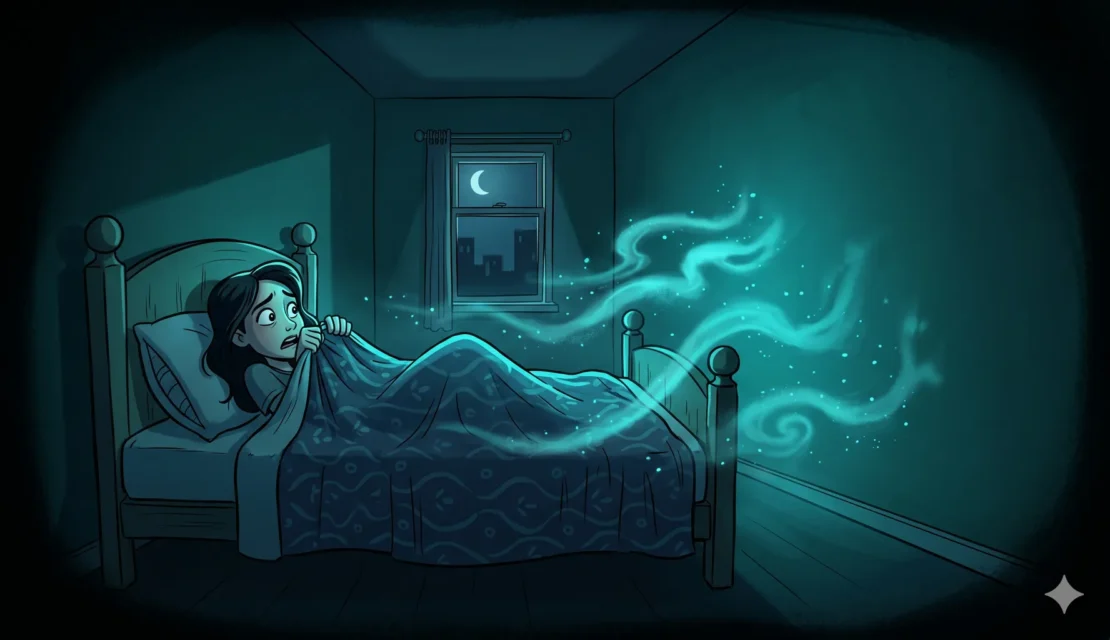
The apartment in Building C had been vacant for six months when Nadia moved in. This was unusual for that neighbourhood, where apartments were taken quickly and the vacancy list was long, but the rent was discounted and the landlord had been clear that there was a reason for the discount and that the reason was non-structural and the apartment was perfectly sound.
He did not elaborate. She did not push.
On her first night she heard the sound.
Not immediately. It was around midnight, when the building had settled into its sleeping rhythms and the street outside had gone quiet. A sound from the wall beside her bed. Not a pipe. Not a settling foundation. Not the kind of sound that belongs to the vocabulary of building noises that you accumulate over time in any apartment.
It was breathing.
Slow, steady, entirely calm. The breathing of something on the other side of the wall that was asleep, or resting, or simply present in the way that things are present when they have been somewhere long enough to belong there.
She lay very still and listened. It did not stop.
In the morning she checked the building plans that the landlord had provided. On the other side of that wall, according to every document, was the external face of the building. No adjacent apartment. No corridor. No space of any kind that could contain the source of what she had heard.
She asked the landlord, carefully, about the wall.
He was very quiet for a moment. “You heard it,” he said. It was not a question.
“What is it?” she asked.
He looked at her with the expression of someone choosing how much to say and landing on less than the full amount.
“The previous tenant said it was comforting,” he said finally. “Once you get used to it.”
“And before she got used to it?”
“She slept in the kitchen for a week,” he said. “But then she stopped. She said it kept her from feeling alone.”
Nadia looked at him.
“She moved out,” she said. “That’s why it’s been vacant.”
“She was transferred for work,” he said.
“Why is the rent discounted?”
He handed her the lease agreement.
She moved in anyway, because the rent truly was extraordinary and because she told herself the previous tenant’s experience was anecdotal and because she was, she believed, the rational type.
That was eight months ago.
She sleeps very well now.
She has stopped thinking about what is on the other side of the wall.
She prefers it that way.
The chill: The most unsettling thing about this story is not the breathing. It is how quickly we can learn to accept the presence of something we have never explained.
Why Scary Stories Are Actually Good for You and Your Children
We know what you might be thinking. Why is a preschool talking about scary stories? But here is the thing we genuinely believe at Apple Tree Preschool BSD: every kind of story matters, and scary stories in particular do something quietly important.
Scary Stories Build Emotional Courage
Age-appropriate spooky stories, the kind that make your heart beat faster without genuinely traumatising, help children and adults practise the experience of fear in a completely safe container. Feeling frightened by a story and then closing the book and realising you are entirely fine teaches, over and over, that big feelings are survivable. That is a genuinely valuable lesson.
Shared Scary Stories Build Connection
There is a reason scary stories are told around campfires and at slumber parties and in family groups. Sharing a frightening experience, even a fictional one, creates closeness. The “did that get you?” and the laughing and the sleeping with the light on, all of it is bonding. It is community built through shared vulnerability.
All Stories Develop Language and Imagination
At Apple Tree Preschool BSD, located in the Educenter BSD Building, we build young imaginations through every kind of story, joyful, funny, warm, and yes, occasionally a little bit eerie. Through our Singapore curriculum, children in our Toddler, Pre-Nursery, Nursery, and Kindergarten programmes develop rich language, emotional intelligence, and creative thinking through the full spectrum of narrative, because life is not always sunny and children deserve stories that reflect its full range.
Sweet Dreams, If You Can Manage Them
We hope these 7 scary stories gave you exactly what you were looking for tonight, a good case of the shivers, a reason to check that the curtains are fully closed, and a story worth telling someone else tomorrow. Scary stories are one of life’s small pleasures, and they’re best shared.
If you’d love for your child to grow up in a place where every kind of imagination is celebrated and nurtured, we would genuinely love to meet your family.Register now and come explore, imagine, and grow together at Apple Tree Preschool BSD! Chat with us on WhatsApp or call us at +62 888-1800-900. We can’t wait to welcome your little one, in the daytime, with all the lights on.



Be the first to write a comment.