If your child gives up too easily, it can feel like you are living with a tiny dramatic critic who reviews every task with, “Too hard, not for me,” then walks away like a celebrity leaving a press conference. We see this often at Apple Tree Preschool BSD in the Educenter BSD Building, and it usually shows up right when you are thinking, “We had a good day, surely nothing can go wrong now.”
Here’s the thing: giving up quickly is rarely laziness. Most of the time, your child is protecting themselves from frustration, embarrassment, or the uncomfortable feeling of not being instantly good at something. If you know what is driving the quitting, you can teach persistence in a way that feels safe, not like pressure.
We are going to keep this practical. You do not need a full behaviour makeover, and you definitely do not need to turn your home into a boot camp. You need small routines that help your child stay with hard things just a little longer, then a little longer again.
Why Your Child Gives Up Too Easily
When young children quit fast, they are usually responding to a feeling, not the task itself. The task is just the trigger. The real issue is what their brain decides the task “means.”
The Most Common Reasons Kids Quit Fast
A few patterns show up again and again:
- The task is slightly above their current skill level, so it feels impossible
- They fear making mistakes, especially if they have been corrected harshly before
- They are tired, hungry, overstimulated, or already carrying big emotions
- They expect instant success, because many modern experiences reward speed
- They compare themselves to others and assume they are “behind”
If your child gives up too easily at the end of the day, it might be less about attitude and more about energy. Even grownups quit faster when they are exhausted, we just call it “being done for today.”
Quitting Is Sometimes a Coping Strategy
Some children would rather stop than risk failing. Others stop because they do not yet have the words to say, “I’m stuck.” Helping your child build persistence starts with teaching them that stuck is normal, and solvable.
Teaching Persistence Without Turning Everything Into a Fight
If you push too hard, your child may dig in. If you rescue too quickly, your child learns quitting is the shortcut. The sweet spot is calm support plus a clear expectation: we try again, in a smaller way.
Use “Tiny Wins” Instead of Big Pushes
Instead of saying, “Finish the whole worksheet,” shrink the goal to something your child can handle. Your job is to design success that still requires effort.
Examples:
- “Let’s do one question together.”
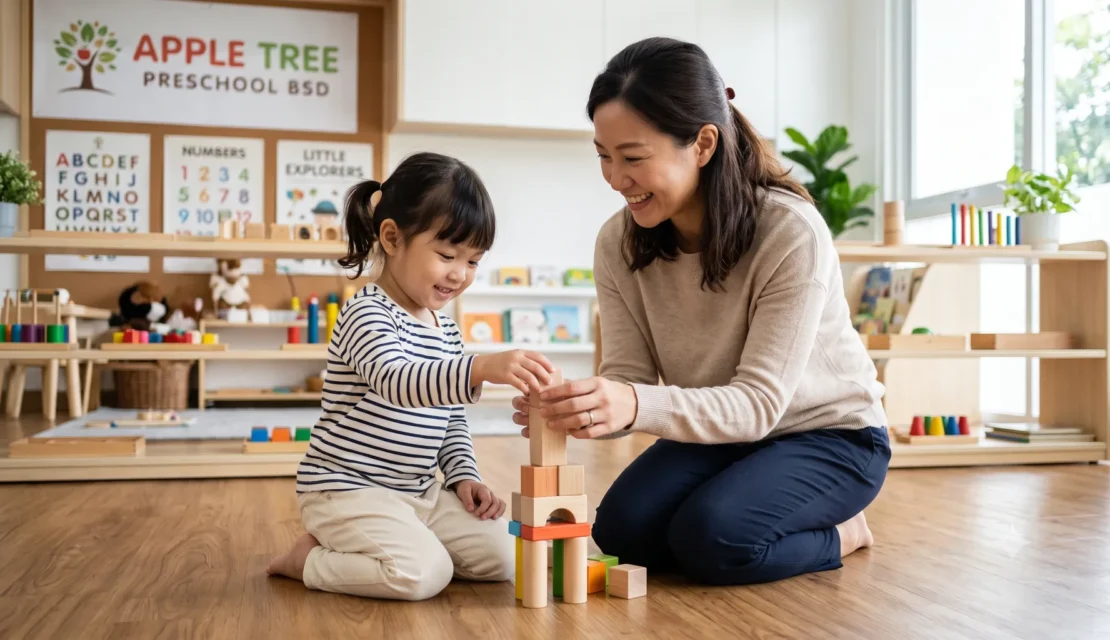
- “Let’s build just the bottom of the tower first.”
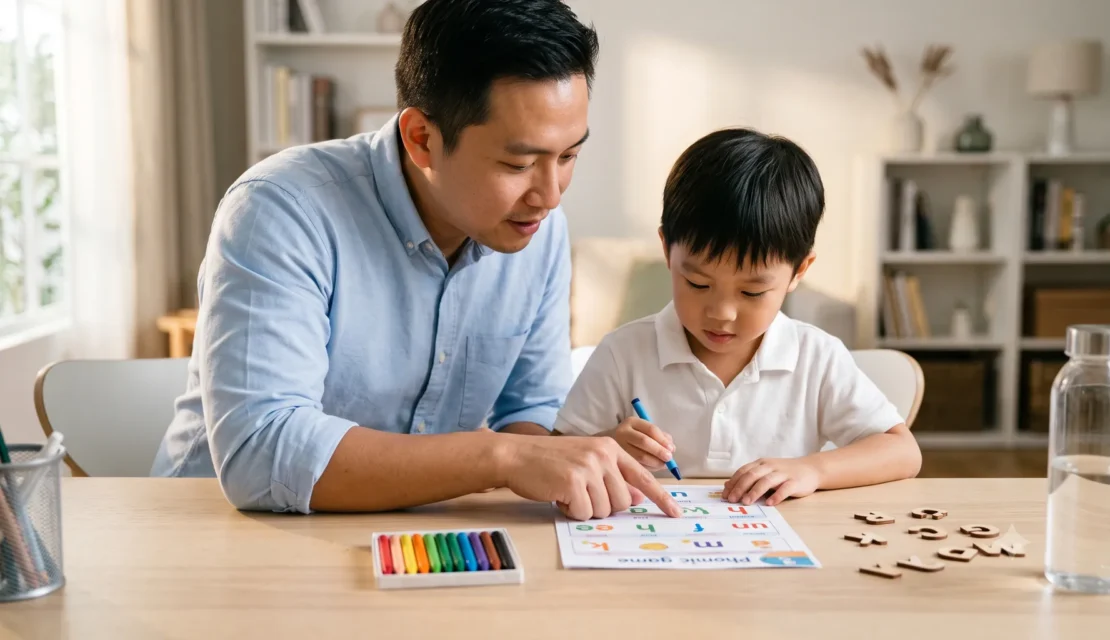
- “Let’s trace one letter, then we stop.”
You are teaching your child that effort leads somewhere, even if it is small.
Replace “Just Try Harder” With “Try a New Strategy”
Children who give up too easily often believe there is only one way to do a task. When that way fails, they assume they fail.
Try saying:
- “Let’s try a different way.”
- “Show me where it got tricky.”
- “What could we change?”
This turns persistence into problem solving, which feels more empowering than being told to push through.
Scripts That Help When Your Child Wants to Quit
You do not need long lectures. You need short phrases you can repeat so your child learns what to do when frustration appears.
Simple Phrases That Build Persistence
Keep these in your back pocket:
- “Hard things feel hard at first.”
- “We can do hard things in small steps.”
- “Not yet, but soon.”
- “Let’s take a breath, then one more try.”
That last one matters because frustration lives in the body. A calmer body can keep going.
Teach the “Pause Plan”
When your child melts down, persistence is impossible. Teach a tiny routine that interrupts quitting.
Try this three step plan:
- Pause and do two slow breaths
- Name the problem, “I’m stuck” or “This is hard”
- Choose the next step, “help please” or “easier version”
You are giving your child a map for what to do instead of quitting.
Make Your Home a Place Where Mistakes Are Safe
If mistakes feel dangerous, quitting becomes logical. If mistakes feel normal, your child will try again.
Praise Effort, Not Talent
When you praise only results, children learn that being “good” matters more than learning. When you praise effort, children learn that progress matters.
Try praising:
- persistence, “You kept going even when it was tricky”
- strategy, “You changed your plan, that was smart”
- recovery, “You calmed down and tried again”
This teaches your child that the proud moment is not perfection. It is continuing.
Let Your Child See You Struggle Calmly
Your child learns persistence by watching you. If you get annoyed and quit every time something is difficult, they copy that too.
You can narrate your own persistence in real time:
“Oops, I made a mistake. I’m going to try again.” Simple, honest, and it works.
Practical Activities That Train Persistence Daily
Persistence grows through repetition, not speeches. The goal is to practise staying with something hard in small, safe ways.
Use Activities That Naturally Require Trying Again
Good persistence builders include:
- puzzles that are slightly challenging
- building blocks, especially taller structures
- simple board games with turn taking
- beginner crafts like cutting and pasting
- early writing and phonics games
Keep sessions short and stop while your child is still managing. The brain remembers endings, so end on success whenever you can.
Use Timers to Make Effort Feel Finite
Many children give up because they feel trapped. A timer makes the effort feel manageable.
Try: “Let’s work for five minutes, then we take a break.” Five minutes can be a huge win for a child who usually quits after thirty seconds.
What Not to Do When Your Child Gives Up Too Easily
Some common adult responses make quitting worse, even when your intentions are loving.
Avoid These Persistence Killers
- Rescuing immediately, because it teaches your child they cannot handle difficulty
- Criticizing effort, “You’re not even trying,” because shame shuts the brain down
- Comparing to other children, because it increases anxiety and avoidance
- Making it personal, “You always quit,” because labels become identity
If you slip, reset and repair. A calm restart teaches more than a perfect reaction.
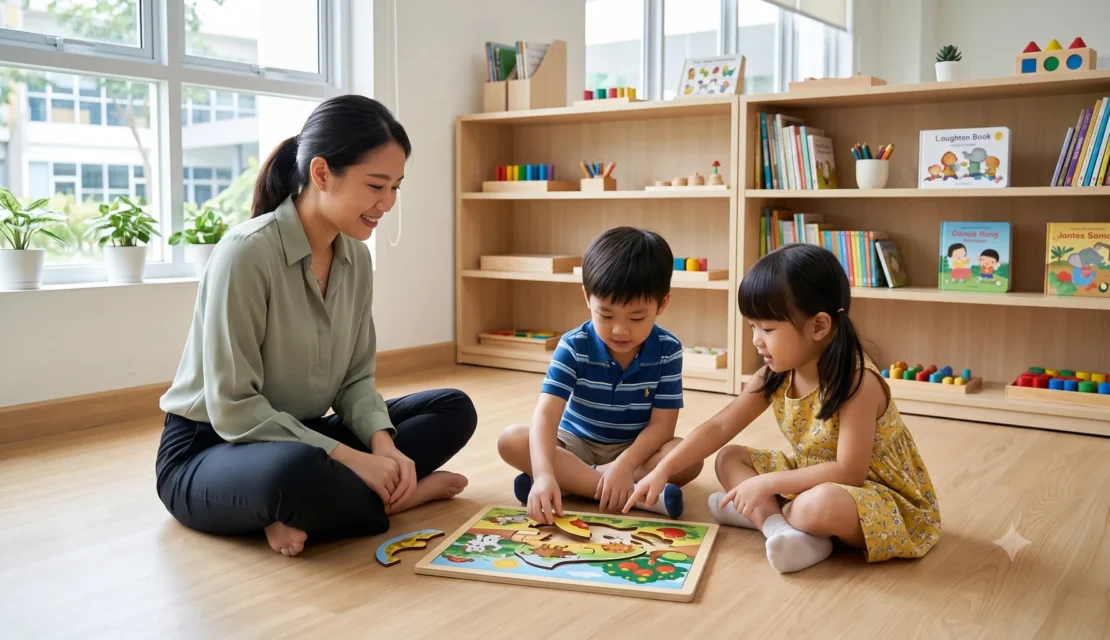
How We Build Persistence at School Every Day
At Apple Tree Preschool BSD, we teach persistence through routines, play, and gentle expectations that children can handle. Children practise waiting, taking turns, finishing small tasks, and trying again with support. They also learn that mistakes are part of learning, not a reason to stop.
Our Singapore curriculum includes English, Mathematics, Chinese, Creativity, Social Studies, Science, Bahasa, Moral, Music, Physical Education, and Phonics. But underneath all of that, we are building the habits that make learning possible, like attention, resilience, and confidence.
If you want to see how this looks by age, explore our programs. When school and home use the same language around effort and growth, children progress faster and feel calmer.
A Simple Weekly Plan You Can Start Today
If you want a realistic plan, keep it small. Big plans fail when you are tired.
Try this:
- Choose one “persistence activity” daily for 5 to 10 minutes
- Use one consistent phrase, “One more try, then break”
- Celebrate one effort moment each evening, even a tiny one
- Do one portfolio check weekly, look at old work and notice growth
Your child gives up too easily less often when they start collecting evidence that effort works.
Let’s Help Your Child Become a “Try Again” Kind of Kid
When your child gives up too easily, they are not broken. They are learning how to handle frustration, and you can teach that skill the same way you teach brushing teeth, slowly, repeatedly, and without expecting instant perfection.
If you would like a learning environment that supports persistence through daily routines, playful challenges, and warm teacher guidance, we would love to meet your family at the Educenter BSD Building. Come see how our classrooms help children grow brave enough to try again.
Come play and learn with other children!
Chat with us on WhatsApp or call +62 888-1800-900 to ask about class availability and the best fit for your child.





Be the first to write a comment.