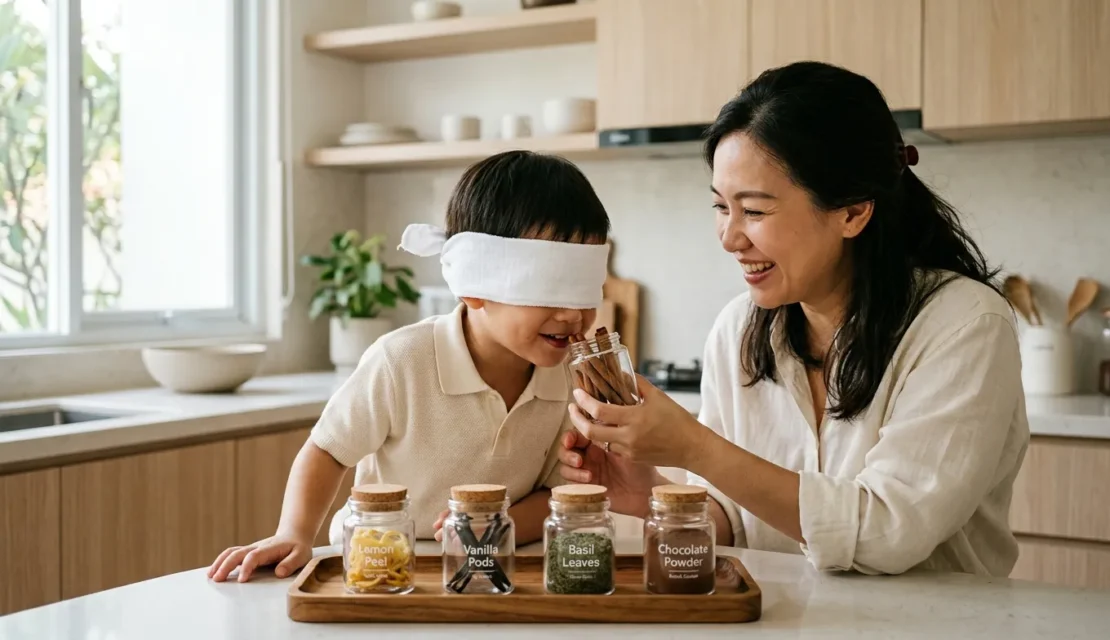
If you have ever watched your child sniff a jar of cinnamon like a tiny food critic on a very important assignment, you already know how much fun a Scent guessing game can be. At Apple Tree Pre-School BSD, located in Educenter bsd, we love simple sensory activities that turn ordinary home moments into rich learning experiences. The best part is that you do not need fancy materials, expensive toys, or a perfectly organised kitchen that looks like it belongs in a magazine. You just need a few safe ingredients, a little curiosity, and a child who is ready to sniff their way through an adventure.
Young children learn with their whole body. They touch, taste, listen, move, and yes, smell. The sense of smell is often overlooked, but it plays a huge role in memory, attention, vocabulary, and how children understand the world around them. A playful scent activity can wake up their curiosity in seconds.
Why a Scent Guessing Game Is So Good for Young Children
A Scent guessing game may look simple from the outside, but it supports many areas of early childhood development at once. When your child smells something and tries to identify it, they are doing more than making a lucky guess. They are comparing, remembering, describing, and building connections between sensory input and language.
That is a lot of learning packed into one little sniff.
Smell helps children build stronger memory
Scents are closely connected to memory. A child who smells orange peel, vanilla, or ginger may suddenly remember baking with you, visiting a grandparent, or drinking warm tea when they were unwell. These scent based memories help children make sense of their world in a very personal way.
This is one reason a Scent guessing game can feel so engaging. It is not just about right or wrong answers. It is about connecting experience, emotion, and memory.
Scent games expand vocabulary naturally
Children do not always have words ready for what they smell. That is part of the fun. You can help them describe a scent as sweet, spicy, fresh, sour, warm, strong, gentle, fruity, or sharp.
Those descriptive words matter. They help your child become more expressive and more observant. Instead of simply saying, “I like it,” they begin saying, “It smells sweet and a little bit spicy,” which is a lovely jump in language development.
Kitchen scent play encourages focus
A Scent guessing game also teaches children to slow down and pay attention. They have to pause, sniff carefully, and think before answering. For preschoolers, that kind of quiet concentration is genuinely valuable.
It is also quite amusing to watch. Some children close their eyes dramatically like they are judging an international cooking competition, which frankly adds to the charm.
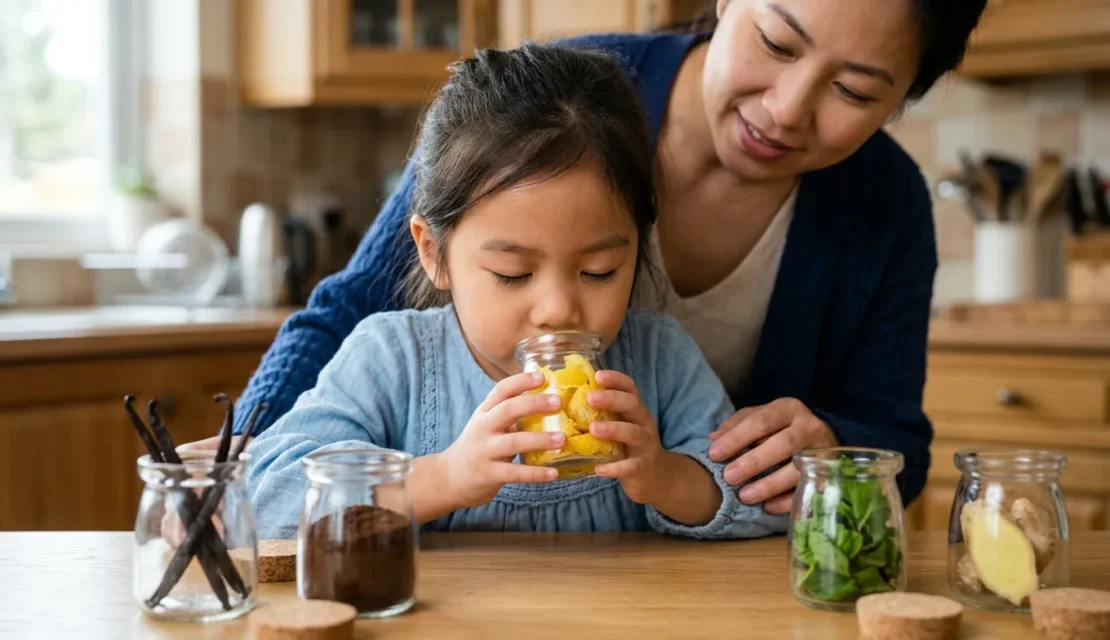
How to Set Up a Scent Guessing Game at Home
The beauty of a Scent guessing game is that it is easy to prepare with things you probably already have in your kitchen. It can be a five minute activity, or it can stretch into a longer play session if your child gets excited and starts guessing everything in sight.
Simple materials you can use
You only need a few safe items:
- Small containers or cups
- Cotton balls or tissue
- Safe kitchen ingredients with noticeable scents
- A spoon for handling ingredients
- A cloth or blindfold if your child is comfortable using one
If you do not want to use a blindfold, that is completely fine. You can simply ask your child to close their eyes. Preschoolers usually enjoy this part, especially if they feel mysterious and important.
Safe scent ideas from the kitchen
Choose scents that are clear, familiar, and safe for children to smell. Good options include:
- Cinnamon
- Vanilla
- Lemon peel
- Orange peel
- Coffee powder
- Ginger
- Mint leaves
- Basil
- Chocolate powder
- Cloves
Try not to use anything too strong or irritating. The activity should feel fun and gentle, not like your child accidentally wandered into a spice market with no warning.
Easy Ways to Play a Scent Guessing Game
Once your materials are ready, the game itself is wonderfully simple. That simplicity is exactly why it works so well for young children.
Version one, smell and guess
Place one scent in each container. Invite your child to smell one at a time and guess what it is. If they do not know the answer, give clues or let them compare it to something familiar.
You might say, “We put this in cakes,” or “This smells like a fruit we eat at breakfast.” A Scent guessing game should feel supportive, not like a test.
Version two, match the same smell
Prepare two containers with the same scent and ask your child to find the matching pair. This turns the activity into a memory and comparison game as well as a sensory one. It is excellent for concentration and attention to detail.
This version works especially well if your child enjoys puzzles or sorting activities.
Version three, describe before guessing
Before your child guesses the item, ask them to describe the smell. Is it sweet, fresh, spicy, soft, or strong? This helps them think more deeply and use richer language.
In our experience, children often come up with descriptions that are unexpectedly brilliant. You may hear things like, “It smells like a cookie trying to be fancy,” and honestly, that is excellent work.
What Children Learn from a Scent Guessing Game
A Scent guessing game supports much more than the sense of smell. It builds observation, patience, language, memory, and even confidence. When children realise they can recognise a scent and explain it, they feel clever in the best possible way.
Sensory awareness grows stronger
Children become more tuned in to their environment when they practise smelling carefully. They start noticing that foods, plants, and everyday objects all carry unique scents. That awareness helps them engage more fully with the world around them.
This is an important part of early sensory development. The more children notice, the more they learn.
Critical thinking begins with simple comparisons
A child might say, “This one smells like the tea we drink,” or “This smells sweeter than the other one.” That is comparison, reasoning, and classification all happening in a playful setting. The learning is real, even if your kitchen table looks slightly chaotic by the end.
Confidence builds through success
Small wins matter. When your child guesses a scent correctly, they feel proud. When they guess wrong and try again, they learn that mistakes are part of exploring.
That kind of confidence matters in every area of learning. Children who feel safe to guess, describe, and explore often become more willing to take healthy learning risks elsewhere too.
Tips to Make Scent Games More Meaningful
If you want your Scent guessing game to be even more enjoyable, a few small adjustments can make a big difference.
Keep the activity short and cheerful
Young children usually do best with short, lively sessions. Five to ten minutes is often enough, especially for younger preschoolers. Stop while your child is still enjoying it, rather than waiting until they wander off in search of a snack.
Connect scents to real life
After each guess, talk about where the scent comes from. Is it used in cooking, baking, drinks, or gardening? This helps children connect the activity to daily life in a meaningful way.
Let your child help prepare
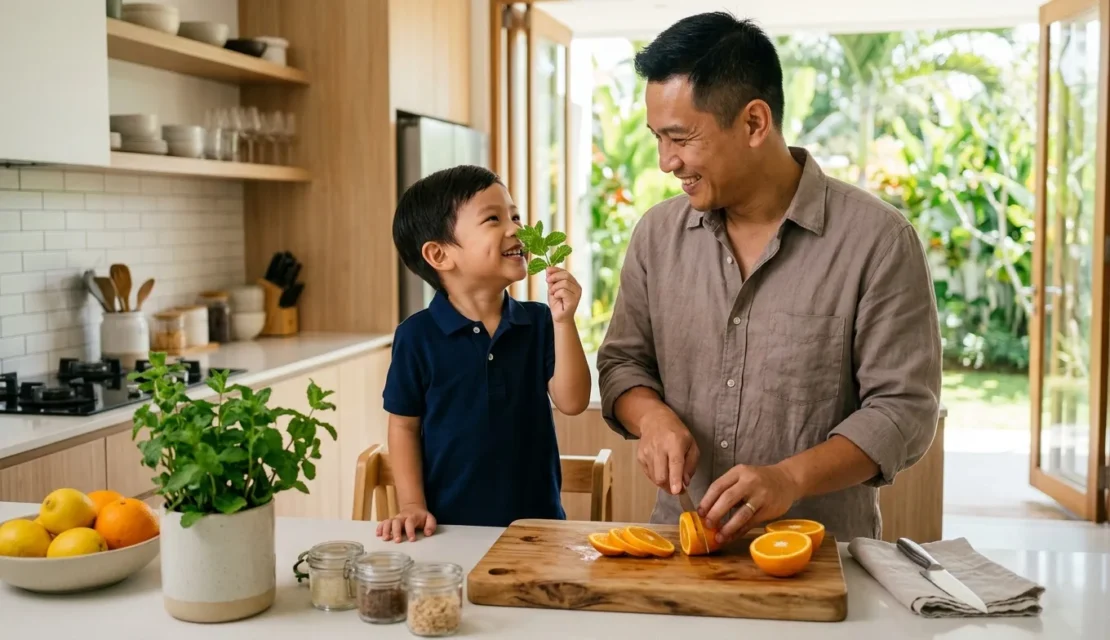
If your child is old enough, let them help peel the orange, pick the mint, or place the ingredient into the container. That extra involvement makes the activity feel even more exciting and hands on.
At Apple Tree Pre-School BSD, we believe these simple sensory invitations are part of what helps children grow into confident, curious learners. Through hands on exploration, conversation, movement, and discovery, children learn best when they are actively involved. If you would like to see how we support this kind of joyful learning every day, you can explore our programs.
Little Noses, Big Discoveries
A Scent guessing game is one of those wonderfully easy activities that feels playful and light, but quietly supports real learning. It helps your child strengthen their sense of smell, grow their vocabulary, sharpen memory, and build confidence through simple kitchen exploration. Not bad for an activity that starts with sniffing cinnamon in a cup.
If you are looking for a preschool where curiosity, sensory learning, and joyful discovery are part of everyday life, we would love to welcome your family. Chat with us on WhatsApp or call us at +62 888-1800-900. Come play and learn with other children at Apple Tree Pre-School BSD.





Be the first to write a comment.