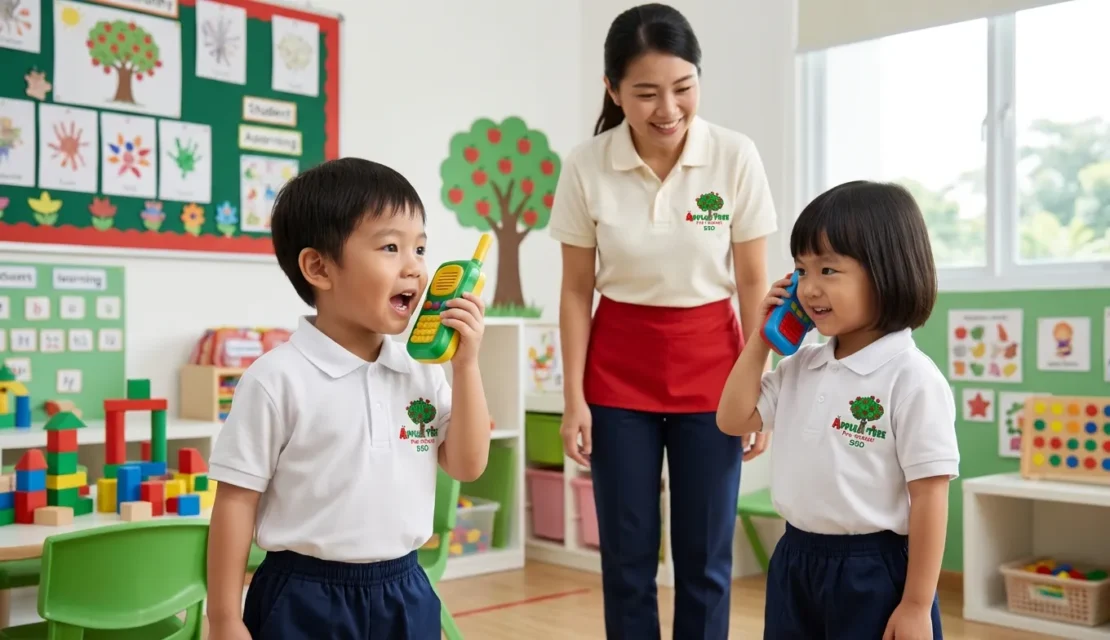
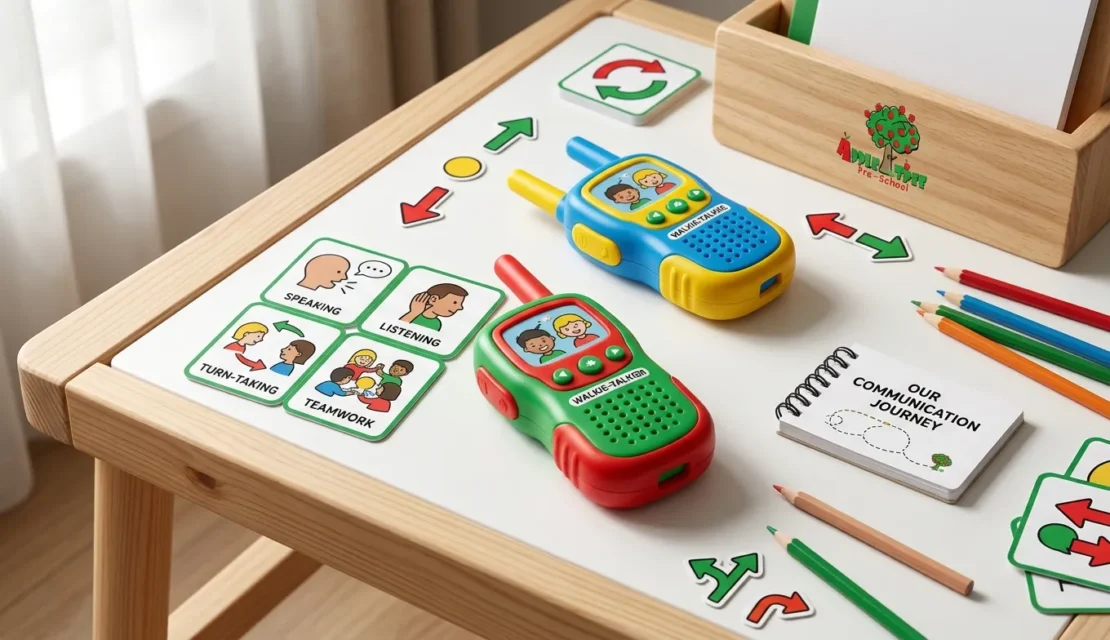
If you have ever handed a child a toy walkie talkie and watched their whole personality suddenly become “mission commander,” you already know how magical this little gadget can be. Walkie talkie play is one of those simple activities that feels like pure fun, but quietly teaches children how to listen, speak clearly, take turns, and respond with confidence. At Apple Tree Pre-School BSD, located in the Educenter BSD Building, we love learning tools that make children feel excited rather than pressured, and this one absolutely earns its place in the play basket.
What makes it even better is that children do not realize they are building communication skills while they are busy pretending to be explorers, rescue teams, shopkeepers, or secret agents with very important snack related information. For parents, that is great news. When learning feels playful, children usually lean in more willingly, and that is exactly the sweet spot we want.
Walkie Talkie Play Helps Children Communicate With Purpose
Young children are still figuring out how conversations work. They may talk over each other, mumble halfway through a sentence, or suddenly switch topics without warning because a butterfly or biscuit crossed their path. That is normal, but it also means they need lots of chances to practice real communication in ways that feel natural.
Walkie talkie play gives children a reason to speak with purpose. They need to send a message, wait for a response, and listen carefully so the game can continue. This structure helps children understand that communication is not just about talking, it is also about timing, clarity, and paying attention.
Why children love this kind of play
Children enjoy anything that makes them feel grown up and important. A walkie talkie instantly turns an ordinary room into a jungle expedition, a fire station, or a mission control center. That kind of imaginative setup keeps them engaged much longer than a simple “let’s practice speaking clearly” activity ever could.
It also feels interactive in a very satisfying way. One child speaks, the other responds, and there is a real sense of connection. Even shy children often warm up when they have a playful device in hand and a role to step into.
Why it is great for communication development
When children use walkie talkies, they naturally practice skills such as:
- speaking in complete thoughts
- listening before replying
- waiting for their turn
- giving simple instructions
- asking clear questions
- responding to information
These are foundational communication habits that support social development, classroom participation, and everyday confidence. In other words, this is not just cute play. It is useful play.
How Walkie Talkie Play Builds Listening Skills
We often talk about speech development, but listening is just as important. Some children can talk endlessly, and quite impressively too, but listening is where the real challenge begins. That is where walkie talkie play can be surprisingly effective.
Listening becomes part of the game
In normal conversation, children may zone out if they are distracted or excited. With a walkie talkie, they quickly realize that if they do not listen, they miss the message. Suddenly, paying attention matters because the game depends on it.
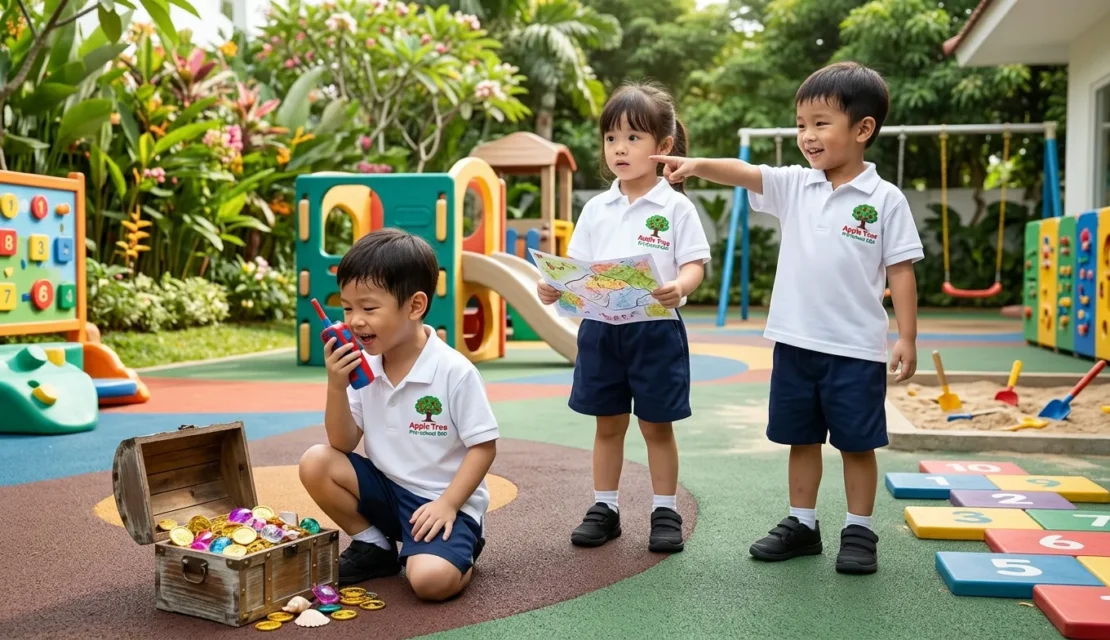
That makes listening feel meaningful rather than forced. They are not listening because an adult said so. They are listening because they want to know where the treasure is, who needs help, or whether the teddy bear patient has been rescued.
Children learn to filter and focus
Walkie talkie communication also teaches children to focus on relevant information. They listen for key words, directions, or clues. This helps build attention and auditory processing skills, which are important for learning in group settings and classrooms.
We see this often in preschool. Children who can focus on short spoken instructions tend to feel more confident in activities, routines, and social interactions. It is a small skill with a very big ripple effect.
Walkie Talkie Play Encourages Clear Speech
Many young children know exactly what they want to say, but what comes out may be a fast and cheerful blur. Parents then become part time interpreters, smiling politely while trying to decode the message. We have all been there.
Speaking clearly has a natural purpose
During walkie talkie play, children quickly discover that unclear speech makes communication harder. If their friend cannot understand the message, they may need to repeat it more slowly or choose better words. That is excellent practice, and it happens in a completely natural way.
You can gently model simple phrases like:
- “Can you hear me?”
- “Please come to the kitchen”
- “I found the toy box”
- “What is your plan?”
- “I need help over here”
These short, practical sentences help children organize their thoughts and speak more clearly.
Confidence grows with every exchange
The more children practice using their voice successfully, the more confident they become. A child who feels heard is more likely to keep trying, keep speaking, and keep engaging with others. That matters a lot, especially for children who are naturally quiet or still developing expressive language.
Sometimes all it takes is one playful communication tool to help a child come out of their shell. It is lovely to watch.
Easy Walkie Talkie Games You Can Try at Home
You do not need a complicated setup to make walkie talkie play effective. In fact, the simplest games are often the best because they leave more room for imagination.
Fun ideas for everyday play
Here are a few easy ways to use walkie talkies at home:
- Treasure hunt with spoken clues
- Pretend rescue mission for toys
- Hide and seek with location hints
- Shop and delivery game
- Animal safari around the house
- “Report from the kitchen” during pretend cooking
These games encourage children to ask questions, give directions, and listen carefully. They also add a sense of excitement to ordinary spaces, which is always a parenting bonus.
Keep the play warm and relaxed
You do not need to correct every sentence or turn the activity into a mini language lesson. The goal is connection, not perfection. If your child says something unclear, you can model it back gently instead of pointing out mistakes.
That keeps the play positive and helps children feel safe experimenting with language. When children feel relaxed, they usually communicate more.
What Children Learn Beyond Communication
One of the things we love most about walkie talkie play is that the learning does not stop at speaking and listening. It also supports social and emotional growth in beautiful little ways.
Children learn to cooperate, take turns, and include someone else in their idea. They practice problem solving when messages need to be repeated or clarified. They also build imagination, self expression, and confidence, all while sounding delightfully serious about highly important pretend emergencies.
At Apple Tree Pre-School BSD, we value these kinds of rich, playful experiences because they support the whole child. Through our Singapore curriculum, children grow in English, Mathematics, Chinese, Creativity, Social Studies, Science, Bahasa, Moral, Music, Physical Education, and Phonics. You can explore our programs to find the class that best fits your child’s age and stage.
Little Voices, Big Growth
Sometimes the best learning tools are not the fanciest ones. Walkie talkie play may look simple, but it creates meaningful opportunities for children to listen well, speak clearly, and connect with others in a joyful way. That is the kind of learning we always love, the kind that sneaks in through laughter, imagination, and a little bit of dramatic pretending.
If you would like your child to grow in communication, confidence, and social skills in a warm and playful environment, we would love to welcome your family to Apple Tree. To learn more, Chat with us on WhatsApp or call us at +62 888-1800-900. Register now and come play and learn with other children at Apple Tree Preschool BSD.


Be the first to write a comment.