When people talk about school readiness, they usually jump straight to letters, numbers, and whether a child can hold a pencil without launching it across the room. But in our experience, social emotional learning preschool skills are just as important, sometimes even more important, because children learn best when they feel safe, understood, and connected. At Apple Tree Pre-School BSD, located in Educenter bsd, we see every day that when children learn how to manage feelings, build friendships, and express themselves well, everything else starts to fall into place.
That is why so many parents in BSD ask us not only, “Can my child learn fast?” but also, “Will my child be happy here?” We love that question, because it gets to the heart of what really matters in early childhood. A child who feels calm, confident, and cared for is much more ready to explore, participate, and grow.
Social Emotional Learning Preschool Skills Matter More Than Many Parents Realize
In the preschool years, children are learning how to be with other people. They are figuring out how to wait, share, speak up, recover from disappointment, and understand that other people also have feelings, which is not always great news when someone else gets the last blue crayon.
This is exactly why social emotional learning preschool experiences are so valuable. These early lessons help children build the habits they need for school life, family life, and everyday life. When children learn how to handle emotions and relate to others, they build a strong foundation for future learning.
What social emotional learning looks like in real life
Social emotional learning is not just a fancy phrase adults use during school meetings. It shows up in the little moments, like when a child says, “I am upset because he took my toy,” instead of crying for twenty minutes and collapsing dramatically onto the floor. Honestly, that kind of progress deserves applause.
In preschool, social emotional learning includes skills such as:
- Recognizing and naming feelings
- Learning to take turns
- Understanding routines and boundaries
- Practicing empathy and kindness
- Solving simple social problems
- Building confidence to try new things
These skills may sound simple, but they shape how children function in a classroom and beyond.
How Social Emotional Learning Supports Preschool Growth
A quality preschool does not treat emotions like side topics. We include them in daily interactions, classroom routines, play, and group activities. Children do not learn emotional skills from one big lecture. They learn them through repetition, guidance, and real experiences.
Children become better at understanding their feelings
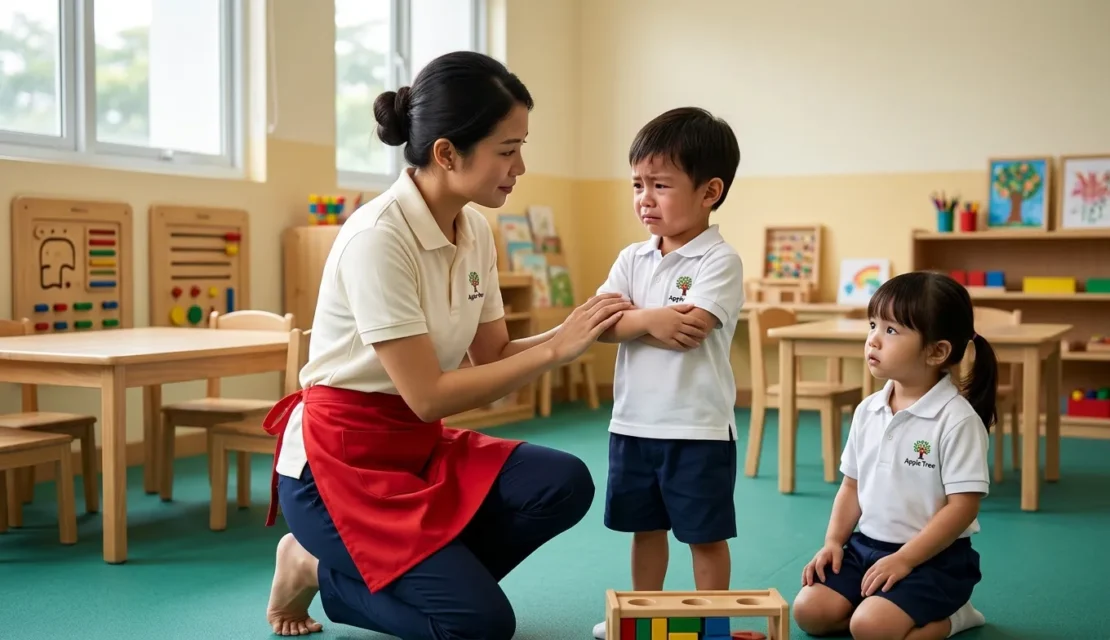
One of the biggest benefits of social emotional learning preschool programs is that children begin to understand what they are feeling. Before that, many children simply experience big emotions without knowing what is happening. Everything feels huge, urgent, and extremely unfair, especially if someone touched their snack.
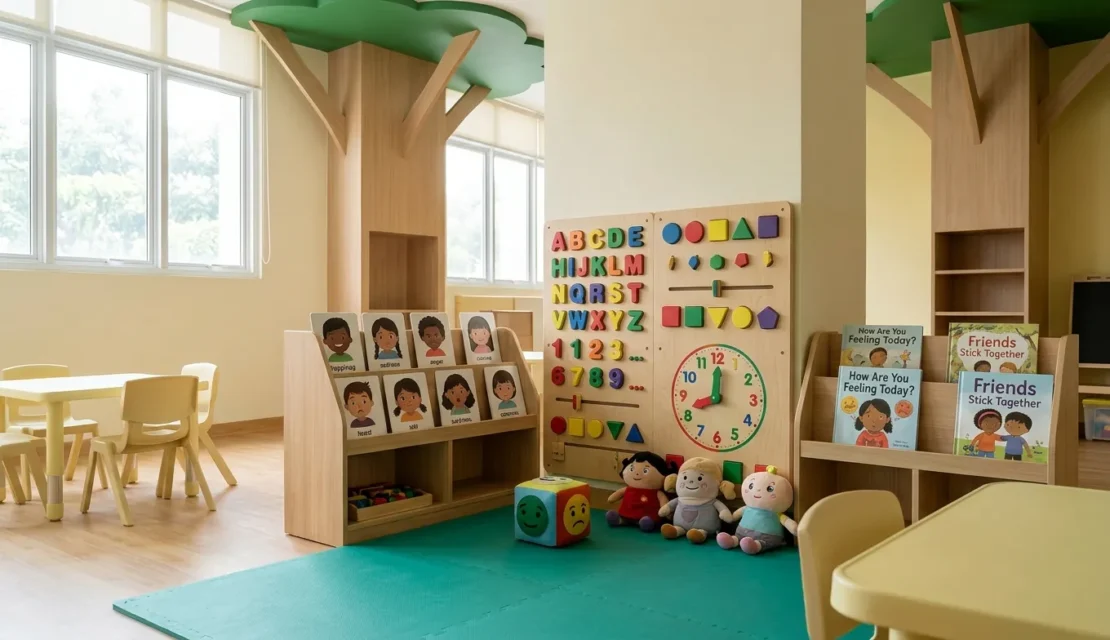
When teachers help children name emotions like happy, sad, frustrated, nervous, or excited, children gain a sense of control. Once they can identify a feeling, they are more likely to manage it in healthy ways. This is one of the first steps toward emotional maturity.
Children learn how to build friendships
Friendship is a serious business in preschool. One minute two children are best friends forever, and five minutes later they are in a disagreement over who saw the toy truck first. Social emotional learning helps children navigate these ups and downs without feeling overwhelmed.
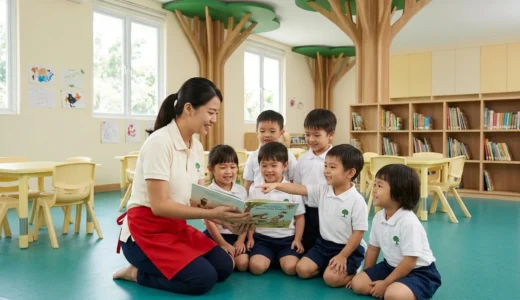
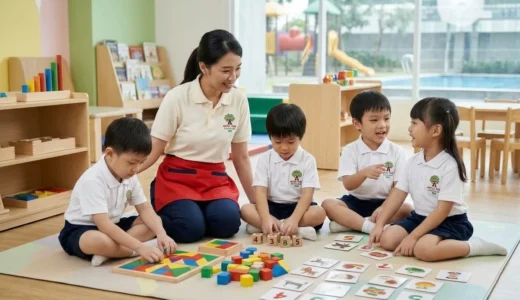
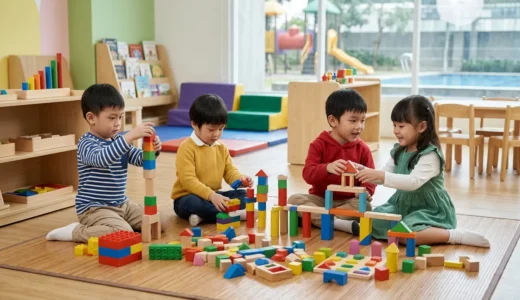
Through guided play and classroom routines, children learn how to greet others, join a group, ask politely, and repair a conflict. These are not small skills. They help children feel accepted and connected, which makes school a much happier place to be.
Children grow in confidence and independence
We often notice that children become more confident when they know how to express their needs and feelings. A child who can say, “Can you help me?” or “I need a turn,” is already developing important self advocacy skills. That confidence carries into academic tasks too.
When children feel emotionally secure, they are more willing to try new activities. They are less afraid of making mistakes, and that matters because learning is full of trial and error. Sometimes it is messy, sometimes it is noisy, and sometimes the glue ends up in very unexpected places, but growth is happening.
Why Social Emotional Learning Preschool Programs Help With Future Learning
Parents sometimes wonder whether social emotional development takes time away from academic learning. In reality, it supports academic learning. Children who can focus, cooperate, and manage frustration are much better prepared to absorb new information.
Better focus and classroom participation
A child who is constantly overwhelmed by emotions will struggle to listen, follow instructions, or stay engaged. Social emotional learning helps children calm their bodies and minds so they can participate more fully. This creates a more positive and productive classroom experience.
When children know what to expect and feel supported by trusted teachers, they become more comfortable joining discussions, participating in activities, and completing simple tasks. Those habits are incredibly important for long term school success.
Stronger communication skills
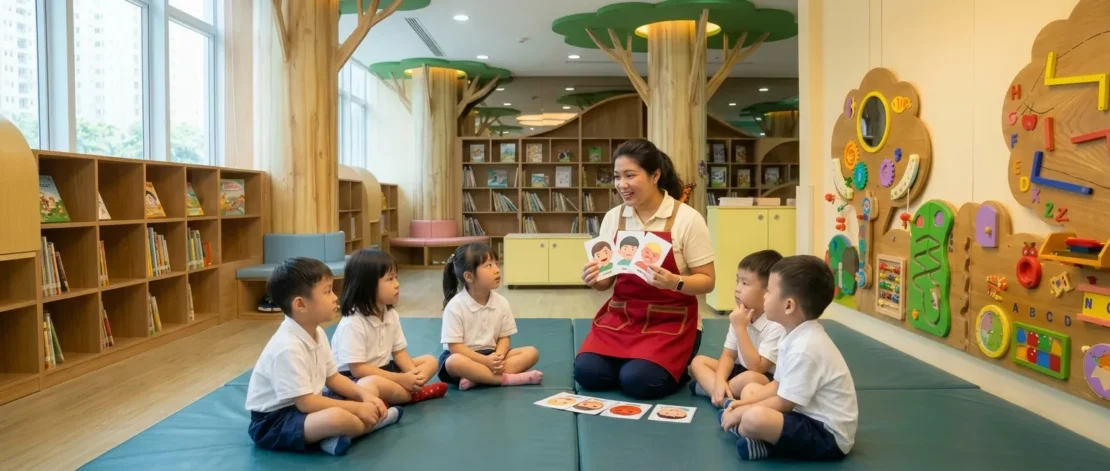
Social emotional learning preschool activities also strengthen language development. Children learn to explain what they want, describe what happened, and listen to others. These communication skills help with friendships, classroom learning, and problem solving.
At Apple Tree, we support this growth through meaningful interactions across our Singapore based curriculum, which includes English, Mathematics, Chinese, Creativity, Social Studies, Science, Bahasa, Moral, Music, Physical Education, and Phonics. Children are not only learning content, they are learning how to connect, communicate, and participate with confidence.
More resilience when things do not go their way
Let us be honest, preschoolers do not always love change. A different seat, a missing pencil, or a classmate getting picked first can feel like the end of the world. Social emotional learning helps children bounce back from these moments instead of getting stuck in them.
Resilience is one of the most valuable things children can build in the early years. It helps them recover, adapt, and keep going. Later on, this becomes a huge advantage in primary school and in everyday life.
What Parents Should Look For In A Preschool
If you are exploring schools, it is worth asking how they support emotional and social growth, not just academics. A warm and structured environment makes a big difference. Children need caring adults, predictable routines, and opportunities to practice real life skills every day.
At Apple Tree, our class sizes are designed to support meaningful interaction, from 12 children in Toddler classes, to 16 in Pre Nursery, and 20 in Nursery, Kindergarten 1, and Kindergarten 2. This helps teachers guide each child with care while still encouraging group learning. If you would like to explore our programs, you can see how each stage supports children according to their age and development.
Little Hearts, Big Growth
When we think about social emotional learning preschool development, we are really talking about helping children grow into capable, kind, and confident little people. These early years are not only about preparing children to read and count. They are also about helping them understand themselves, connect with others, and enjoy learning in a secure environment.
If you want your child to grow smart and happy together with you, we would love to welcome your family to Apple Tree Preschool BSD. You can Chat with us on WhatsApp to ask about registration, visit options, and class availability, or call us directly at +62 888-1800-900. Come learn, play, and grow with us in a place where children feel supported from the inside out.


Be the first to write a comment.